Tag Archives: Aircraft

Aloha at Upolu airport

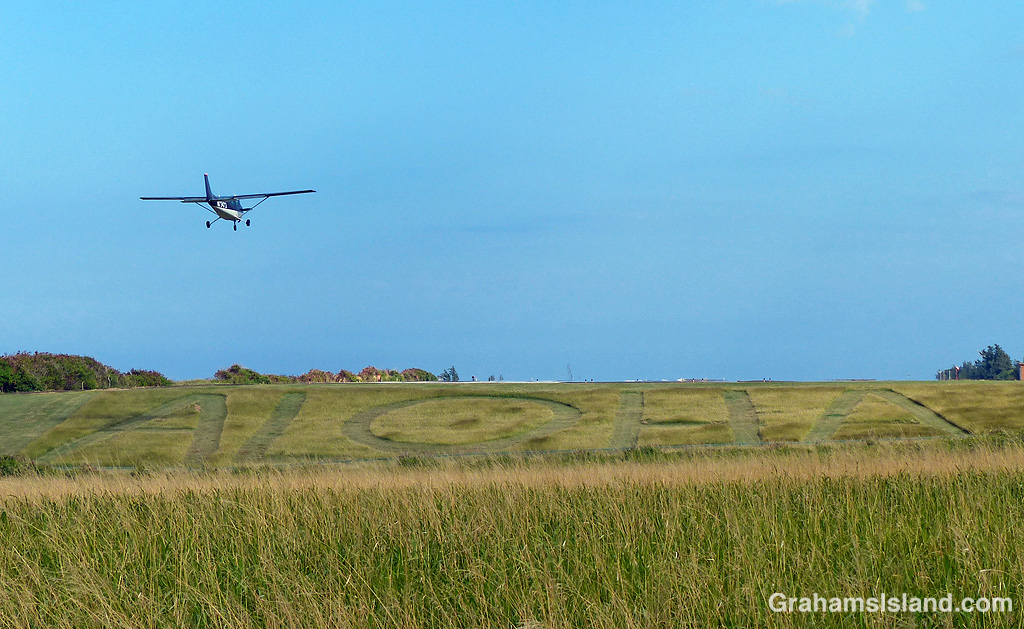
An Aloha greeting is mown into the grass at Upolu Airport

This Aloha greeting, mown into the grass at the end of Upolu Airport’s runway, greets arriving aircraft. At this time of year, it’s also traditional for the grounds crew to mow the words “Mele Kalikimaka & Haouoli Makahiki Hou” into the grass bordering the runway. It means “Merry Christmas and a Happy New Year.”

I don’t have a photo of this because it’s only visible from the air, but here’s a link to the scene in 2016.

Mini helicopter

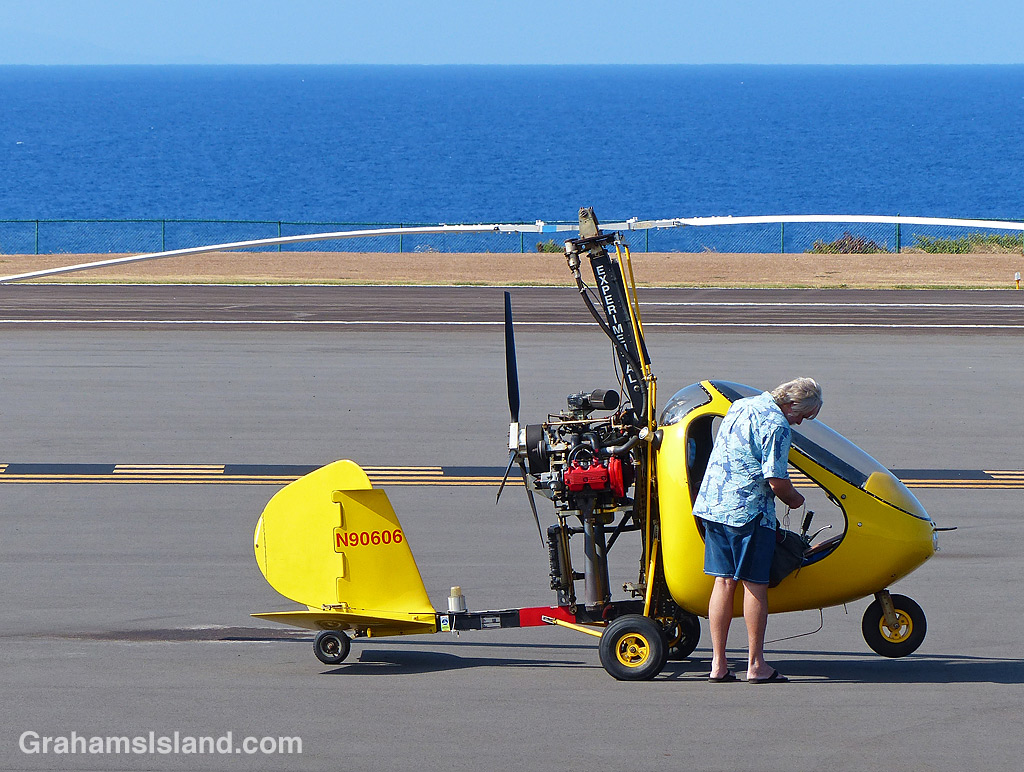
A mini-helicopter parked at Upolu Airport.A mini-helicopter takes to the air.

This mini helicopter was parked at Upolu Airport recently. A single seater, it looks like a home-built aircraft. A little while later, I heard a clattering noise and saw it airborne, headed east along the coast.


Helicopters circle Pu’u O’o vent

Tour helicopters circle Pu'u O'o vent on the Big Island of Hawaii

During a recent hike on the Nāpau Trail in Hawaii Volcanoes National Park, one accompaniment was the throb of helicopter engines. The active flow from Pu’u O’o vent, and its ultimate outpouring into the ocean, is a great attraction for visitors and locals alike.

One way of seeing these events is on a helicopter tour and, as I sat at the Nāpau overlook, I noticed there was a clear order to those helicopter visits. A pair would arrive from the west, one a bit behind the other. One would circle the vent, the other visit the ocean entry. Then they’d switch. After 10 or 15 minutes, the two helicopters would head off to the northeast and soon after, the next pair would arrive.

For more information about Hawaii Volcanoes National Park, go to nps.gov/havo/.
 For more information about Kilauea Volcano and it’s eruptions, go to hvo.wr.usgs.gov/kilauea/history/main.html.


V-22 Ospreys

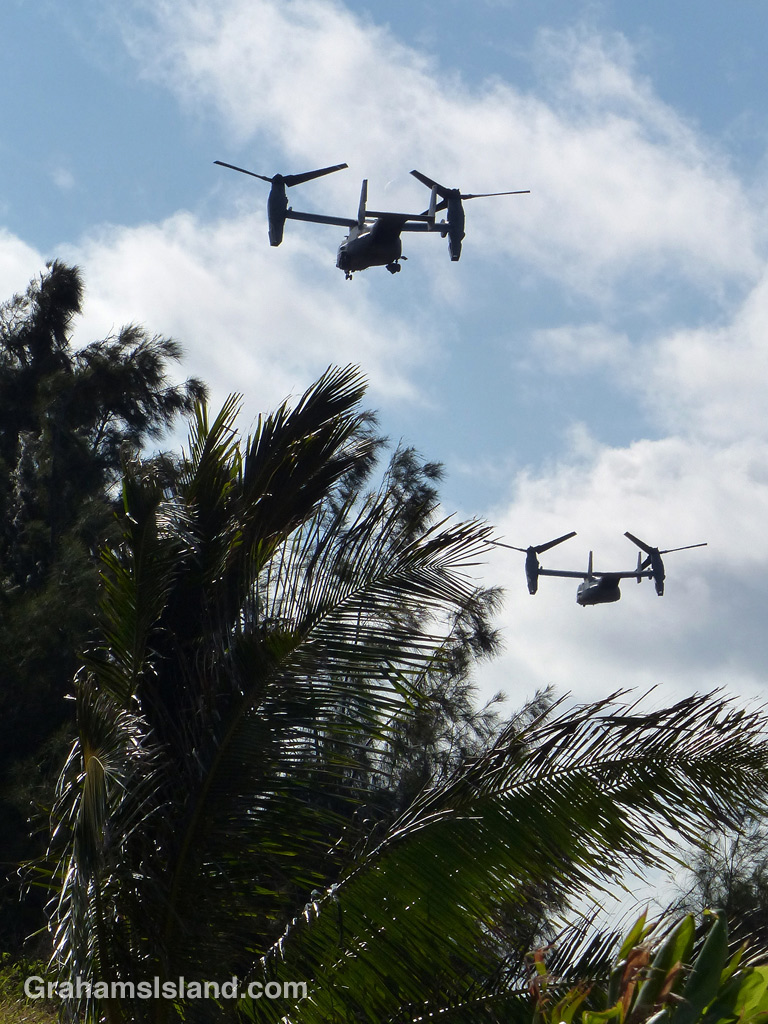
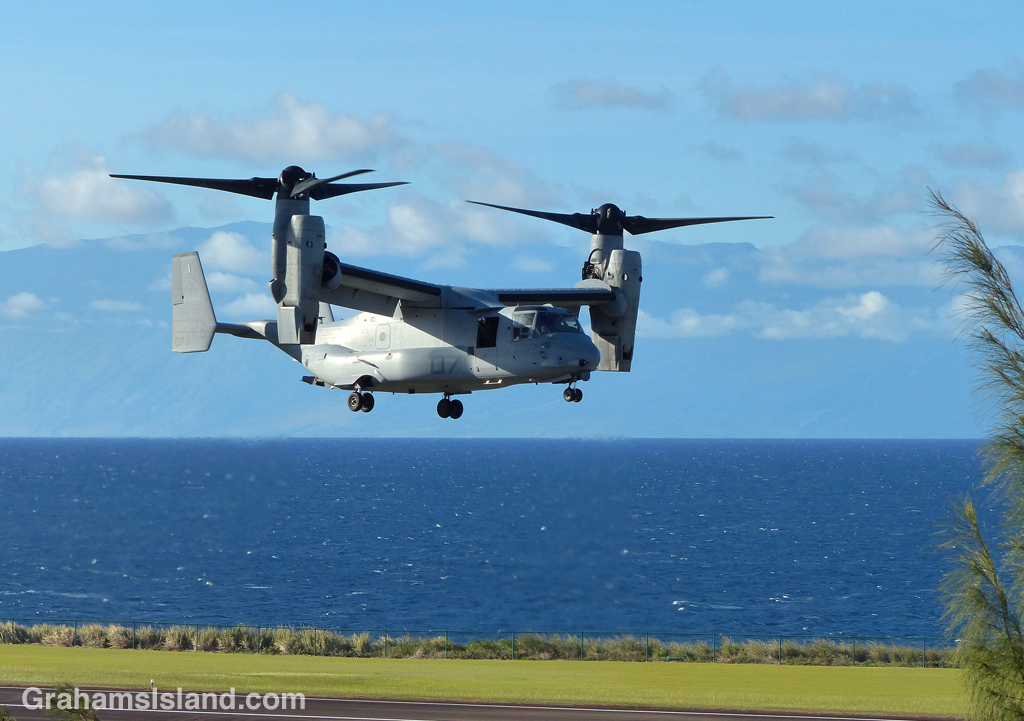
Two V-22 Osprey aircraft land at Upolu Airport on the Big Island.Two V-22 Osprey aircraft leave Upolu Airport on the Big Island.
I’m not a bird watcher per se, but I’ve increasingly enjoyed the wide variety of bird life that I see when I’m out and about. Recently, I’ve been seeing a couple of pairs of nene, the Hawaiian goose. There’s a family of zebra doves that huddle up together on the mock orange outside the kitchen window. On a daily basis I encounter pairs of mynah birds, saffron finches, northern cardinals and several more.

What does that have to do with these photos? Well, for some reason, my first thought on seeing these two V-22 Ospreys thundering toward Upolu Airport was, ‘I wonder if they’re a breeding pair?’ All things considered, I suspect they are.

V-22 Osprey

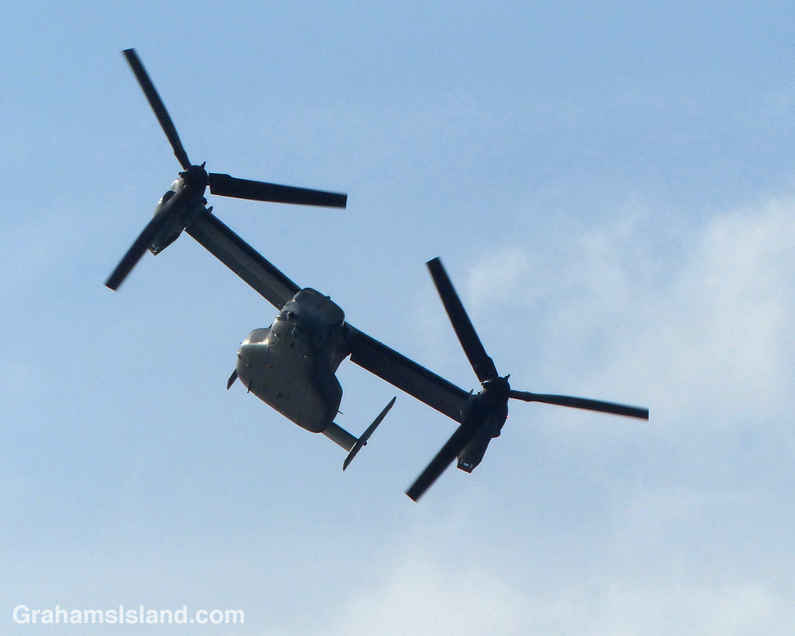
A V-22 Osprey lands at Upolu Airport.A V-22 Osprey banks as it approaches Upolu Airport.
Returning from a walk around Upolu Airport, I was startled by a loud thumping noise close by. Through the trees I saw this peculiar-looking aircraft touching down. The plane is a V-22 Osprey, a tiltrotor aircraft used by the military, in this case, the U.S. Marine Corps.

The plane made several loops, out over ʻAlenuihāhā Channel and back around to the airport to land, then do it all over again. It was actually quite fascinating to see the engines rotate from horizontal to vertical while in flight.

Eventually, the plane headed out over the channel and kept going, probably back to its base on Oahu.

Kilauea lava reaches the ocean – part 2

Kilauea lava reaches the ocean in the pre-dawn light.

The lava flow lights up the pre-dawn sky.

A photographer gets close to the flow as Kilauea lava reaches the ocean.

Apparently, you can never be too close to get a good photo of the action.

Kilauea lava reaches the ocean with a surge of steam.

The bottom of the flow, where the lava meets the sea. To the right is the beginning of a new black sand beach created by the activity.

Yesterday, I posted about the background to the trip my wife and I made to see lava entering the ocean from Kilauea Volcano’s Pu’u O’o vent. Today, I have a few more photos from the trip.

The Lava Ocean boat was a good-sized double-hulled aluminum boat and we were on the water around 4:30 a.m.. The trip out, in the dark, was uneventful and we arrived at the flow in dim, pre-dawn light. The bright lava glow cut through the darkness. Tiny figures materialized on the cliff top near the flow.

Once at the flow, the boat slowed and made passes back and forth. A couple of smaller boats were also around. Ashore, figures could be seen perched dangerously close to both the flow and the cliff edge. Several had gathered, with their cameras, on a raised knob of lava to one side of the flow. I hoped those photographers knew the risks they were taking. From their standpoint, they’d know they were near the edge, but from our vantage we could see that the knob they stood on was sharply undercut, a prime candidate to crash down at any time.

Our boat moved about, sharing time near the flow with the other boats, and providing views from different angles. It edged in close to shore, then away again. We could feel the heat from the lava. As daylight filled in, the drama of the glow ebbed, but more detail emerged – clumps of glowing lava tumbling down the slope, waves rushing ashore to explode into steam, and a steady river of lava flowing down the slope to the sea.

A helicopter from the United States Geological Survey (USGS) joined the scene, making close passes over the area. The USGS surveys Kilauea’s activity regularly and posts daily updates of the situation at the website below.

We were there an hour or so before heading back. The experience was everything we’d hoped, well worth the cost of the excursion. We were lucky that conditions had been good – not too windy and a quiet sea for that area. To top off the trip, on the way back we were joined, for a while, by a pod of spinner dolphins.

Today, the flow has widened and is putting on an even better show, but I’m happy to have seen what we saw, knowing I could check the situation tomorrow or the next day and find out that the flow has stalled, never to resume.

For more information about Kilauea Volcano and it current eruption, go to hvo.wr.usgs.gov/activity/kilaueastatus.php.
For more information about boat trips to see the lava, go to lavaocean.com.

The top of the cliff where Kilauea lava falls to the ocean.

The top of the flow with lava running over the edge. A couple more steps and the man on the right will be one with the flow. Ouch!

A small boat is on hand to see Kilauea lava reaching the ocean.

A couple of smaller boats were at the scene while we were there.

A USGS helicopter checks the progress of Kilauea lava reaching the ocean.

A USGS helicopter joined the scene for a while to monitor the state of the activity.