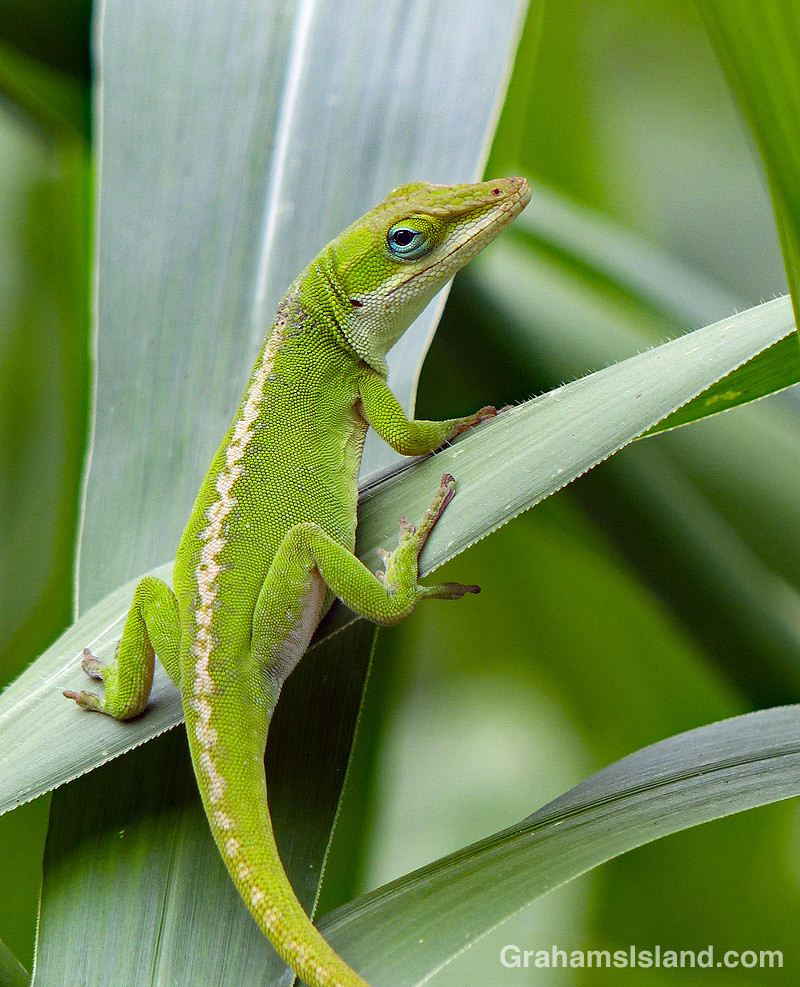
This green anole looked very suspicious when I sneaked up behind it to take its photo.

This green anole looked very suspicious when I sneaked up behind it to take its photo.
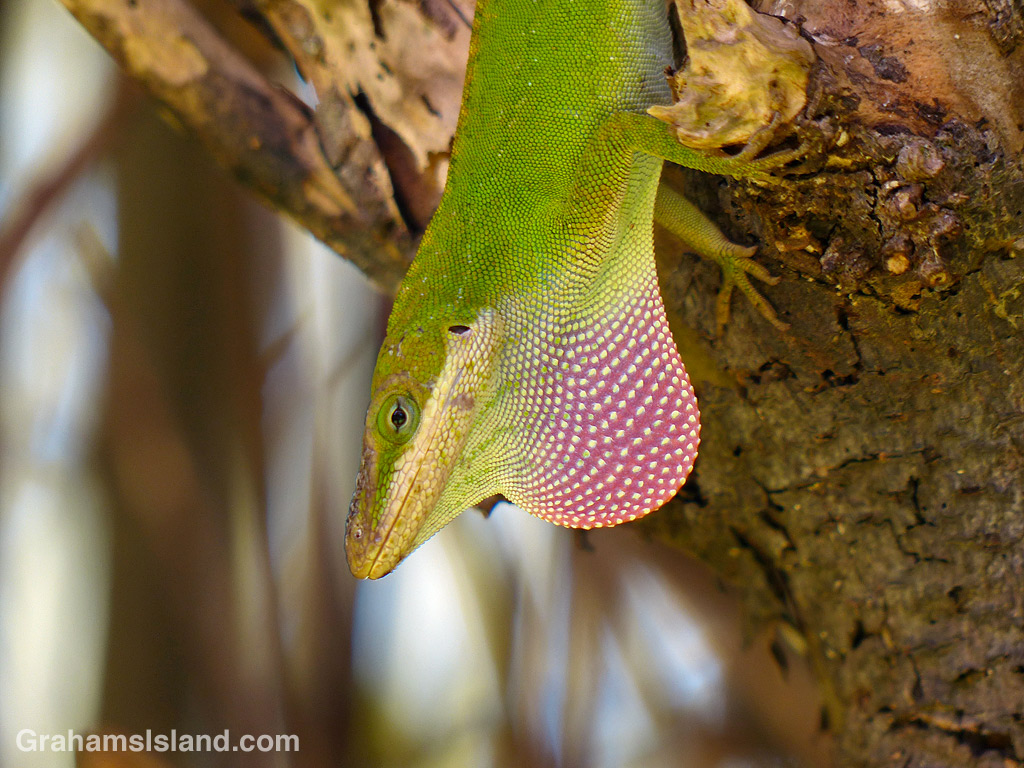
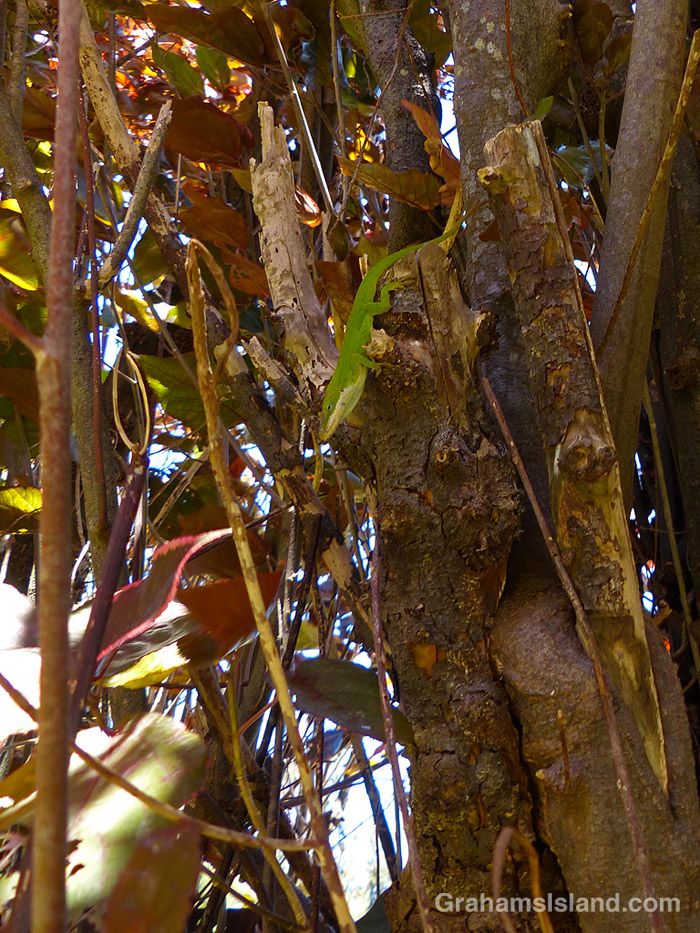
A green anole defends its territory in a hedge from an encroaching photographer. A typical display involves a lot of head bobbing and extending of the anole’s dewlap. If the intruder is another anole, the defender might rush the other one, though in my experience, they rarely end up fighting.
When I’m the intruder, the anoles usually have a similar expression to this one, a sort of benign resignation.

I noticed this gold dust day gecko and green anole in a stand of yellow bamboo. The gecko was just hanging out as per usual, but from the anole’s perspective it was intruding on his territory. When that happens, an anole will puff out his pink dewlap and engage in some vigorous head bobbing. This performance will put wanna-be anoles in their place, but I have yet to see it work on a gecko.
Posted in response to Becky’s July Squares challenge theme of ‘Perspective.’ See more responses here.
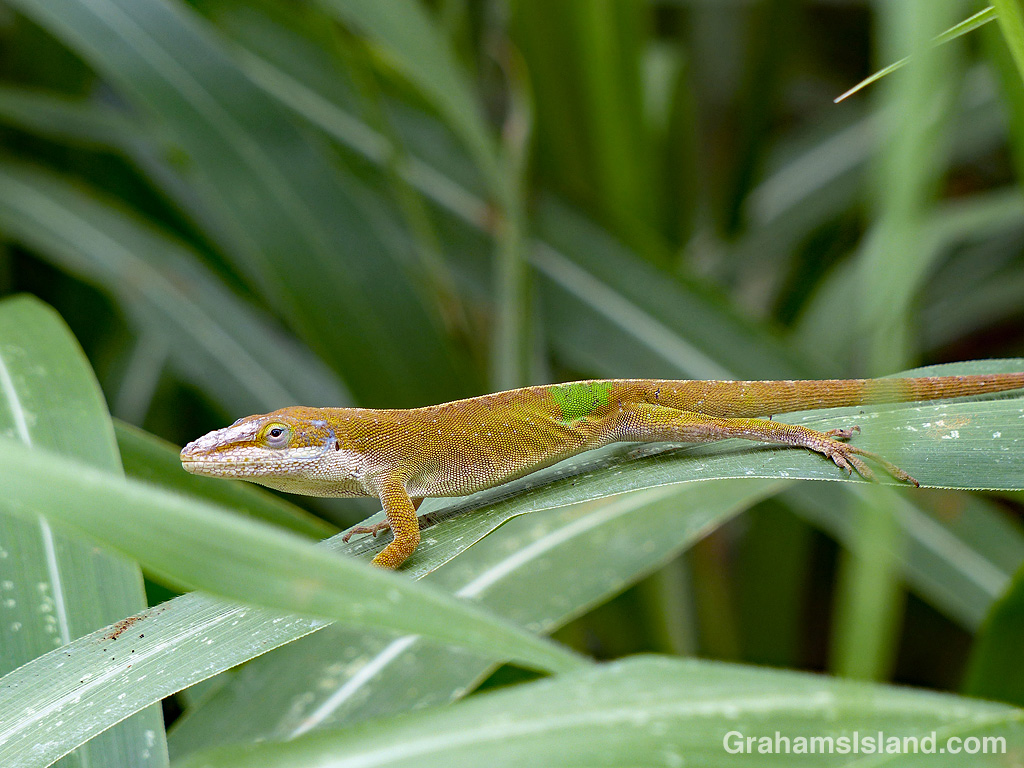
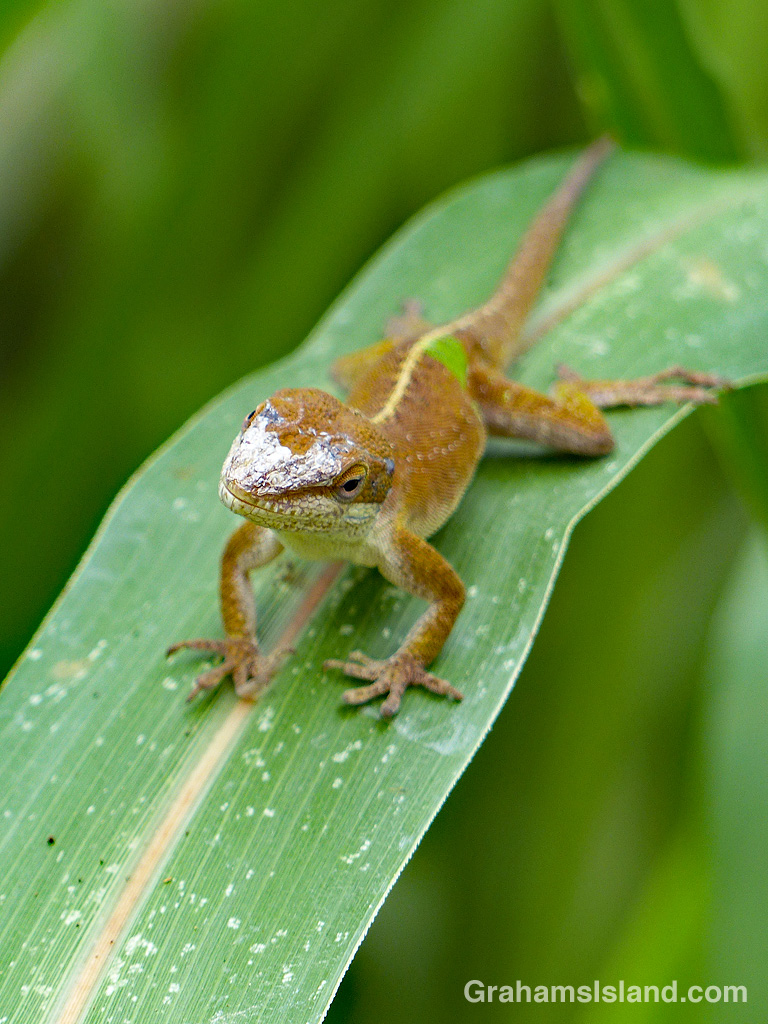
Green anoles often look a bit rough on the top of their noses, but this one was particularly rough and white in that area. In addition, while it has assumed brown coloration, a patch of green refused to go away. One or both of these conditions might be related to shedding, but it could be something entirely different.

This week’s Sunday Stills challenge theme is ‘Green Macro or Close-Up.’ See more offerings here.
Here’s a green anole (Anolis carolinensis) perched on a green ti leaf so that I could take its photo (possibly). Light greens in the sun, dark greens in the shadow. With all this, I can forgive the anole its powder blue eye-shadow.
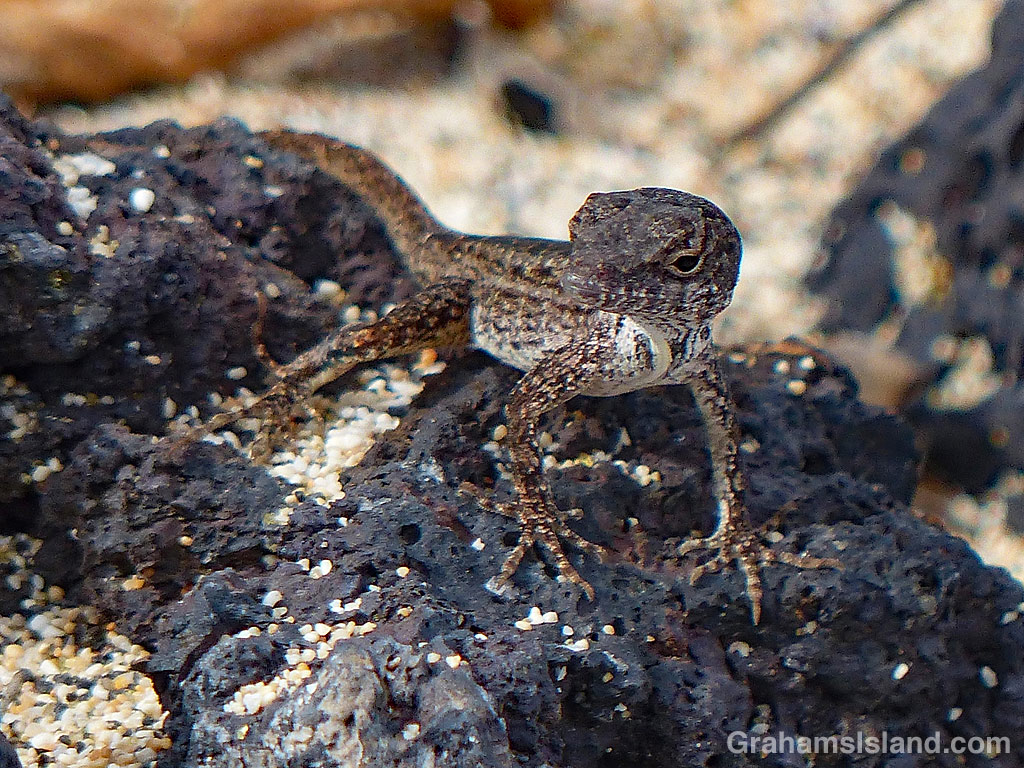
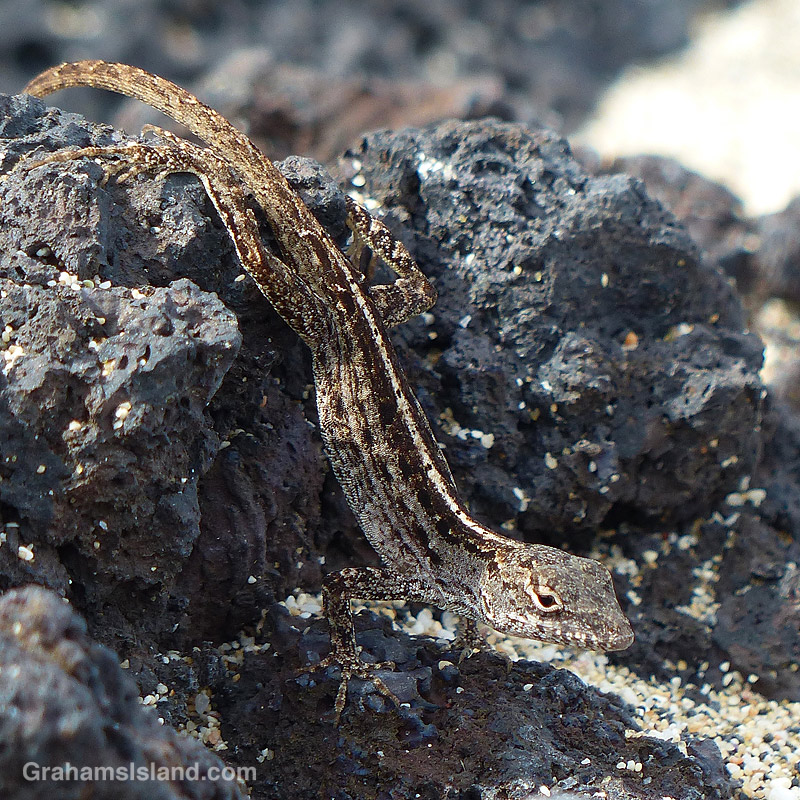
I’ve posted plenty of anole photos on this blog, but they have all been of the green anole or Carolina anole (Anolis carolinensis). Some of these photos have shown an anole that is colored brown, but that’s because the green anole can change color to brown.
It was only recently that I saw my first brown anole (Anolis sagrei), which has a quite different look and different markings to the green anole. Native to Cuba and the Bahamas, it is considered quite invasive and will outcompete green anoles for territory. This one was next to the coast path through Hualalai Resort on the Kona coast.
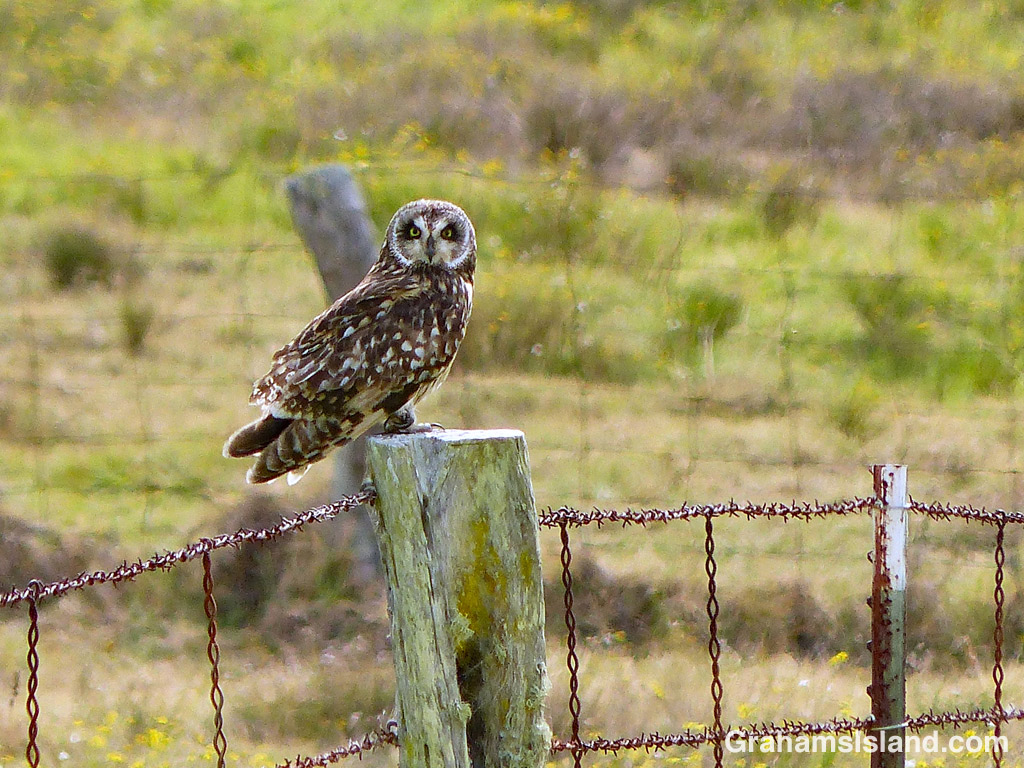
This week’s Sunday Stills challenge theme is ‘Oldie-but-Goodie or Favorite Photo.’ (See more responses here.)
This seemed like a good opportunity to run a few of my favorite photos from the first year of this blog.


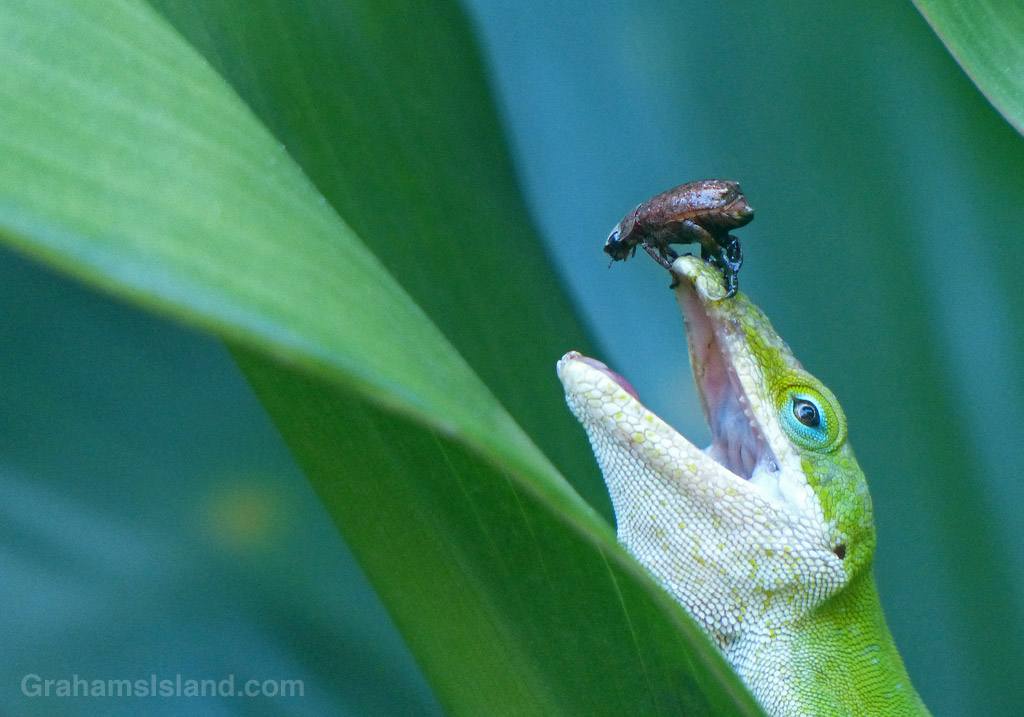


A green anole looks wary as it stands on a ti leaf adorned with raindrops.

