A bee forages on the bright yellow flowers of a mamane tree.
Posted in response to Becky’s July Squares challenge theme of ‘Trees.’ See more responses here.

A bee forages on the bright yellow flowers of a mamane tree.
Posted in response to Becky’s July Squares challenge theme of ‘Trees.’ See more responses here.


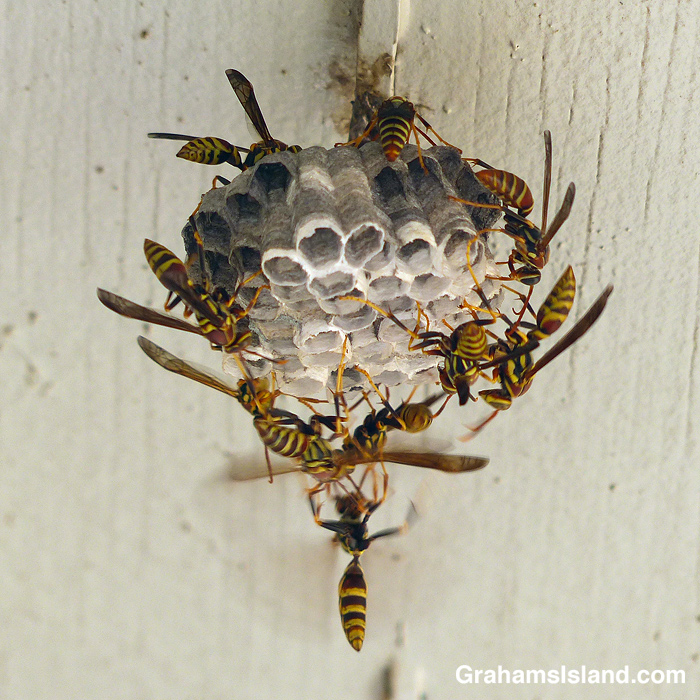
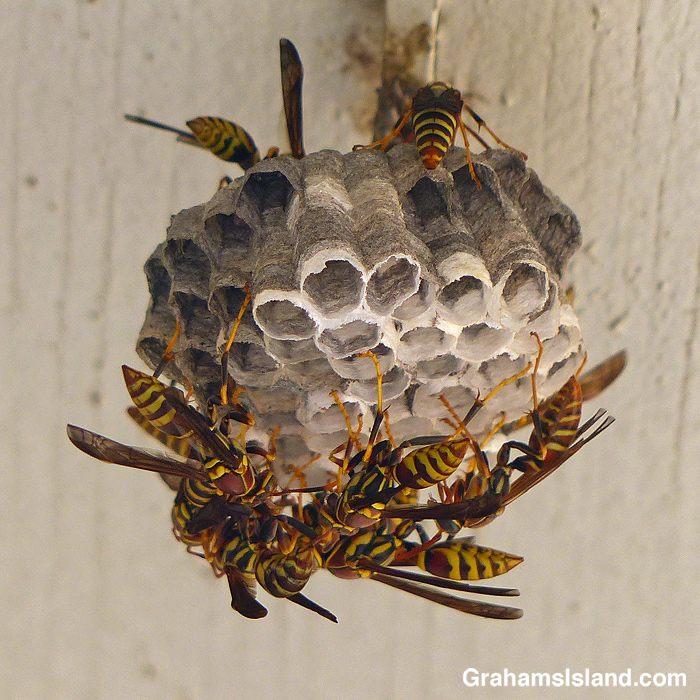
Last week, I saw these wasps working on a nest under the eaves of a building. I was curious because the wasps were mostly stationary, almost like a still life painting (top photo). Then another wasp flew in and the ones on the nest burst into life, swarming the newcomer, and bustling about their business.
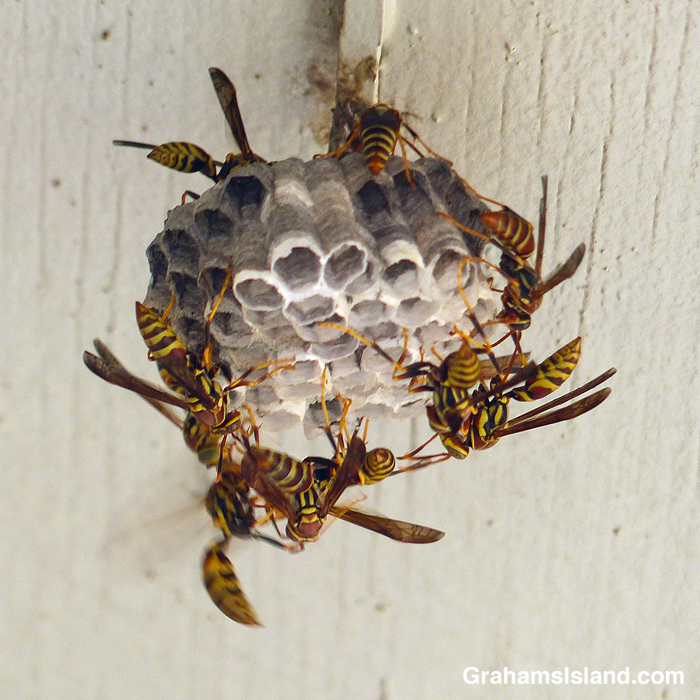
I went outside with my camera and watched the activity. A couple of wasps flew away while the others continued with their work. Within a minute or two they slowed down until they were again mostly stationary. It occurred to me that this was all part of the process. Wasps flew in with building materials or water. Other wasps received this and used it to add to the nest. When they were done, they waited, conserving energy, until another delivery occurred and the cycle kicked off again.
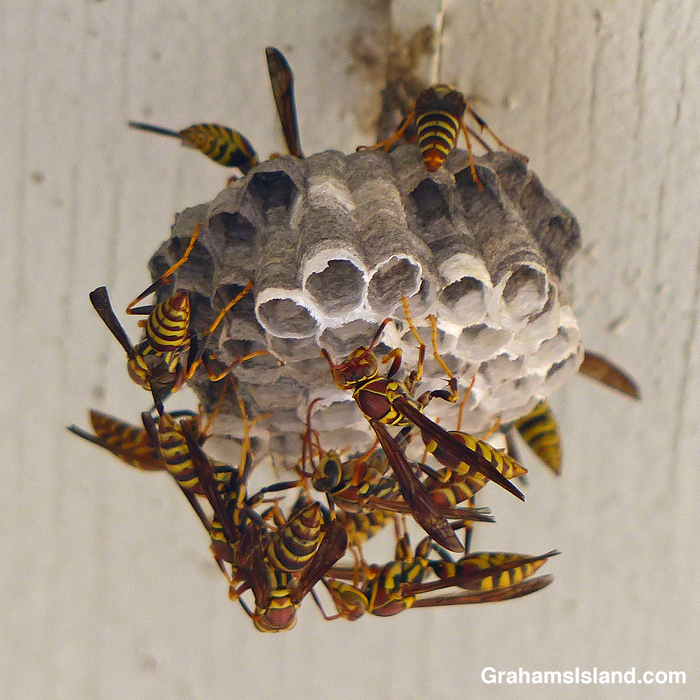
I waited with my camera and, sure enough, a wasp flew in (at the bottom of the second photo). The others responded, crowding around for supplies, before dispersing to their work sites on the nest. I’ve watched wasps building nests before, and seen a nest grow to the size of a football, but I’d never registered this work and rest cycle before.


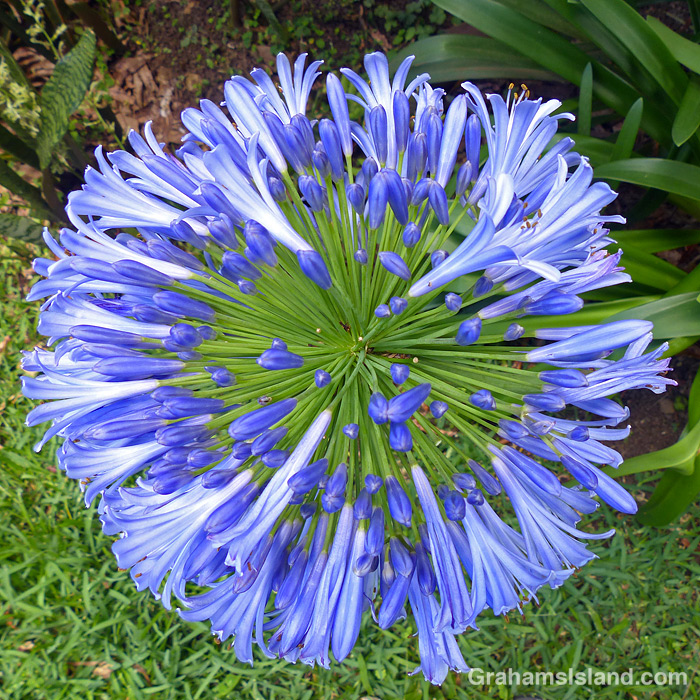
This agapanthus has bloomed for the first time, with a fine array of showy blue flowers. Not only do they look good, but the bees like them, too.


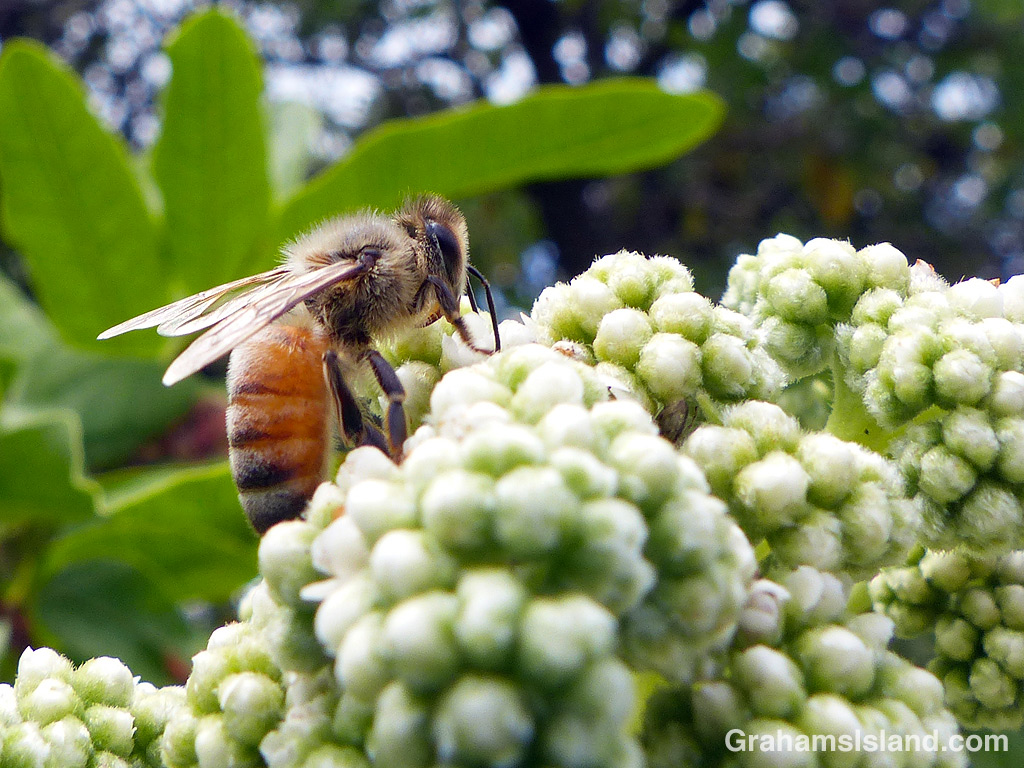
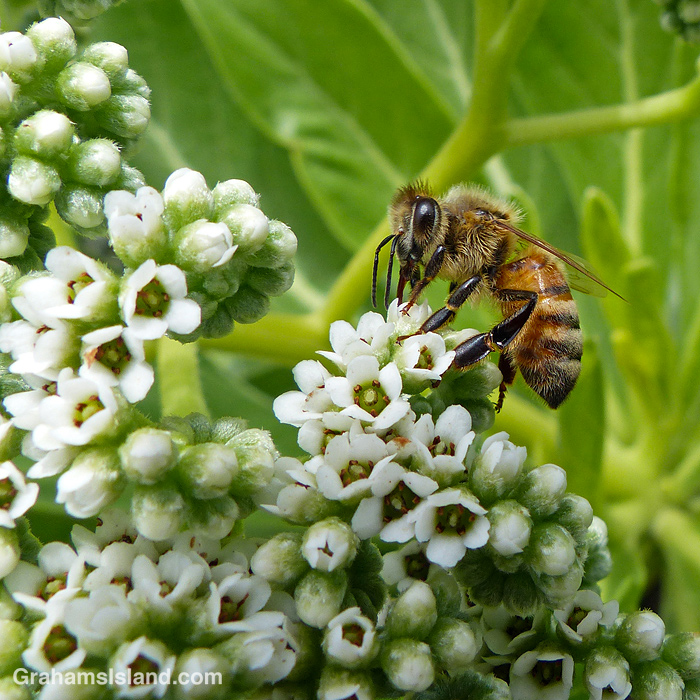
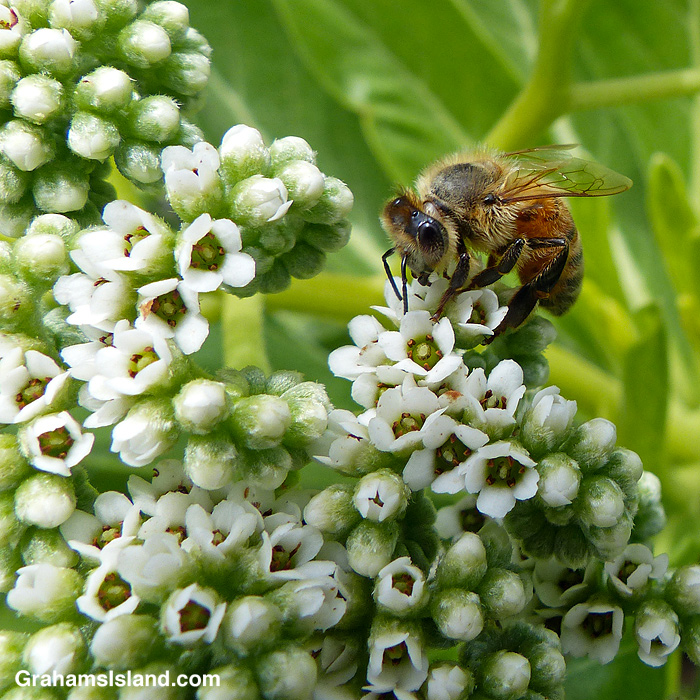
Tree heliotropes produce clusters of little white flowers which are a big draw for bees. When the flowers bloom there are usually plenty of bees in attendance to gather the goodies within.

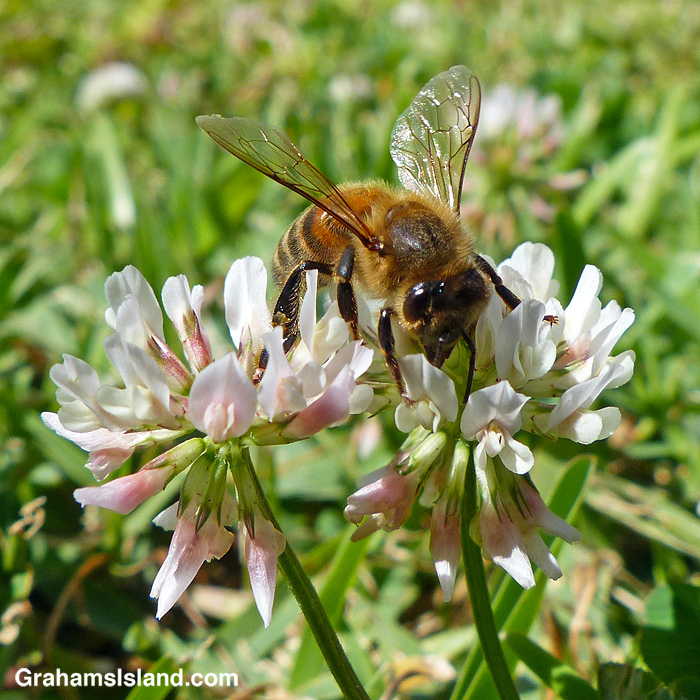
I was walking to my car when I noticed the bees had discovered the clover flowers in what passes for a lawn around here. So I got down and joined them for a little while.


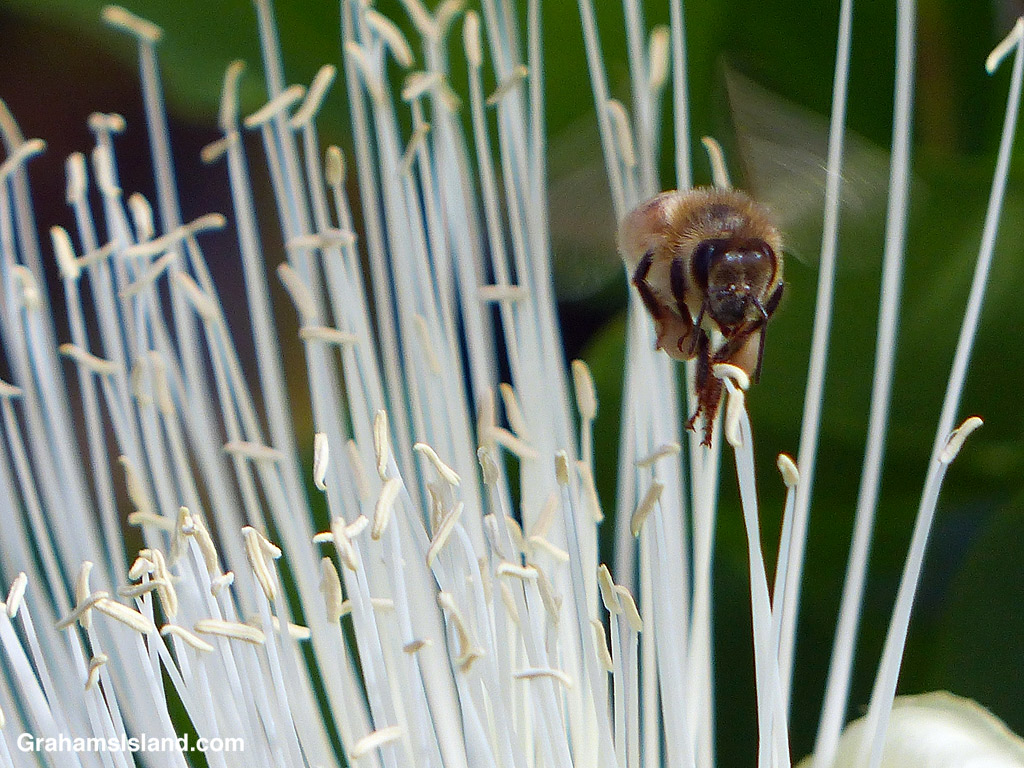
Maiapilo (Capparis sandwichiana) is an endemic plant that requires little water once established and is also salt tolerant. This means it grows well on the dry side of the island along the coast. This of course is also an area popular with humans, both for living and recreation. Consequently, maiapilo is considered an at risk plant.
Its standout feature is the beautiful white flowers, but if you want to see them, bring a flashlight or be prepared to get up early. Maiapilo blooms at night and begins to wilt early in the morning, fading to pink as it does so.
These photos were taken around nine in the morning and the bees were busy exploring and pollinating the flowers. At night though, native moths are the main pollinators, attracted by the white flowers and pleasant lemon scent. A cucumber-like fruit follows the flowers but, unlike them, it is said to have a very pungent smell.
The plant can be low-growing and sprawling, or a more upright shrub reaching 10 feet.


I was taking photos of dragonflies over a pool when I realized there was a good deal of buzzing around where I stood. Looking around, I saw a fair number of bees collecting water from the edge of the pool. Luckily, I wasn’t bothering them and they didn’t bother me. I took a few photos and then returned to the futile practice of photographing dragonflies in motion.

A bee forages on an ohia lehua flower.
Posted in response to Becky’s January Squares challenge theme of ‘Up.’ See more responses here.