Tag Archives: Bird of the Week

Great Frigatebirds

Great Frigatebirds flying over Hawaii
There were too many to get in one photo!
Great Frigatebirds flying over Hawaii
Great Frigatebirds look like they’re not even trying when they fly!

I was driving down to Upolu for my usual walk when I saw a few Great Frigatebirds off in the distance. They seemed to be heading my way, so I pulled over and waited. As I did so, more appeared. They glided down towards the coast, then banked left to cross the road, which is when I took these photos.

Great Frigatebirds flying over Hawaii
They fly easily in formation.

I counted 17 in all, though there might have been more. Usually, I see these birds in ones and twos, but larger flocks like these are, apparently, not unusual. Such gatherings can be simply social, but can also improve their chances in the search for food, as well as for spotting predators, not that they have a lot of those while flying.
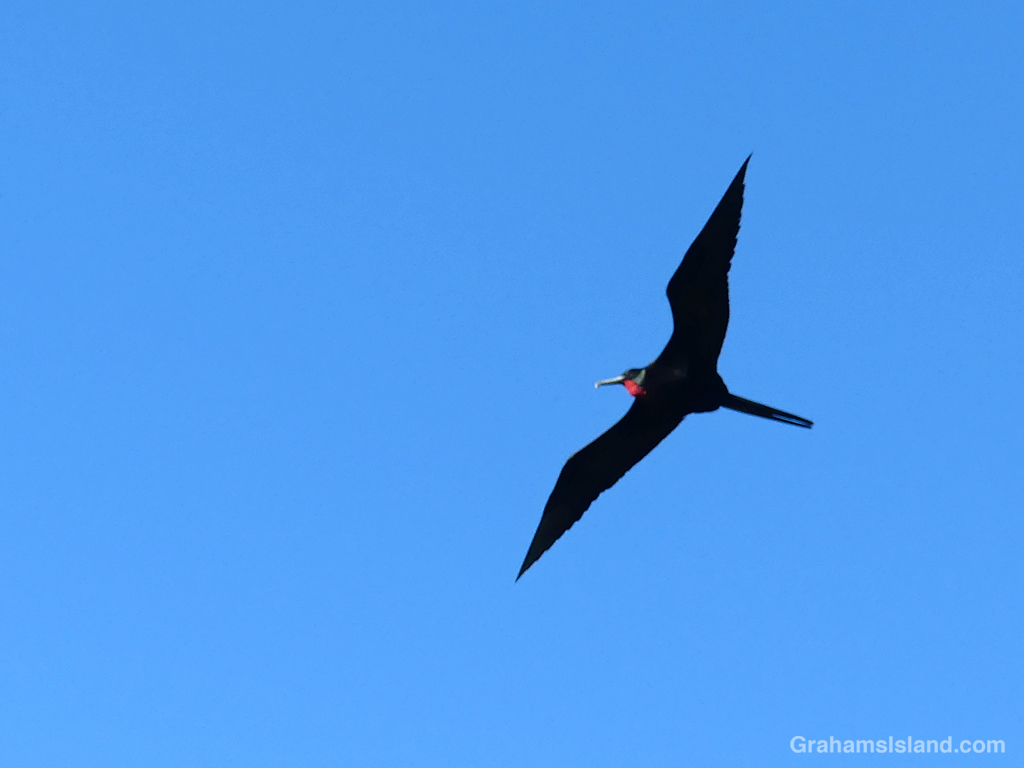
A Great Frigatebird flying over Hawaii
Males have a red gular sac at the throat. It makes them easy to identify, even at a distance.

My bird book notes that most Great Frigatebirds seen in Hawaii are females or juveniles, but I regularly see males, which are easily identified by the red gular sac on their throat. This sac can be impressively inflated during courtship.

Posted for Bird of the Week LVIII. See more responses here.

Great Frigatebirds flying over Hawaii
Last seen heading to Maui.

Hawaiian Stilts

Three Hawaiian Stilts at Kohanaiki Park in Hawaii

The Hawaiian Stilt or Ae’o is endemic to Hawaii and is a subspecies of the mainland Black-necked Stilt. It’s listed as endangered with a population of around 2,000 birds, a number that has been increasing very slowly over the last few years.

Their plight is due to the usual reasons. They were popular hunting targets until that was banned in the 1940s. But a variety of predators, including cats, dogs, mongooses, and other birds such as Barn Owls and Cattle Egrets, are still a significant threat. So too is loss of habitat, mostly shallow wetlands, to development, agriculture, and pollution.

These three were at Kohanaiki Beach Park, where Hawaiian Stilts can often be seen feeding and nesting. The two on the left seemed to have nodded off and didn’t move while I watched. But the third was fidgety, preening and looking around, then tucking its head away, before repeating the process several times.

Posted for Bird of the Week LVI.

Three Hawaiian Stilts at Kohanaiki Park in HawaiiThree Hawaiian Stilts at Kohanaiki Park in Hawaii

Nenes

A pair of Hawaiian geese or nenes.

The Nene (Branta sandvicensis) is native to Hawaii and is the state bird. It’s believed to be a distant relative of the Canada Goose but is much smaller. Nenes spend most of their time on land rather than in the water. Because of this they have evolved different characteristics than other geese. Their feet feature less webbing than other geese and they have claws suited to providing grip in rocky areas where they are often found. However, like most geese they can often be found on golf courses!

When they fly, they will typically make loud honking noises, but walking on land as these two were, they make a variety of very pleasing burbling noises as they move along. Nenes are herbivores and feed on a variety of grasses as well as berries and fruit. They’re also one of those birds that mate for life.

Nenes are considered the world’s rarest goose, with a current population of less than 5,000. But this is a vast improvement from the 1950s when it is believed that there were only 30 or so birds here on the Big Island. Recovery has been aided by official protections and breeding in private reserves. Kauai was the center of this recovery, mainly because there are no mongooses there.

Nenes have been on the Endangered Species list since 1967, but their recovery has been such that they are now listed as ‘Near Threatened,’ which means they are no longer considered to be near extinction, but could quickly return there if the situation does not continue to improve.

One thing of note about these two birds is that neither of them have bands on their legs. Many birds have identifying bands that allow those monitoring the population to know where they come from and where they’ve been.

Posted for Bird of the Week LIV. See more responses here.

Ring-billed Gull

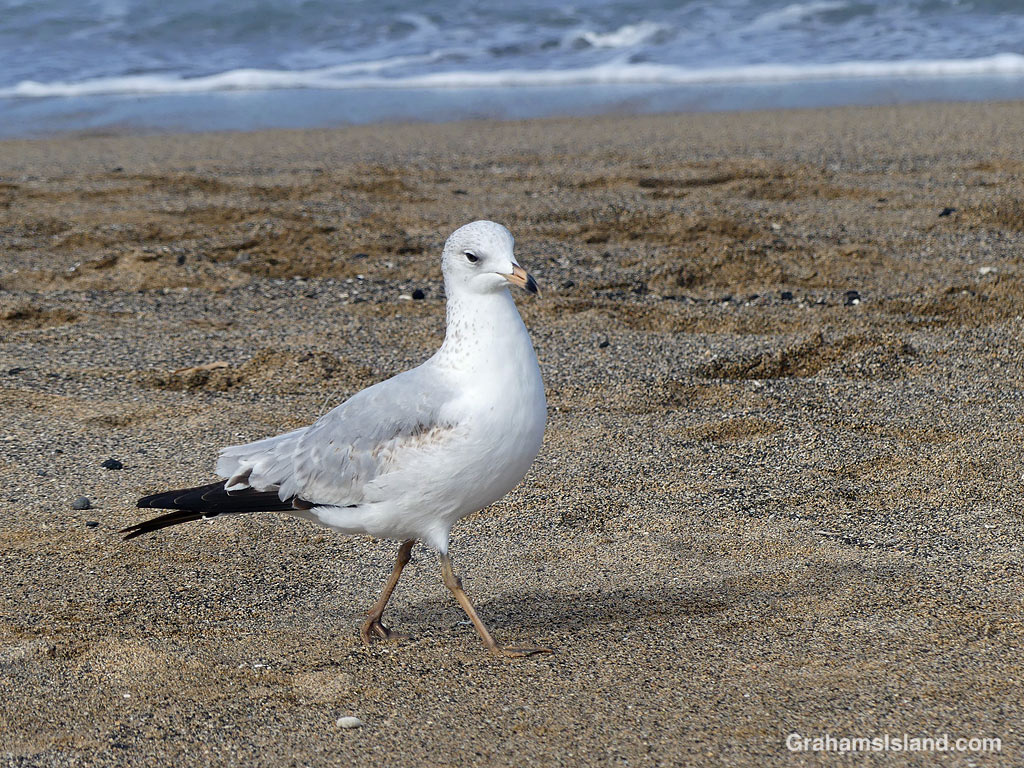
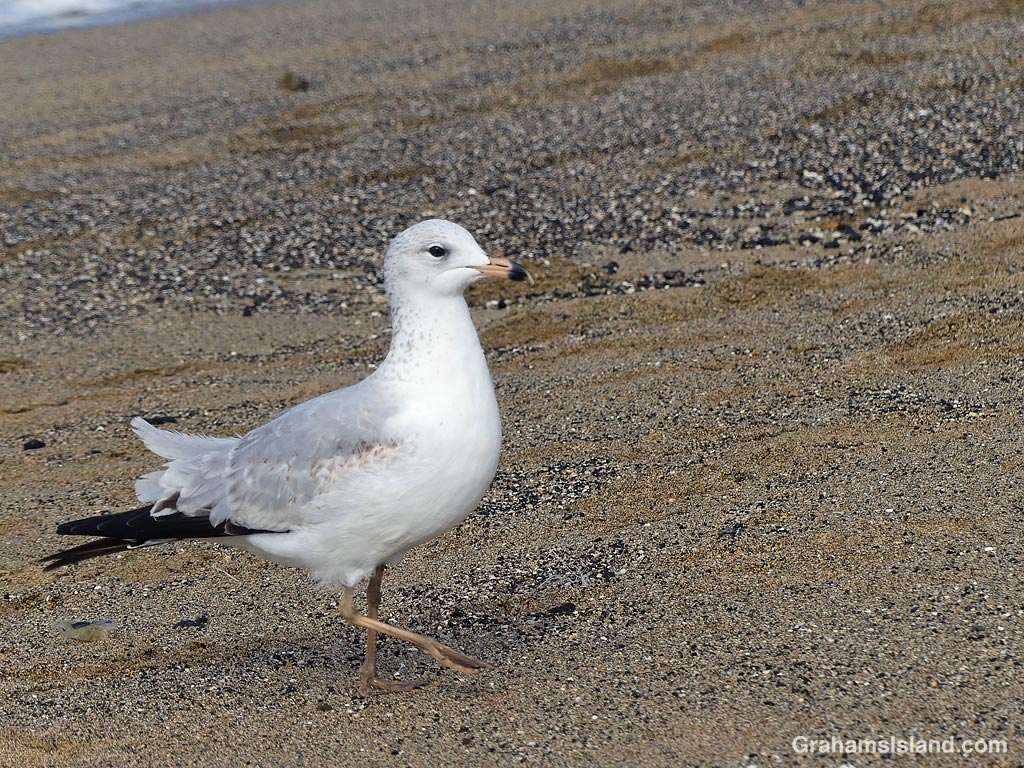
A Ring-billed gull in Hawaii

I was walking the beach at ʻAnaehoʻomalu Bay (often known as A Bay, for obvious reasons) when I noticed this bird walking in the same direction as me. I was idly wondering what kind of gull it was, when I suddenly realized, ‘it’s a gull.’

Unlike most places, a gull sighting in Hawaii is a rarity. I know people who’ve never seen one here. Gulls prefer shallow tidal areas and tropical islands don’t have those, so they’re not gull-friendly. But a few get blown in every year and some arrive as stowaways on ships

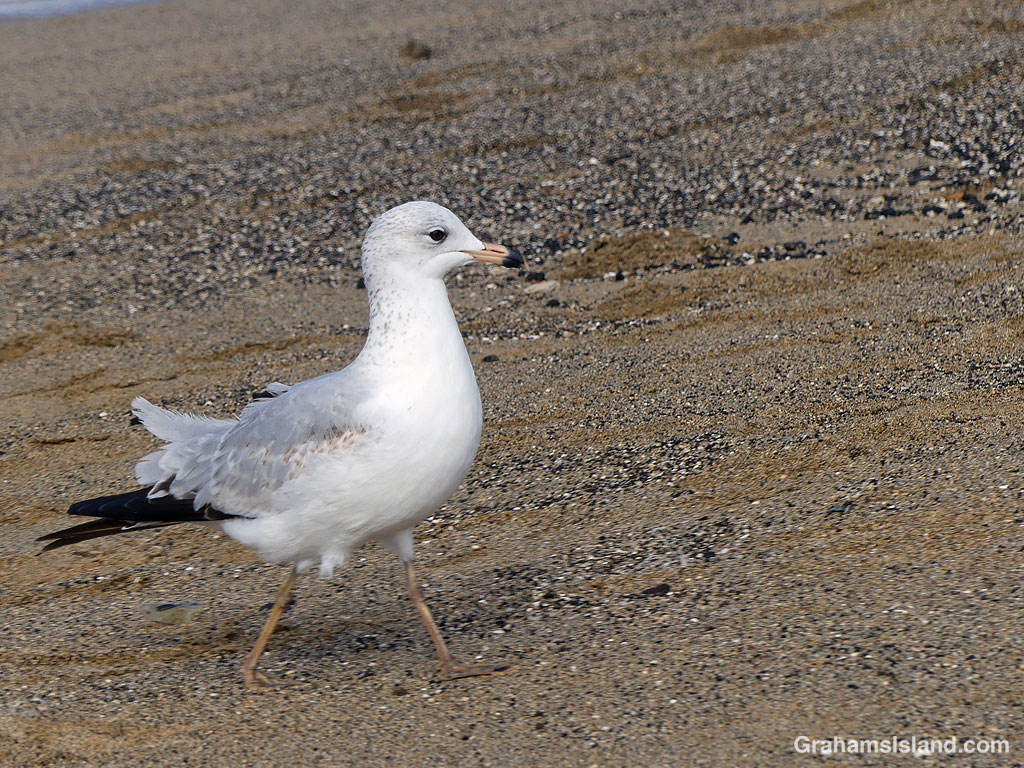
A Ring-billed gull in Hawaii

This one is a Ring-billed Gull, and it’s the second I’ve seen in my time here. The first, I saw catching a fish (here). I rather liked how this one was strutting its stuff on the beach.

A Ring-billed gull in Hawaii

Also posted for Bird of the Week LII. See more responses here.
Pueo on the wing

A pueo flies over pasture land in Hawaii

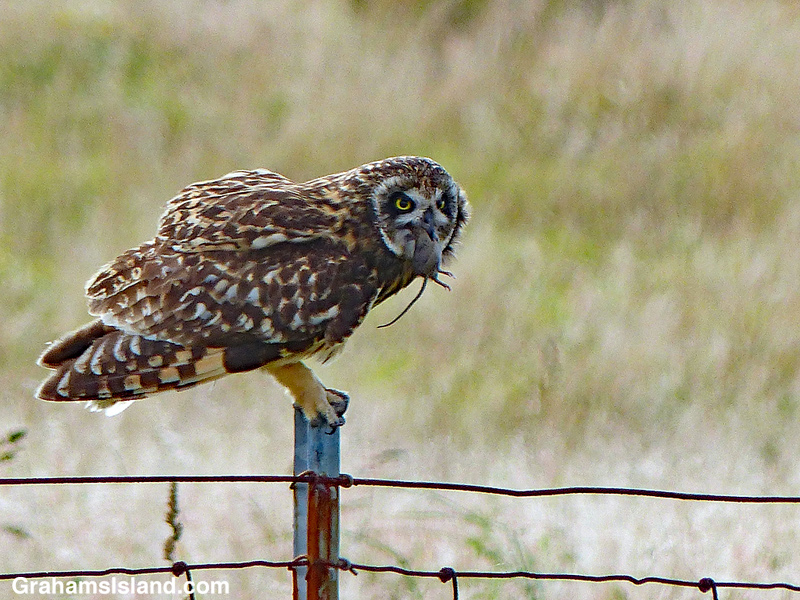
I was driving home from Waimea when I noticed a movement off to my left. I thought it looked like a Pueo, the Hawaiian Short-eared Owl, endemic to the islands. Sure enough, it proved to be one, gliding over the pastureland, looking for an evening meal. I watched it for some time, going back and forth over the pasture looking for movement and a meal below.

Unlike most owls, Pueos are active during the day, and so are easier to spot. The bottom photo is an older photo that’s run before (here), but gives a clearer view of the bird and what it eats!

Posted for Bird of the Week LI. See more responses here.

A pueo flies over pasture land in Hawaii

Hawaii Elepaio

A Hawaii Elepaio on the Pu'u O'o Trail in Hawaii

The Hawaii Elepaio is a small, endemic bird found only on the island of Hawaii, though it has close relatives on Oahu and Kauai. It’s found mostly in the higher elevation forests on the island. This one was on the Pu’u O’o Trail off Saddle Road, a good spot for seeing these birds, at an elevation of more than 5,000 feet.

The Elepaio is a member of the flycatcher family and feeds on insects it catches on the wing or by probing tree trunks and branches.

Posted for Bird of the Week XLVIII.

A Hawaii Elepaio on the Pu'u O'o Trail in Hawaii