Tag Archives: Friendly Friday

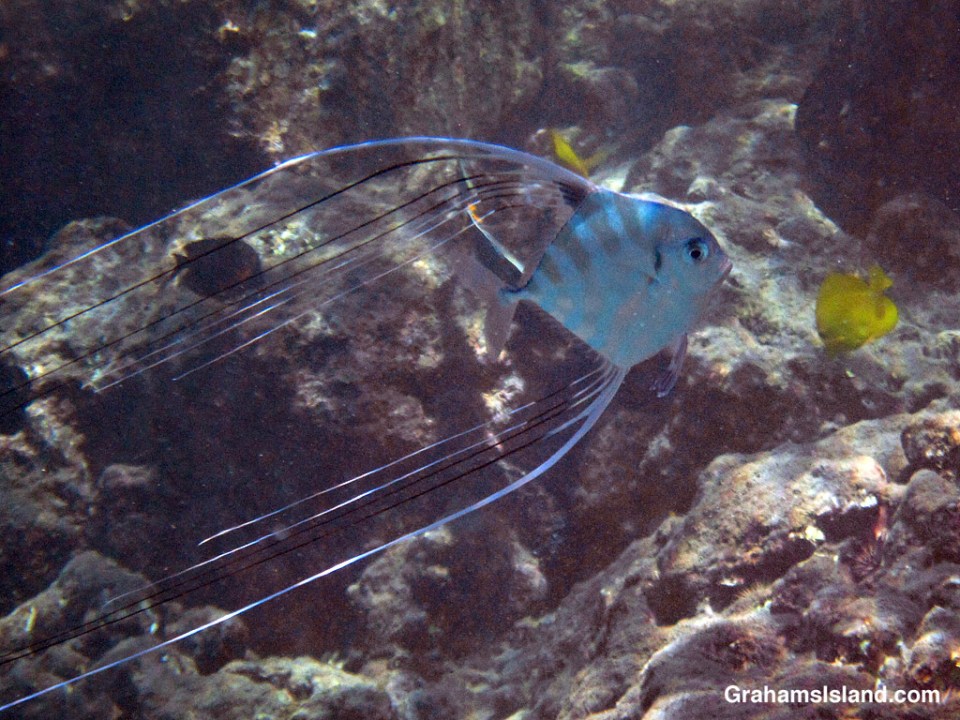
Threadfin jack juvenile

Threadfin Jack JuvenileThis week’s Friendly Friday challenge theme is ‘Fake.’ See more responses here. I don’t really have many photos that fit this bill, but this one does. This exotic-looking little fish is a juvenile threadfin jack. This is a fish that will grow up to become large and blocky, living in deep water and rarely seen by snorkelers of divers.

But as a juvenile, while still not often seen, it hangs around in shallow waters towing this extraordinary array of filaments. The theory is that the filaments make it look like a jellyfish and thus much less appetizing to predators. The fish will putter along, then throw in a few moves that make the filaments ripple. The first time I saw one doing this, I thought it was a jellyfish. It faked me out, which is exactly the point.

Usually, each year I see one, two, or even three of these juveniles in my local snorkeling bay, but this year I haven’t seen any or heard of them being spotted by anyone else. Not sure why this is. The water has tended to be murkier than is usual in the summer, but otherwise not much has changed. May and June is the usual time to see them, but I have seen them as late as September, so there’s still time. (This photo is taken from a previous year.)

I hope one or two do show up. Seeing them is one of the highlights of the snorkeling year for me.

The ocean doesn’t want me

I came across this little scene on an early morning walk around Kiholo Bay. I looked around. There was no one in the water, no one visible on land. The gear appeared to be abandoned. But all I could think of was a Tom Waits song, The Ocean Doesn’t Want Me, and in particular the line in it, ‘All they will find is my beer and my shirt.’ The shirt is there, and this is Hawaii – no one’s leaving their beer behind.

Posted in response to this week’s Friendly Friday challenge on the theme of ‘Abandoned.’ See more responses here.

Honolulu day trip

This week’s Friendly Friday challenge theme is ‘Day Trip.’ (See more responses here.)

Any trip on the Big Island could qualify as a day trip, as everything can be reached and returned from in a day. But a common day trip in Hawaii is a visit to one of the other islands. This might be for work, for medical reasons, for some other kind of appointment, or simply for pleasure.

These photos are from my last trip to Honolulu. An early flight from Kona Airport and a late afternoon return gave me plenty of time to conduct my business and have a wander around downtown.

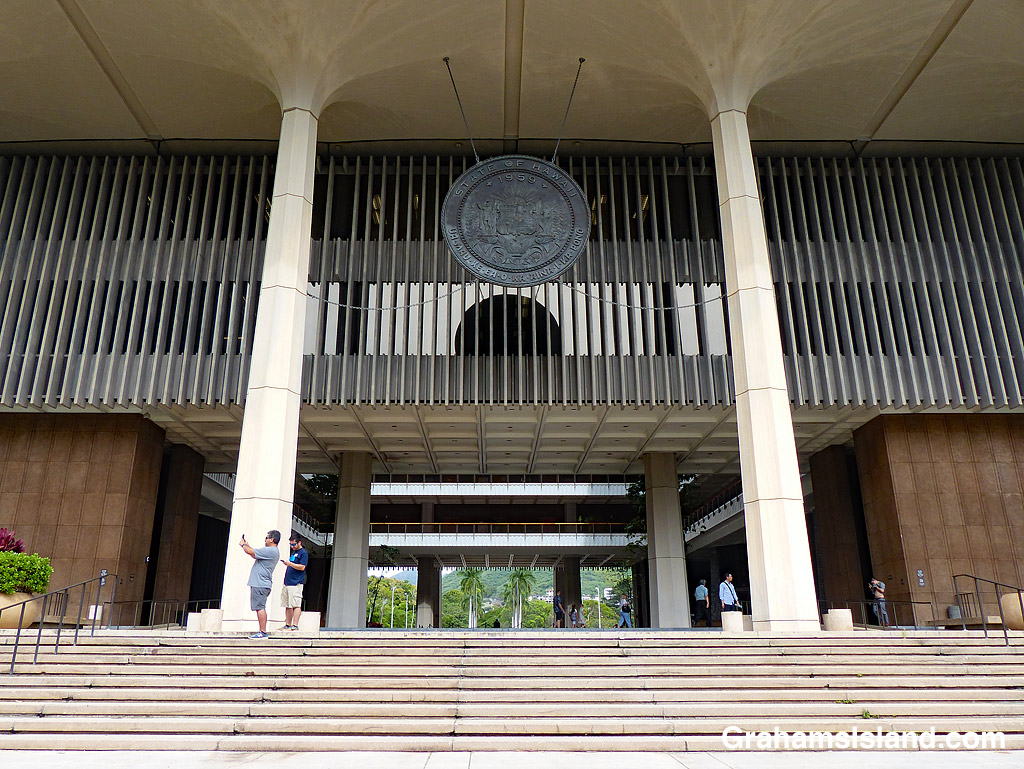
The top photo shows the entrance to the Hawaii State Capitol building. In the middle is Kawaiaha’o Church, constructed between 1836 and 1842, and considered the main Protestant church in Hawaii. Below is one of Honolulu’s large office buildings, somewhat screened by a generous amount of palms and other trees.

Tugs and a barge

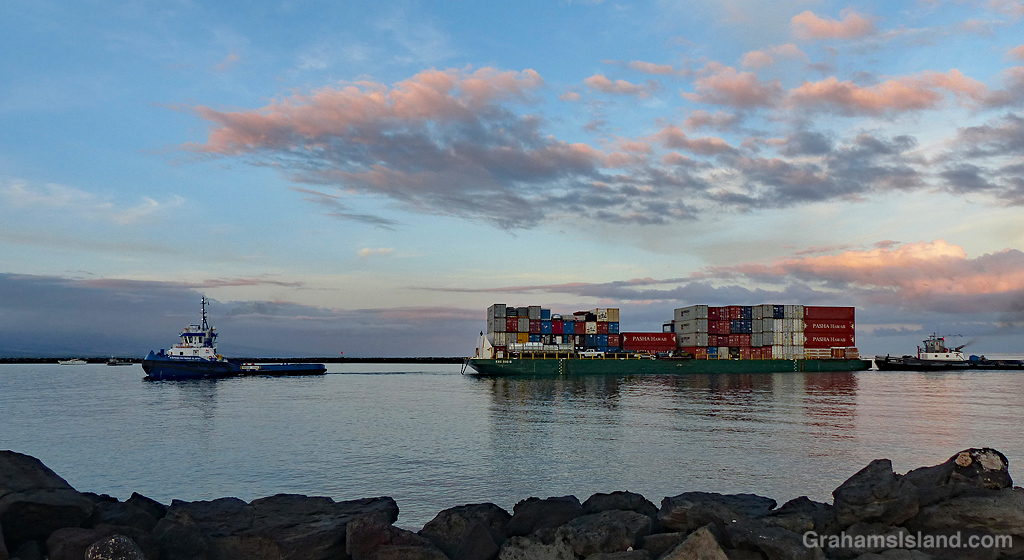
A lot of cargo for Hawaii is delivered by ship to Honolulu on Oahu. Cargo for the smaller (in population) islands is then distributed by inter-island barges. One of their ports of call is Kawaihae, on the west coast of the Big Island.

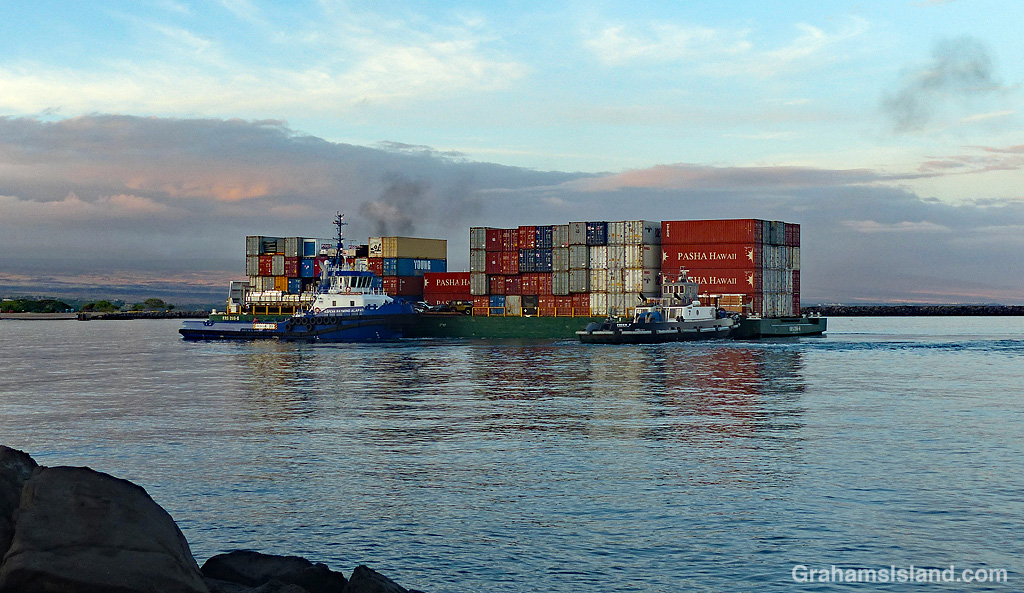
When the tug and barge arrives at the port, a second tug is sent out to hook a line onto the stern of the barge, so that it can help check the momentum of the barge. The tug at the front stops towing and assists in this braking process. Once the barge has pretty much come to a stop, the two tugs push the barge around until it’s alongside the jetty for unloading.

These photos show some of that process. Above: entering the port and slowing down. Below: both tugs begin to push the barge.

Posted in response to this week’s Friendly Friday challenge on the theme of ‘Between the Lines.’ See more responses here.

Flowers at Hawaii Tropical Botanical Garden

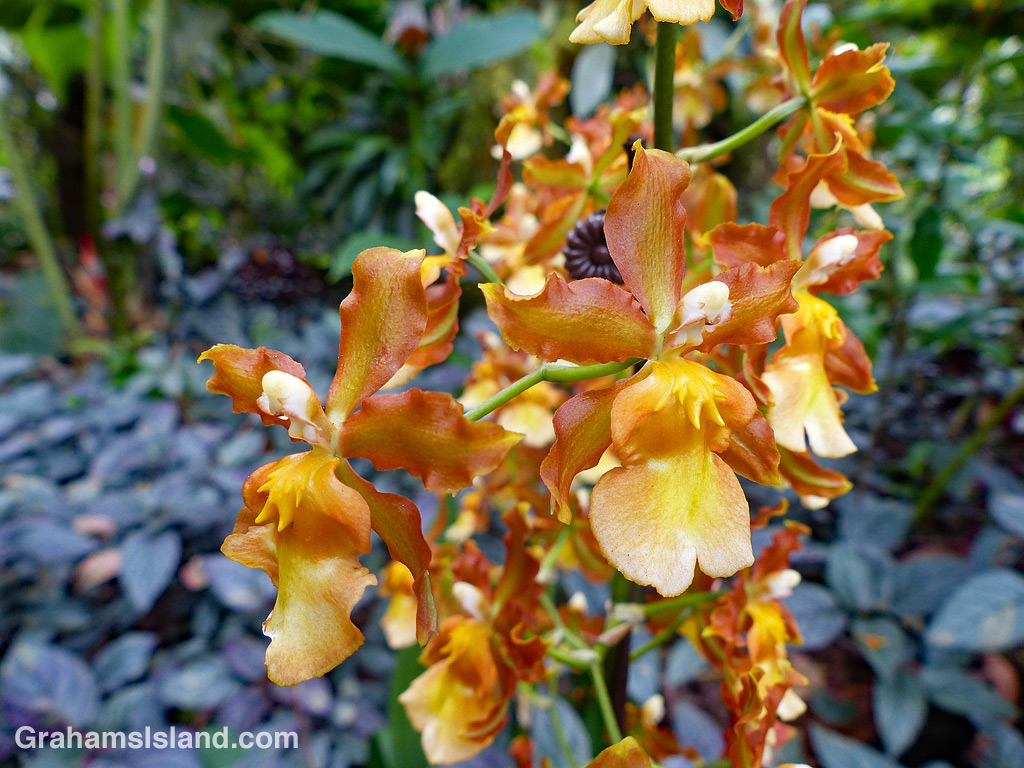
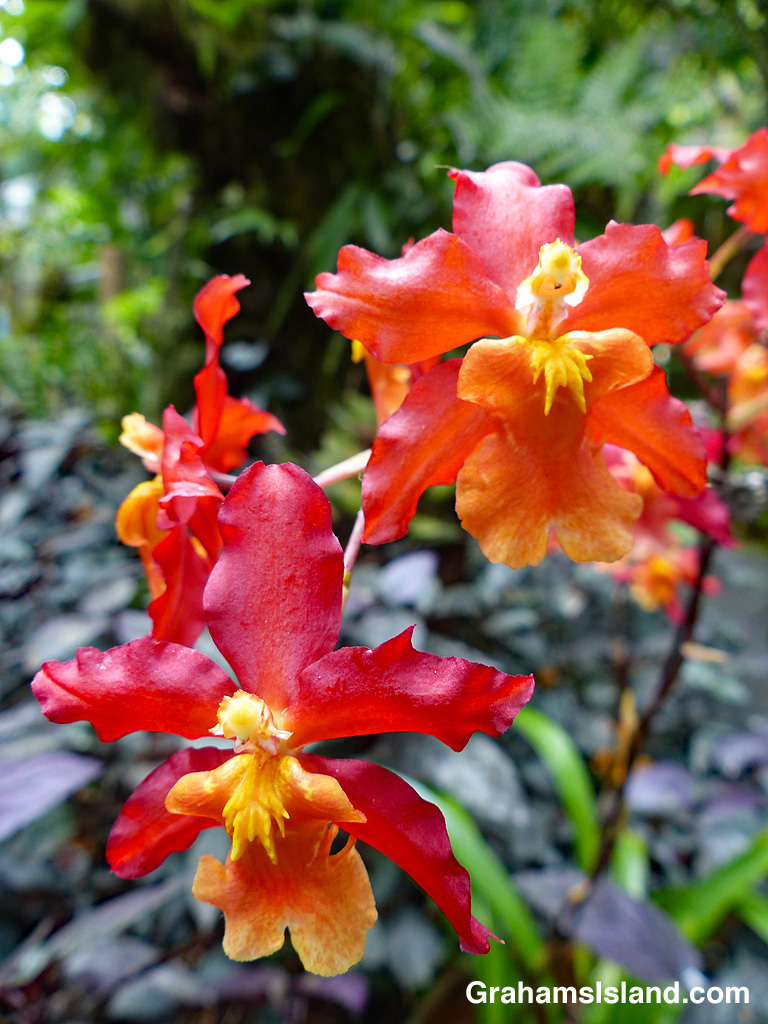
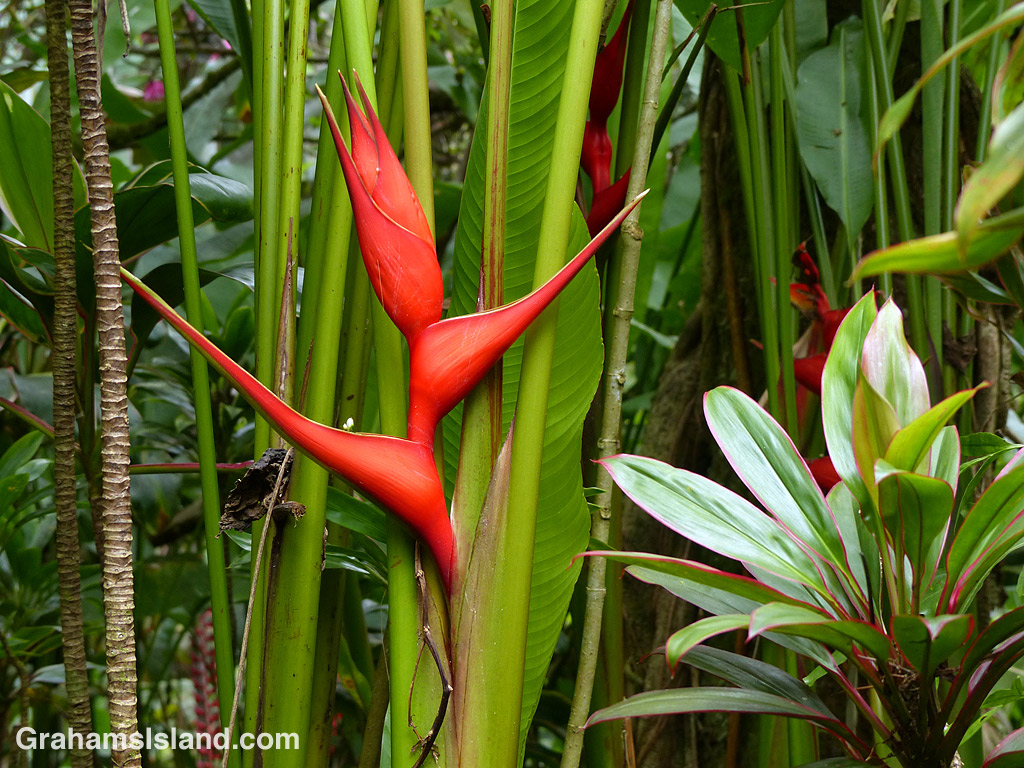
This week’s Friendly Friday challenge theme is ‘Floral.’ (See more responses here.) I thought a few photos from my last visit to Hawaii Tropical Botanical Garden (with Terri from Second Wind Leisure Perspectives) would fit the bill.

The top photo is an orchid, Catatante ‘Pacific Sunspots.’ In the middle is another orchid, Wilsonara Aloha Sparks ‘Halloween.’ Below is a heliconia against a backdrop of tropical foliage.

For more information about Hawaii Tropical Botanical Garden, go to htbg.com.

Mooring buoy

At the northern end of Kealakekua Bay, near Captain Cook’s monument, is an area that has good snorkeling. People can hike down to the place or take a boat trip there with one of several companies.

Many of the tour boats are small runabouts. The skipper can just drift with the boat in the bay while the clients snorkel. The largest boat is Fair Wind II, a catamaran that features has two 15-ft waterslides and a high-jump platform! This is not a boat suited to drifting around a bay lined with shallow, coral rich waters and crowded with snorkelers. So they have a mooring buoy in the bay.

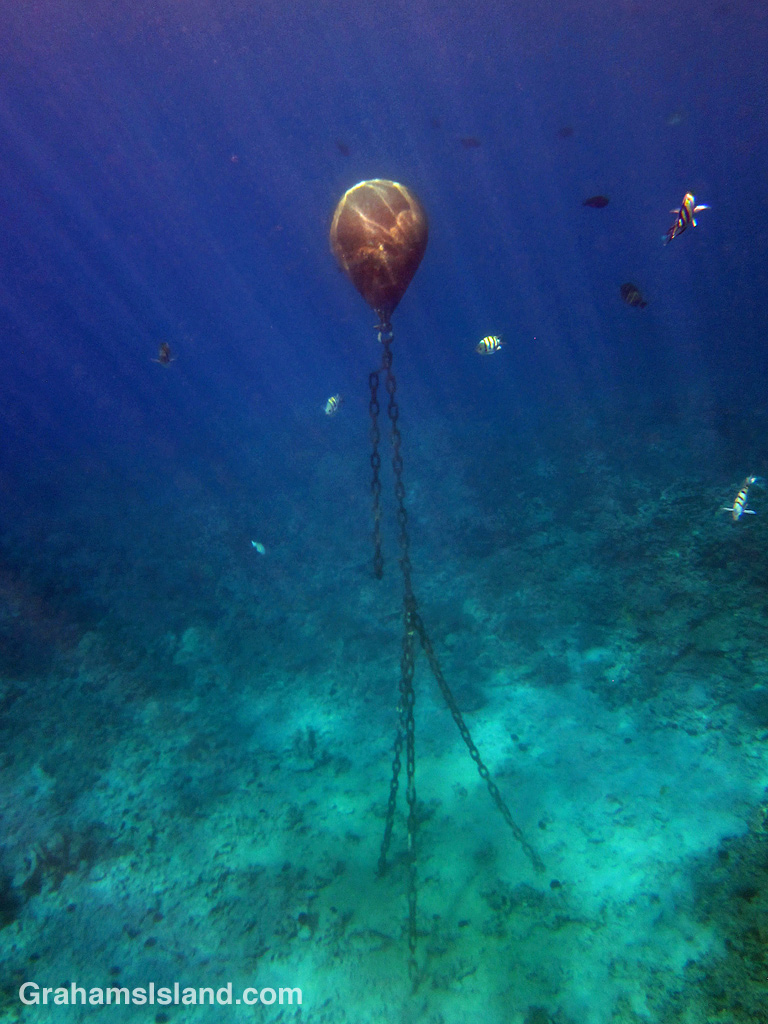
Mooring buoys are basically floating balls with a length of chain tethering them to something heavy, usually a large concrete block. The chain is long enough to allow for the ebb and flow of the tides so that the buoy is always available for use. The idea is that a boat ties a line to the buoy, which holds it in a relatively restricted area so that it doesn’t crash into underwater obstructions, land, or other boats.

The Fair Wind II buoy in Kealakekua Bay is different in that its length of chain keeps it permanently below the water, regardless of the state of the tide, as the photo shows. The idea is that when the boat arrives in the bay, a crew person jumps overboard with a mooring line and attaches it, not to the buoy, but to the length of chain hanging below the buoy. The line is then hauled in and the boat is secure and held in place. I think that the reason for this slightly different arrangement is that there’s no buoy floating on the water day in, day out, regardless of whether it’s being used or not. In this historically important bay, this might be regarded as an unwelcome sight.

The last time I was there, the eerie appearance of the buoy was augmented by movement of the water causing the loose length of chain to clank, loudly, against the fixed length. It was a scene straight out of scary movie where the ominous quiet is shattered by the terrifying … well, you get the idea.

Posted in response to this week’s Friendly Friday challenge on the theme of ‘Ebb and flow.’ See more responses here.

For more information about Fair Wind II, go to fair-wind.com/.

Keck 1 and 2 telescopes

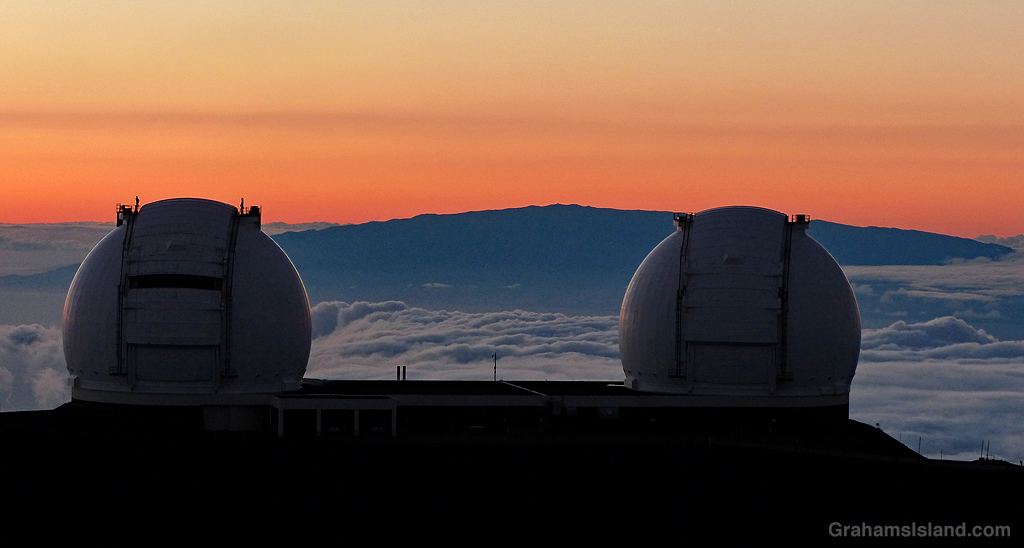
This week’s Friendly Friday challenge theme is ‘Twins.’ (See more responses here.)

These are the two telescopes of the W. M. Keck Observatory on Mauna Kea. Keck 1 began operation in November, 1990, while Keck 2 made its first observations in October 1996. Each telescope’s 10-meter primary mirror is made up of 36 segments, hexagonal in shape. Not that these segments are small themselves. Each one is 1.8 meters wide and weighs half a ton.

The telescopes can accommodate a wide variety of instruments, such as cameras and spectrometers, and are considered to be the most scientifically productive in the world.

For more information about the W. M. Keck Observatory, go to www.keckobservatory.org.