
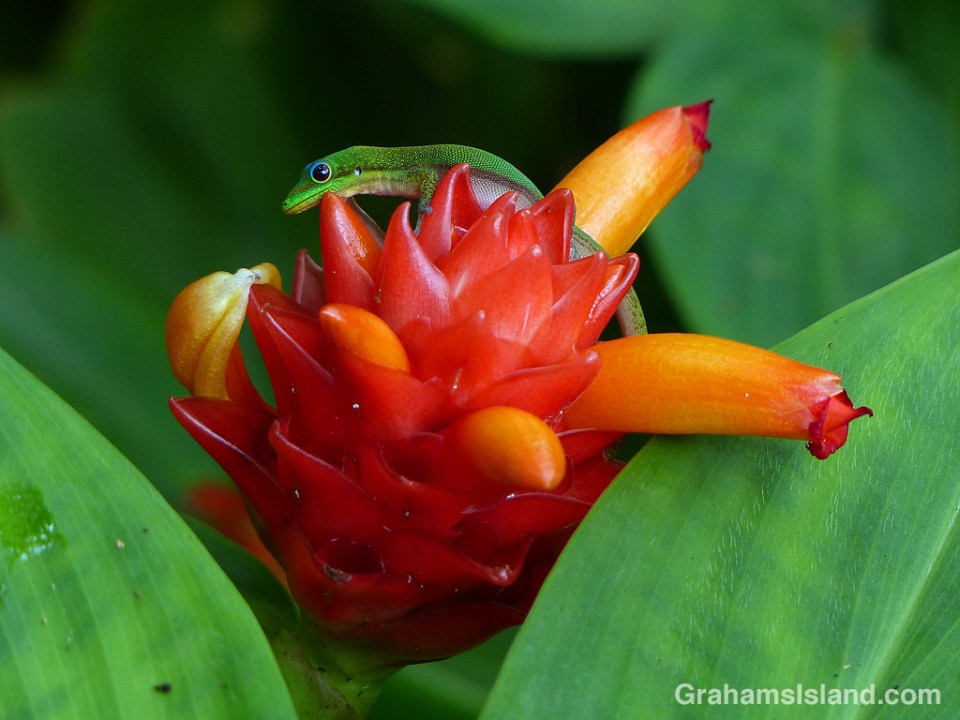
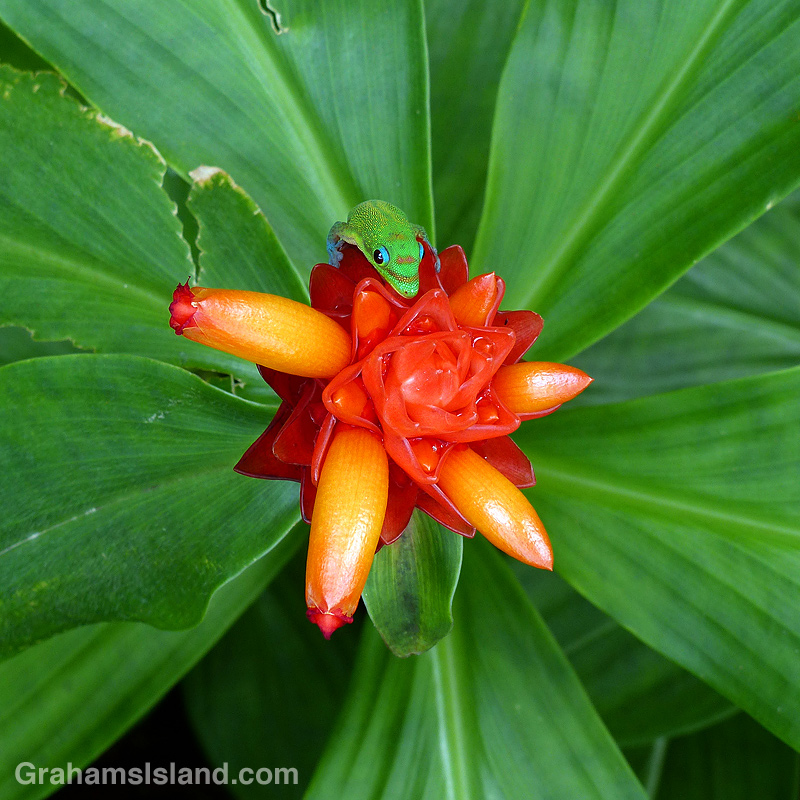
 Costus curvibracteatus is also known as orange tulip ginger and hails from Costa Rica and Panama. In these photos, the overlapping red parts are the bracts and the longer orange tubular forms, emerging from between the bracts, are the flowers. However the bracts can also be orange, and the flowers a similar length as the bracts.
The plant was being explored by a gold dust day gecko, which was likely searching for something sweet or possibly seeking water trapped in the bracts.
This one was at Hawaii Tropical Botanical Garden. For more information about Hawaii Tropical Botanical Garden, go to htbg.com.

 Osmoxylon lineare is also commonly known as miagos bush. It hails from the Philippines and grows to about six feet high. This plant is interesting for its spiky foliage and because the distinctive creamy-white flowers and dark fruits can be seen on the same plant at the same time.
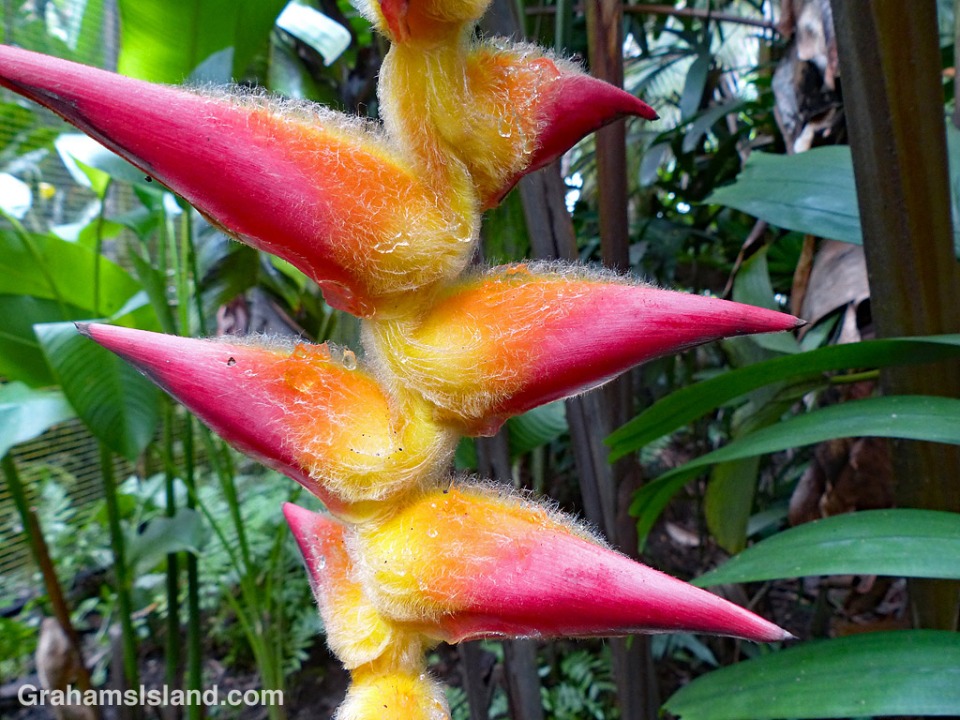
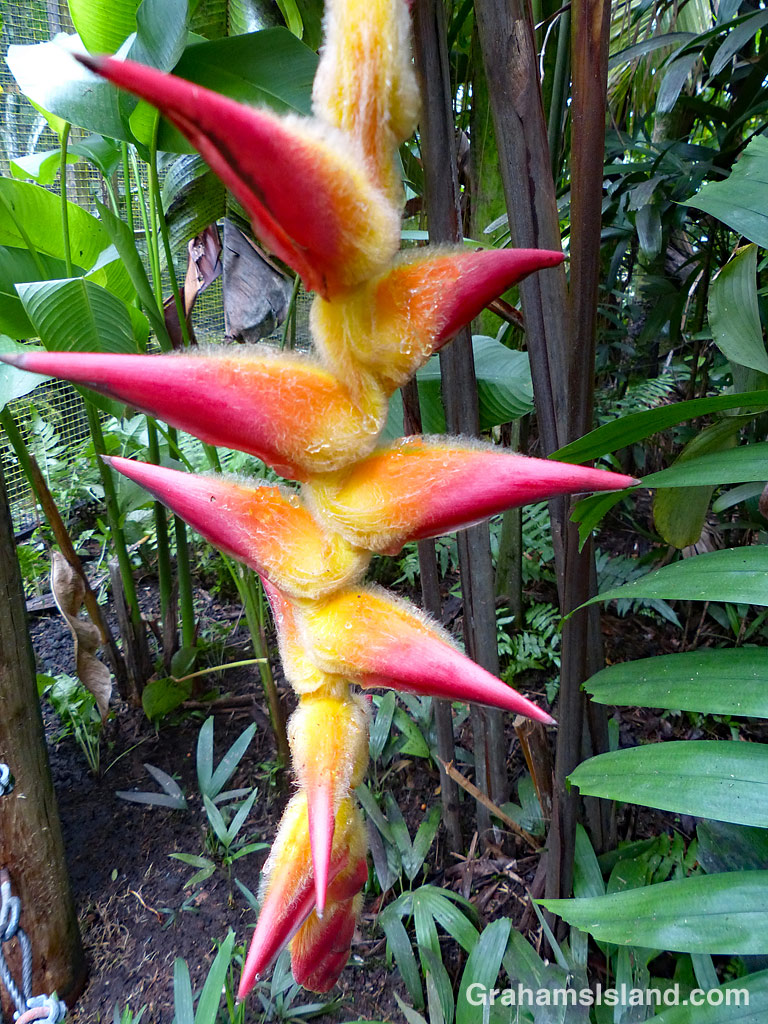 Let’s face it, heliconias are weird looking. Long hanging flowers, bit sticking out all over, neon colors. This heliconia is Heliconia caribaea X Bihai ‘bubblegum’ and it’s notable, not just for the bright pink, yellow and orange, but for the soft, downy texture on the flower.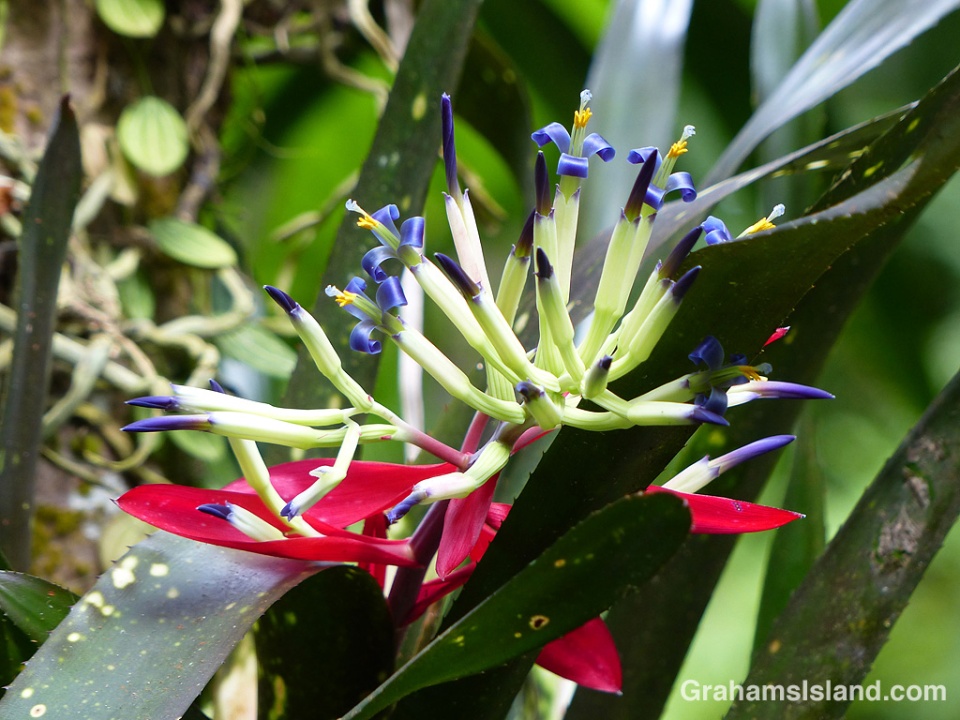
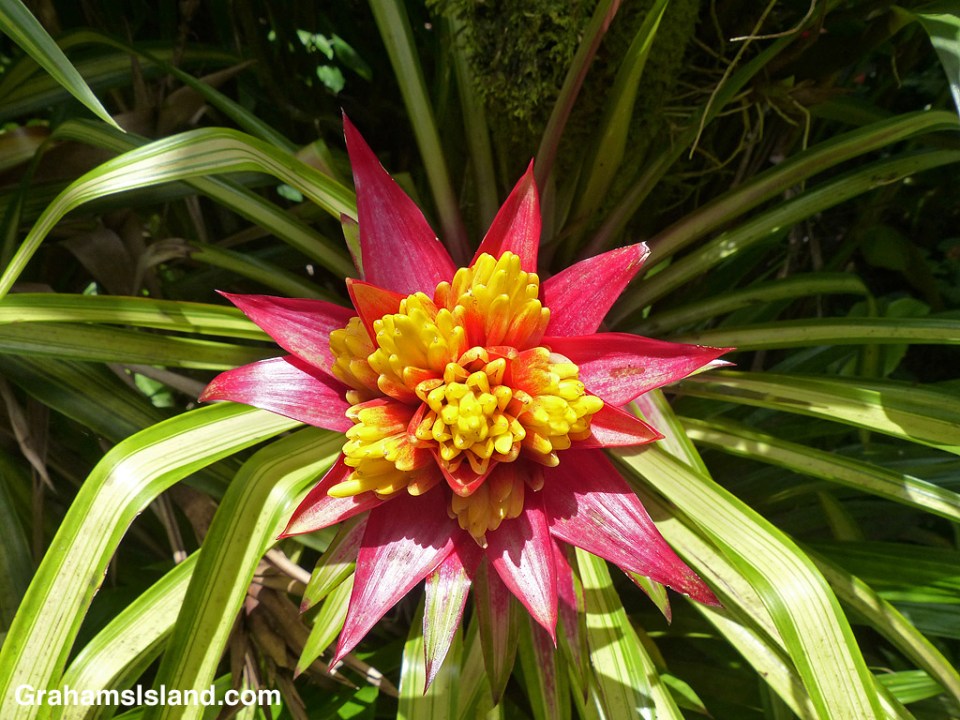
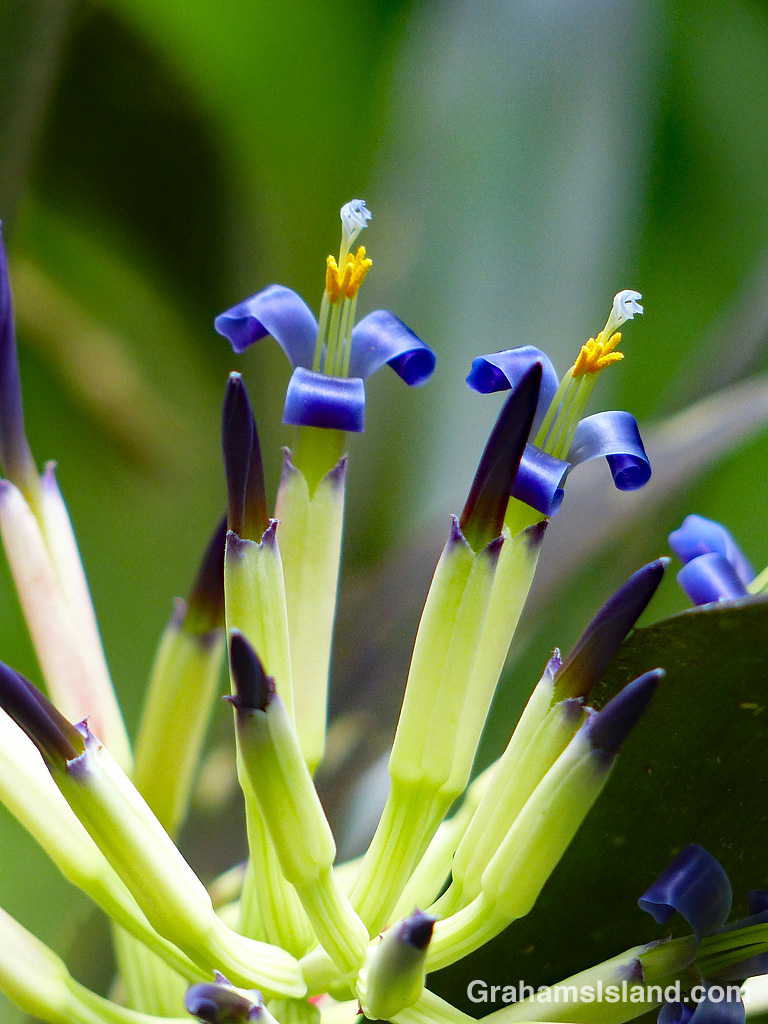 I took these photos on a recent visit to Hawaii Tropical Botanical Garden. The plant looked somewhat familiar to me, but I couldn’t put a name to it. After rummaging through the garden’s plant database, I finally identified it as billbergia nutans. That name sounded even more familiar and a quick check revealed it was a plant I grew in my (tropical) garden in Washington State. There, it was an annual or one to be overwintered indoors. Here, it grows year-round.
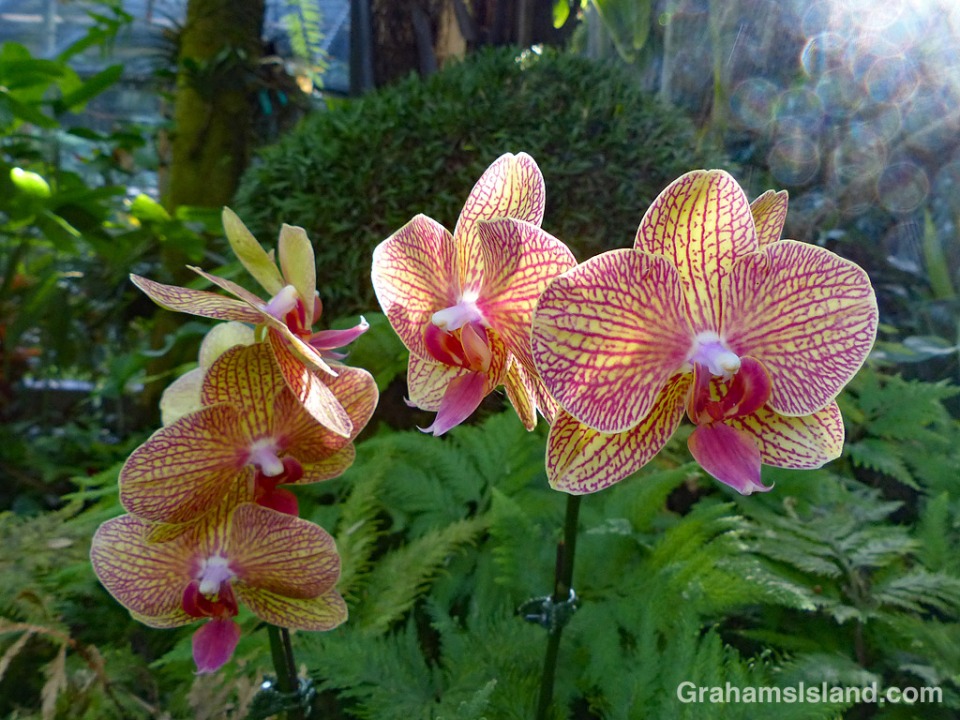
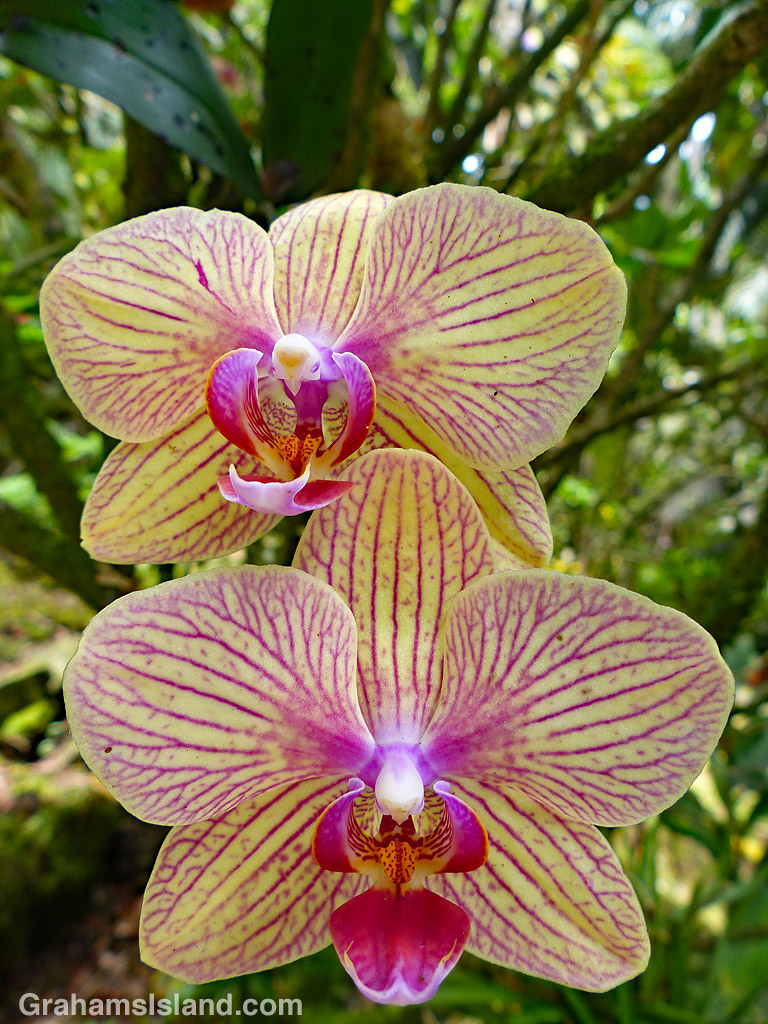 Phalaenopsis orchids are also known as moth orchids because the flower shape resembles a moth in flight. They’re very popular with growers because they’re relatively easy to care for and bloom for a long time. This popularity has also resulted in growers producing numerous hybrids of this orchid.

