Tag Archives: Hilo

Rainbow Falls

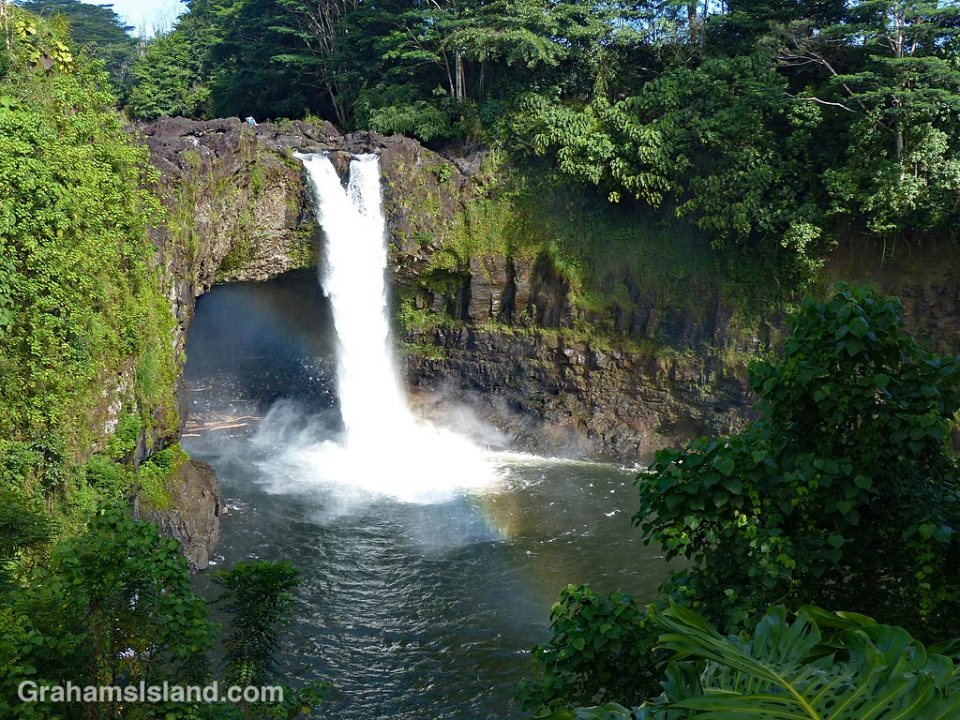
Rainbow Falls and rainbow

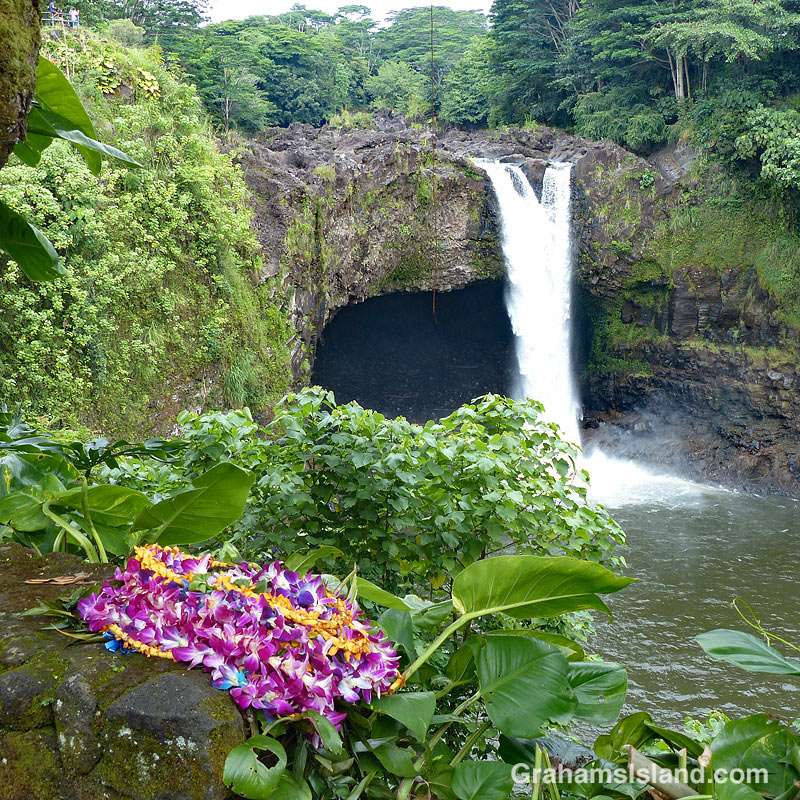
Rainbow Falls and offeringRainbow Falls are located in Wailuku River State Park, in Hilo. They get their name from the fact that, in the mornings, rainbows often form in the mist from the falls (above).

Center, someone left an offering, possibly to Hina, mother of the demigod Maui, who is said to have lived in the cave behind the falls.

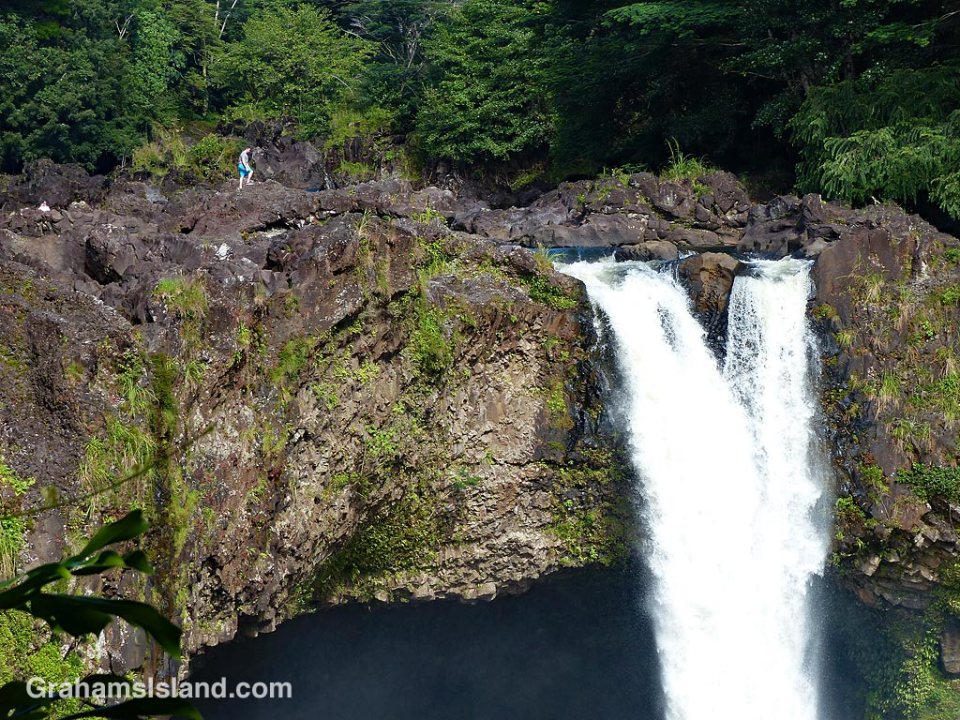
And below, someone who has inadvertently walked past the 83,000 ‘Danger’ and ‘Warning’ signs to wander around at the top of the falls. Flash floods occur often and people die here every year.

Rainbow Falls

Abstracts: Rainbow Falls banyans

Abstracts-Rainbow Falls Banyans

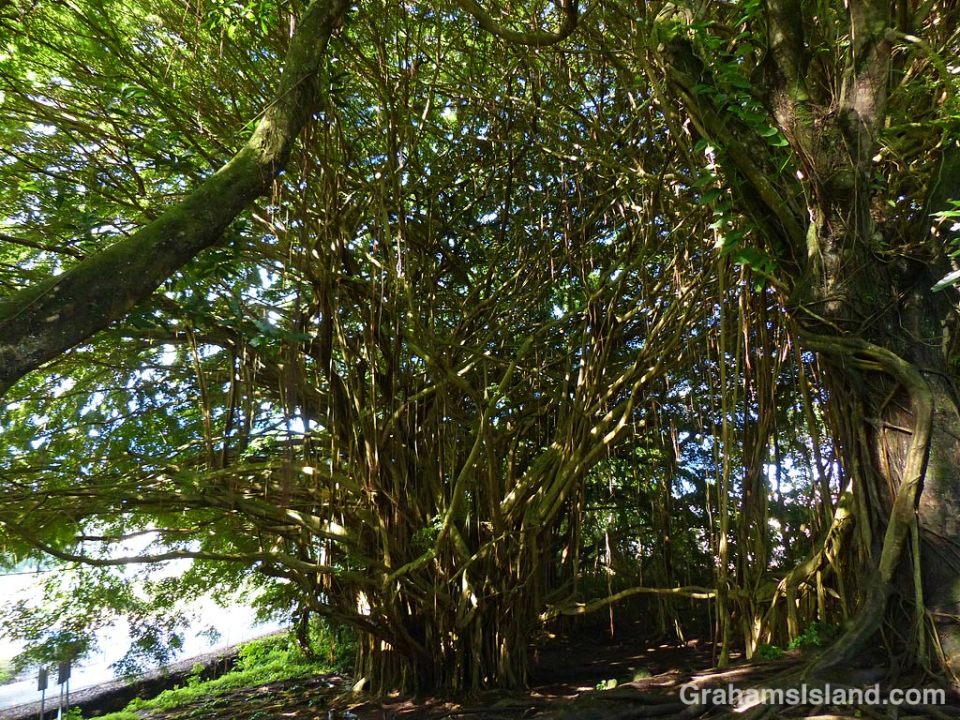
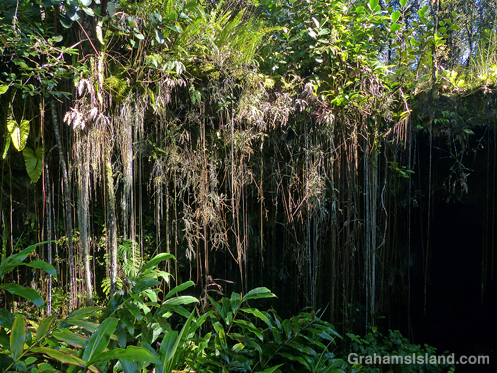
Abstracts-Rainbow Falls BanyanThe main attraction of Wailuku River State Park, in Hilo, is Rainbow Falls. But at the top of the hill are these huge banyan trees.

Banyans are not just a huge sprawl of branches, but a sprawl of roots, too. As epiphytes they begin life growing on other trees, from seeds dispersed there by birds. Over time, they send roots down to the ground, known as prop roots, which help support the mass of branches.

Banyan trees are also known as strangler figs because their roots and branches will ultimately overwhelm the host tree and kill it. Eventually, the dead host will decay and leave a hollow center to the banyan tree that’s left.

By continuing to send down prop roots, banyans grow out as well as up. Very old trees can cover a huge area. For example, the Great Banyan Tree in Kolkata, India is more than 250 years old. Its covers around four acres and has more than 3,500 prop roots. Here in Hawaii, the largest banyan grows in Lahaina on Maui. Planted in 1873, it now has 16 main trunks and covers two thirds of an acre.

The Rainbow Falls trees aren’t that large, but they’re coming along nicely.

Kaumana Caves

Kaumana Cave entrance

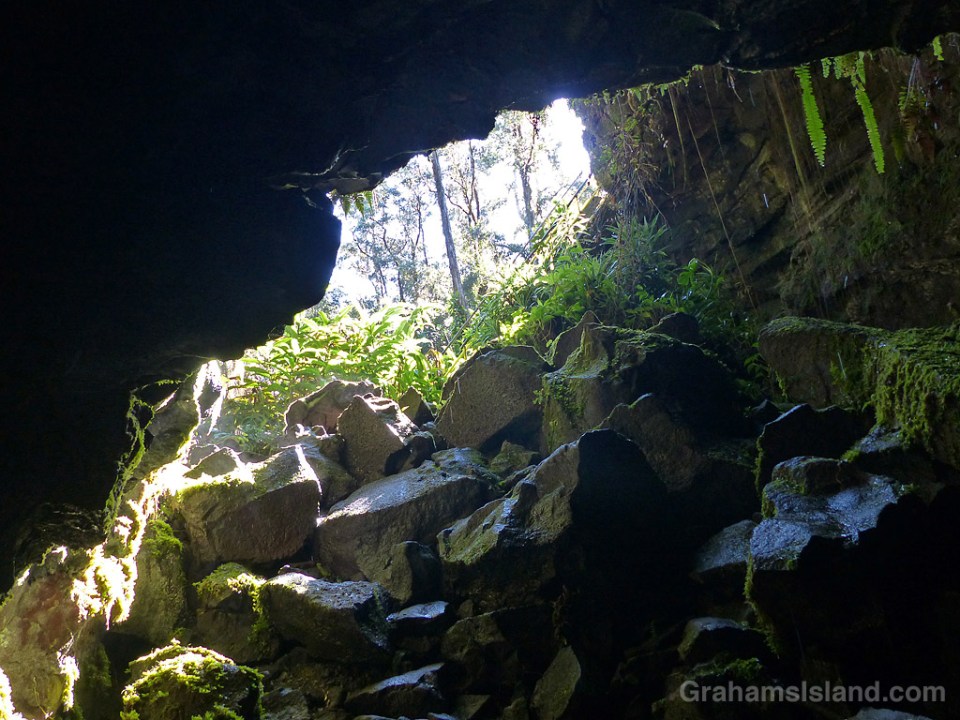
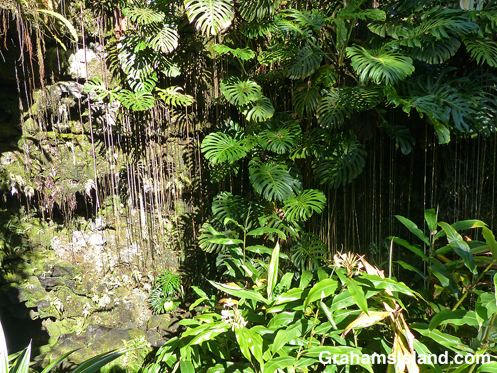
Kaumana Cave access stairsKaumana Caves State Park is a small park west of Hilo. Besides the usual park facilities, the main attraction is the caves. The caves are actually a lava tube, created by a flow from Mauna Loa in 1881. They’re accessed through the large opening where a section of the tube collapsed, so the two caves are at opposite ends of this opening.

My understanding is that the caves go on for quite a way, but one is not supposed to go much beyond the entrances because it is, officially, private property after that. It’s also very dark and claustrophobic, so that was enough for me.

The photos show – Above: A view from mouth of the southern cave; Middle: The staircase down to the caves; Below: Foliage that’s grown in the open portion of the tube. The cave entrances are the dark areas at the edge of these photos.

Kaumana Cave tropical foliageKaumana Cave foliage

Cheerful Emu

Emu

This cheerful looking emu is a resident of Pana‘ewa Rainforest Zoo & Gardens, near Hilo. What strikes me most though is how this photo is just like looking in a mirror. I mean, the hair, the beak …

Posted in response to this week’s WordPress Photo Challenge ‘Smiles.’

For more information about Pana‘ewa Rainforest Zoo & Gardens, go to hilozoo.org.

Signs: Don’t tease the tiger

This sign can be seen at Pana‘ewa Rainforest Zoo & Gardens in Hilo, and that’s Sriracha pacing behind the fence. I post this because I really want one of those signs. It would be great, give local kids something to think about, maybe even cause the neighbor’s dogs to think twice before pooping in the yard.

The only thing that could improve this sign is to add, ‘or we’ll throw you over the fence.’

For more information about Pana‘ewa Rainforest Zoo & Gardens, go to hilozoo.org.

Sriracha the Bengal tiger

Sriracha, a female Bengal tiger, paces at Pana‘ewa Rainforest Zoo in Hilo.

This week’s WordPress photo challenge is to choose your favorite photo taken in 2017. I’m going with a photo that I haven’t posted before (though below I offer a few of my favorites that have run).

This is Sriracha, a female Bengal tiger and cousin of Tzatziki, a white male tiger. Both can be found at Pana‘ewa Rainforest Zoo in Hilo. What I like about this photo is those huge paws, the quiet movement, and the sense of great power that could be uncoiled at any moment.

For more information about Pana‘ewa Rainforest Zoo & Gardens, go to hilozoo.org.

As far as favorite photos already posted are concerned, I offer a few here:

Top. A gold dust day gecko drinking from a bird of paradise flower is a blaze of color (posted here).

Second. This photo captures the awesome spectacle of the lava firehose from Kilauea Volcano pouring into the ocean (posted here). Currently, while the flow is still active, lava is no longer entering the ocean.

Third. I was happy to snap the moment a passion vine butterfly laid an egg (posted here). This was taken on the same day as the gecko photo above, so a banner day for me.

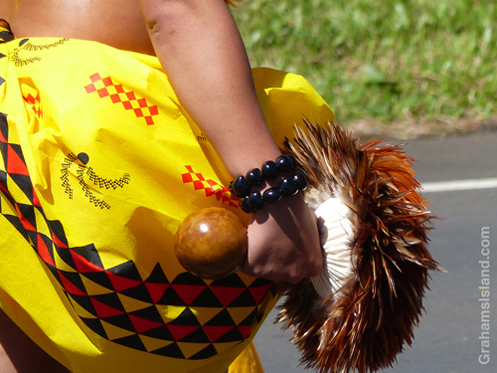
Fourth. I like all the photos in this post for their color and how they capture something of this most Hawaiian of dance (posted here).

Finally, I love this gargantuan blenny for its name, and was very pleased to get this photo, since the fish is apt to dart away and the shallow water was rocking (posted here).
Tropical coast

A view of the coast north of Hilo on the Big Island of Hawaii

One things I like about the east side of the Big Island is the variety of places where one gets a peek of the ocean through tropical foliage. Sometimes this can be from the main highway that circles the island (the belt highway). More often, it’s from a smaller road.

This view of the Pacific is from a narrow, twisty stretch of the original belt highway, north of Hilo.