Tag Archives: Honaunau

Raccoon Butterflyfishes

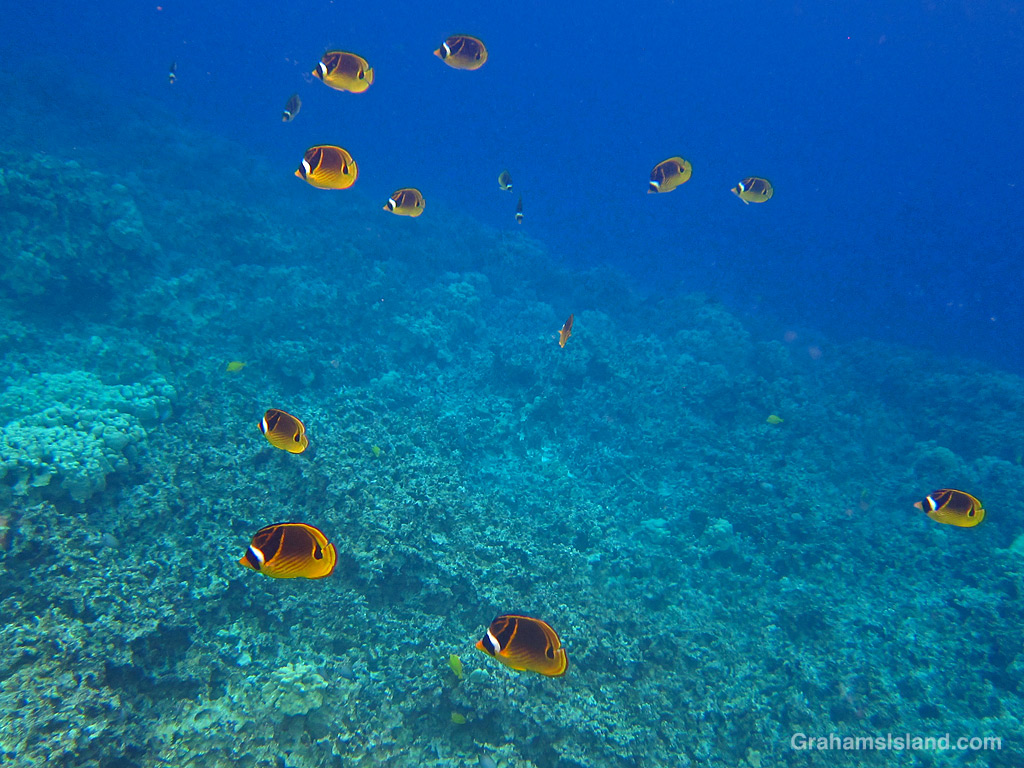
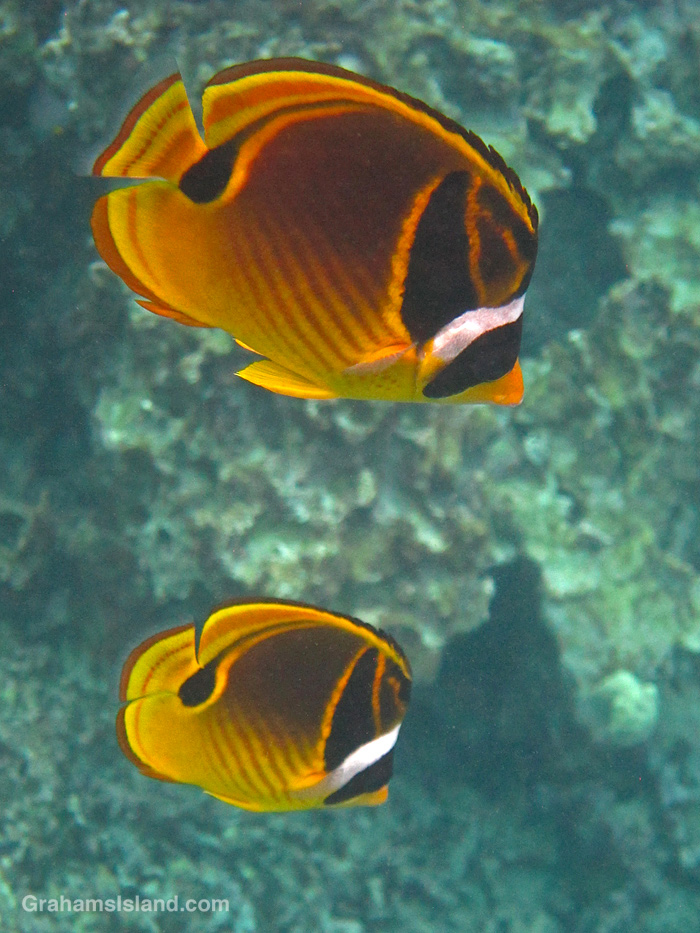
Racoon Butterflyfishes in the waters of Honaunau Bay (Two Step), Hawaii

Last week, my wife and I fled Hawi in the wee hours of the morning to avoid being trapped at home by the Ironman race. The cycling portion of the race goes past our driveway and the road was closed from 7:00am to 3:00pm.

Our first destination was Two Step, more properly known as Honaunau Bay. Arriving before 6:30am, we were the first people there and had the bay to ourselves for a short while. It’s a great spot for snorkeling as it’s generally fairly calm, and the area is a marine reserve, which means the various kinds of fishing aren’t allowed. Experience has shown that fish in marine reserves are less skittish, which makes them easier to see and photograph.

These Raccoon Butterflyfishes are a good example of that. I see them elsewhere, hanging in the water, but if I approach they ease away from me. At Two Step, the fish stay where they are. I’ve had one or two come right up to me, presenting a different photographic challenge as they butt my camera housing.

This small school was drifting above the steep slope bordering the deeper part of the bay.
I think I can make it

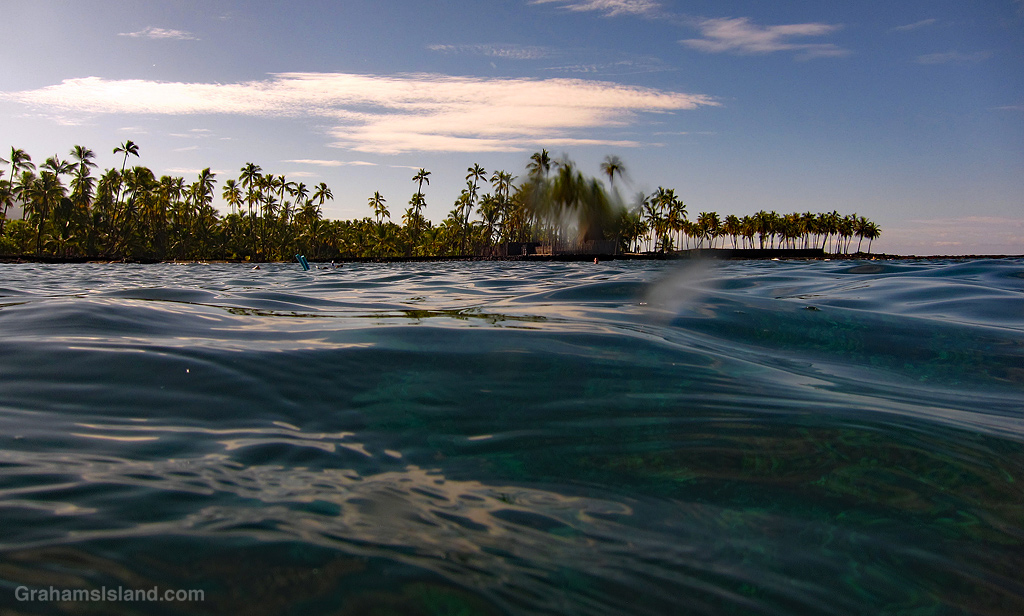
Pu'uhonua o Hōnaunau National Historical Park seen from the water

This week’s Sunday Stills challenge theme is ‘Celebrations.’ See more responses here. Since I rarely take photos of people, the usual options for this one were off the table. So I’ve gone with some photos from Pu’uhonua o Hōnaunau National Historical Park.

This site is also known as Place of Refuge and it represented guaranteed forgiveness for those who had broken kapu. The park’s website (here) notes, “Kapu (sacred law) regulated fishing, planting, and the harvesting of other resources. Any breaking of kapu disturbed the stability of society, and the punishment was often death. Any fugitive who had broken kapu could seek refuge and forgiveness within the walls of the Puʻuhonua.” The refuge is bordered by a huge L-shaped wall on land and by the ocean on the other sides.

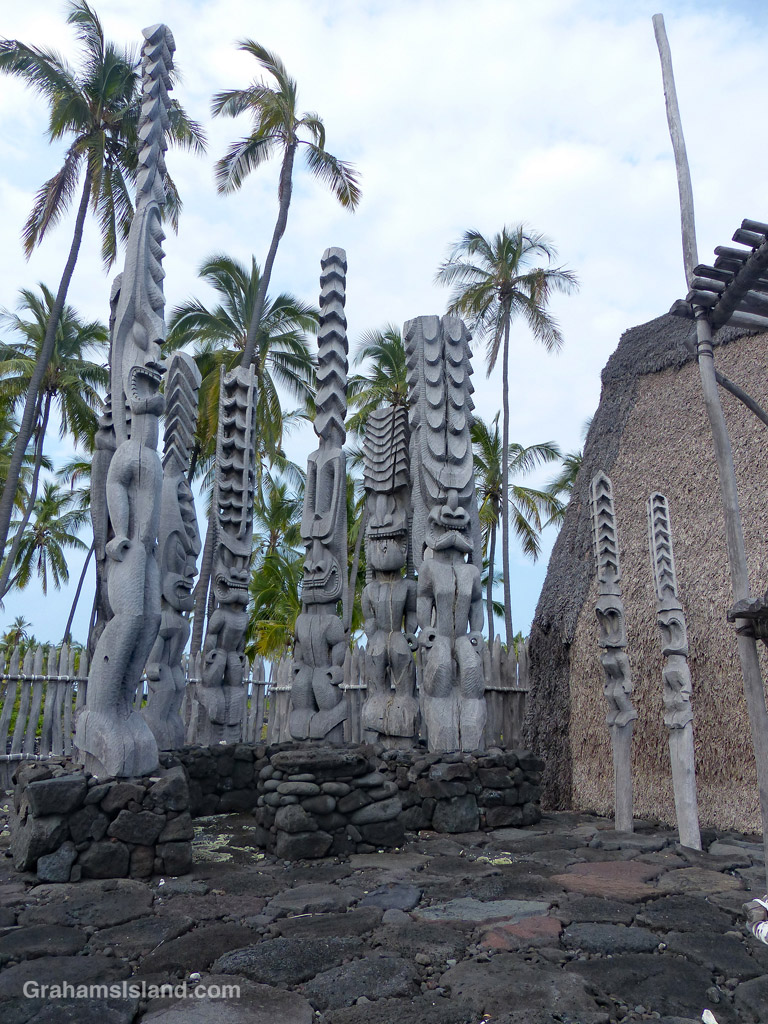
Hale o Keawe at Pu'uhonua o Hōnaunau National Historical Park.

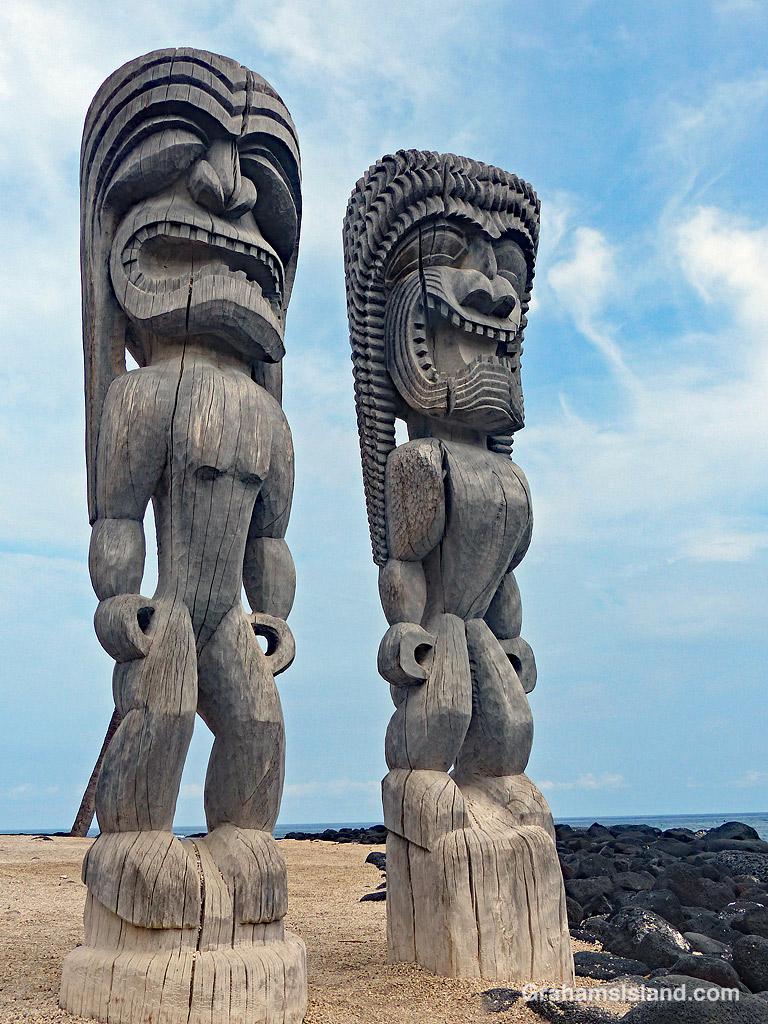
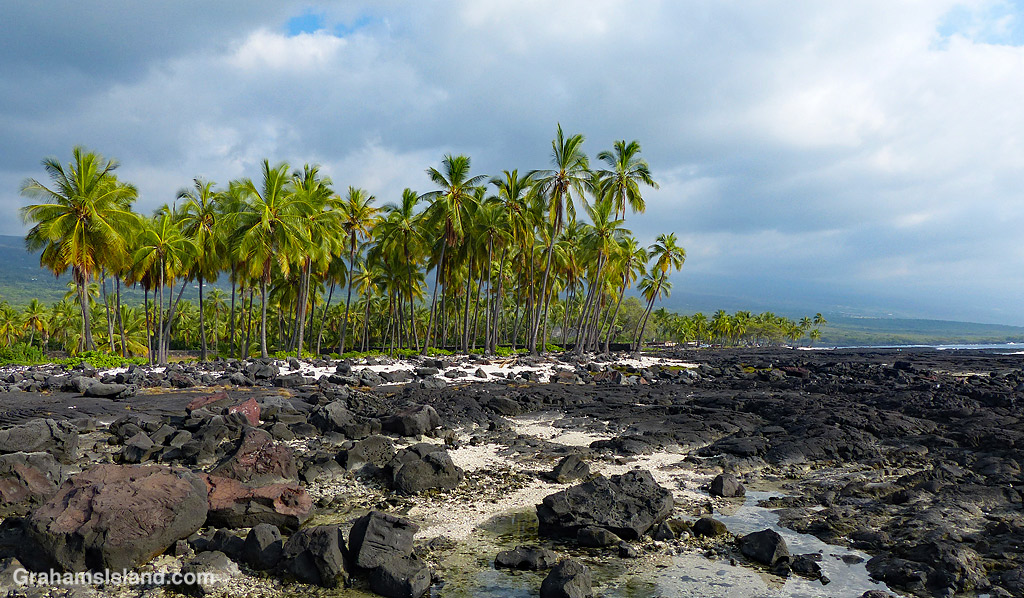
I imagine some such unfortunate swimming across Honaunau Bay. The palm trees look welcoming, but this is a sacred place, home to Hawaiian royalty, and to important ceremonial sites. One of these is Hale o Keawe, situated at the northern end of the wall, a place of powerful mana, or divine power. It is home to many ki’i, representations of “the akua, or the multitude of Hawaiian gods, deities, and venerated ancestors.” The refuge is on the other side of the Hale.

These ki’i would look down on the miscreant swimming toward them, growing in size as they got closer. But so too would the welcoming palm trees and though it is a rocky shore, a few cuts and scrapes would be a small price to pay for salvation.

Palm trees at Pu'uhonua o Hōnaunau National Historical Park in Hawaii

Once ashore, forgiveness was guaranteed and the person was free to reenter society and rejoin family and friends, who would no doubt celebrate the return.

Statues at the Painted Church at Honaunau

Statues in the garden below the Painted Church at Honaunau.

Another post on the WordPress photo challenge theme of ‘serene.’

I’m not a religious person, but I’ve always enjoyed visiting churches. The interiors are usually calm and quiet, and the graveyards and grounds outside have their own serenity. These statues can be found in the garden below the Painted Church at Honaunau.

For more information about the Painted Church at Honaunau, go to thepaintedchurchhawaii.org/.

The Painted Church at Honaunau

The Painted Church at HonaunauBible scenes on the walls of the Painted Church at Honaunau
I’m not a religious person, but I’ve always enjoyed visiting churches. I grew up in England and the stone churches had a calm ambience with cool, quiet interiors. Usually, there was some feature of note, even in the smallest church – carvings on the pew ends, a font dating from Norman times, the tomb of some ancient notable under the floor.

The Painted Church at Honaunau, on the Big Island, is different from those churches, more fitting to its setting. A wooden structure, it dates back to 1899. Father John Velghe moved much of a previous structure to its present site and had it repaired and added to. A self-taught artist, he then painted the interior including several scenes from the bible on the walls.

What I like is how colorful the interior is, with a real tropical feel. But it too has that stillness that I associate with churches and an ambience all its own.

For more information about the Painted Church at Honaunau, go to thepaintedchurch.org.