Yesterday, I posted photos from the latest of a series of swells rolling in from the northwest. After the last one, and before the next, I got in the water for a swim. It wasn’t great. Visibility was poor and the swells were still a good size.
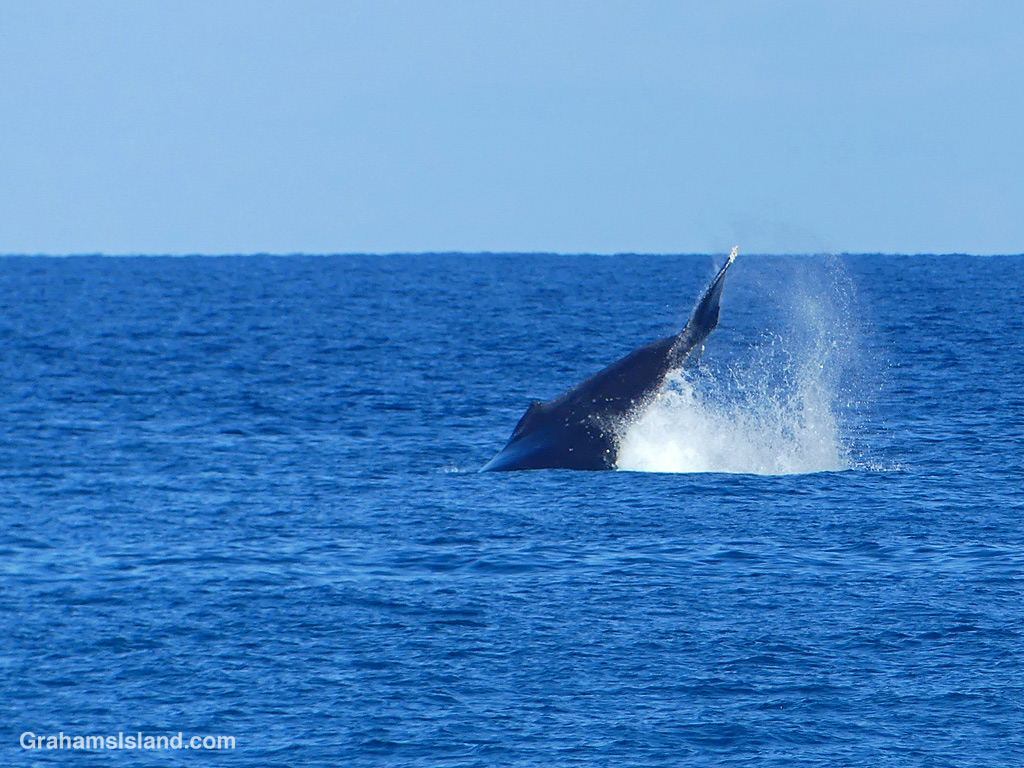
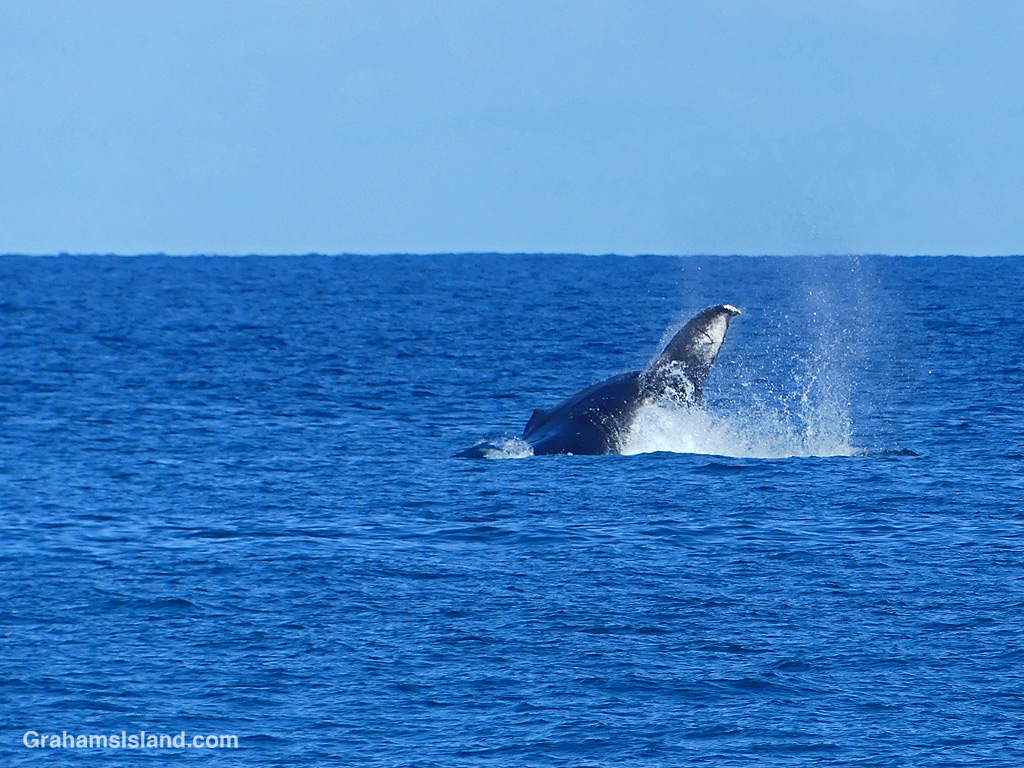
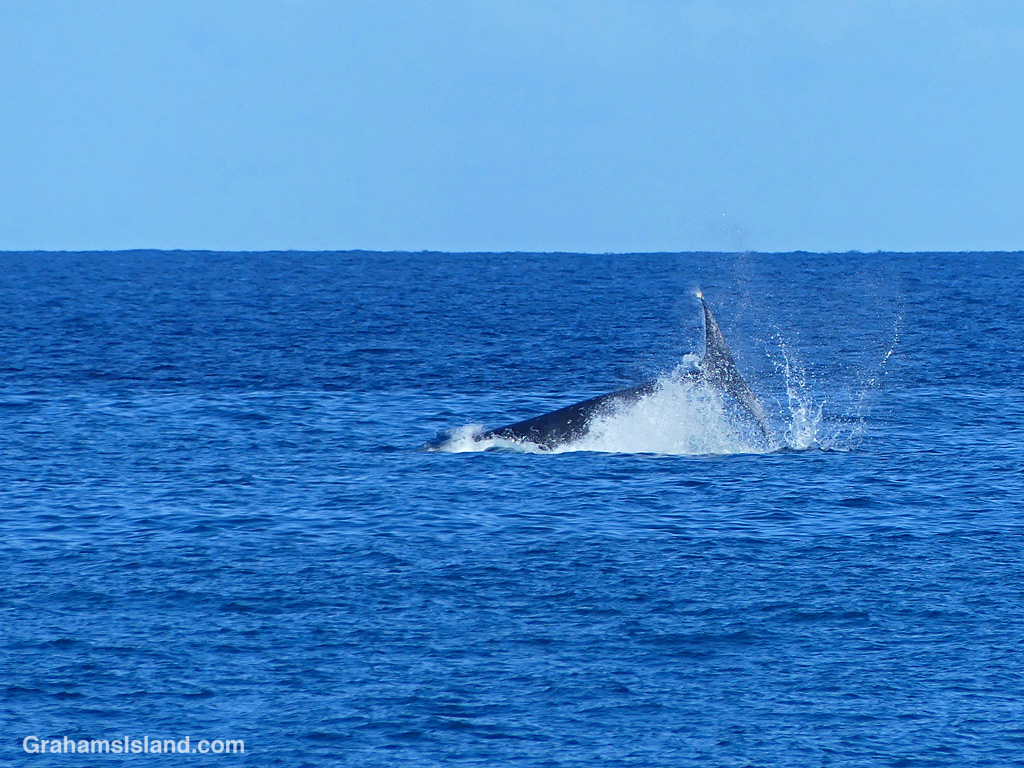
The highlight of the swim was drying off afterwards and seeing several Humpback Whales active not far offshore. There were a few good breaches, which naturally escaped my camera, but I did get photos of some vigorous tail slapping, which was fun to see.
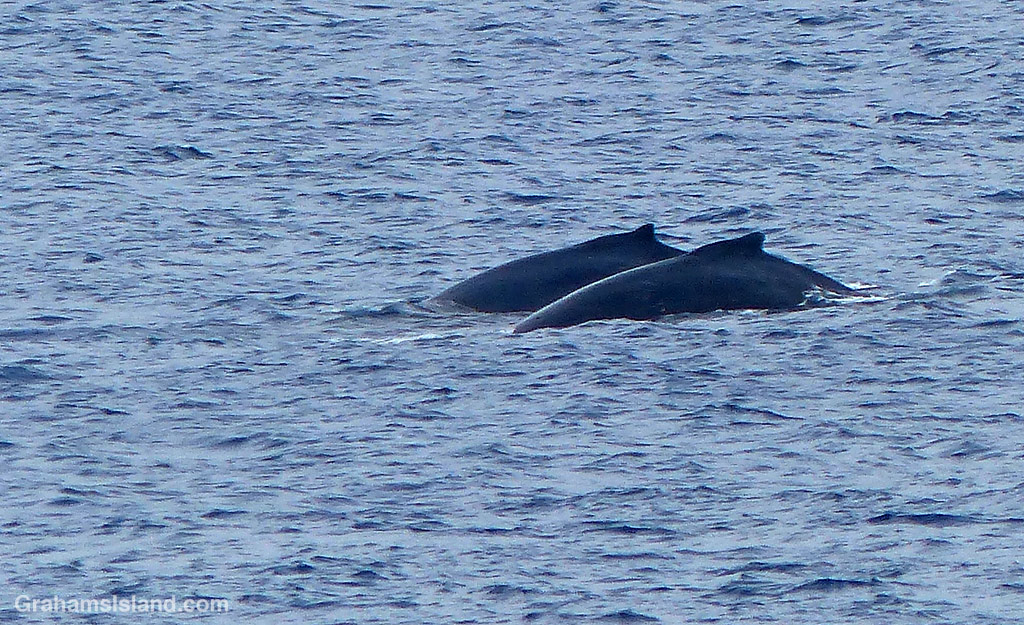
The humpback whales are back in force as we approach the middle of the whale watching season. I’ve been seeing them regularly on my walks along the coast. These two adults were making their way westward in no particular hurry.
These tables were at a restaurant on the coast in front of the Hilton Hotel. I noticed that each table had a small pair of binoculars on them, probably because we’re in the Humpback Whale season. I thought that was a nice touch. I don’t know what the food’s like though.
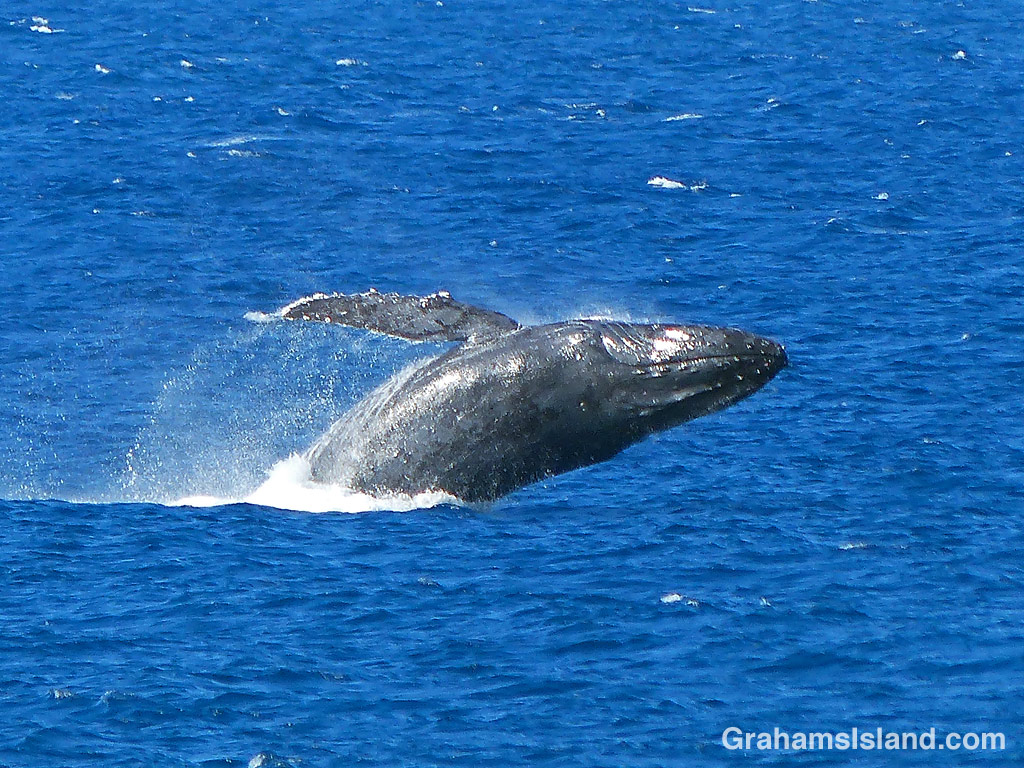
This is a follow up to yesterday’s post. These were taken just a few minutes after yesterday’s photos. It might well be the same whale, but here, it had moved along far enough that I was no longer shooting straight into the sun. The blue of the ocean comes out and my eyes also had a chance to recover!
Last weekend was the third and final of this year’s Sanctuary Ocean Count of humpback whales. Each year, counts are conducted between 8 a.m. and 12:15 p.m. on the final Saturday of January, February, and March. These months are the height of whale season in Hawaii, though whales can be seen here from November through April. The counts happen on Oʻahu, Hawaiʻi and Kauaʻi and are coordinated with similar events on Maui. Volunteers gather at sites around the islands to watch for whales and count their numbers and activities. This information is used to help researchers track how many whales come to Hawaii to calve and mate. Over the last few years, numbers have been in decline, but it’s not clear whether that’s due to drop in the whale population or a change in their migration patterns.
Volunteers for the counts are mostly local people, but more visitors are taking the opportunity to get involved while they’re here. This year, because of Covid restrictions, only site leaders took part in the count, but that will hopefully not be the case next year. I’ve done several of these counts and it’s fun to set aside the time to sit and watch the humpbacks. Sometimes they just cruise by, but often they splash and leap out of the water, putting on a show that’s wonderful to watch.
Posted in response to Becky’s April Squares challenge theme of ‘Bright.’ See more responses here. Also posted in response to this week’s Sunday Stills challenge theme of ‘Volunteering.’ See more responses here.
This is the first of a pair of similar posts for Becky’s April Squares challenge theme of ‘Bright.’ (See more responses here.)
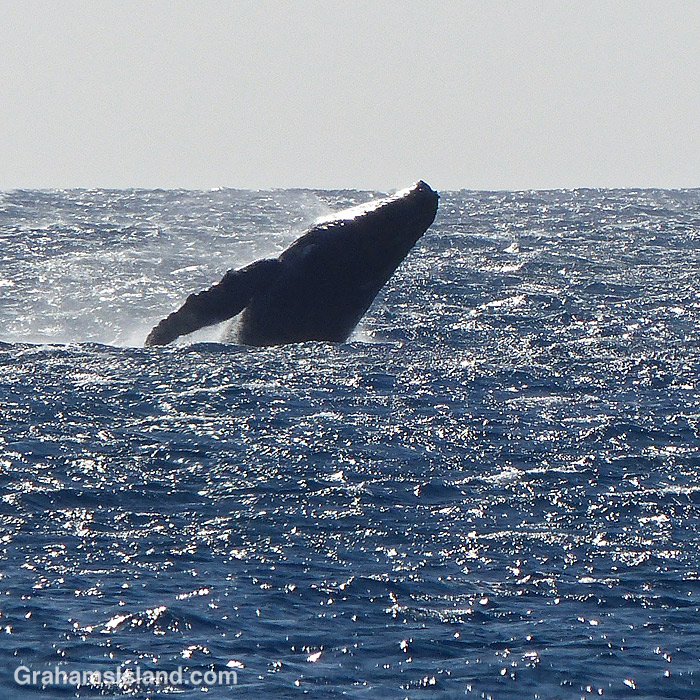
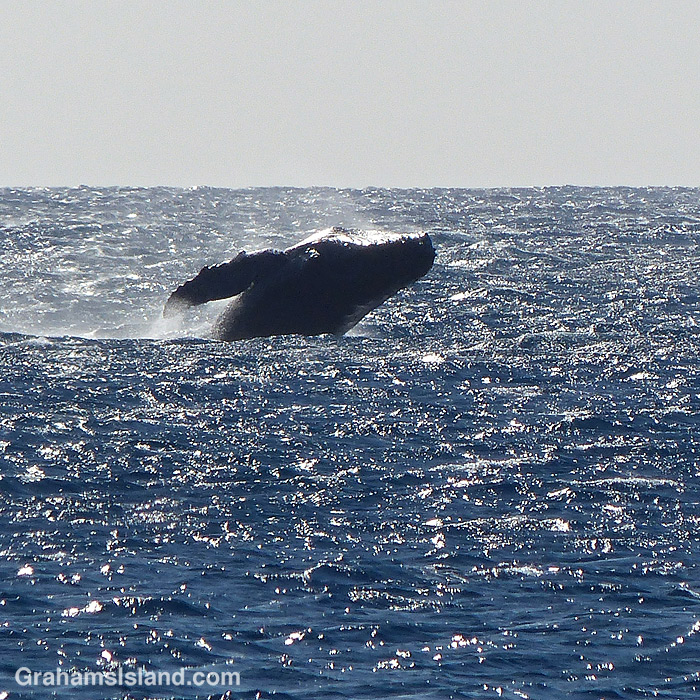
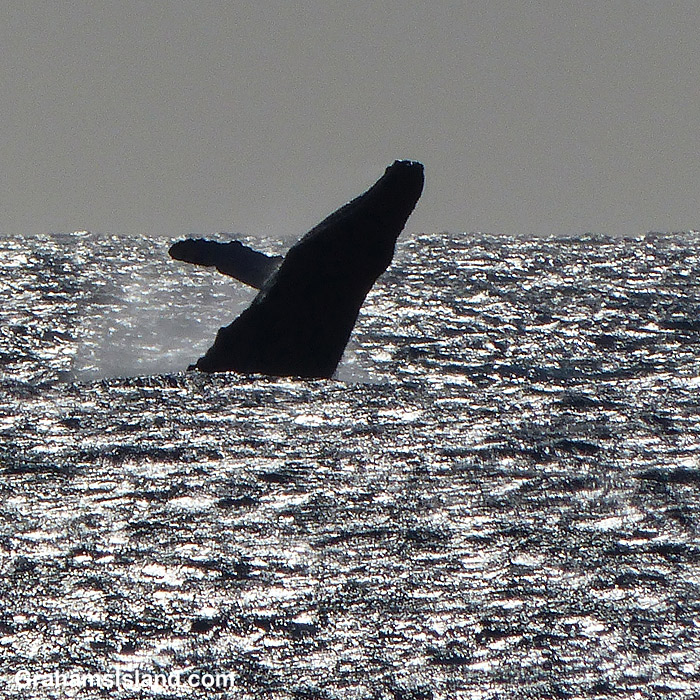
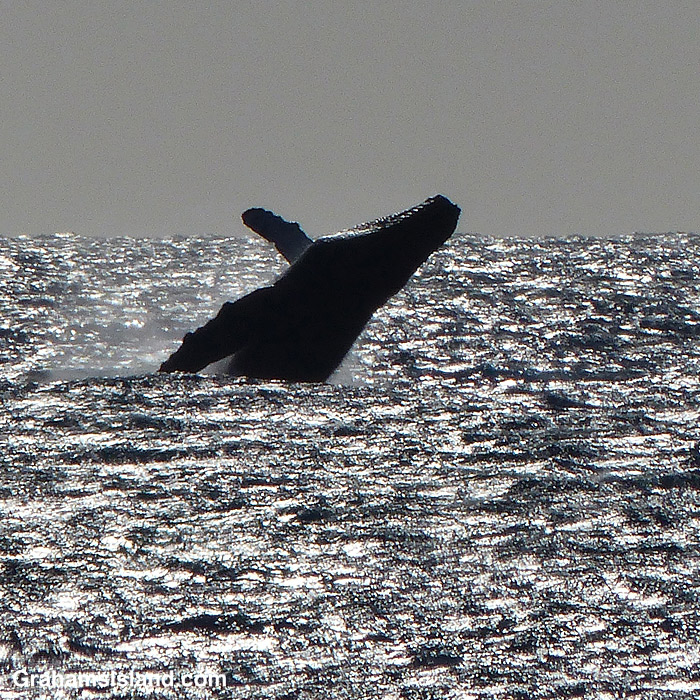
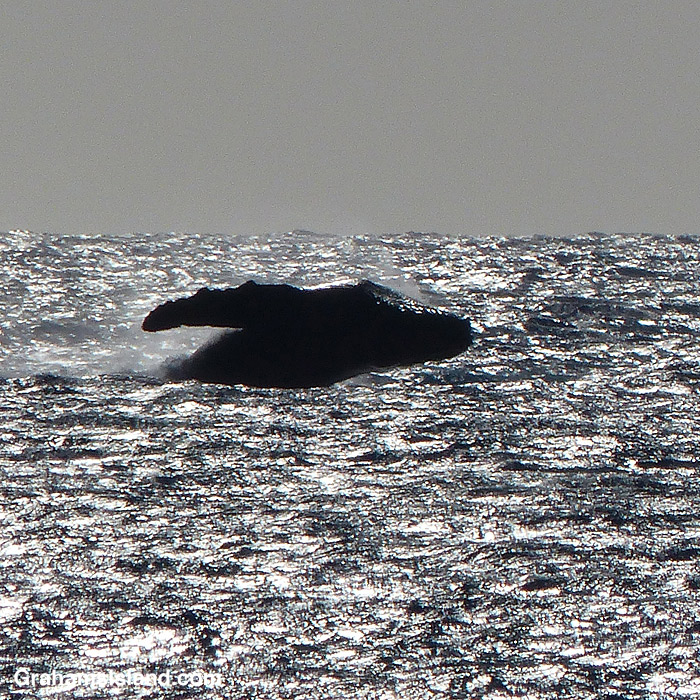
Early last month, I was nearing the end of a walk on a trail along a west-facing shore in North Kohala. I looked out toward the late-afternoon sun sparkling on the water and thought I saw a paddleboarder. A moment later, the paddleboarder fell into the water, then miraculously emerged again. I realized this was not a person, but a humpback whale slapping a pectoral fin. The whale was close enough to shore that the long fin appeared human-sized.
I moved to the shoreline, sat on a rock, and got my camera ready. The whale moved on underwater. So I returned to the trail, looked back one last time, and saw a different whale breach a little farther out. Back to the shoreline and my seat, camera again ready.
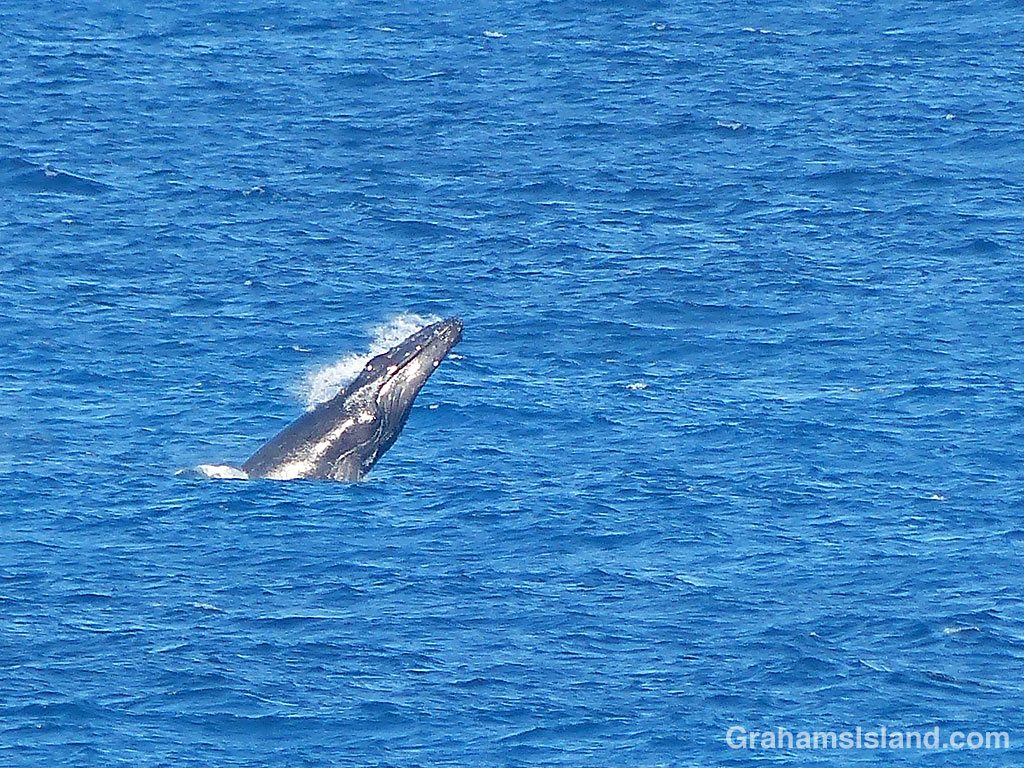
This whale was more cooperative and launched itself upward again. I was able to get these images which, shooting into the sun, look almost black and white.
This week’s Sunday Stills challenge theme is ‘Winter.’ See more responses here.
There are seasons in Hawaii, but they’re not as markedly different as they are on the mainland. So when it comes to a seasonal challenge theme I tend to fall back on migratory creatures. When it comes to winter, I think of humpback whales.
Humpbacks spend their summers in Alaska, which is their prime feeding ground. They come to Hawaii to calve and to mate. The first humpbacks arrive in Hawaii in October or November, but the high season for them is January through March. They can be seen anywhere around the island, but the prime viewing spots are on the more sheltered west side, from Kailua Kona all the way up to Upolu, at the island’s northern tip.
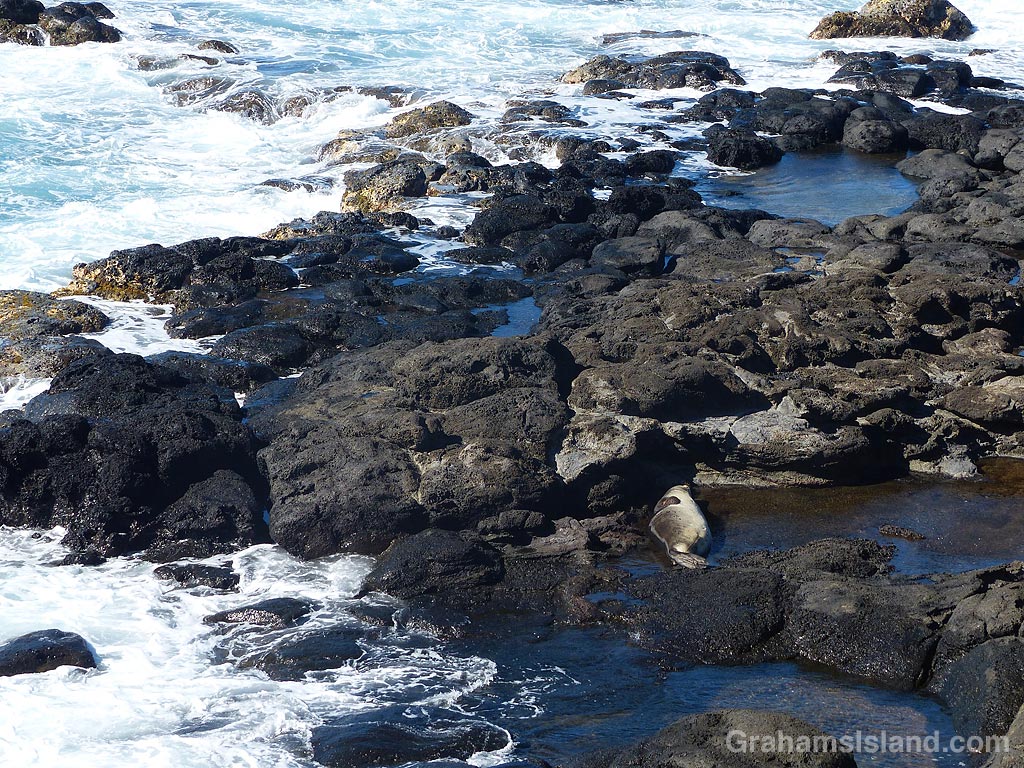
I call this spot Fran Point since that’s the name on the cross in this photo. Here, a rainbow arches over the coast and the surf rolling in.An endangered Hawaiian monk seal rests in a tide pool along the rocky shoreline.
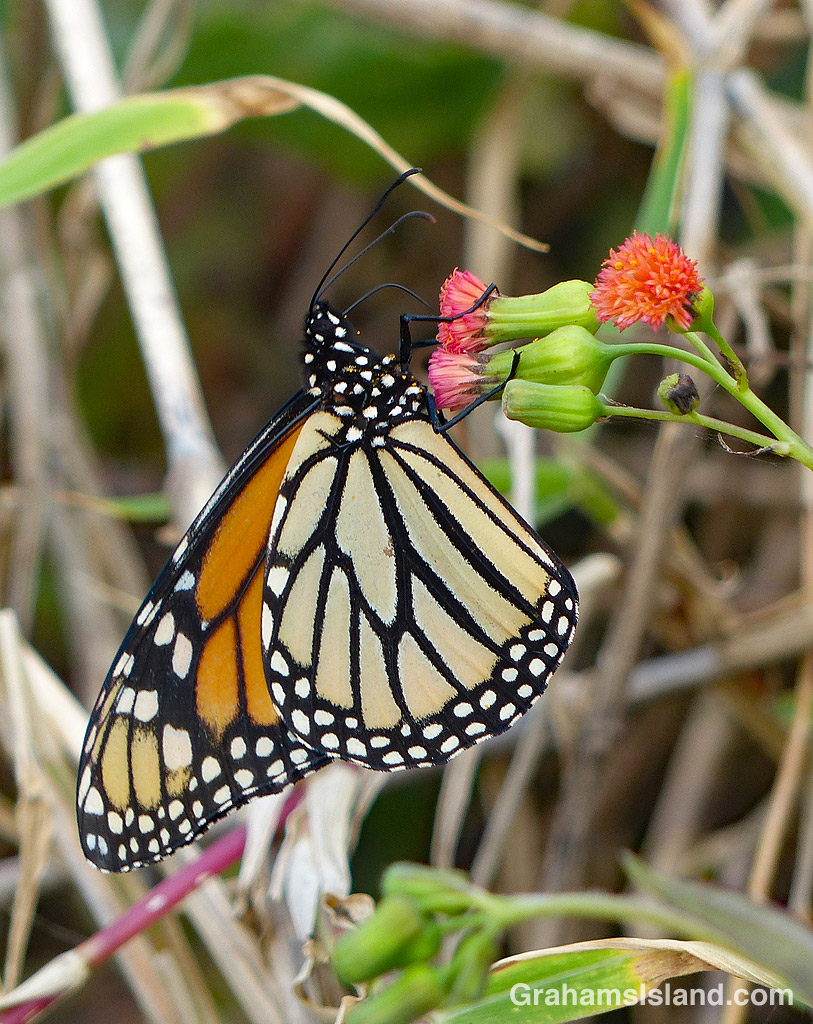
A monarch butterfly on a tasselflower.
This week’s Sunday Stills challenge theme is ‘Favorite Place.’ See more offerings here.
I could think of several places on the Big Island that would fall into the category of favorite place. Hawaii Tropical Botanical Garden, Hawaii Volcanoes National Park, Palila Forest Discovery Trail, the ocean – all these are places I return to. But the coast at Upolu is where I go for exercise and to enjoy the ever-changing scene there.
This stretch of coast features scenic high cliffs interspersed with lower areas where tide pools nestle among the rocks. Often, there’s a great view of Maui across the ʻAlenuihāhā Channel. In those waters I look for humpback whales, turtles, monk seals, and once, even a passing shark. Up in the air I might see anything from plovers to noddys to great frigatebirds. On land, there’s an assortment of birds, bugs and butterflies to be seen, as well as horses, cattle, and the occasional wild pig.
Sometimes, it’s hot and dry, but usually there’s a decent breeze, occasionally strong enough to make me lean into it while blown dirt sandblasts my legs. Sometimes, I get caught in the rain, but when I do, I’m usually dry again by the time I get back to my truck.
I’ve lived here seven years now and I never tire of going down there and looping around the fenced airstrip, wondering what I’ll see.
A bristle-thighed curlew strides along the edge of the airstrip at Upolu.A humpback whale cruises no more than 50 feet offshore. This was one of a pair that I saw just this past week. I suspect they were a male and female, with the male interested in mating before heading north to Alaska. Not only was this as close as I’ve seen whales, but it was the first time, from land, that I’ve heard a whale do anything other than blowing. In this case, the pursuing whale made a deep, two-toned mooing sound as it went by.
Humpback whales have returned to Hawaiian waters. They spend the summers in Alaska and then come down here to have their calves and to breed. This year, the first whales were spotted early – at the end of October. I saw a couple in early November, but then nothing for a month.
This, of course, doesn’t mean they weren’t around, just that I didn’t see any. But in the second half of December I started seeing more of them and more activity, and now I see one or two most days.
On this day, I saw five whales. Three were just blowing, but two cruised along the coast, in the same direction I was walking, and were quite active. In the top photo, one of the whales rises out of the water – not a full breach, but what might be called a head slap as it bangs back down. In the other photo, the whale dives. When an adult whale dives it can stay underwater for 20 minutes or more.











 Graham's Island