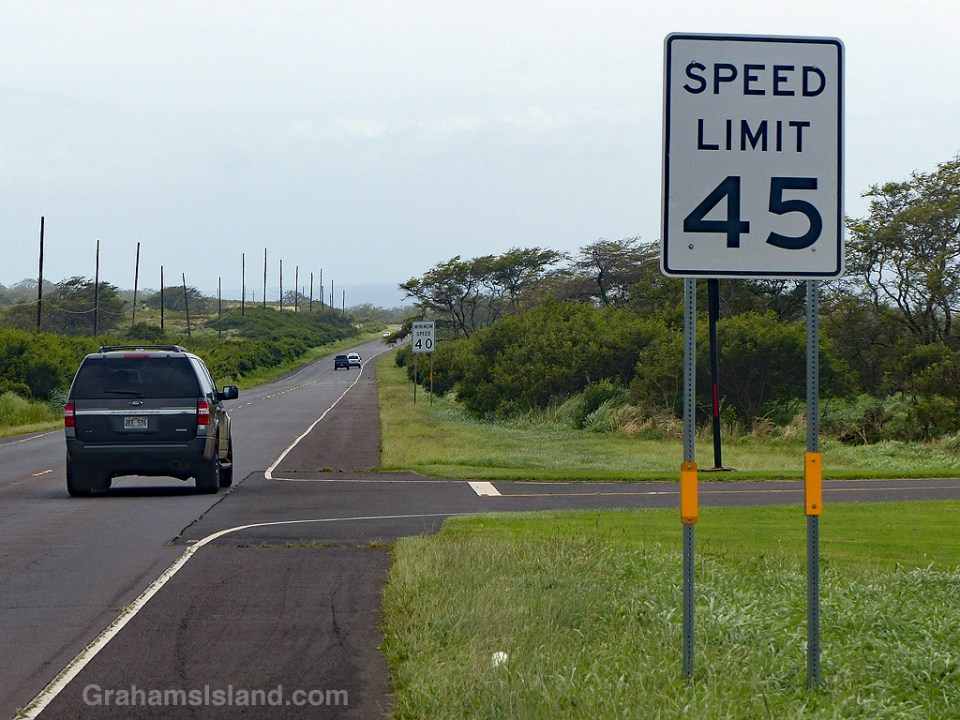
 Recently, these two new speed limit signs appeared, alongside the main road, not far from where I live. Nothing too remarkable about that, you may say, but it is odd. The first sign gives the speed limit as 45 miles per hour, but the second sign mandates a minimum speed of 40 miles per hour. Seems like a prime area for tickets to be handed out. I can’t imagine anyone getting very far without breaching one of those two limits.
As it happens, about a quarter mile before this pair of signs, there’s another pair that have been there a long time. Those signs, which mark the departure from a more residential area to a largely uninhabited stretch of road, mandate a speed limit of 55 miles per hour, with the same minimum speed of 40 miles per hour.
So why would the county want people to speed up to 55 only to put the brakes on a few hundred yards down the road? They don’t. They just put up the wrong sign. It was gone a few days later.
This isn’t the first time the Hawaii County Department of Public Works has had a sign problem. In late 2016, a major new road project, the Mamalahoa Highway Bypass, south of Kailua-Kona, was completed. Where this new road joined the existing Mamalahoa Highway, a dangerous Y-shaped junction became a fully-signaled, four-road intersection.
Most people were thrilled with the new, safer setup, but not all. People unfamiliar with the area were perplexed. They didn’t know where to go because the major new highway intersection didn’t come with any signs. If that sounds like it must be an exaggeration, it is a bit. There was one sign, on the old road, that had not been removed during the project. Unfortunately, because of the intersection’s redesign, the directions it gave were wrong. It indicated the main highway went straight ahead, but that now sent traffic plunging down a steep, winding road into a populous residential area.
As with our local sign, after a few days the old highway sign disappeared and a week or so later proper signage was erected for the new intersection.


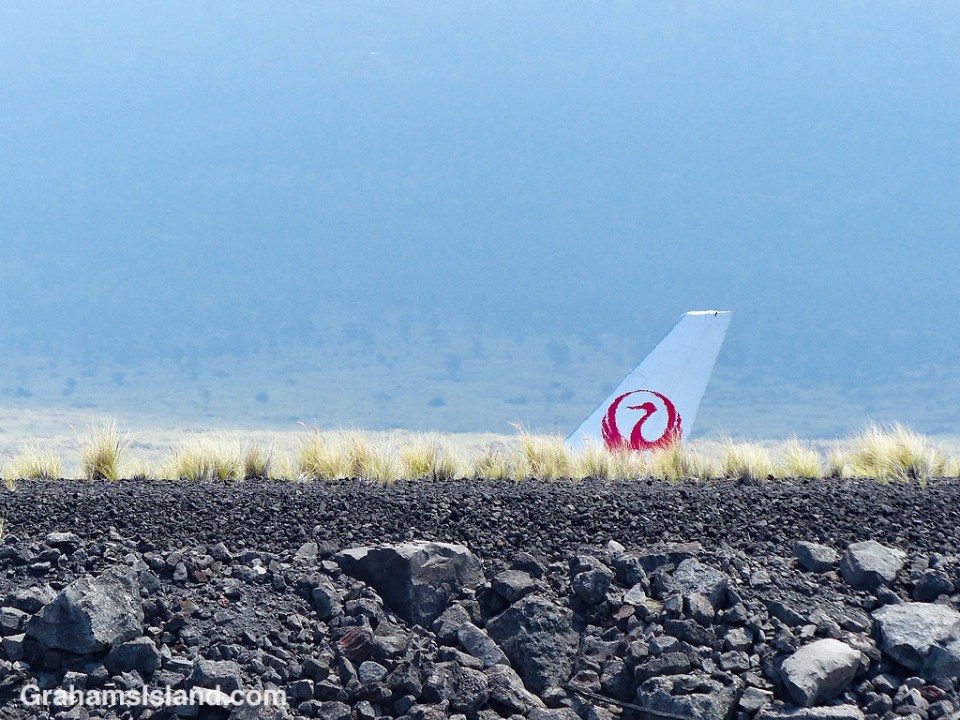
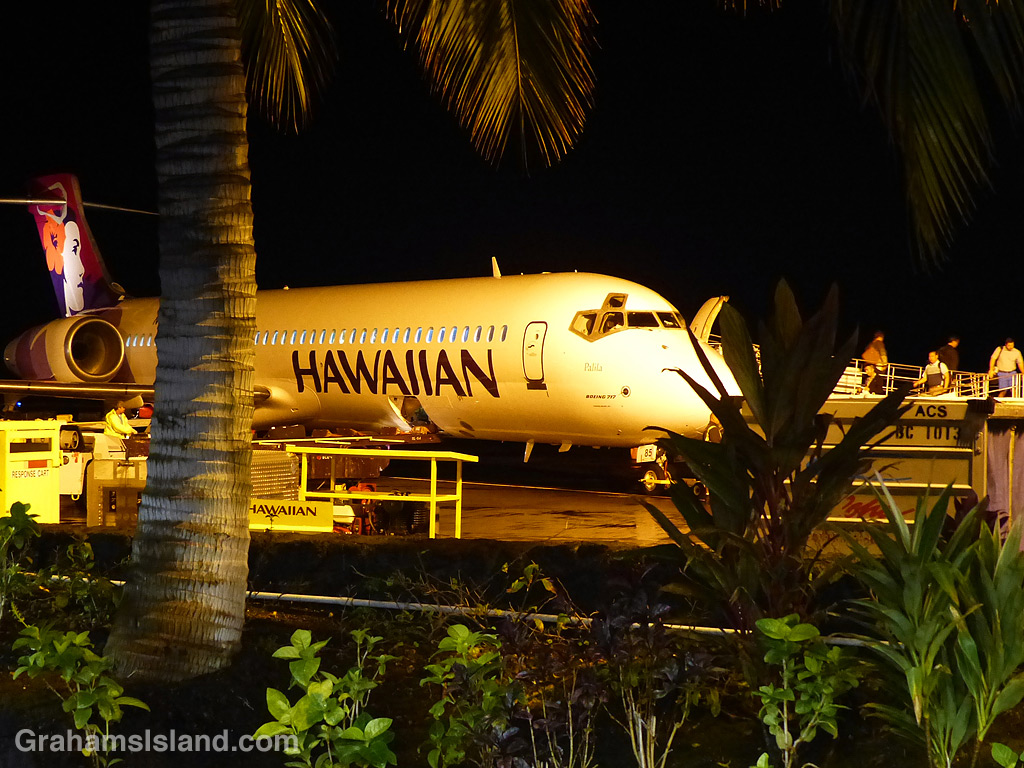
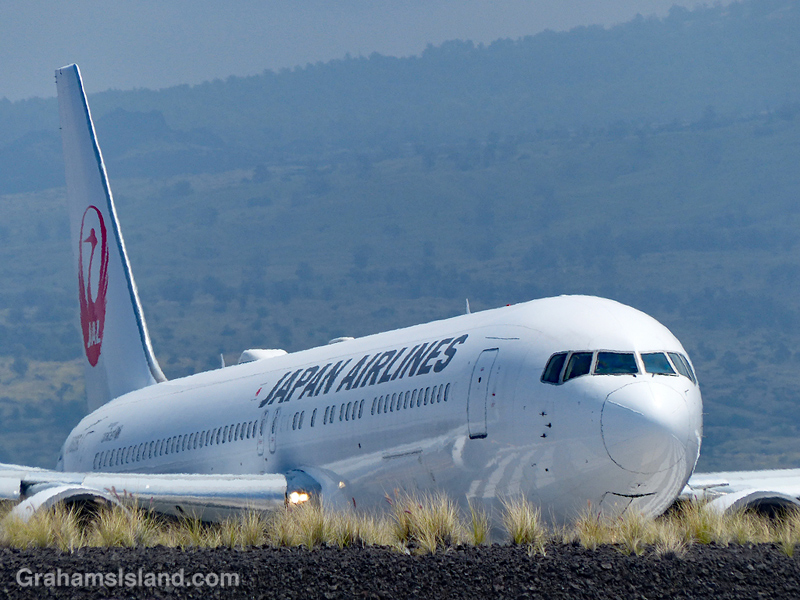 Kona airport is officially called the Ellison Onizuka Kona International Airport at Keahole.




 Graham's Island