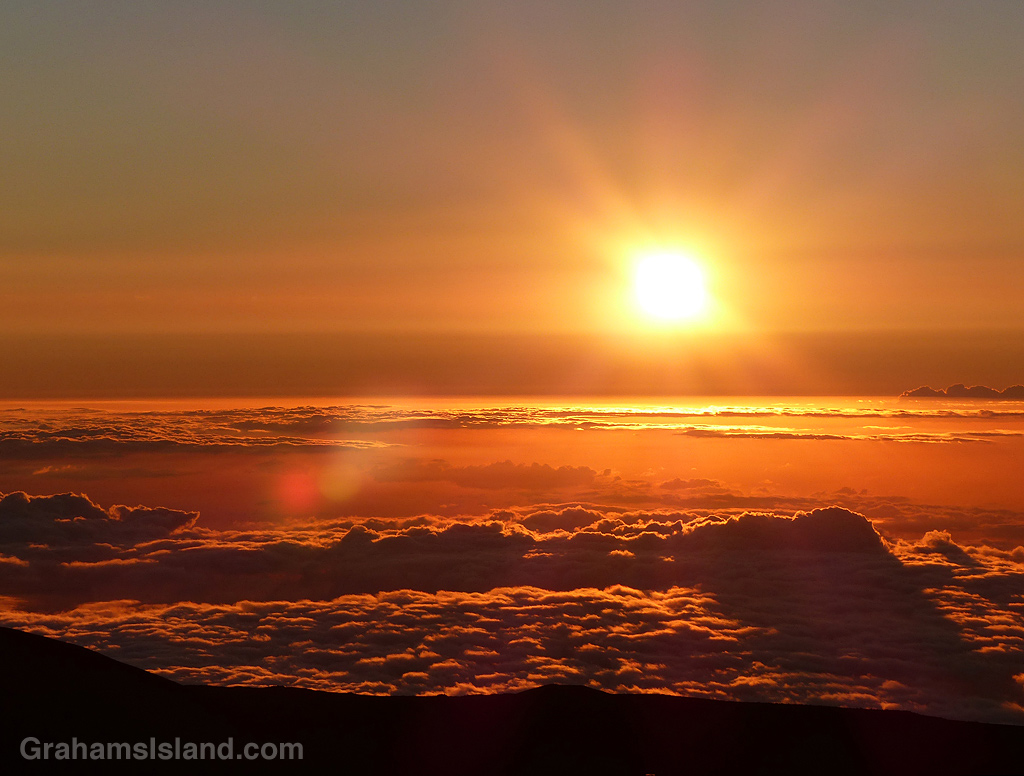
As the sun slips away for the last time in 2017, we in Hawaii are among the last to say farewell to the old year.

As the sun slips away for the last time in 2017, we in Hawaii are among the last to say farewell to the old year.
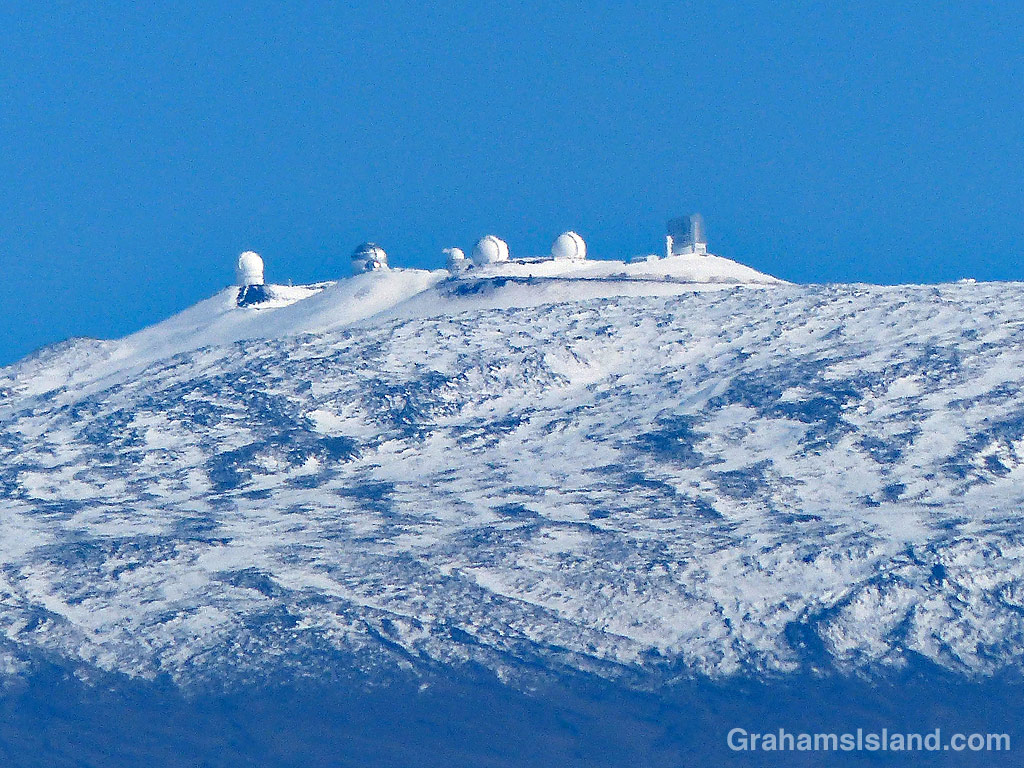
It’s been wet here lately and, when conditions are right, that translates into snowfall on Mauna Kea and Mauna Loa.
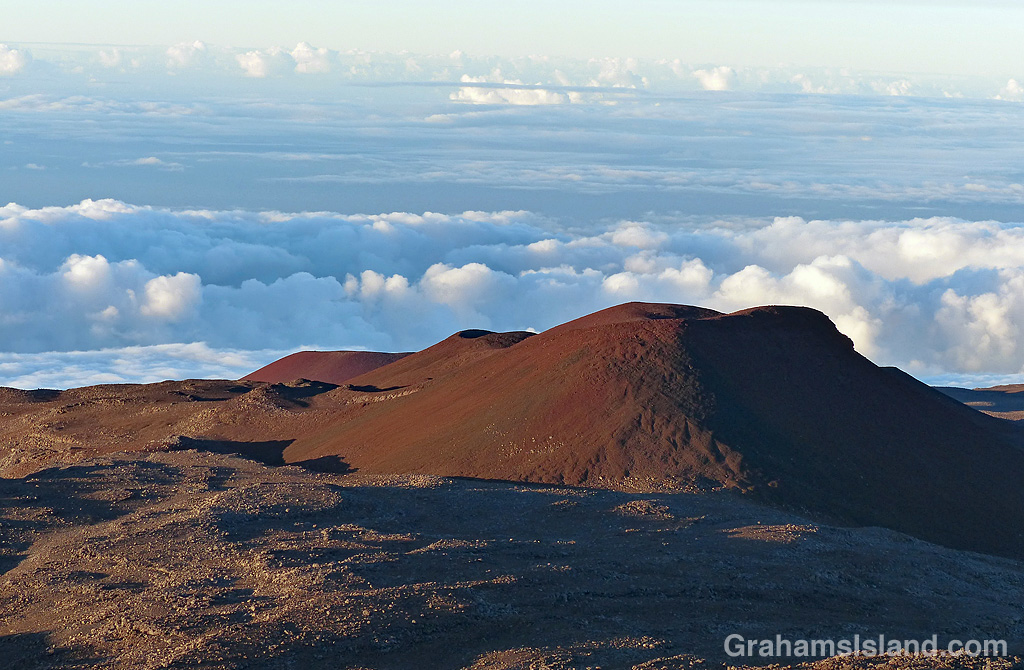
Another post on the WordPress photo challenge theme of ‘serene.’
To me this Mauna Kea scene, of an empty landscape in early evening light backed by pillow-like clouds, is quite serene. But is it really? Those fluffy clouds could contain the kind of turbulence that throws airplanes around, and the pu’us are evidence of volcanic eruptions in the past. Still, it does look serene.

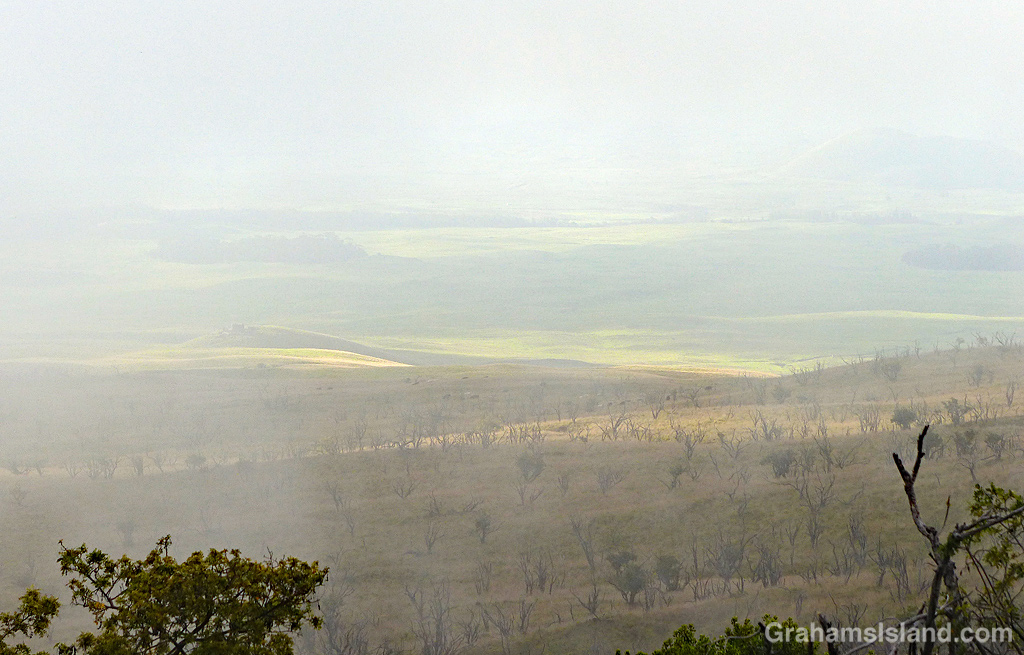
Many times when I travel on Old Saddle Road, there comes a point where I’m exiting the clouds or disappearing into them. I like to take photos in this zone, experimenting as the level of the clouds comes and goes.
The top photo has that transition from clouds to clarity, but I also like the ethereal quality of the lower photo as patches of sun illuminate the pastures below.

Another post on the theme of ‘Rounded,’ this week’s WordPress photo challenge.
The rounded domes of the two Keck telescopes on Mauna Kea gaze out over the clouds to Maui – and a bit farther afield too.
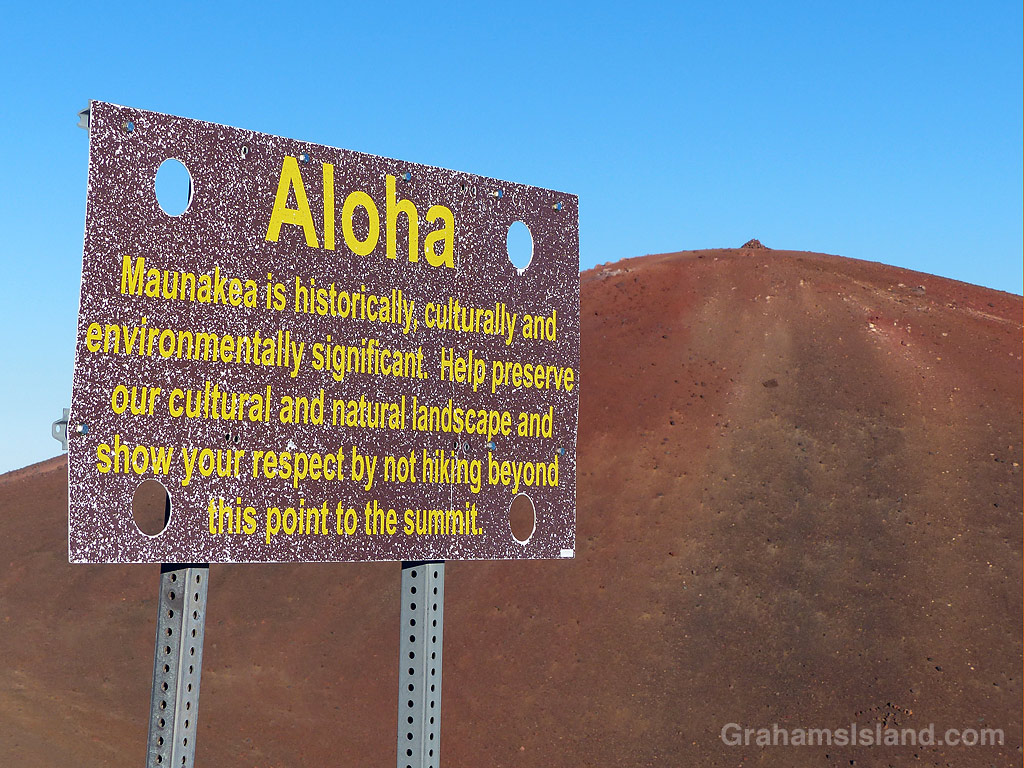
Above: The sign by the start of the trail to Mauna Kea summit.
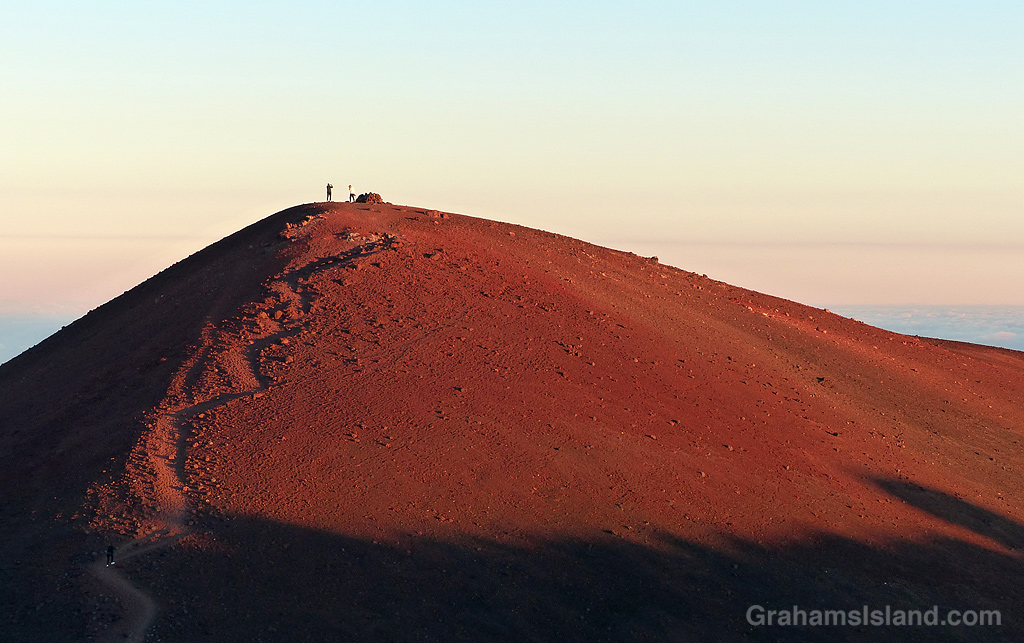
Below: Two disrespectful people and one more on the way, dwarfed by the scale of the volcano.
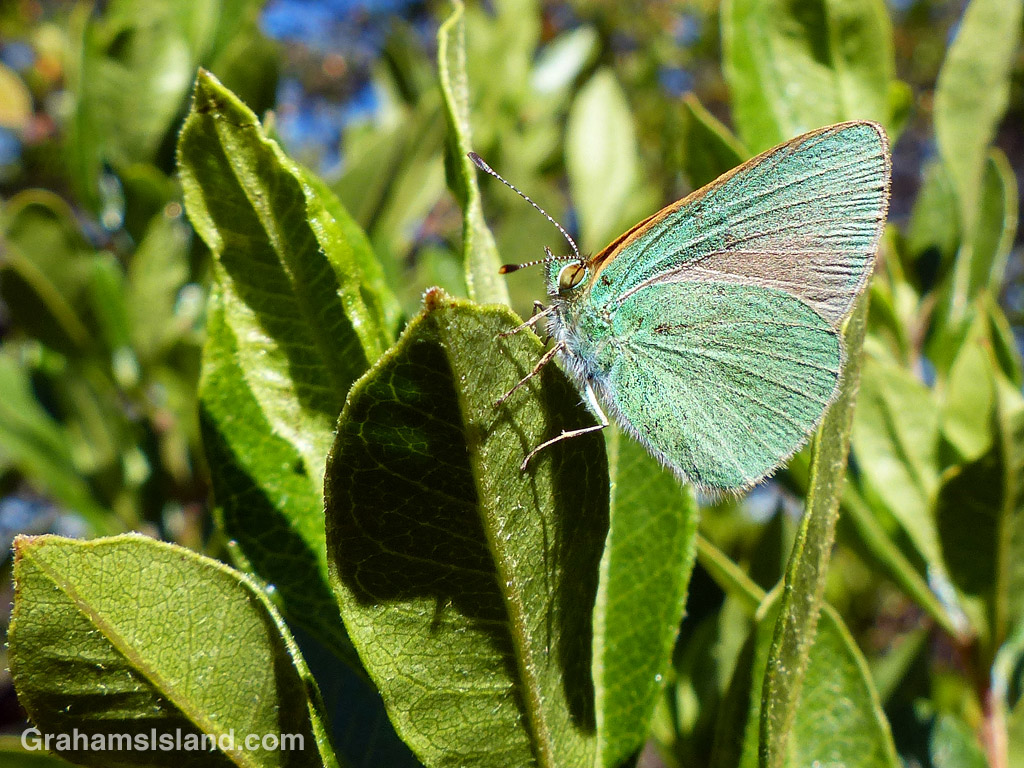
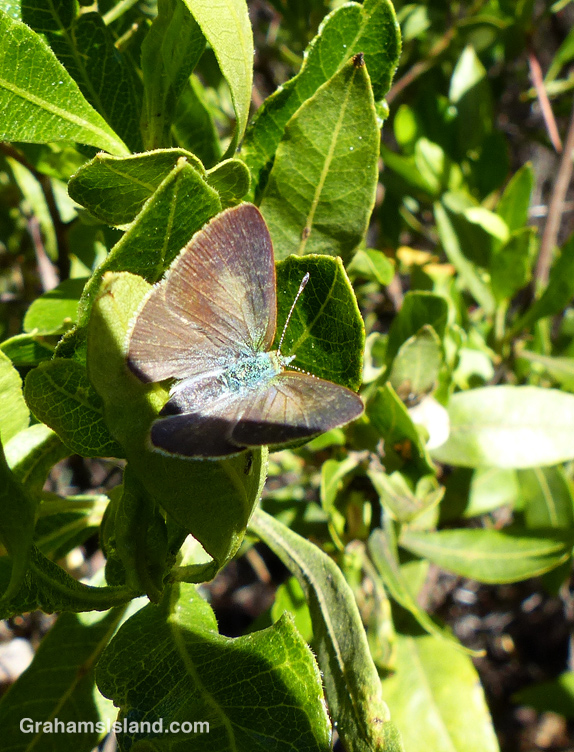
This endemic Hawaiian blue butterfly was flitting around at the Palila Forest Discovery Trail, on the southwest flank of Mauna Kea. This one is, I think, a female with its bright underside and uniformly brown top.
The butterfly is also known as the Koa butterfly, since its caterpillar feeds on that tree. I don’t think Koa trees are found in the trail area, but ‘A‘ali‘i (Dodonaea viscosa), an indigenous Hawaiian plant, does grow there and that’s another plant the caterpillar will eat.
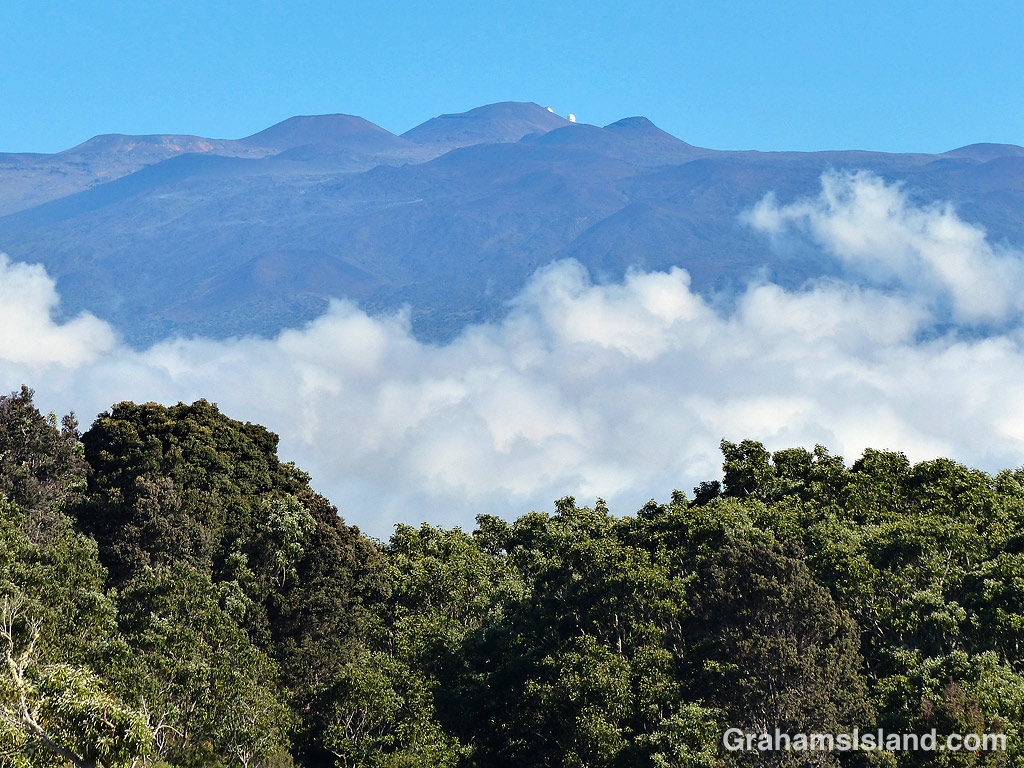
In this view of Mauna Kea from the Pu’u O’o Trail, the trees of a kipuka, clouds rolling over the saddle, and the bulk of the mountain, create a layered effect.
 Graham's Island