
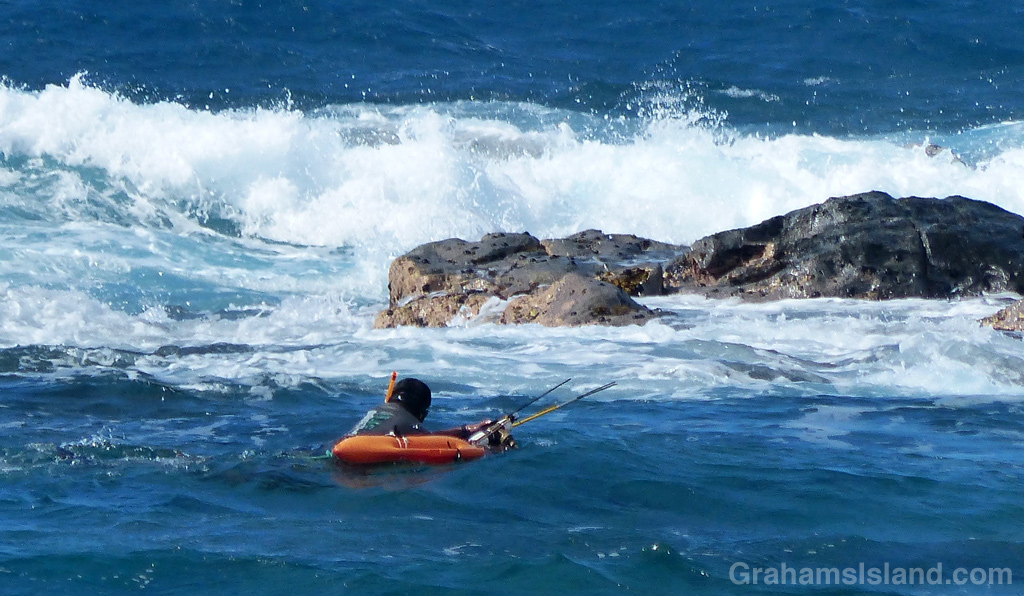
A spear fisherman eyes breaking waves as he makes his way toward the shore on the rocky North Kohala coast.
Tag Archives: On The Coast
Abstracts: Yellow tang in blue water
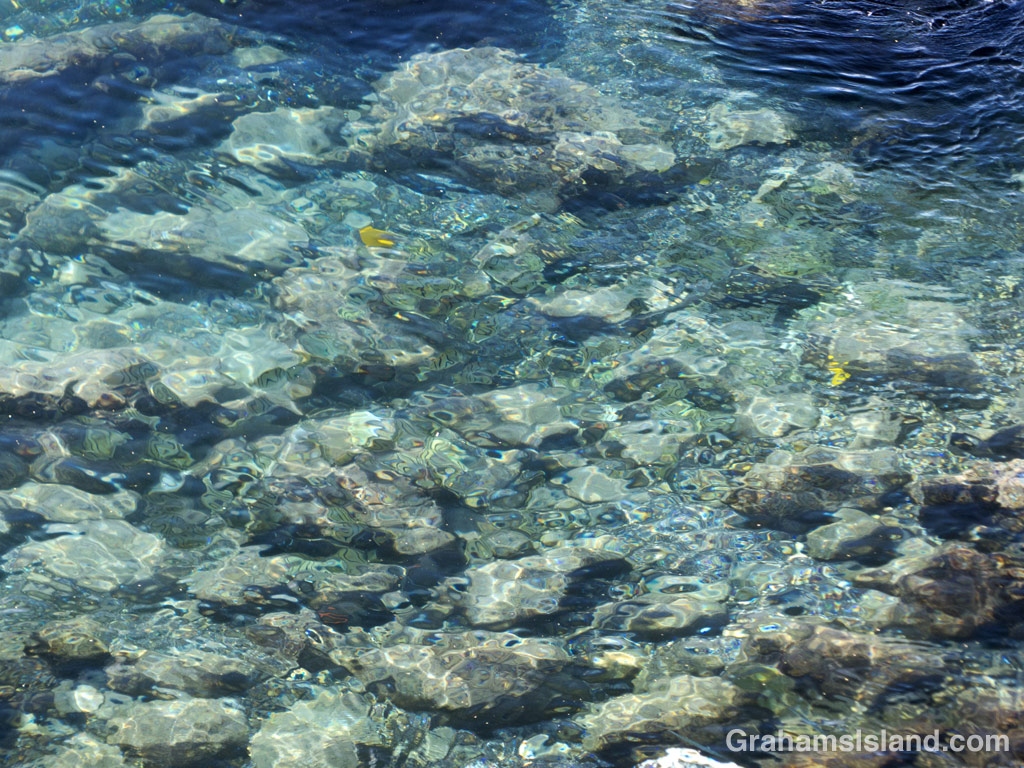
A couple of yellow tang swim around rocks as the surface water ripples overhead.
Molted monk seal
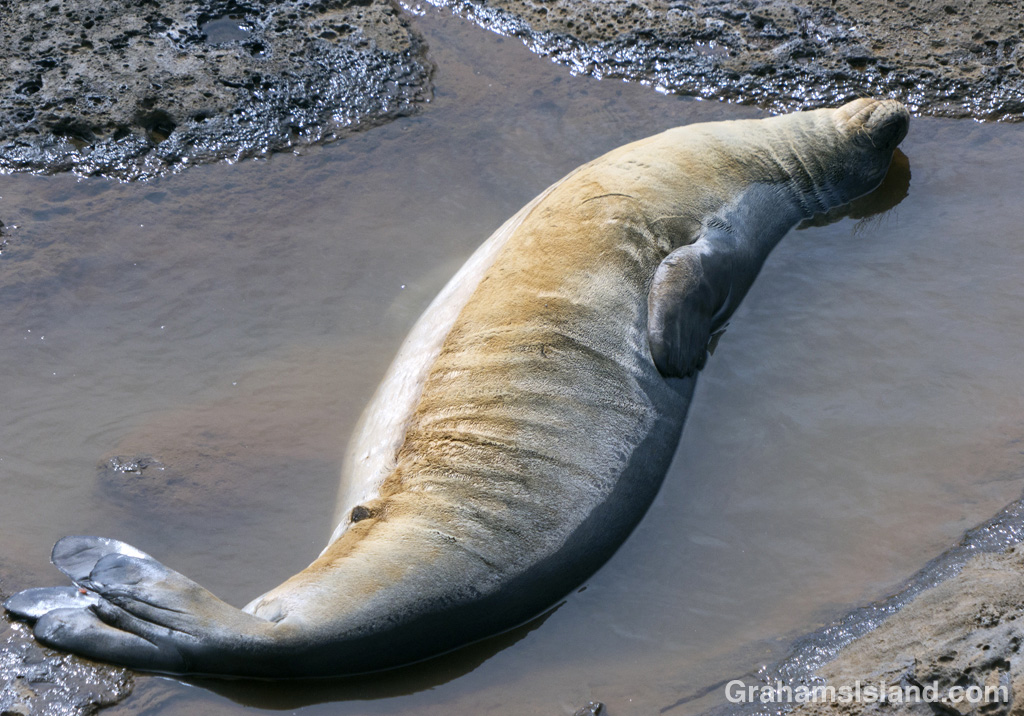

I posted a photo of IO5 back on April 27. Since then, I saw him in mid-May looking about the same. Then a couple of weeks ago I saw him again and in the interim he had clearly molted. The green tinge around his head and flippers was gone and instead he looked clean and tan, silvery where he’d been rolling in the water.
One thing that hadn’t changed from previous sightings was his demeanor and activity on shore. Once again he looked supremely relaxed, stretched out in a tide pool.
Many Hawaiian monk seals look pretty beaten up with scars from encounters with sharks, boats, and goodness only knows what other perils of the sea. IO5 is something of an exception in that, currently, he has barely a mark on him.
For more information about Hawaiian monk seals, go to www.pifsc.noaa.gov/hawaiian_monk_seal/ or www.marinemammalcenter.org/hawaii.
Abstracts: Little convicts
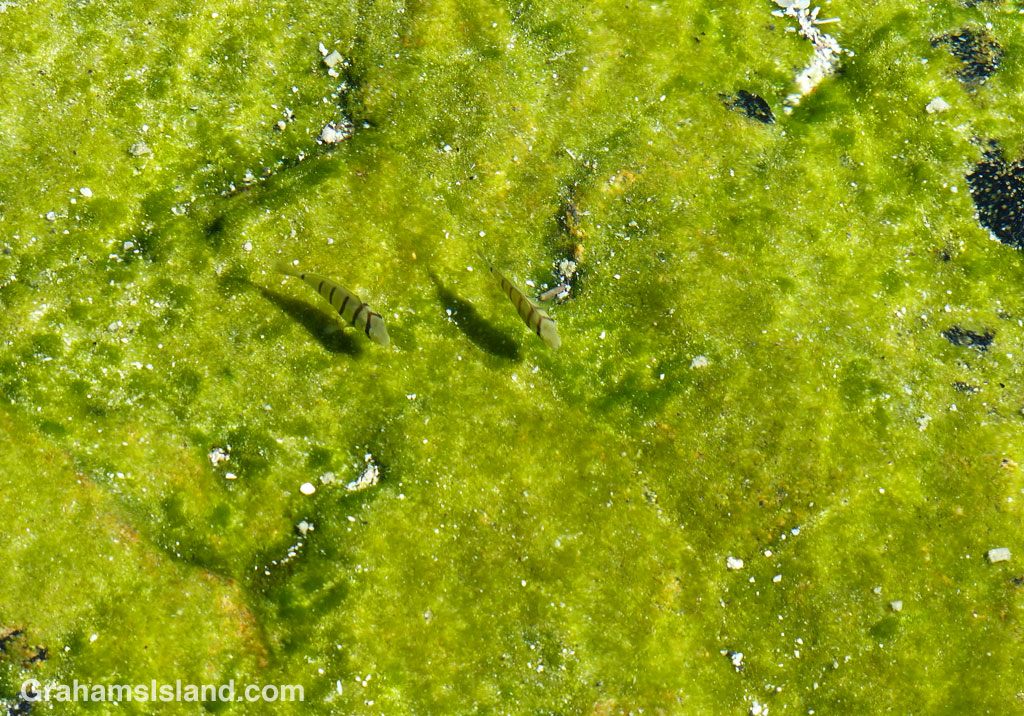
A pair of baby convict tang putter around in a shallow tide pool.
In my attempts to identify what I see in the water, I use John P. Hoover’s book The Ultimate Guide to Hawaiian Reef Fishes, Sea Turtles, Dolphins, Whales, and Seals. His website is hawaiisfishes.com.
Abstracts: Early evening sun on water
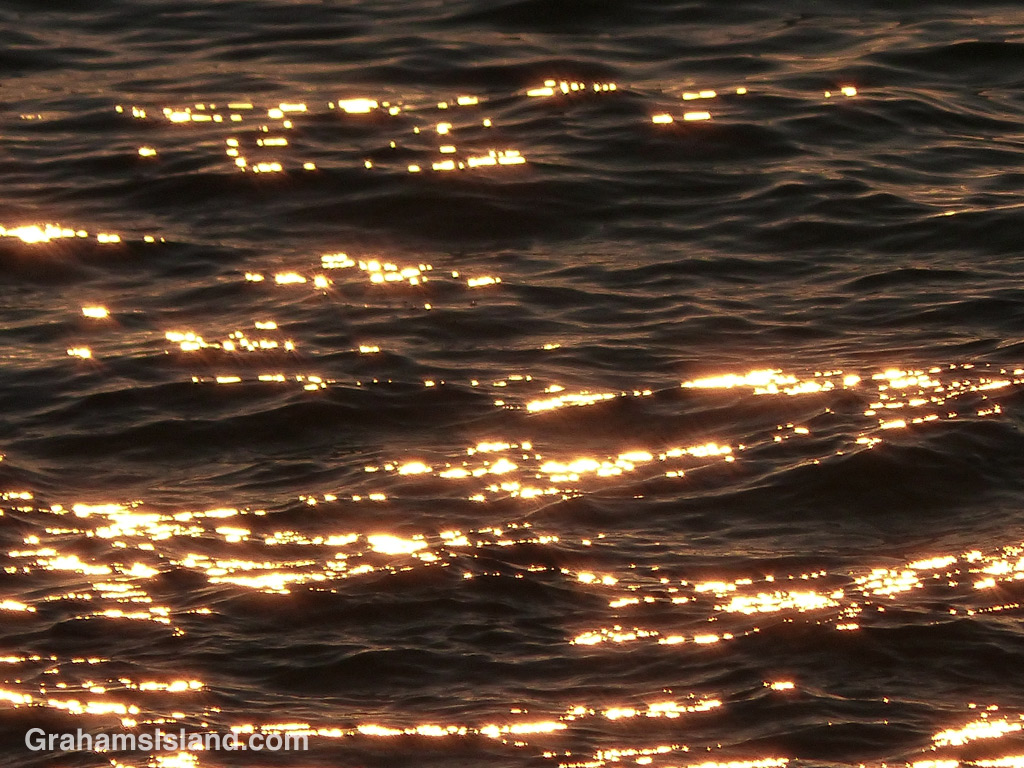
Early evening sun illuminates ripples on the water.
Signs: Temporary closure
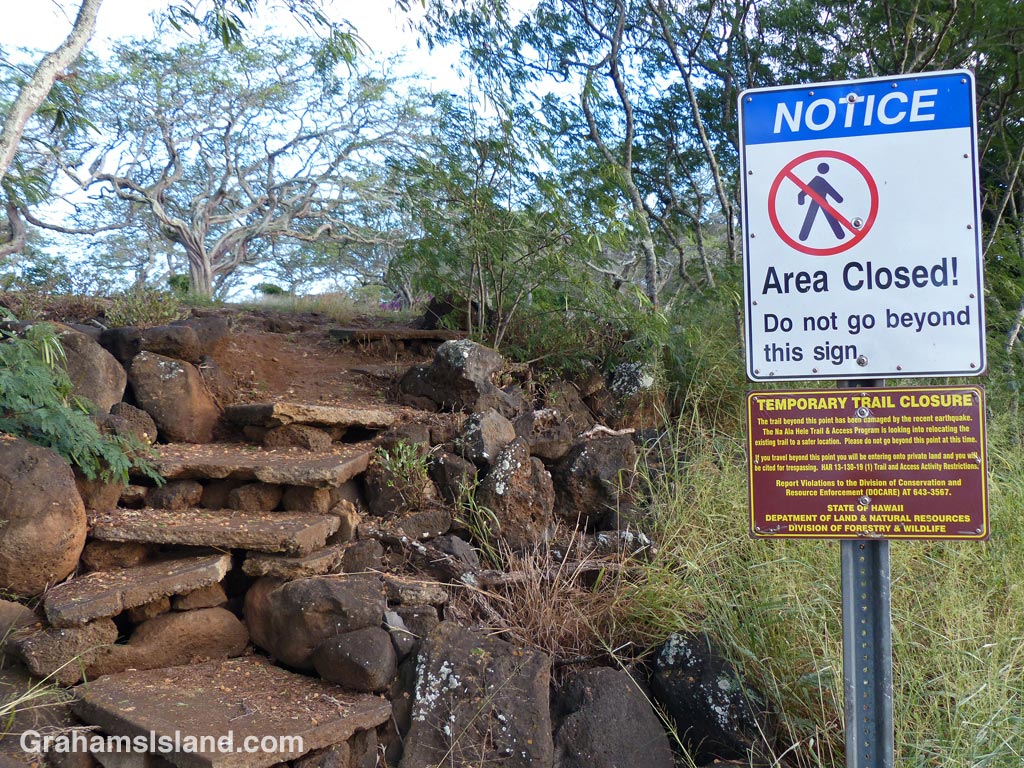
Back in 2006, an earthquake off the west coast of the Big Island caused extensive damage. One of the casualties was this trail. Part of the cliff it traverses slid into the sea and the path was deemed unsafe. But this wasn’t just some local trail. It’s the Ala Kahakai trail, also known as the King’s Trail, which followed the coast from North Kohala all the way along the west and south coasts to the Puna District in the southeast of the island.
Just beyond this sign is a private gated community and specifically a very large, very expensive house (currently available for 10 or 11 million dollars – it’s been for sale for a while). The trail wasn’t popular with the home’s original owners, who put up a barbed wire barrier (well, I suspect they didn’t actually do the work).
Anyway, the trail has been temporarily closed for 10 years now and, as is the way around here, I suspect it will remain permanently temporarily closed. That is, until the next significant earthquake detaches another stretch of cliff and sends the big house sliding into the ocean. Then, who knows?
Abstracts: Kiholo branches

A tangle of curly branches forms a dense thicket along the shore near Kiholo Bay.
Sun on the water

Afternoon sun illuminates the ocean off the North Kohala coast.

