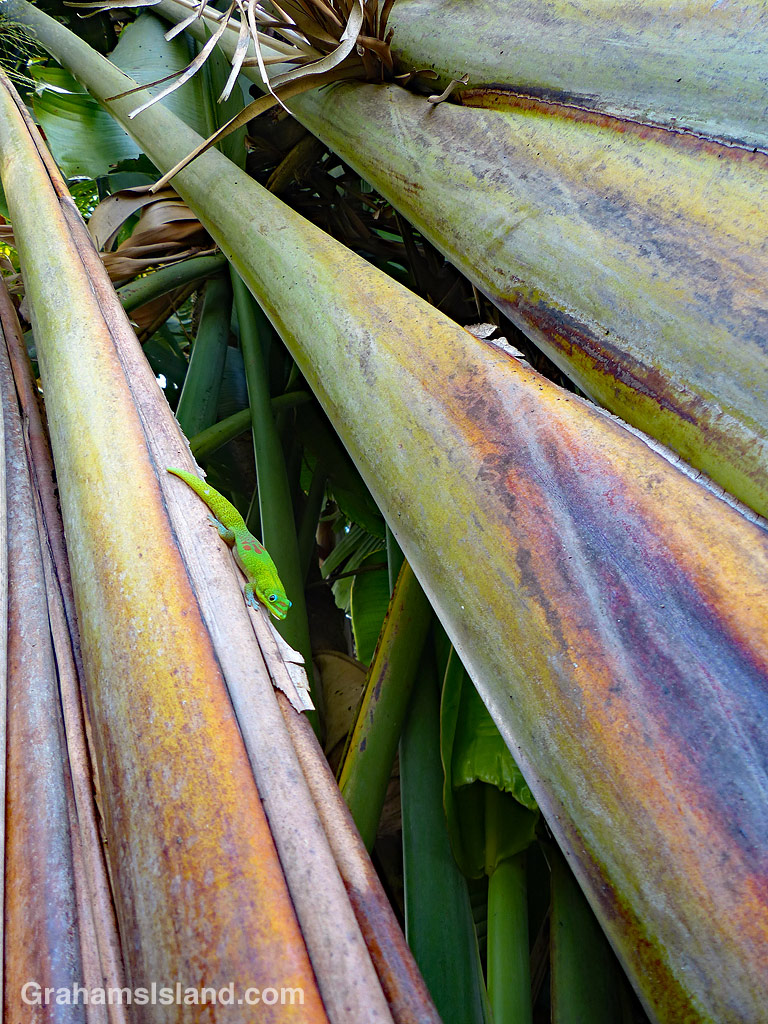
A gold dust day gecko scoots down the stem of a traveler’s palm.

A gold dust day gecko scoots down the stem of a traveler’s palm.

This is a view of the base of the petioles (leaf stems) of a traveler’s palm (Ravenala madagascariensis). It’s not a true palm but a member of the family Strelitzia with flowers similar to some bird of paradise flowers.
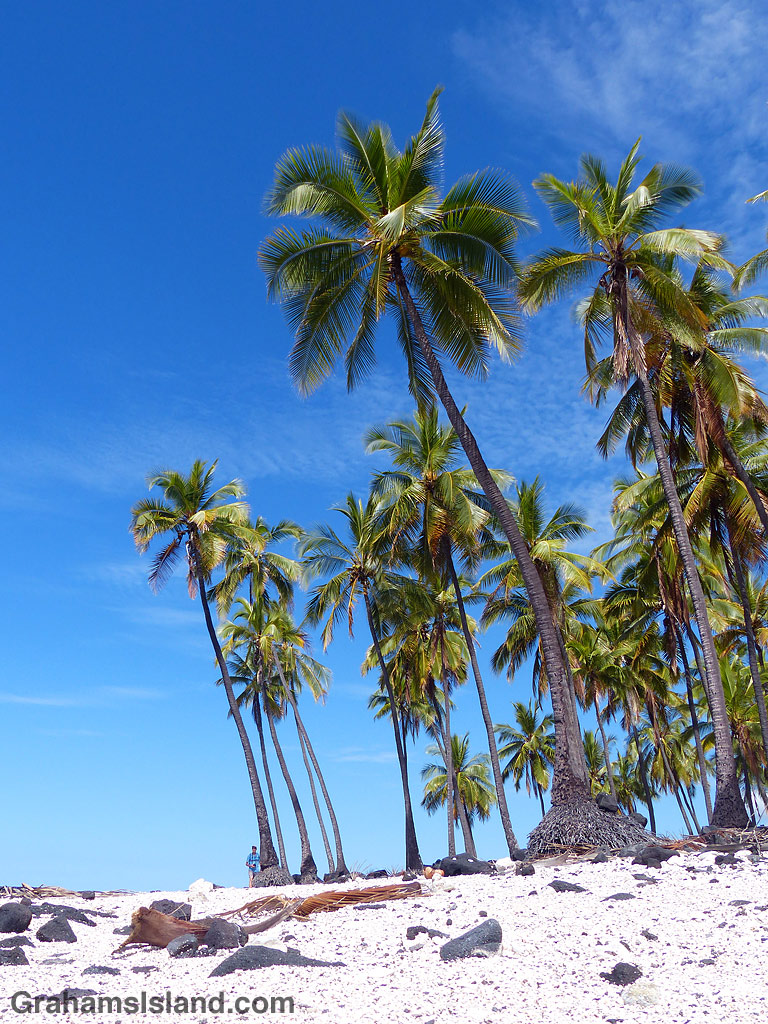
White sand, towering palms, blue sky, and almost invisible in this quintessential Hawaiian image, a single small figure.
In response to WPC ‘A face in the crowd.’
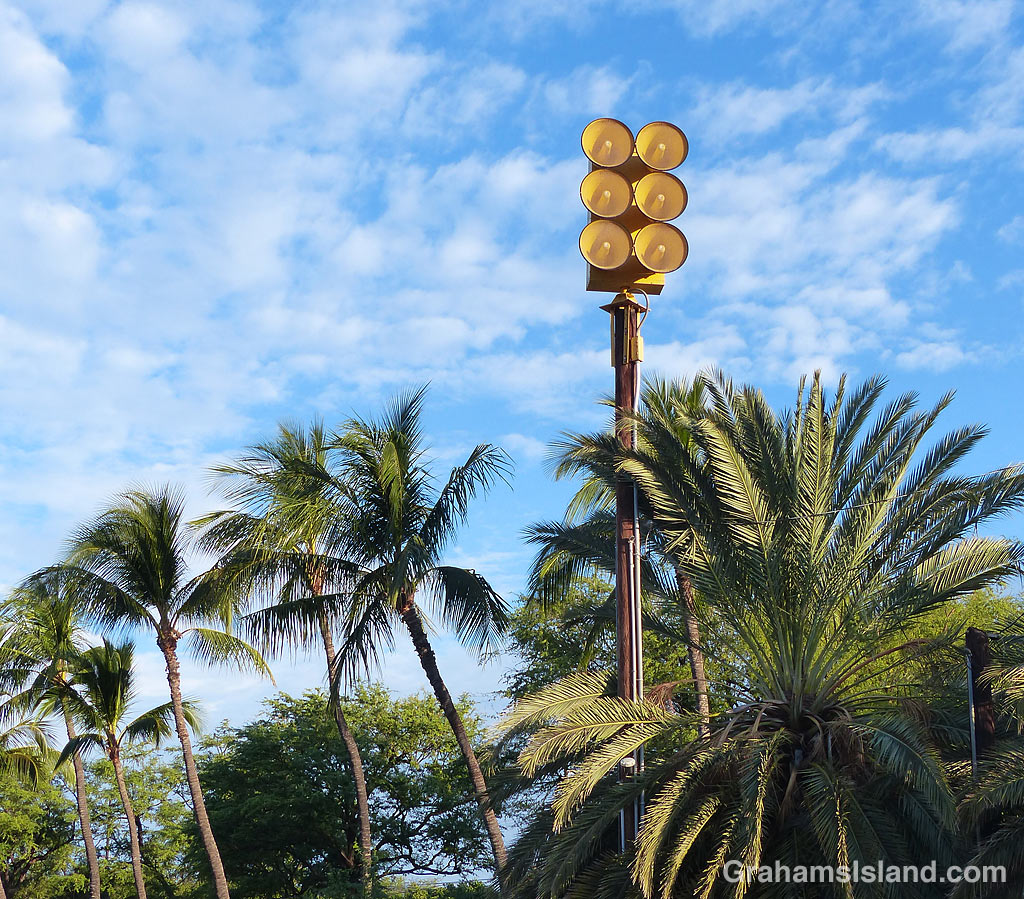
This is one of Hawaii’s emergency alert sirens. There are different styles, but I like how this one, at Kawaihae, emerges from the palm trees. The sirens are intended to warn of impending tsunamis and, these days, nuclear attack.
These sirens did not go off during the recent false missile attack fiasco. That issue concerned messages sent to residents’ phones and to radio and TV. In the aftermath of that incident, I read in a news report that “According to state officials, the watch officer had been a cause for concern to his colleagues for more than a decade and had twice before mistaken drills for real alerts. It was unclear how he had managed to remain in such a sensitive post for so long.” Not in this household. Our ‘joke’ is that a person has to kill three people here before it’s considered serious enough to be fired from a government job. I guess causing widespread panic and embarrassing the state worldwide must be roughly the equivalent.

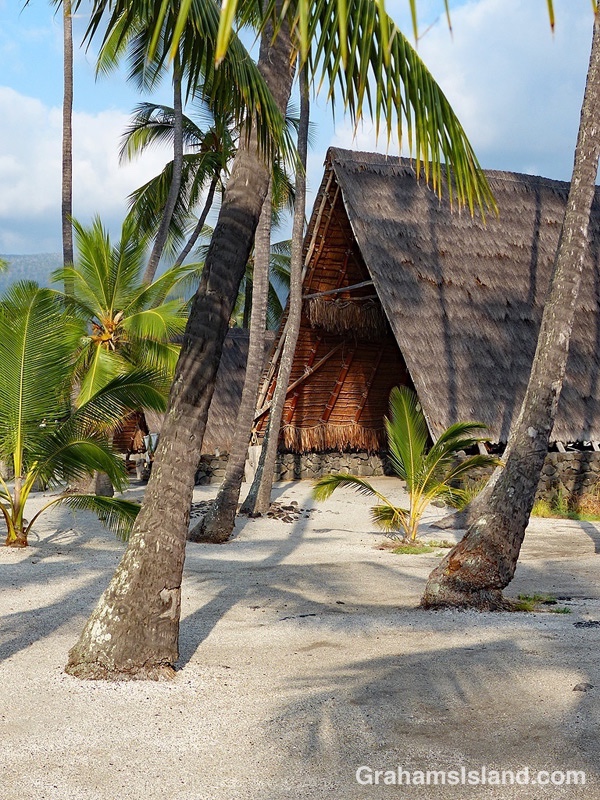
The final post on this week’s theme of the WordPress photo challenge, ‘Tour Guide.’
These photos are from Pu’uhonua o Hōnaunau National Historical Park, otherwise known as Place of Refuge. This National Park showcases important Hawaiian history with it’s royal grounds where the Hawaiian royalty lived, Hale o Keawe where the bones of 23 ali’i were housed, and for the Pu’uhonua where anyone who had broken kapu (sacred laws) could seek shelter and ultimately forgiveness.
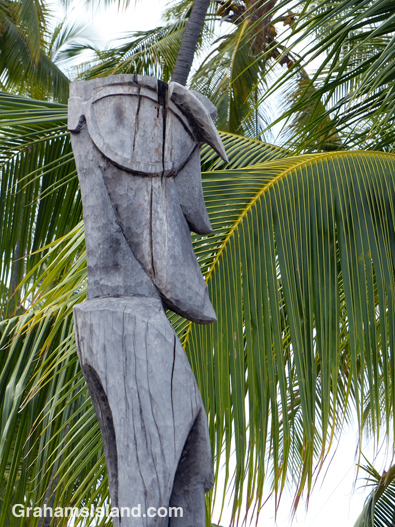
Here are views from the ocean side (above), of a hālau (right) which houses canoes, and of a ki’i (below) representing an Hawaiian god.
For more information about Pu’uhonua o Hōnaunau National Historical Park, visit https://www.nps.gov/puho/index.htm.

Coconut palms stretch upward to the blue Hawaiian sky.
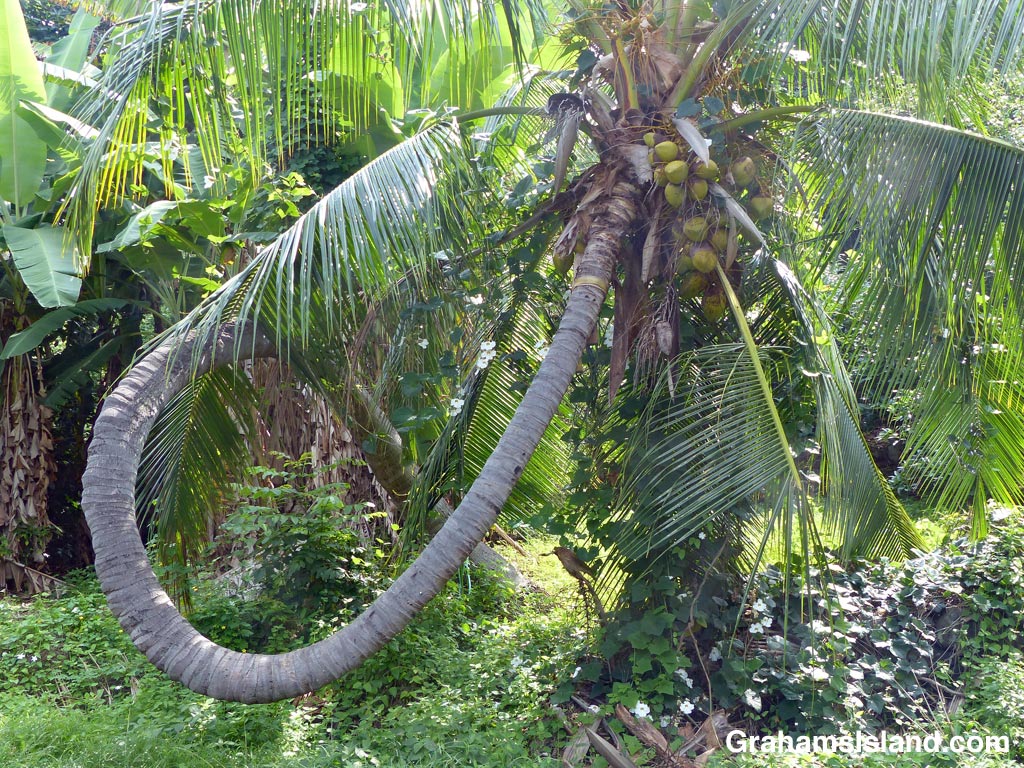
Most people are familiar with the image of palm trees towering over golden Hawaiian beaches. This is not one of those. It’s taken an unusual path, twisting down and around and up again, but none the worse for its circuitous route.
 Graham's Island