
Padina japonica is a kind of seaweed which is found in tide pools. I love it’s creamy curled shape.

Padina japonica is a kind of seaweed which is found in tide pools. I love it’s creamy curled shape.

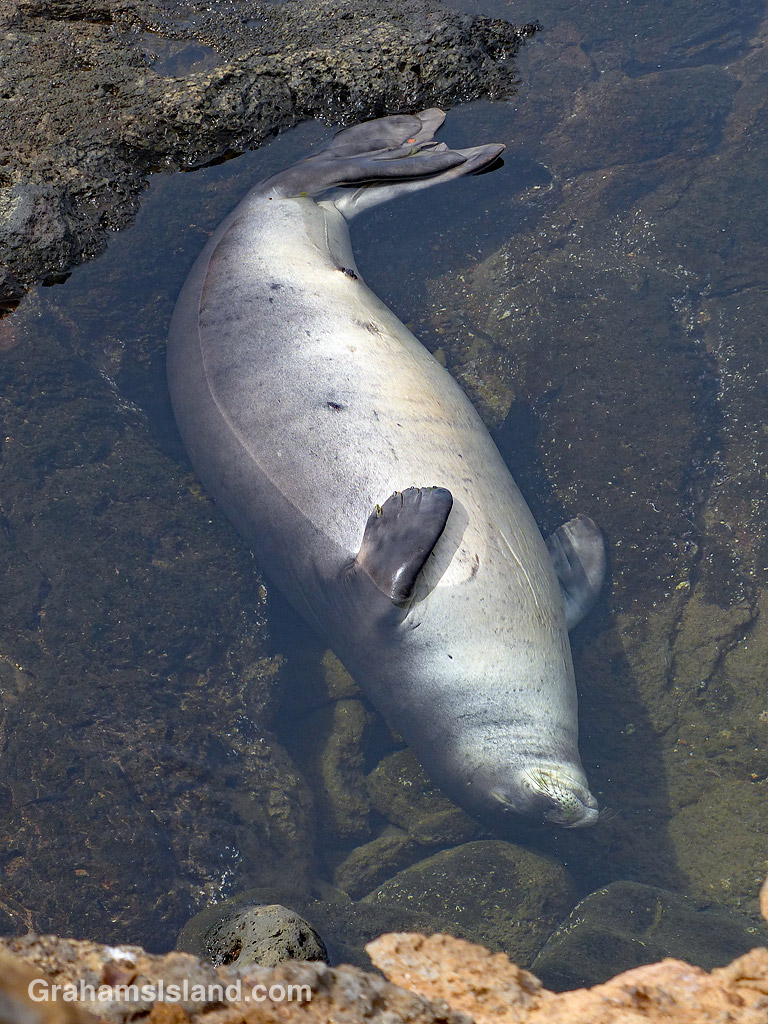 Monk seals are endangered and only a handful regularly live in the waters around the Big Island. The seal in these photos is one of these and I’m lucky enough to see him on a regular if not always frequent basis. When I do see him, it’s not unusual for him to be submerged in a tide pool as he was on this day.
Sometimes, when there’s been rain, the tide pool will be brown with runoff and all I see is this body with its head submerged. When I first saw this, I wondered if the seal had drowned, but since a monk seal can hold it’s breath for 20 minutes or more I know that’s not what’s going on.
What I like on this occasion, was the little fish (seen above) swimming around the seal’s head and through his whiskers. I like to think it was wondering what the heck this giant lump was that had suddenly taken up most of the space in its pool.

This week’s Sunday Stills challenge theme is ‘Autumn,’ (more responses here) which poses a bit of a challenge. In Hawaii, we don’t have leaves turning color or a certain crispness in the air. But what we do have at this time of year is migratory birds coming to the islands.
One of the more impressive of these travelers is the Pacific golden plover. These birds spend the summer, their breeding season, in the Arctic tundra from western Alaska to northern Asia. At the end of the season they make an epic migration south to places as far away as Australia, Southeast Asia, and northeast Africa.
Hawaii is a stopover on their way to Australia, New Zealand, and other Pacific islands, but some of the birds spend their winters in Hawaii. This is a non-stop journey of more than 2,500 miles and takes the birds three to four days. How they do this is not fully understood. There are no landmarks or stopping points en route and no room for errors in navigation. But year after year, Pacific golden plovers return precisely to the same sites. Not only that, but new born plovers are able to make the journey independently despite never having flown the route before.
Then there’s the small matter of how this little bird fuels itself for such a long flight. There’s a fine balance between the amount of fuel it must carry and the need to fly fast. But even if it gets this right, the fact is an individual plover still wouldn’t be able to go that far. The secret lies in the birds flying in a V-formation which saves enough energy for the birds to make the whole distance with a little bit to spare to cover adverse conditions. It’s a remarkably precise balance which the birds manage successfully year after year.
This plover was foraging (successfully in the top photo) in tide pools along the Kona coast.
For more information about the Pacific golden plover’s migration to Hawaii, go to https://phys.org/news/2011-06-plovers-tracked-pacific.html.

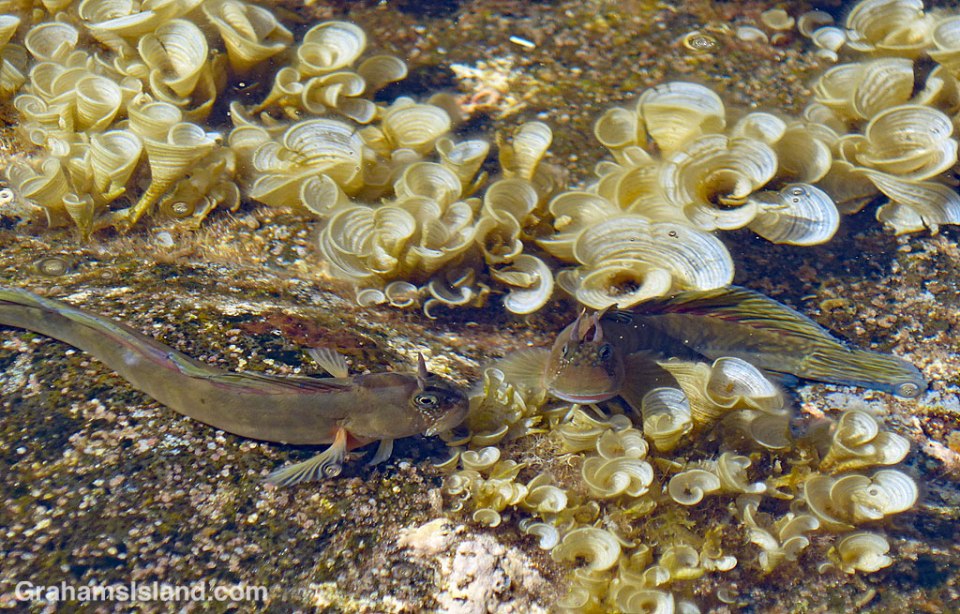
A few weeks ago, I posted a photo of a dead blenny floating in a tide pool filled with ‘delicate creamy shells.’ Recently, I returned to that area and I realized that the creamy shells were not shells, but something growing.
It turns out they’re a kind of seaweed, padina japonica, which both surprised and delighted me, since I think of seaweed as being stringy and brown. I learn something every day.
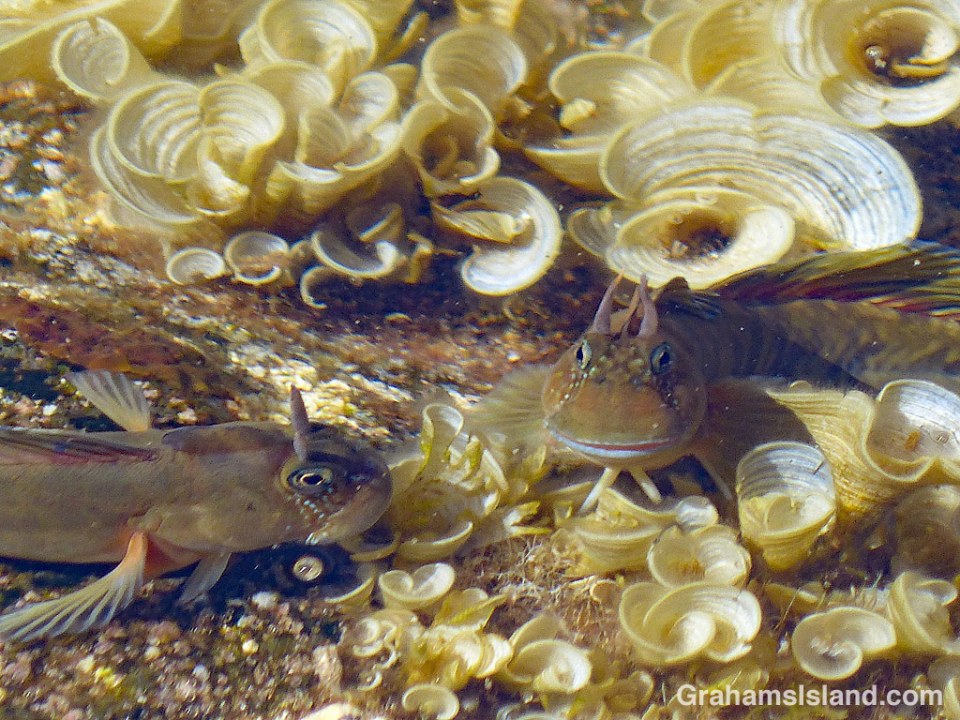
To celebrate, I went back and took some more photos, including these two Hawaiian zebra blennies, both very much alive, and both as delightful as the seaweed, with their little blue dots under the eyes and those oh-so-charming expressions.
Thanks to Jeanne at http://hawaiinaturejournal.weebly.com/ for help with the padina japonica identification.
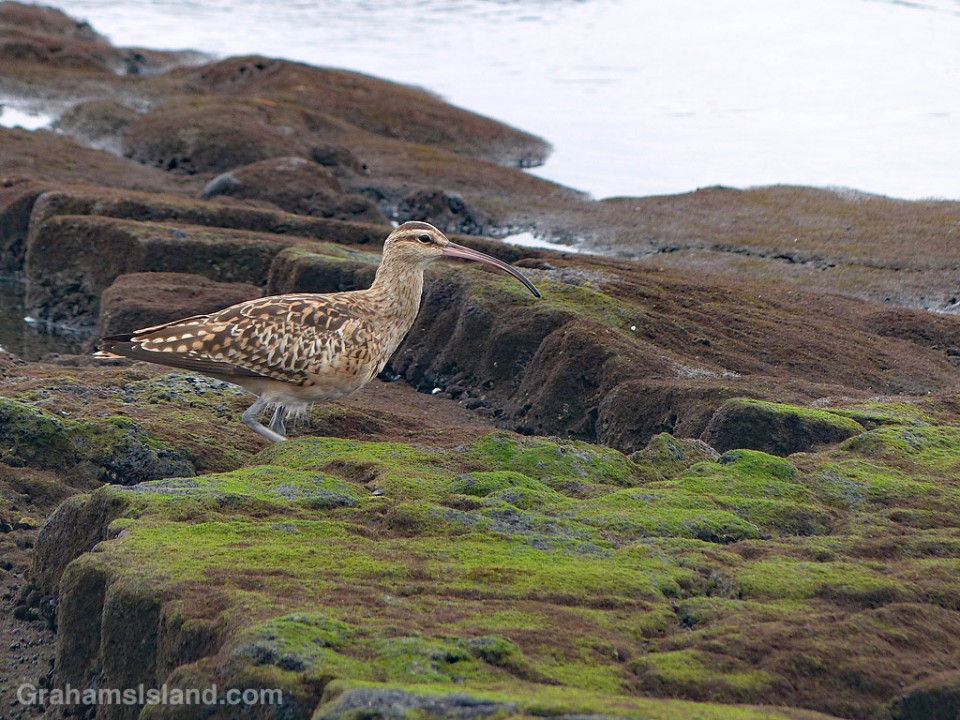
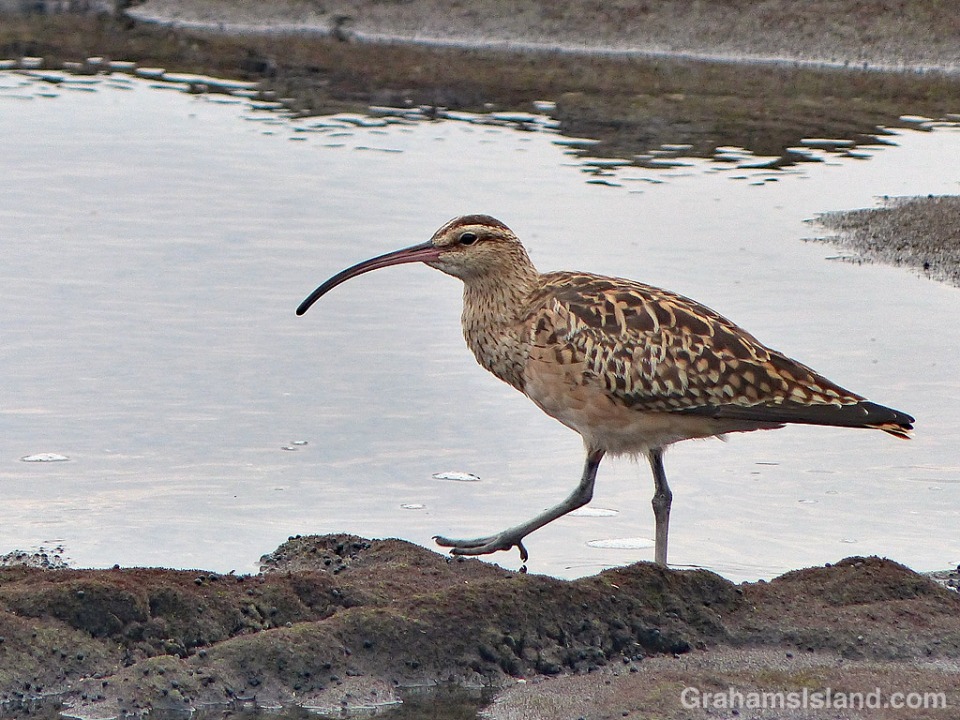
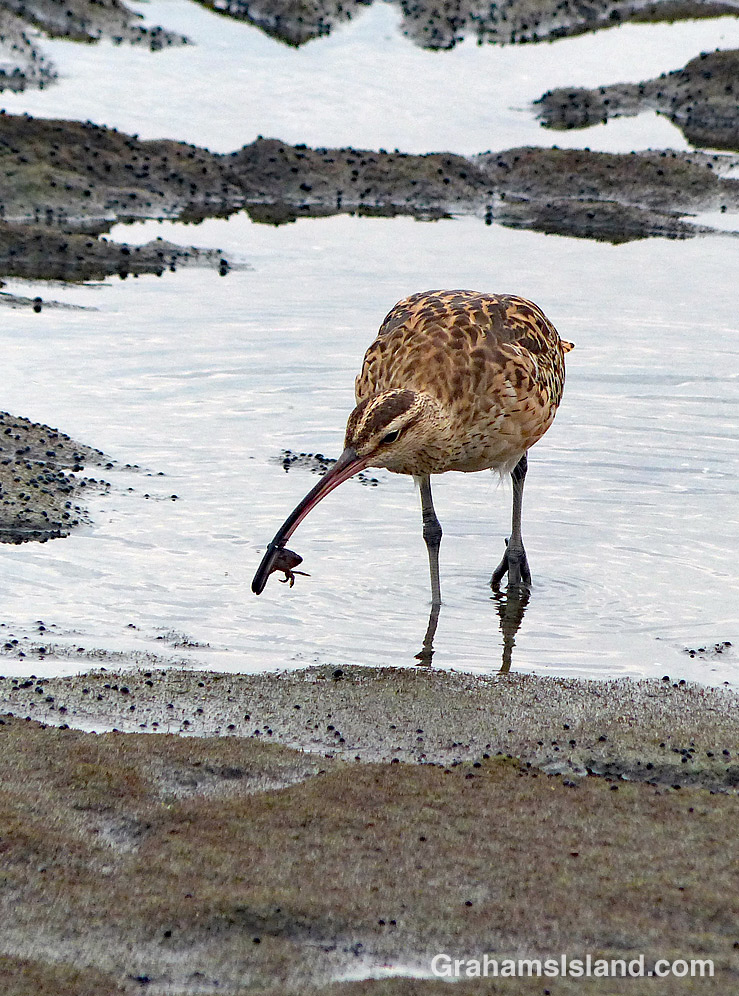 A bristle-thighed curlew making its way along the shoreline at Kiholo while searching for food. The middle photo shows it with a small crab that it plucked from one of the tide pools.

A photo of some colored lava rocks. But wait. Why are there tiny fish among those rocks? No, they’re not skittering about on minuscule legs, a living proof of evolutionary theory. Instead, they’re swimming in very shallow, very clear water near the edge of a freshwater-fed pool, just inland from Akahu Kaimu Bay, south of Waikoloa Resort.
On my last hike along that stretch of coast, I stopped here for a refreshing dip. The entry to the pool was over these somewhat rough lava rocks. While I was feeling my way across them, these little fish seemed greatly interested in my feet, which suggests life in the pool must be very dull indeed.
Posted in response to this week’s WordPress Photo Challenge ‘Liquid.’

Exploring tide pools one day, I found this unfortunate floating blenny. It was quite large, for a blenny, and in a small pool. The weather had been calm for a few days, without much ocean swell. I think the fish was trapped in the pool and, without fresh seawater reaching it, the pool had become stale and oxygen starved.
The macabre essence of the scene contrasted with its painterly quality, enhanced by the blenny’s coloration and the delicate creamy shells in the pool.
Updated 6-20-18
I’ve since learned that the ‘delicate creamy shells’ in the pool are actually a type of seaweed, Padina japonica. I’m also not sure about my oxygen starvation theory either since blennies are notoriously adept as jumping from pool to pool. Two things are unchanged however: the blenny is still dead and I still like the painterly quality.

I’d rather be at the beach, though I’m not one for stretching out on the sand and slowly broiling. I much prefer a beach like Kealia, north of Ho’okena, where the mix of sand and lava attracts tide pool dwellers and the birds that feed on them.
It was here, also, that I first saw butterflies, such as the large orange sulphur (Phoebis agarithe) below, drinking from the sand. I subsequently learned that butterflies can’t drink from open water, but get moisture from dew on plants, wet sand, earth and mud. In addition, drinking from these sources allows butterflies to obtain needed salts and minerals.
I learn something new every day. Now, if only I could remember these things.
Posted in response to this week’s WordPress Photo Challenge, ‘I’d rather be…’


