Author Archives: Graham

Unknown's avatar

About Graham

I take photos when I'm out and about, recording life on the Big Island of Hawaii.

Monk seal pup update

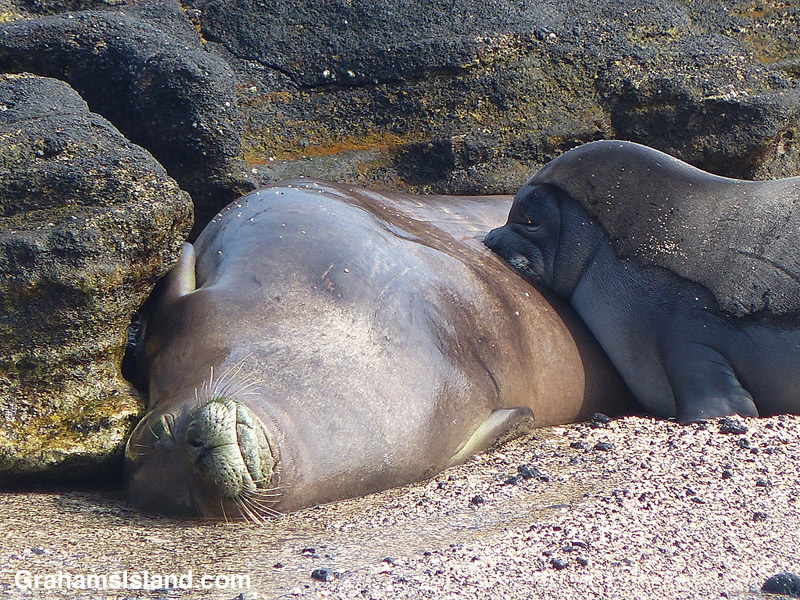
Monk seal and pup

Monk seal pup feedingI visited the Big Island’s newest monk seal pup again, a couple of days ago, and I’m happy to report that mother and pup continue to do well. Since my last post about the pup, it’s clearly been packing on the pounds. Equally obvious is the mother’s loss of weight. Also, since that post, the pup has also been identified as female and given a name, Manu’iwa, which is a reference to the great frigatebird.

In these photos the pup is exactly 6 weeks old, so sometime very soon the mother will leave the pup to fend for herself. The top photo shows the two of them, the pup having shed her black baby coat for the more usual monk seal look. In the second photo, Manu’iwa has a feed. She was lying in the water which is why her lower half looks smooth while the dry upper part is raised and lighter. Below, mom heads for the water leaving Manu’iwa barking that she’s still hungry. Bottom, mom leads Manu’iwa out into the water for a swim, part of her ongoing education of the pup so that it will be able to fend for itself.

I should mention that these photos, as with those in the previous post, are taken with a telephoto lens. The area where the seals spend their time is cordoned off with volunteers monitoring the area and providing information to visitors. The volunteers work to minimize human interactions with the seals. If the pup gets used to humans it may seek them out and, at some point, is likely to have an interaction that ends badly – not necessarily for the pup, but for the person involved. This could be a bite or something more serious. If the pup, or any seal, has such encounters, it will likely have to be captured and relocated to the northwest Hawaii islands, which are uninhabited. This would be hard on the seal, faced with new territory and greater competition, and also be a blow to the goal of raising the number of monk seals living permanently around the main Hawaii islands.

Monk seal and pup enter the waterMonk seal and pup swimming

V-22 Ospreys at Upolu

V-22 Ospreys landing at Upolu

Upolu is a favorite spot where I walk most often. The coast below the airport is wild with crashing surf and strong winds. There’s a wealth of ocean life to be seen from turtles to humpback whales, though this year the whale numbers have been down, at least from my observations. There’s also a good variety of birds and other wildlife.

Also on this coast are Mo’okini Heiau and King Kamehameha’s Birthplace and, in a more modern vein, there’s the airport. I’m posting these photos, not because this is the most notable feature of the area, but because I just took them.

Last May, the Marine Corps got some flack for the amount of operations taking place at Upolu, so they stopped using it for the rest of the year. This is the first time I’ve seen the planes back since then, but it has been two days in a row that I know of.

In the top photo, the planes kick up the dirt as they come in to land. Below, they sit on the tarmac, dwarfing the little plane used by a local skydiving operation.

Posted in response to the WordPress photo challenge, ‘Favorite place’.

V-22 Ospreys at Upolu

Palila Forest Discovery Trail

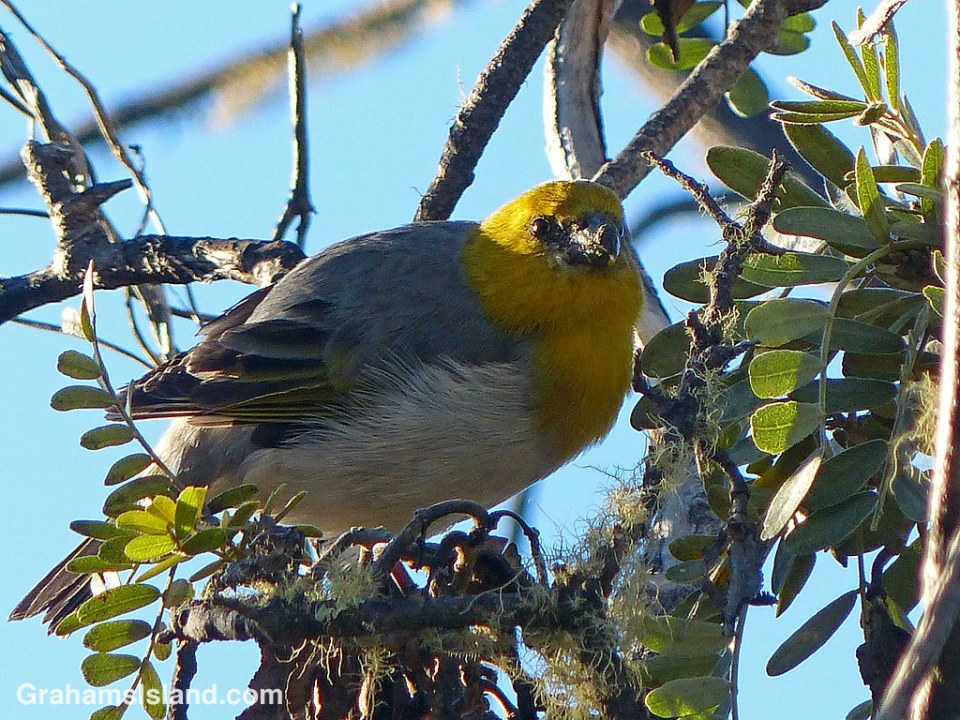
Palila on a branch

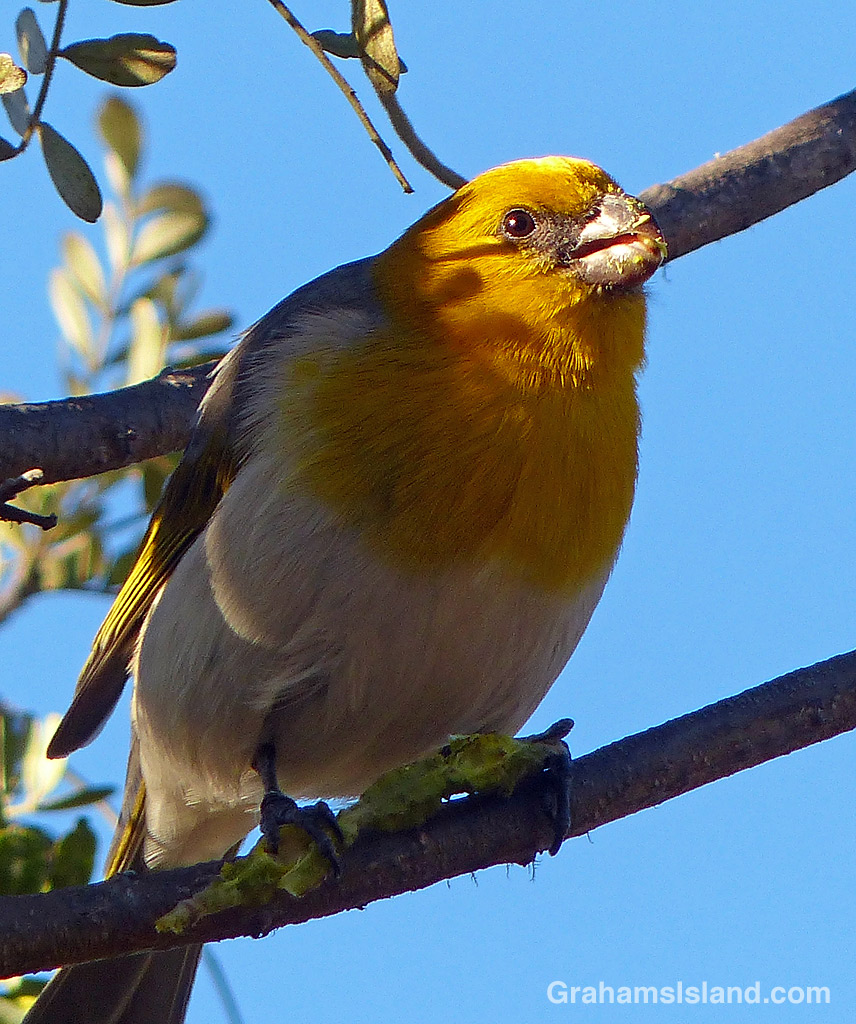
Palila with mamane seedI haven’t ever been a real birder, but since moving to Hawaii I’ve been more drawn to them. Because of this interest, one of my favorite places to visit on the Big Island is the Palila Forest Discovery Trail. Opened in July, 2016, this one mile loop trail passes through Mauna Kea’s unique, high-elevation dry forest.
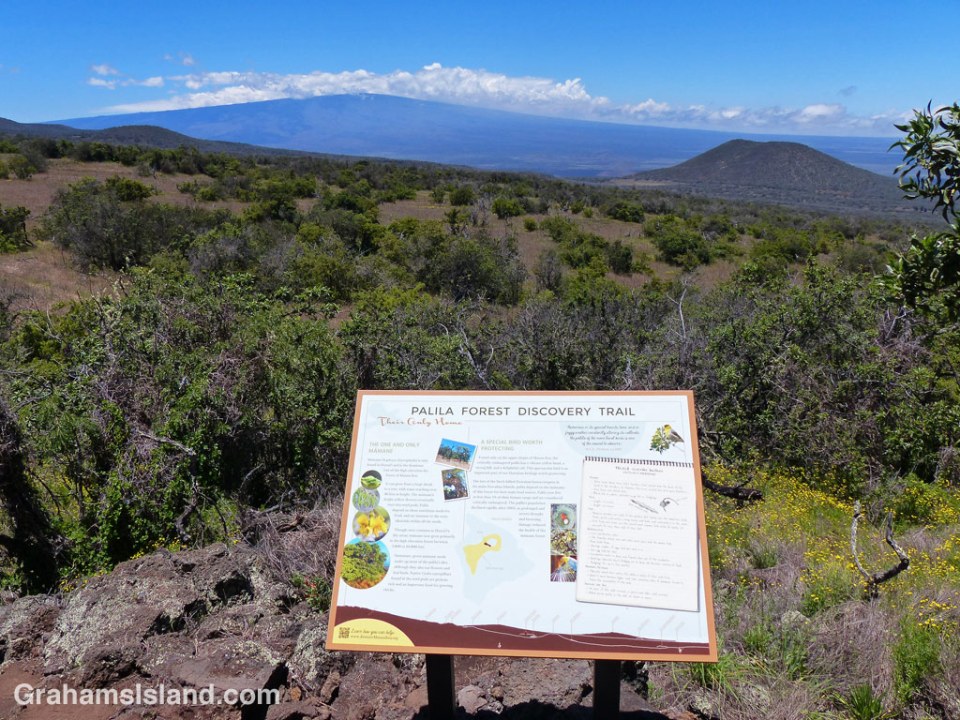
The endangered palila (top two photos, eating a mamane seed), which I posted about previously here, is the signature bird to be seen there, but there are many other kinds of birds, both native and introduced, in the area. In addition, the trail has a good variety of other wildlife from bugs to wild pigs. To top it off, the views towards Mauna Loa (below) and Maui are wonderful.

Finally, the drive to the trail goes along Old Saddle Road, which is a fun drive and a place where I often see pueos, the native Hawaiian owl, as well as wild turkeys and other birds and wildlife. All in all, a trip I never tire of making.

The Palila Forest Discovery Trail is featured on the Hawaii Island Coast to Coast Trail, a selection of sites that offer birding opportunities on the Big Island. For more information about Hawaii Island Coast to Coast Trail, go to hawaiibirdingtrails.hawaii.gov/.

For more information about Palila Forest Discovery Trail, go to dlnr.hawaii.gov/restoremaunakea/palila-forest-discovery-trail/.

Posted in response to the WordPress photo challenge, ‘Favorite place’.

View of Mauna Loa from Palila trail

Allograpta obliqua hoverfly

Allograpta obliqua hoverfly

I saw this hoverfly on a mamane flower near the top of Pu’u Wa’awa’a, which is one of my favorite places to hike. At first I thought it was a wasp or bee, which is what I’m supposed to think. Mimicking these insects may afford the hoverfly some protection from predators.

Allograpta obliqua is considered a beneficial insect since its larvae feed on aphids.

Many thanks to Daniel at whatsthatbug.com for help with the identification.

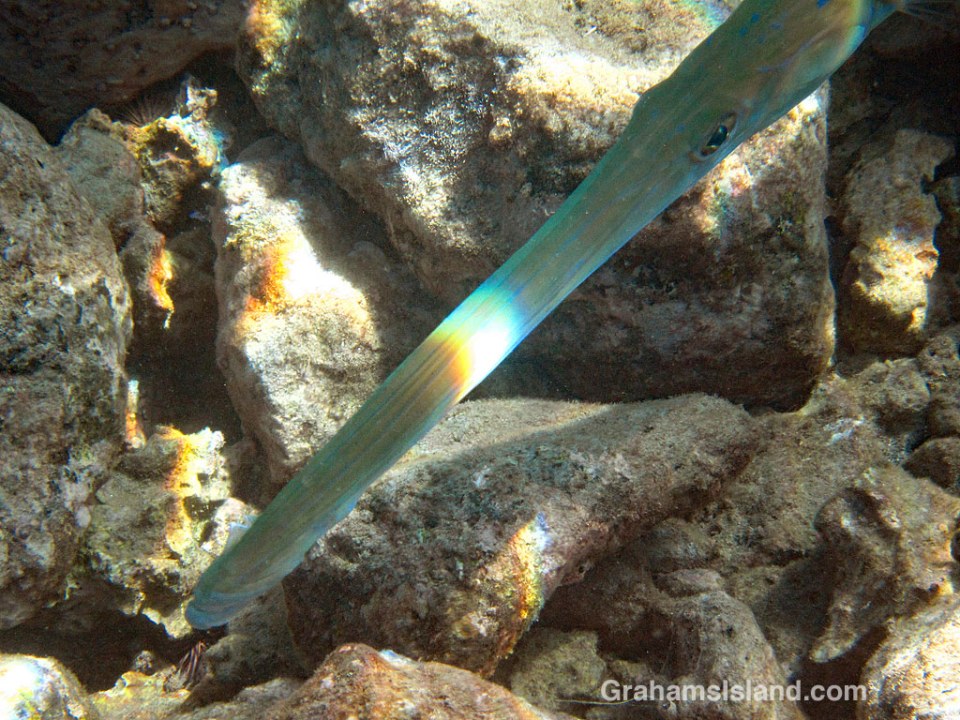
Cornetfish close-up

Bluespotted Cornetfish

Bluespotted cornetfish are long and slender, though they appear wide if seen from above. They can often be seen hovering in quite shallow water. While they’re quite capable of shooting off if they feel threatened, they’re equally likely to remain where they are and watch as swimmers or snorkelers pass close by, even directly above them.

This one was in very shallow water as I passed over it and it didn’t budge. It had a wound on the right side of its snout, near the tip. I’ve noticed other cornetfish with damaged snouts including one where the whole thing veered off at 45 degrees. I saw it on more than one occasion and it didn’t seen to be bothering the fish. I assume the damage was the result of an encounter with some would-be predator, but part of me likes to wonder if such wounds are sometimes simply the result of banging into things with that long, long snout.

Aphelandra sinclairiana

Aphelandra sinclairiana flowerAphelandra sinclairiana

Aphelandra sinclairiana, is a shrub commonly known as Coral Aphelandra, orange shrimp plant, or, as this one was labeled, Panama Queen. It’s native to Central America, but this one was at Hawaii Tropical Botanical Garden, near Hilo.

For more information about Hawaii Tropical Botanical Garden, go to htbg.com.

Posted in response to this week’s WordPress Photo Challenge, ‘I’d rather be…,’ because I’d rather be out looking at flowers.

Kealia beach

Kealia Beach

I’d rather be at the beach, though I’m not one for stretching out on the sand and slowly broiling. I much prefer a beach like Kealia, north of Ho’okena, where the mix of sand and lava attracts tide pool dwellers and the birds that feed on them.

It was here, also, that I first saw butterflies, such as the large orange sulphur (Phoebis agarithe) below, drinking from the sand. I subsequently learned that butterflies can’t drink from open water, but get moisture from dew on plants, wet sand, earth and mud. In addition, drinking from these sources allows butterflies to obtain needed salts and minerals.

I learn something new every day. Now, if only I could remember these things.

Posted in response to this week’s WordPress Photo Challenge, ‘I’d rather be…’

Large Orange Sulphur Butterfly on sand

Abstracts: Birdman

Abstracts-Birdman

I’d rather be out exploring, which is how I found conclusive evidence of the existence of this previously unknown creature – half man, half bird. I bet it spends a good deal of its time going around in circles.

Posted in response to this week’s WordPress Photo Challenge, ‘I’d rather be…’