Category Archives: Insects

Gnat cloud

Gnat cloud and wind turbine

Gnat cloudDriving past Hawi Wind Farm, I unexpectedly ran into several clouds of gnats. I quickly rolled up the windows on my truck, not needing a cab full of gnats to influence my driving. Sometimes the clouds blended and made one big gathering, and I was reminded of murmurations of starlings, though perhaps not as dramatic.
It’s the first time I’ve seen anything like this since I’ve lived here. The clouds are made up of male gnats hoping to snag a mate. The large numbers give them visibility so that the females can spot them. Of course, that doesn’t explain how the males can spot the individual females when they show up. Hmmm.

Posted in response to this week’s WordPress Photo Challenge ‘Unlikely.’


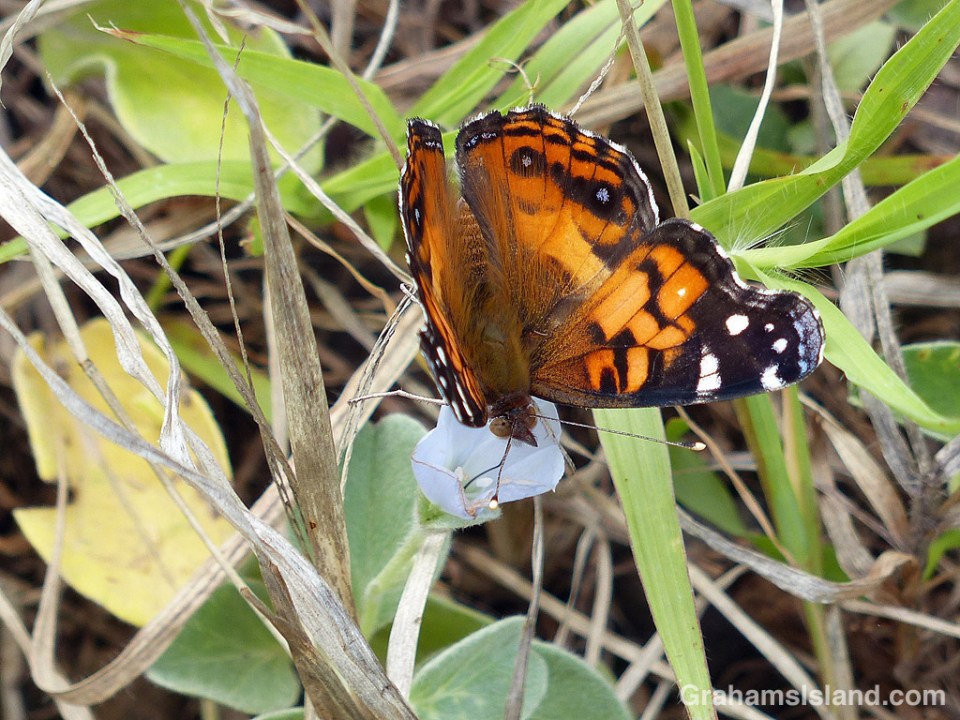
American painted lady butterfly

American Painted Lady Butterfly feeding

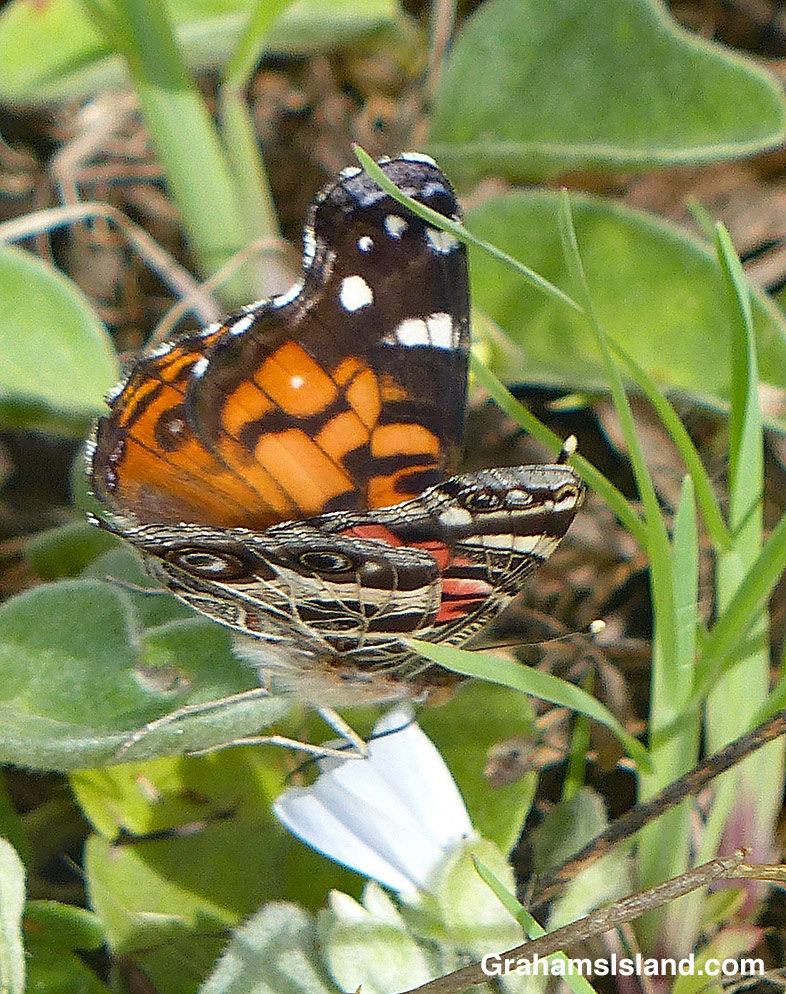
American Painted Lady ButterflyA while back, I posted photos of a painted lady butterfly (Vanessa cardui) here. The American painted lady butterfly (Vanessa virginiensis) is similar, but with some noticeable differences.
On the upper-side, the American painted lady markings are more pronounced on both the forewings and hindwings. On the underside, the same is true, with the American painted lady’s color standing out more. In addition, the hindwings have two large circles as opposed to the four smaller circles of the painted lady.

The American painted lady is also known as simply American lady or painted beauty. Alternative names for the painted lady butterfly are cosmopolite or cosmopolitan.

Blooming mock orange

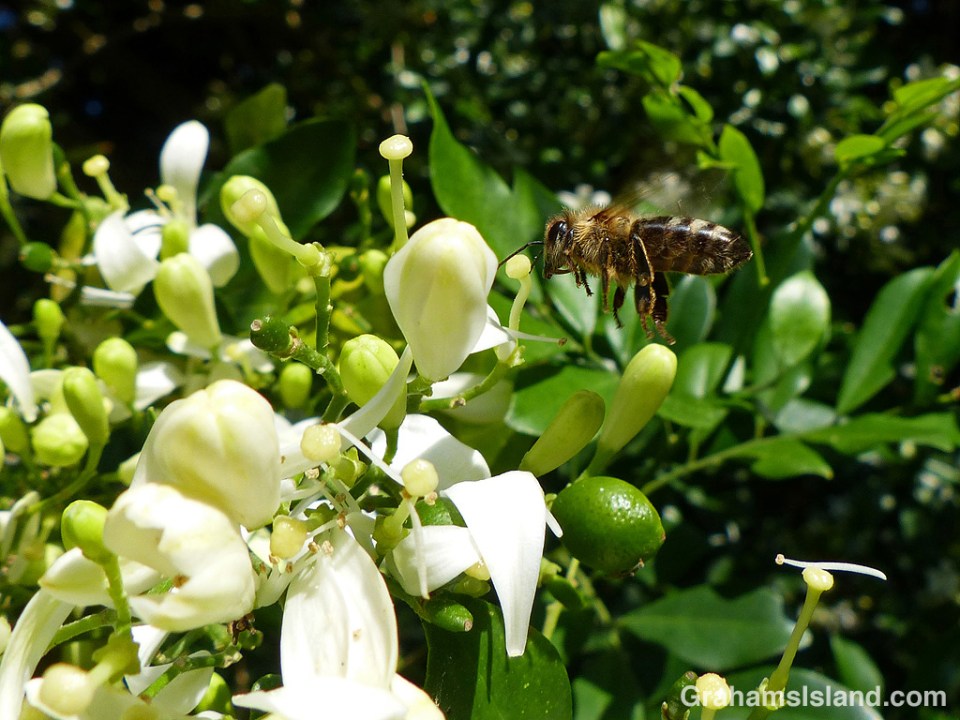
Bee flying to a mock orange

Bee on a mock orangeThree or four times a year, the mock orange in the yard comes into bloom with a prolific show of small, white flowers and wonderful fragrance. During these times it’s a bee magnet and the whole tree buzzes from morning to night.

Posted in response to this week’s WordPress Photo Challenge ‘Prolific.’

Allograpta obliqua hoverfly

Allograpta obliqua hoverfly

I saw this hoverfly on a mamane flower near the top of Pu’u Wa’awa’a, which is one of my favorite places to hike. At first I thought it was a wasp or bee, which is what I’m supposed to think. Mimicking these insects may afford the hoverfly some protection from predators.

Allograpta obliqua is considered a beneficial insect since its larvae feed on aphids.

Many thanks to Daniel at whatsthatbug.com for help with the identification.

Kealia beach

Kealia Beach

I’d rather be at the beach, though I’m not one for stretching out on the sand and slowly broiling. I much prefer a beach like Kealia, north of Ho’okena, where the mix of sand and lava attracts tide pool dwellers and the birds that feed on them.

It was here, also, that I first saw butterflies, such as the large orange sulphur (Phoebis agarithe) below, drinking from the sand. I subsequently learned that butterflies can’t drink from open water, but get moisture from dew on plants, wet sand, earth and mud. In addition, drinking from these sources allows butterflies to obtain needed salts and minerals.

I learn something new every day. Now, if only I could remember these things.

Posted in response to this week’s WordPress Photo Challenge, ‘I’d rather be…’

Large Orange Sulphur Butterfly on sand

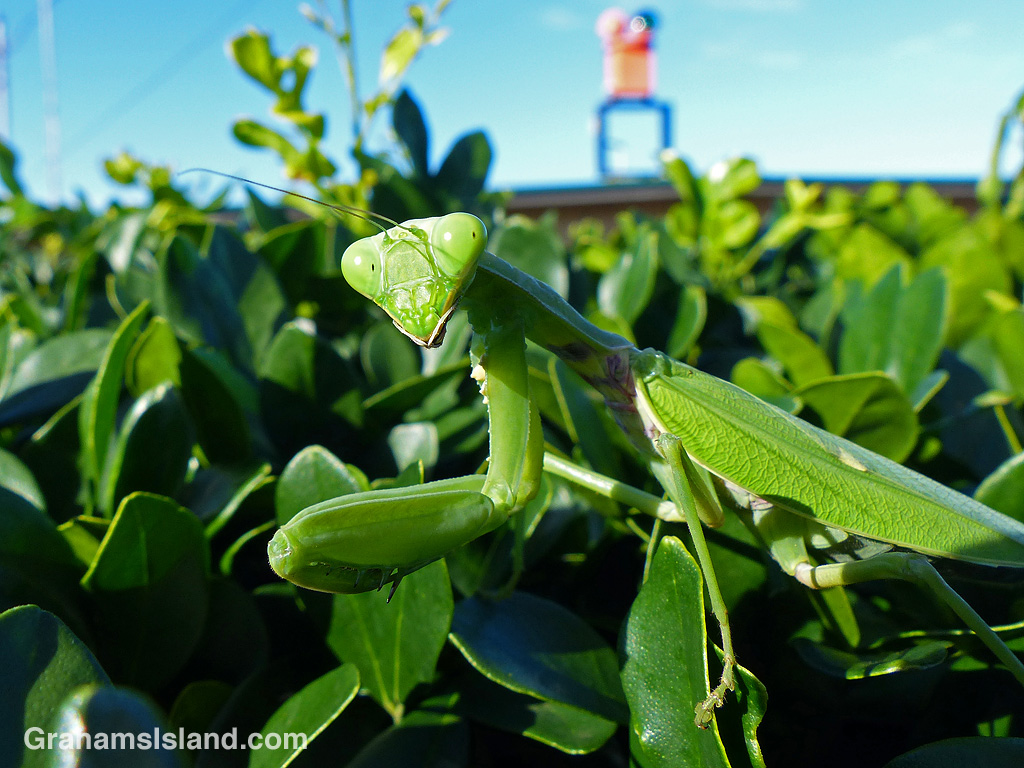
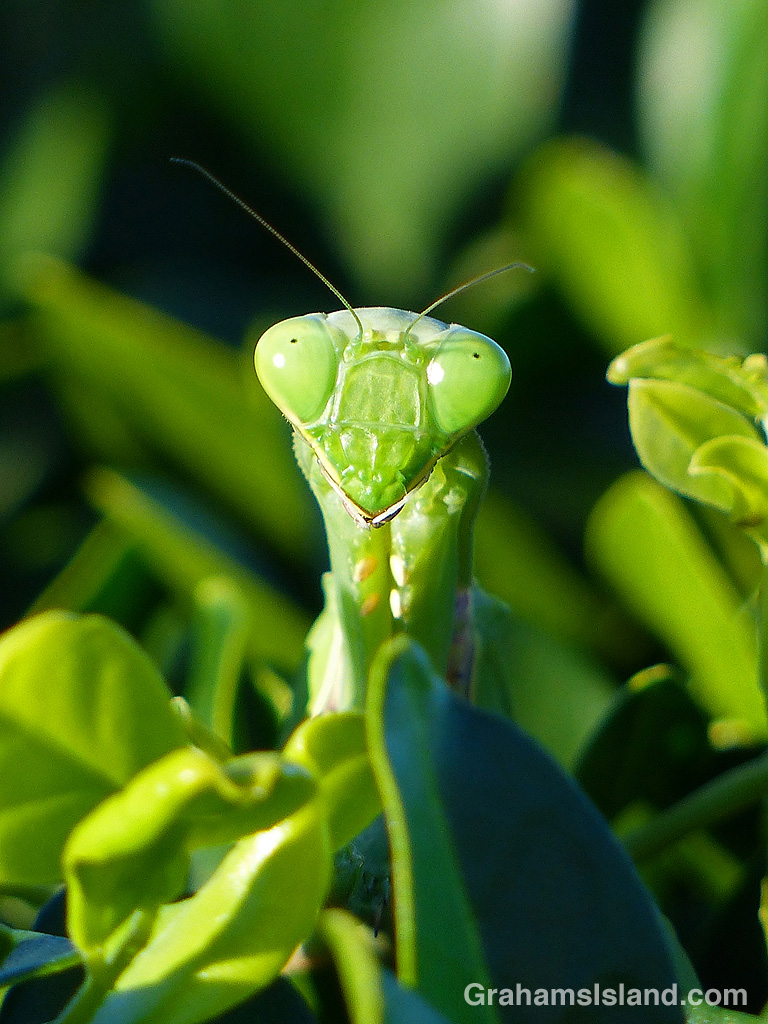
An alien-like praying mantis

When it comes to bugs, there are many contenders for otherworldly status. One such is the praying mantis. This one was slowly working its way along a hedge looking for prey, but it kept a wary eye out for the weird looking, big-headed alien creature pointing that glass-fronted box in its direction.

Posted in response to this week’s WordPress Photo Challenge, ‘Out of This World.’

Angry bees

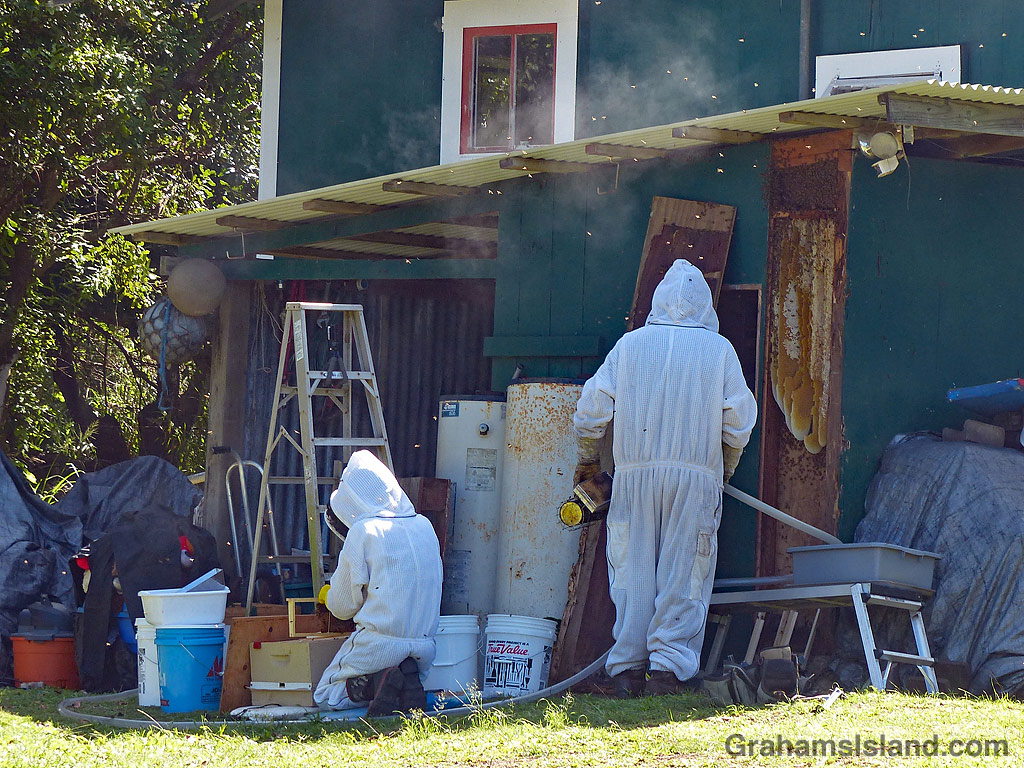
Beekeepers remove a swarm of bees nesting in a wallA beekeeper removes a swarm of bees nesting in a wall


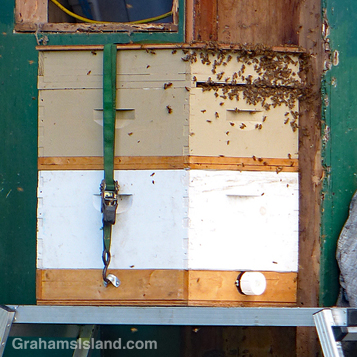
A swarm of bees is removed from a wall and settled in a new hive

Recently, when I moved my truck to mow the lawn, I noticed this scene at a neighbor’s house. I was impressed by the number of bees and the huge, hanging combs filled with sweet honey. When I got out of the truck, I thought I’d get a few photos.

The bee wrangler called out to me that there were a lot of angry bees about. I said I wasn’t going to come closer and asked if it was OK to take photos. He said that was fine, but the bees might come and find me where I was. Since I was a good 70 or 80 feet away, I wasn’t too worried. I snapped a few photos, then heard a buzzing noise, and felt something on my arm. Sure enough it was a bee.

I imagined this bee sending back a message along the lines of, ‘Hey, here’s another one of those creatures, but this one doesn’t have protective clothing. Let’s get him.’ I pictured the rest of the colony heading my way in a matter of moments, so I blew the bee off my arm and hotfooted it back home. Before I went inside I made sure I hadn’t accidentally ended up with the queen bee lodged somewhere in my clothing. No need to have my day turn into a starring role in a horror movie.

After the lawn was mowed, the bee wranglers were still on the scene so I left the truck where it was. A couple of hours later I thought it would be safe to retrieve it. As I reached the house, the bee wranglers were just leaving. We chatted a bit about what they’d been doing. They’d cleaned out the bees’ home in the wall and put a new hive next to it. Presumably they’d found the queen and installed her in her new digs. The idea is to have the bees relocate to the new hive and, when they’re settled in, move it to a new location, probably on one of the farms around here.

They warned me, however, that there were still some disgruntled bees flying around. As if on cue, I heard buzzing. Something landed on my head and started burrowing into my hair. The bee wrangler had just handed my his card and I used that to try and extract the bee. The buzzing intensified, but I couldn’t dislodge it. Finally, it popped loose and I took off for my truck. I jumped inside, making sure the door shut properly and the windows were closed, and drove home.

I avoided walking past that house for a while until, two days later, the hive was gone and it was safe to venture out again.

For more information about Ho’ola Beekeepers, go to savehealthrive.com.