Sonoran carpenter bees are big. They’re the kind that, when I see one, I automatically flinch because I don’t want it to bump in to me and have it leave a bruise. Truth is, they’re pretty docile. This one is a female and has a stinger, but will only use it if provoked. Males are brown and somewhat smaller and don’t have a stinger at all.
Posted in response to Becky’s October Squares challenge theme of ‘Kind.’ See more responses here.
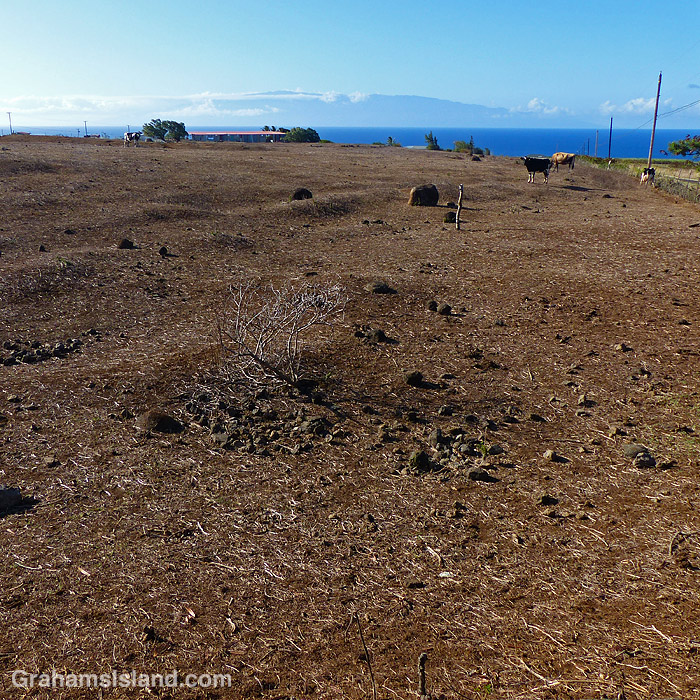
A couple of days ago I posted an image of an irrigation unit used in one of the local dairy’s fields (here). This is the same kind of field but without irrigation. There were more cows in this field than blades of grass because it’s been so dry in this part of the island.
Ironically, since I took this photo three days ago, we’ve had a couple of days of fairly solid rain and this field is already showing a tinge of green where new grass is coming through. However, the last time it was this dry, after it rained the first things to spring up were weeds which basically choked out the grass.
Posted in response to Becky’s October Squares challenge theme of ‘Kind.’ See more responses here.
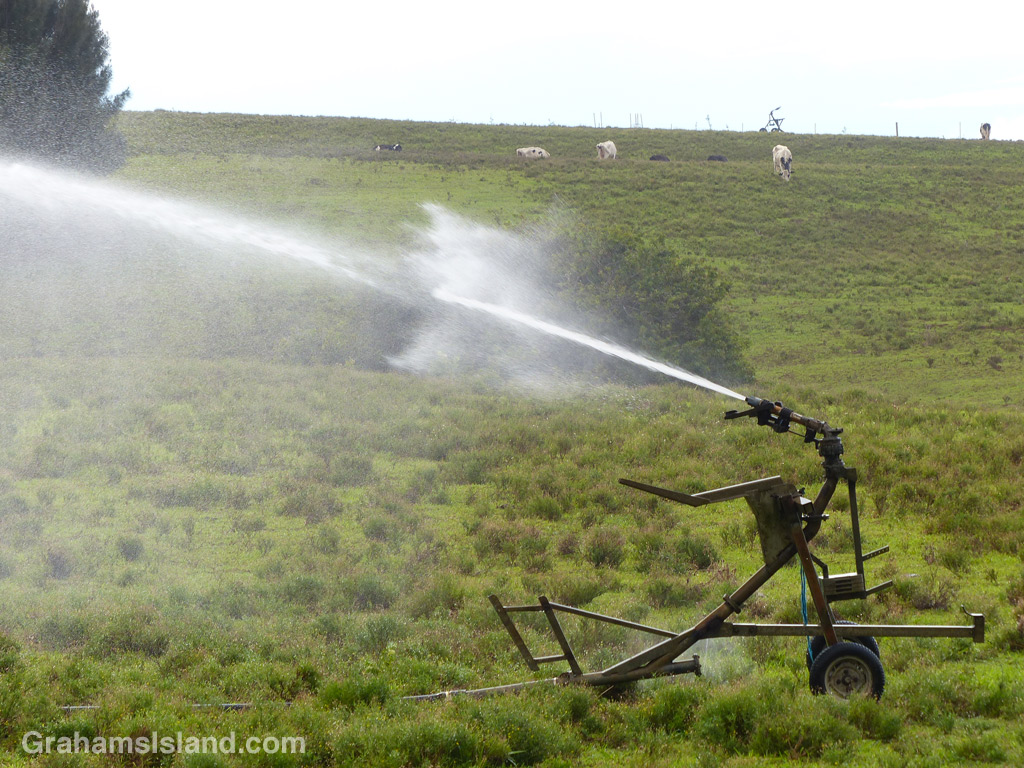
It’s been a very dry summer and fall in this part of the island. This is one of the greener fields in the area and that’s entirely due to irrigation of which this is one unit.
Posted in response to Bushboy’s Last on the Card photo challenge. See more responses here.
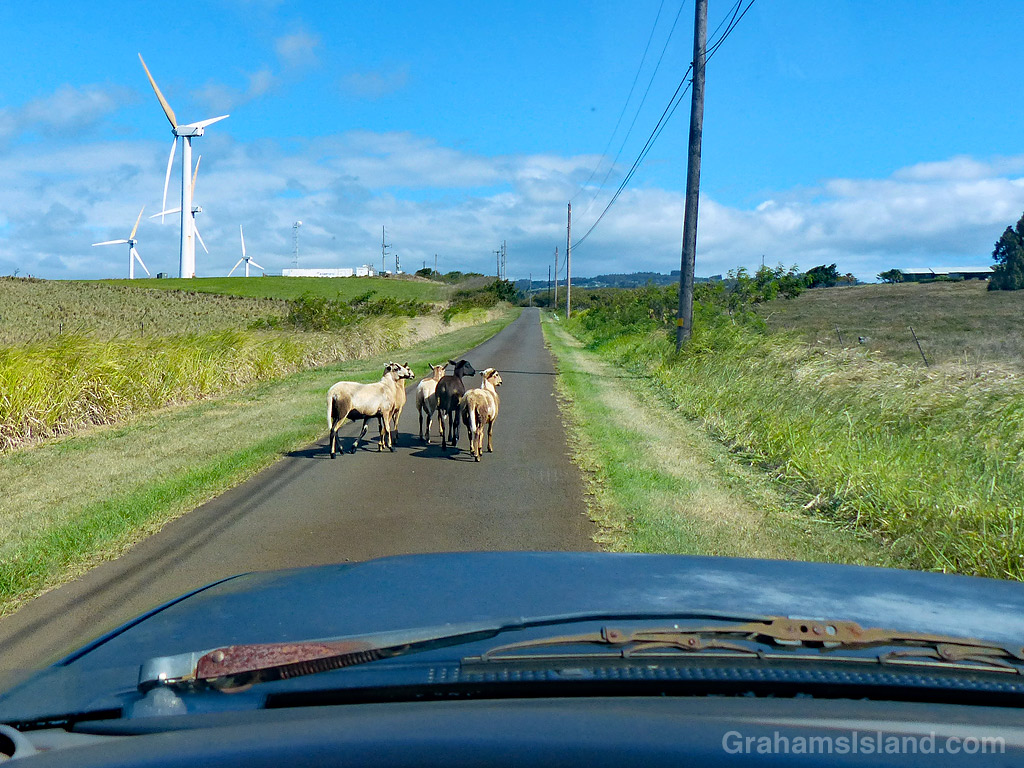
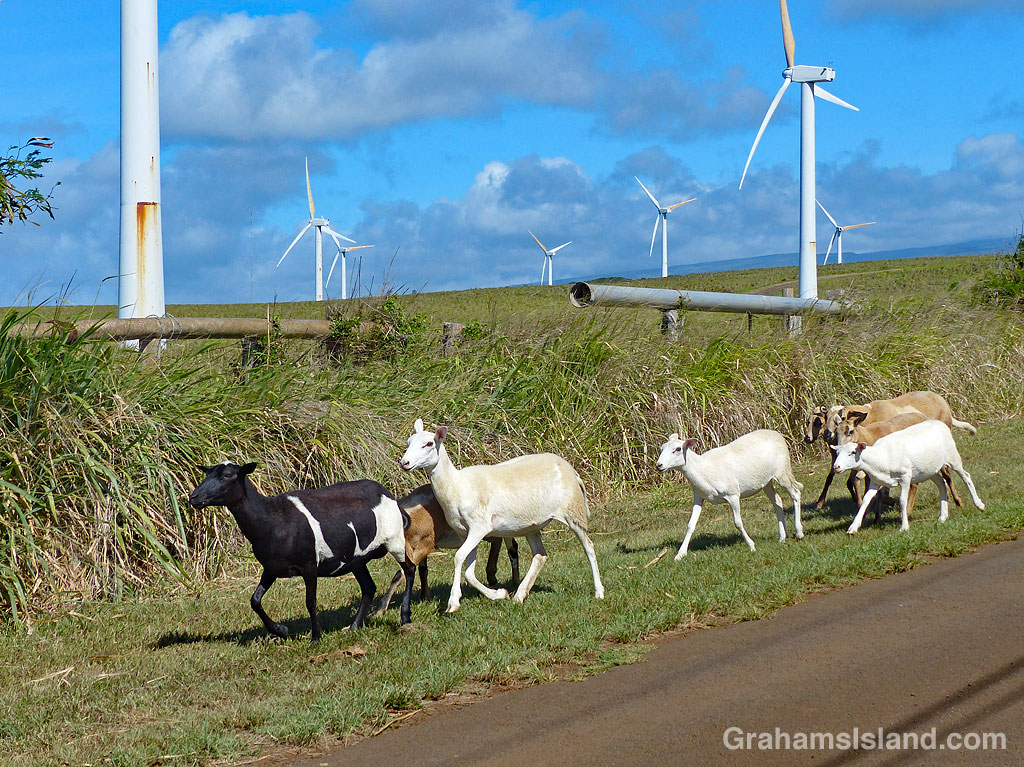
On my drives to and from Upolu Airport, it’s not uncommon to encounter groups of sheep on the road. Some of the field fencing is not in the greatest shape and, in any case, it’s primarily there to corral cattle, not that it always works for that either.
When I do encounter sheep, their typical response is to run ahead of me. At some point though, they usually veer off to the side and I can get by. Sometimes they turn and run back towards me. The last group I saw ran off, with several of the leaping into the air, twirling as they did so. I don’t think it was because they were so excited to see me.
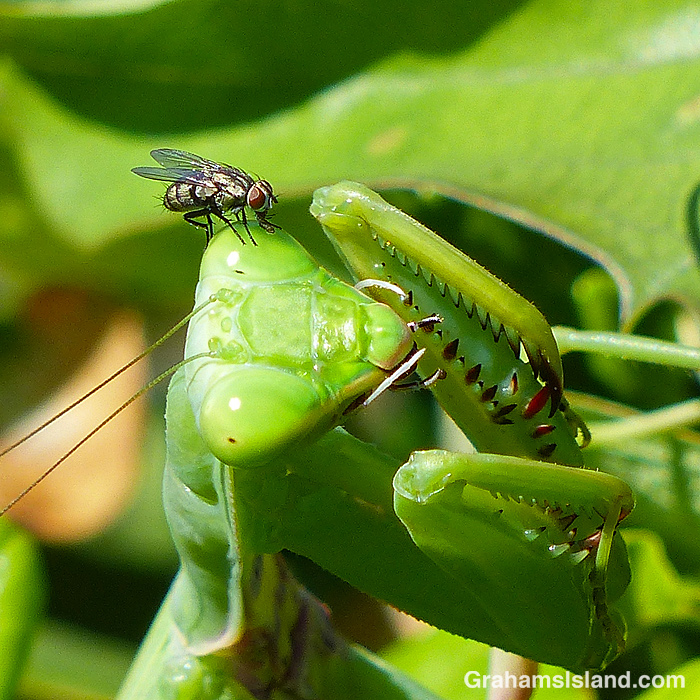
At Upolu Airport, where I go walking a lot, there’s a mock orange hedge with a passion vine running through it. I check this hedge to see what’s happening on it and lately, it’s been overrun by flies. I don’t know why this is, but I wasn’t surprised when I noticed two praying mantises stationed in the hedge. They were having a field day.
The flies would flit around as flies do, but when one settled, a mantis would strike. Their success rate was quite high, but the flies were easy targets. The safest place to be was on one of the mantises, but that wasn’t a long term solution.
The scene remained the same over three or four days, and then, though the flies were still around, the mantises disappeared. I guess that’s understandable. I mean, how many flies do you think you could eat before you’d start looking for something different?
This week’s Sunday Stills challenge theme is ‘Towering.’ See more responses here.
Up near the top of Kohala Mountain is this array of towers. They sit in the middle of pastureland, surrounded by cattle and horses. The one with the large white ball on top is NEXRAD, the Next Generation Weather Radar, which provides current time information showing where clouds and rain are moving through the area. It’s also a navigation aid to local pilots who refer to it as the golfball.
The cattle don’t have access to the information from the golfball, but they know that when they’re wet, it’s raining, and when they’re dry, it’s not, and really that’s all anyone needs to know.
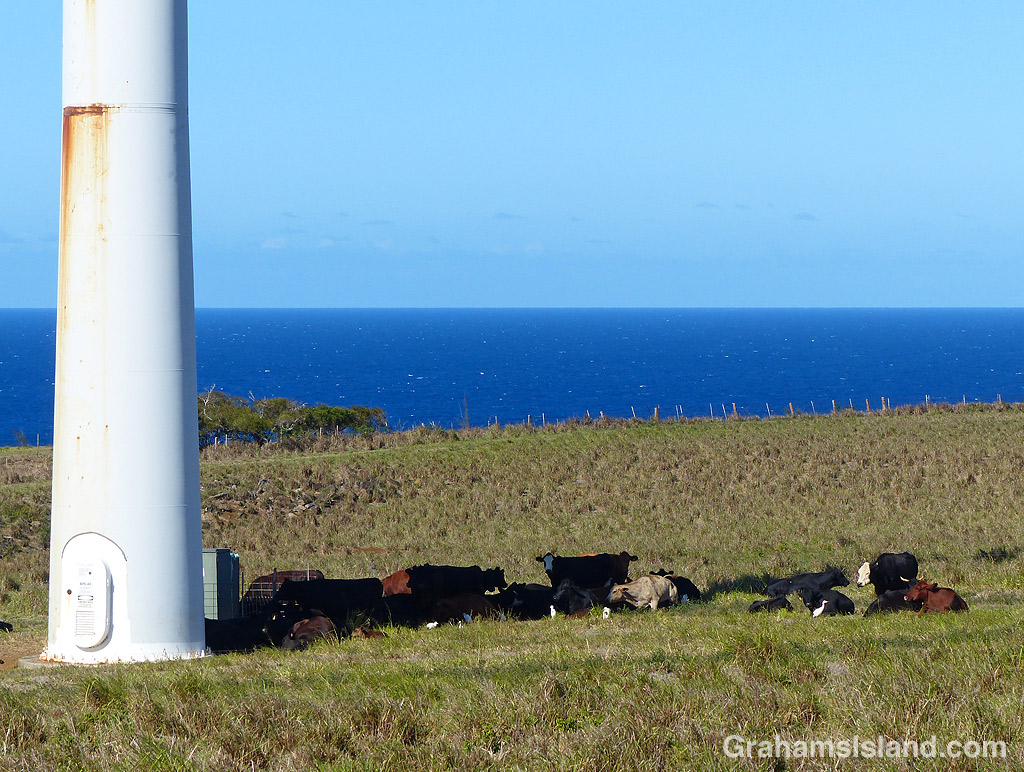
The Hawi Wind Farm often shares its grounds with cattle or horses. It’s open pasture with no trees and on this day, a clump of cattle had wedged themselves into the narrow band of shade cast by one of the turbines.
This week’s Sunday Stills challenge theme is ‘Inside.’ See more responses here.
I have a ladder I keep in a shed. Lately, I’ve had to access the attic on a regular basis (rat problems!) and have to bring the ladder inside to do so. I’ve learned from experience that, while in the shed, the ladder is home to a variety of creatures, mostly geckos. So before I bring it in the house I do my best to shake out the residents. Almost always, one or two will leap to safety. However, sometimes it’s not until I have the ladder in the house and set up that the more tenacious geckos make a break for it.
I’ve had a spate of this happening, which has resulted in a boost in the numbers of nocturnal house geckos inside. This, in turn, has resulted in territorial clashes between the geckos.
What does this have to do with jars of pasta? Well, at one end of this shelf is a cupboard which is home to one of the resident geckos. The other end of the shelf falls into the realm of a house gecko that lives in a closet in the next room. Into this setup, up above the jars, stumbled one of the new geckos. When it got too close to one end, the cupboard gecko chased it away. It ran to the other end where the closet gecko chased it back. Back and forth it went with the other geckos closing in with each pass. Soon the three of them were very close together.
At this point, the new gecko scurried down the wall in amongst the jars. This left the two resident geckos facing off in close proximity. Cupboard gecko charge the other one, but ran right past while closet gecko just looked bemused. Problem was, now they were both separated from their respective territories by the other gecko. A series of feints and scampers ensued before they regained their own homes.
In the meantime, the new gecko kept a low profile down amongst the pasta jars. That’s when I took this photo, as it was tentatively checking to see if the coast was clear.







 Graham's Island