Category Archives: Animals

A green anole looking for its keys?

Anole hanging on to leaf

Something about how this green anole is hanging on to the leaf, and its expression — a touch of frustration and resignation — made me imagine it was looking for something, lost keys perhaps, or that bug it had stashed for later.

More likely, it’s thinking, ‘If I keep very still, perhaps this annoying thing will go away.’

Tenting for termites

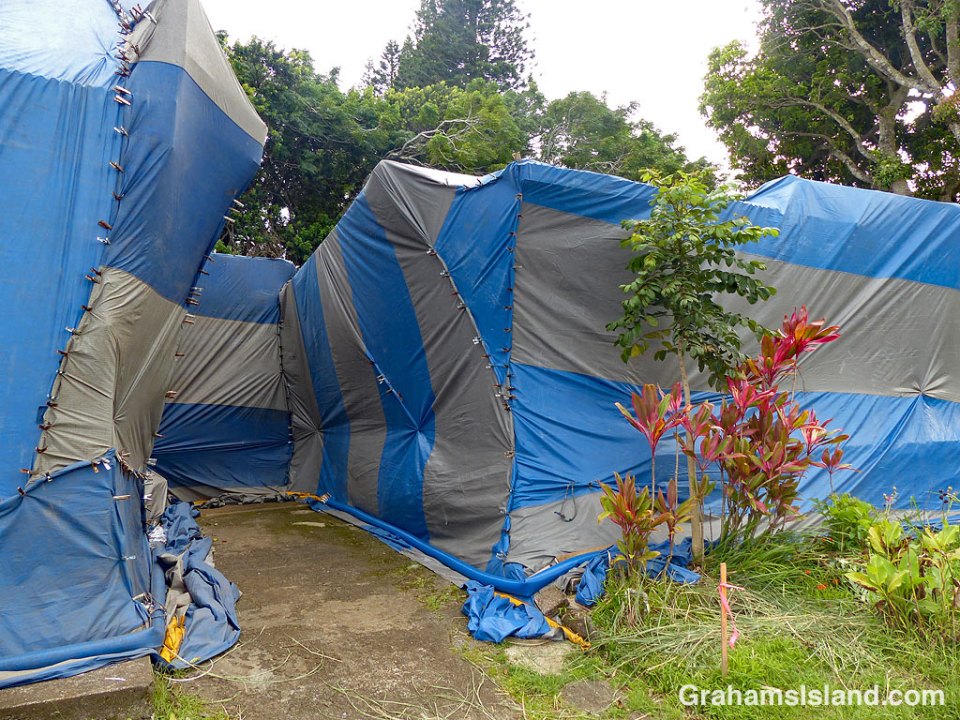
Tented for termites

No, it’s not the circus come to town. These tents are for a more macabre purpose, the termination of termites.

As in most warm climates, termites are a problem here. Houses, especially older ones, are easily colonized. Without treatment, the occupying termites will consume wood from the inside, leaving a thin membrane as protection. Infested wood might look fine, but a gentle push on the surface will go right through two or three layers of paint to the termites’ cavern inside.

Besides leaning against a wall and going right through, a prime indicator of termites is small mounds of little round pellets below a pinprick hole in a wall or piece of furniture. These are termite fecal pellets, which the worker termites clear out of the nest from time to time.

Another indicator of the presence of termites is to turn a light on and find a horde of them flying around the room. Around here, May is the prime time for this activity. These flying termites are fertile males and females, leaving the nest they grew up in to find a place of their own and start a new colony.

As unpleasant as it is to find a room full of flying termites, it’s even worse to wake up and see countertops littered with discarded wings, a sure sign that these fertile termites have moved in to a new spot.

So tenting for termites is common practice here. The structure is covered with nylon sheeting until it is completely sealed and then a fumigant is pumped in. The tent usually remains on overnight. After the tent is removed, the house has to sit empty a while for the gas to dissipate. It’s not wise to go back in too early or one could find oneself joining the termites. Typically it can be two or three days before a home can be reoccupied.

Tenting for termites is effective but it has downsides. It works for drywood termites, but not subterranean termites since they live outside the house and just dine inside. There are also environmental concerns about the process. And while fumigation works, there’s no guarantee that a new colony of termites won’t move in just as soon as the gas has cleared.

Tenting for termites

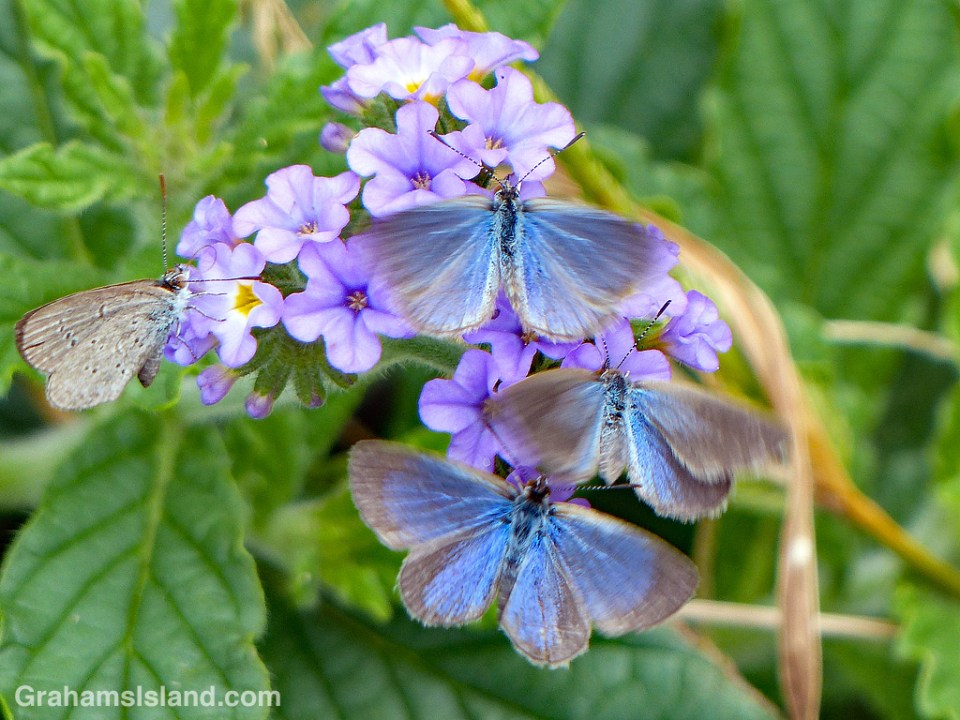
Lesser grass blue butterflies

Lesser grass blue butterflies

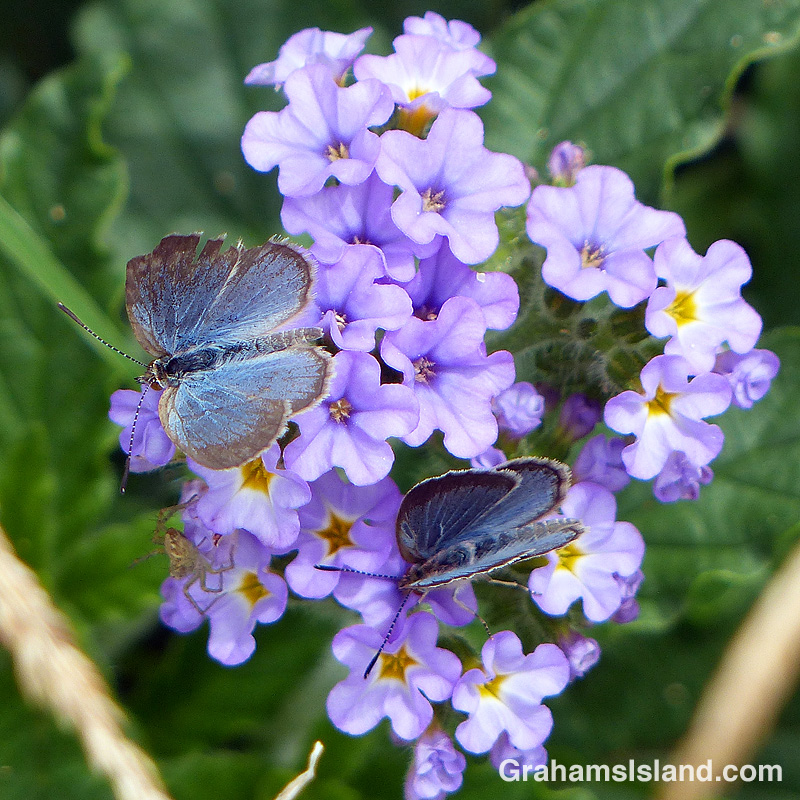
Lesser grass blue butterflies and a spiderThe lesser grass blue butterfly (Zizina otis) was first seen in Hawaii on Oahu in 2008 (for an article, or most of an article, about the find, click here). They’re now well established on the Big Island as well.
Lesser grass blues are very small, with a wingspan no more than ¾-inch. With wings folded up they’re the size of a small fingernail. They also fly close to the ground, within a foot or two.

Lately, I’ve been seeing them in large numbers on these blue heliotrope (Heliotropium amplexicaule) flowers. When I say ‘seeing them,’ what I mean is that when I walk past a patch of these flowers, a host of lesser grass blues will flutter up from the flowers, dance around in a tizzy for a few moments, and then settle back down again. When they do this, it’s like blue confetti being thrown (a few inches) into the air.

I’ve tried to capture this image with my camera, but haven’t been able to (and I’ve taken LOTS of photos). The butterflies are so small, I’m tall, and the effect is fleeting. But the top photo gives an idea of what’s going on, with three lesser grass blues homing in on the small blue heliotrope flowers while a fourth has already found a spot.

It wasn’t until I processed the photos at home that I noticed the spider in the second photo. I don’t know what it made of all the butterfly activity. I hope they weren’t its prey.

Bee on lantana

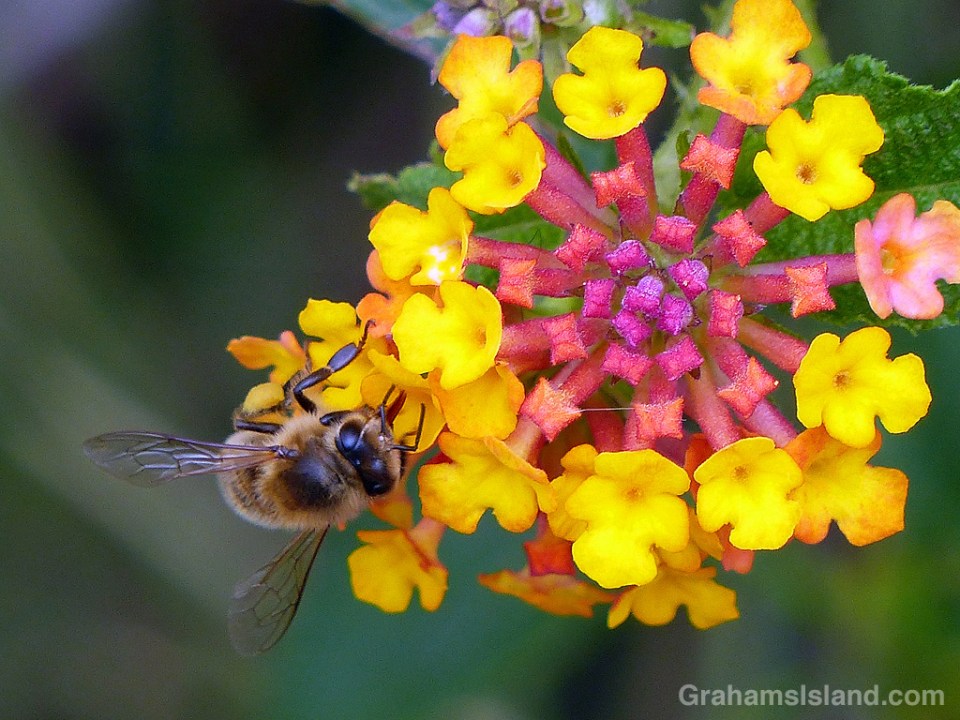
Bee on Lantana

Lantana is such a colorful flower – pink and purple, yellow and orange (and invasive here, but let’s not talk about that). Curiously, it doesn’t seem all that popular with bugs, at least by my observations. But at certain times I see butterflies very interested and on this occasion, several bees were going from bloom to bloom.

Posted in response to this week’s Sunday Stills challenge on the theme of ‘Macro-Photography of Anything.’ See more responses here.

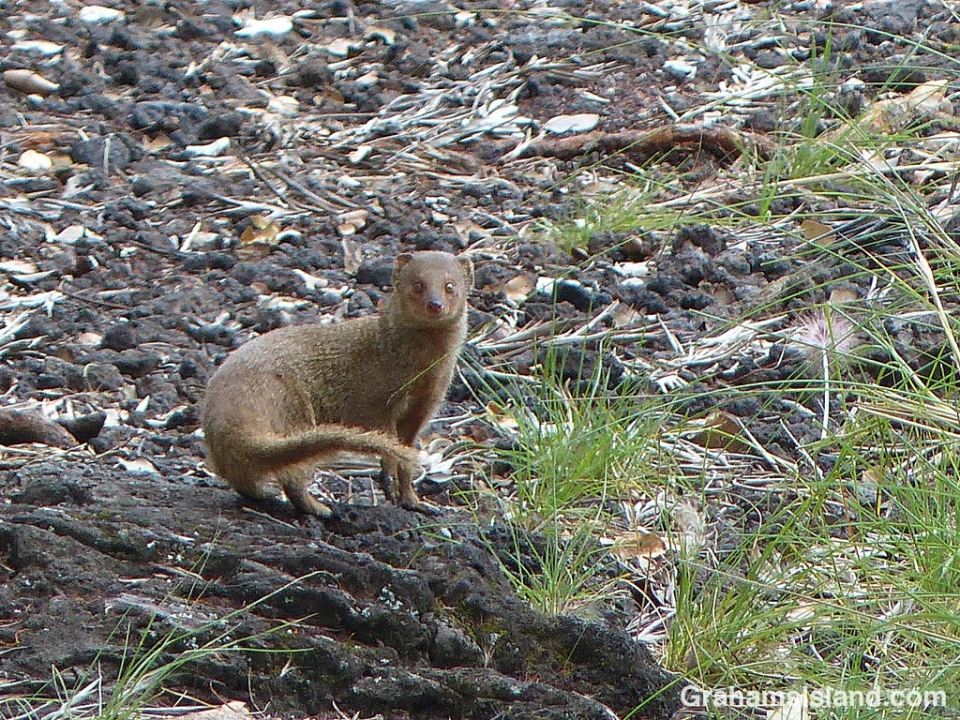
Mongoose alert

Mongoose

On a recent hike at Pu’u Wa’awa’a, I was ambling along one of the trails when I heard squeals and a commotion in the grass a few feet off to the side. A mongoose shot out from cover hotly pursued by a second one. They took off down the trail, away from me, before vanishing into the undergrowth on the other side.

A couple of minutes later, this one reemerged, trotting away on the trail before it turned suddenly and gave me this look. I don’t think my presence had registered earlier, so it must have been a bit surprised to see me. Don’t know what happened to the other one, but since I didn’t hear any horrendous screeching, I suspect it got away.

For more information about Pu’u Wa’awa’a and its trails, go to puuwaawaa.org.

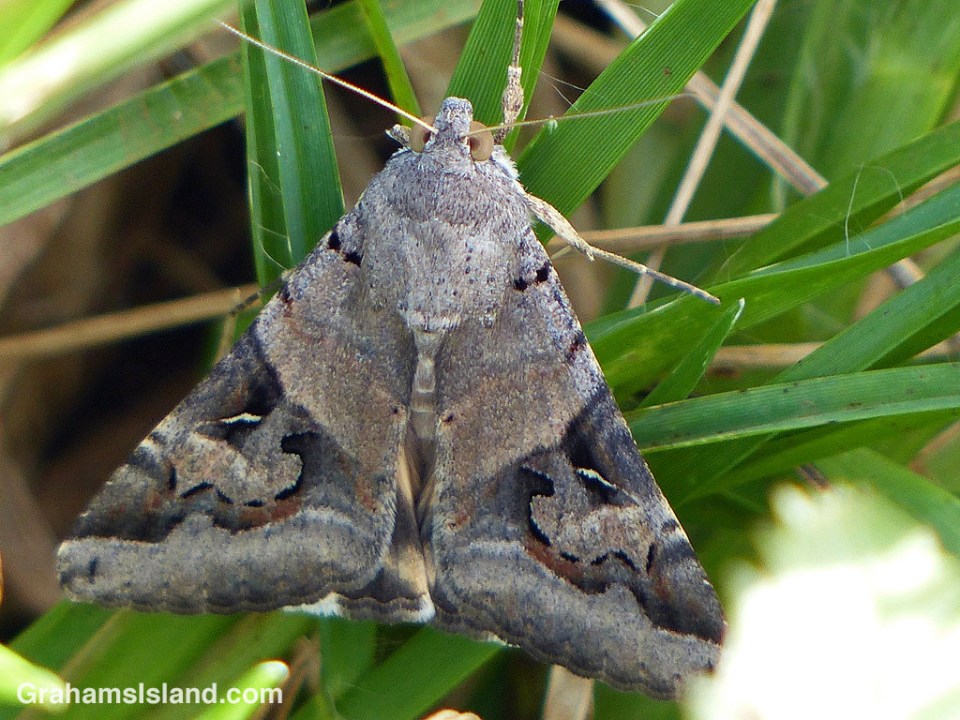
Indomitable melipotis moth

Indomitable Melipotis Moth female

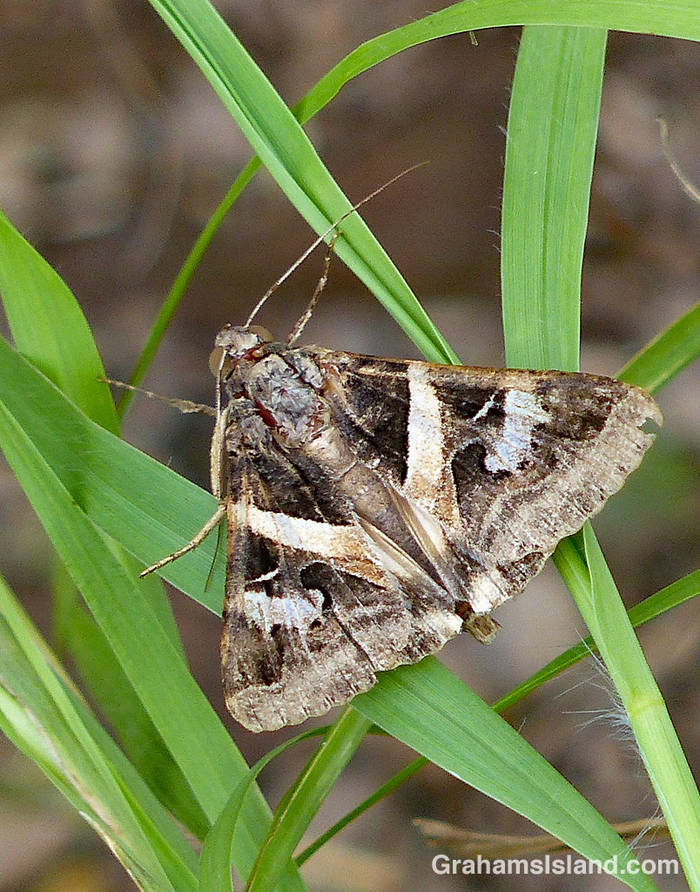
Indomitable Melipotis Moth male (700)Two photos of indomitable melipotis (Melipotis indomita) moths, a female above and a male below. This species is common across the southern United States, but many sources do not include Hawaii in its range. However, it was first recorded here in 1969 according to this paper (https://scholarspace.manoa.hawaii.edu/handle/10125/11031) published in 1974.

Caterpillars of the moth were first found on kiawe trees but soon after turned up on defoliated monkeypod trees, hence it also being known as the monkeypod moth, because of its fondness for shrubs and trees of the legume family. They’re certainly quite common up here on the northern tip of the Big Island as I see them often when I’m out and about.

Many thanks to Daniel at whatsthatbug.com for help with the identification. For his detailed information about the moth, see https://www.whatsthatbug.com/2018/05/01/indomitable-melipotis-moth-from-hawaii/.