 The lesser grass blue butterfly (Zizina otis) was first seen in Hawaii on Oahu in 2008 (for an article, or most of an article, about the find, click here). They’re now well established on the Big Island as well.
Lesser grass blues are very small, with a wingspan no more than ¾-inch. With wings folded up they’re the size of a small fingernail. They also fly close to the ground, within a foot or two.
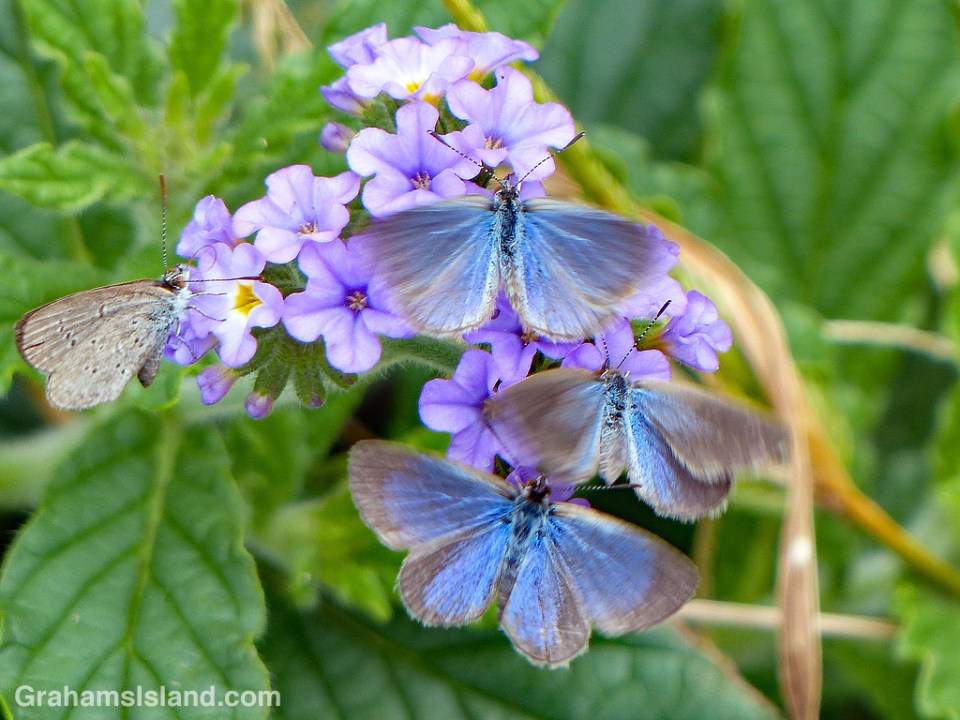
Lately, I’ve been seeing them in large numbers on these blue heliotrope (Heliotropium amplexicaule) flowers. When I say ‘seeing them,’ what I mean is that when I walk past a patch of these flowers, a host of lesser grass blues will flutter up from the flowers, dance around in a tizzy for a few moments, and then settle back down again. When they do this, it’s like blue confetti being thrown (a few inches) into the air.
I’ve tried to capture this image with my camera, but haven’t been able to (and I’ve taken LOTS of photos). The butterflies are so small, I’m tall, and the effect is fleeting. But the top photo gives an idea of what’s going on, with three lesser grass blues homing in on the small blue heliotrope flowers while a fourth has already found a spot.
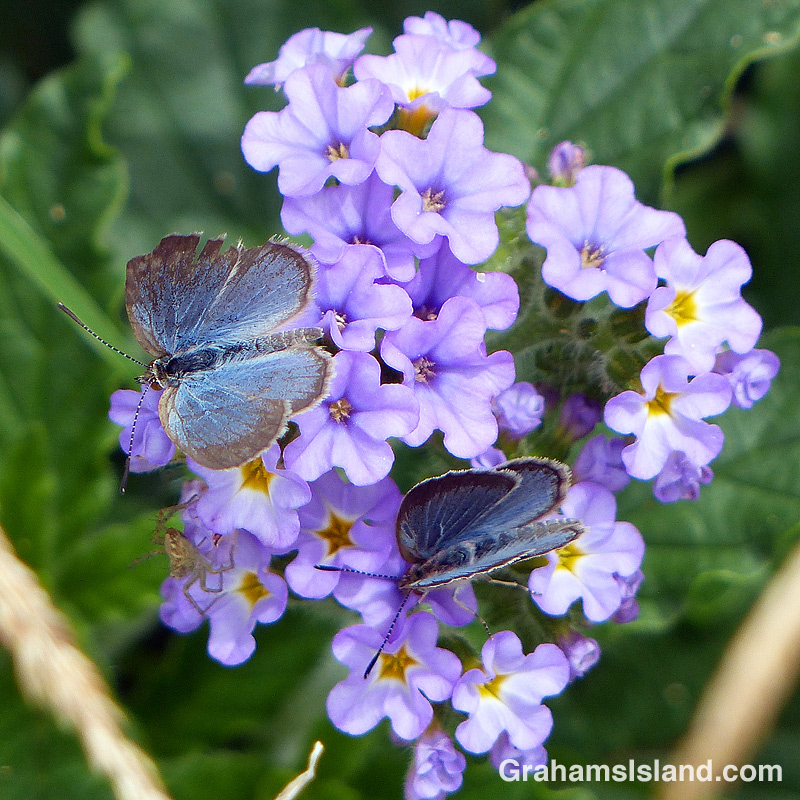
It wasn’t until I processed the photos at home that I noticed the spider in the second photo. I don’t know what it made of all the butterfly activity. I hope they weren’t its prey.


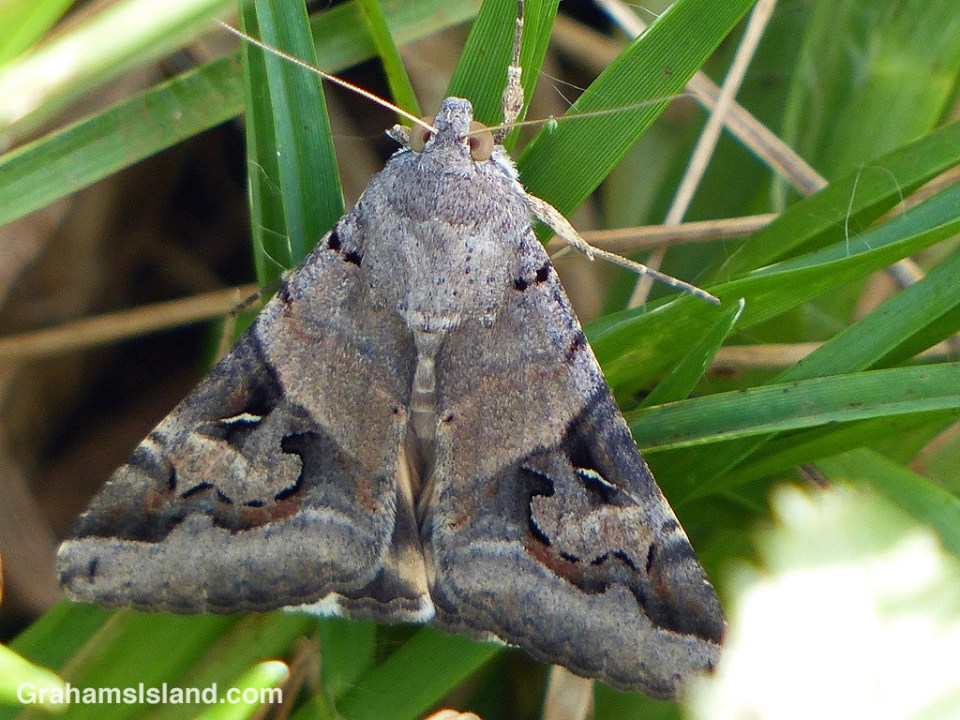
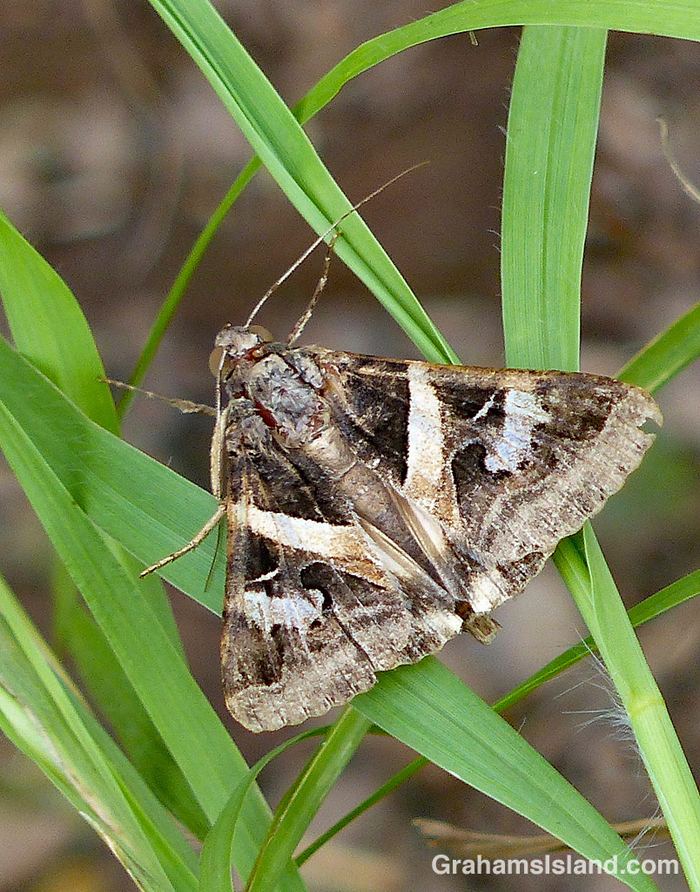 Two photos of indomitable melipotis (Melipotis indomita) moths, a female above and a male below. This species is common across the southern United States, but many sources do not include Hawaii in its range. However, it was first recorded here in 1969 according to this paper (
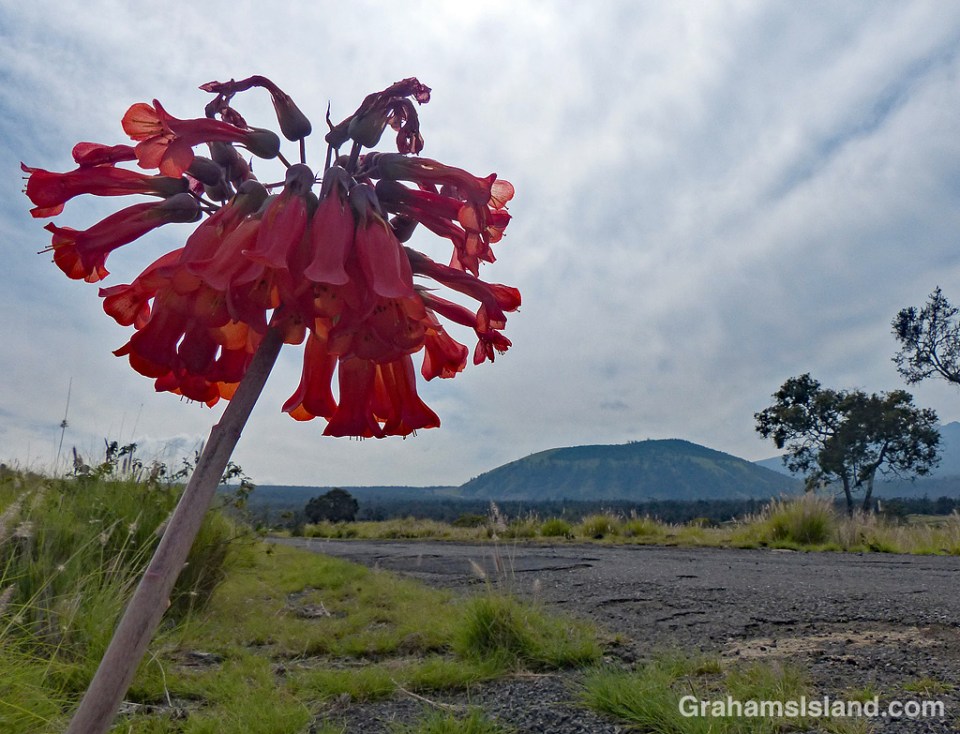
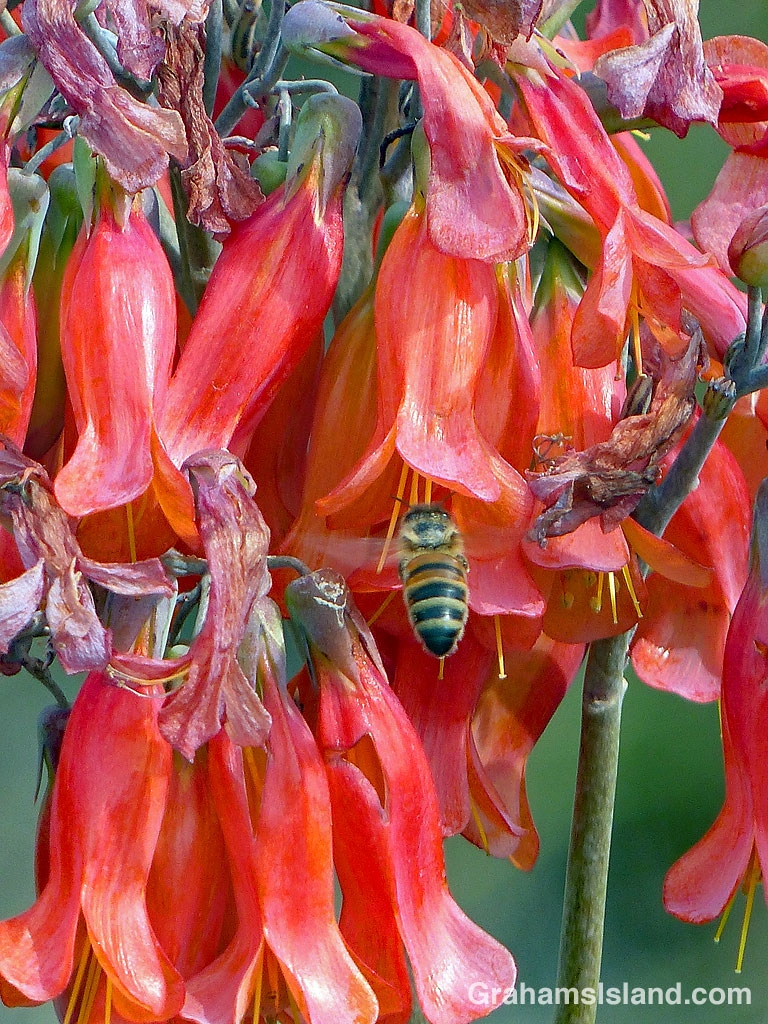 This bryophyllum is probably bryophyllum x houghtonii, but there are several similar looking varieties of bryophyllum. Their common names are telling, however. Bryophyllum x houghtonii is known as ‘hybrid mother-of-millions.’ Common names for other bryophyllums include ‘mother-of-millions,’ ‘prolific mother-of-millions,’ and ‘mother-of-thousands.’
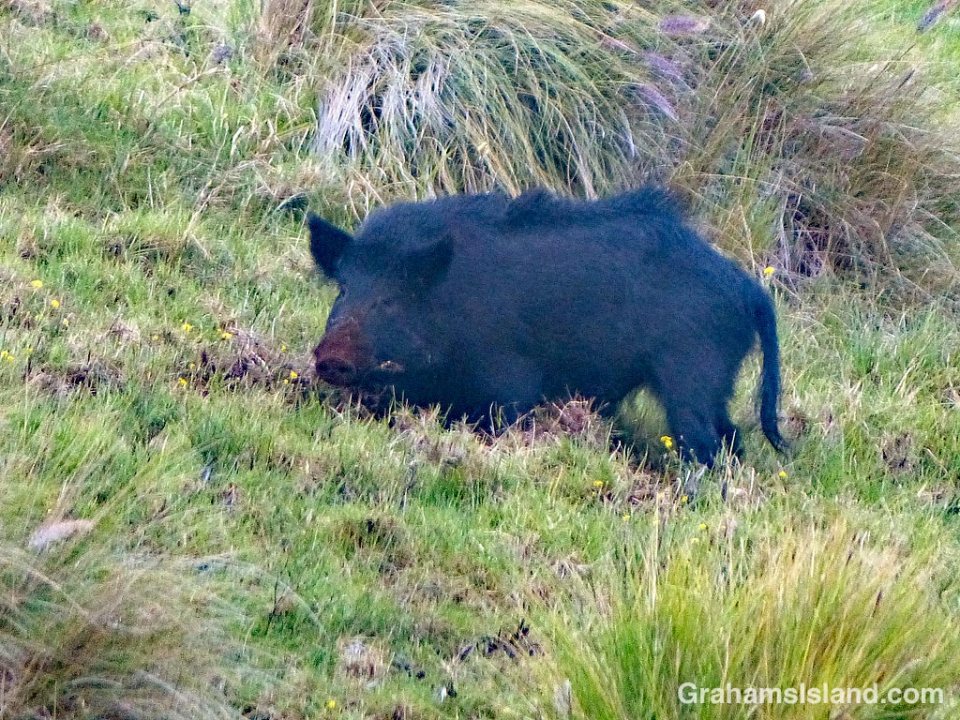
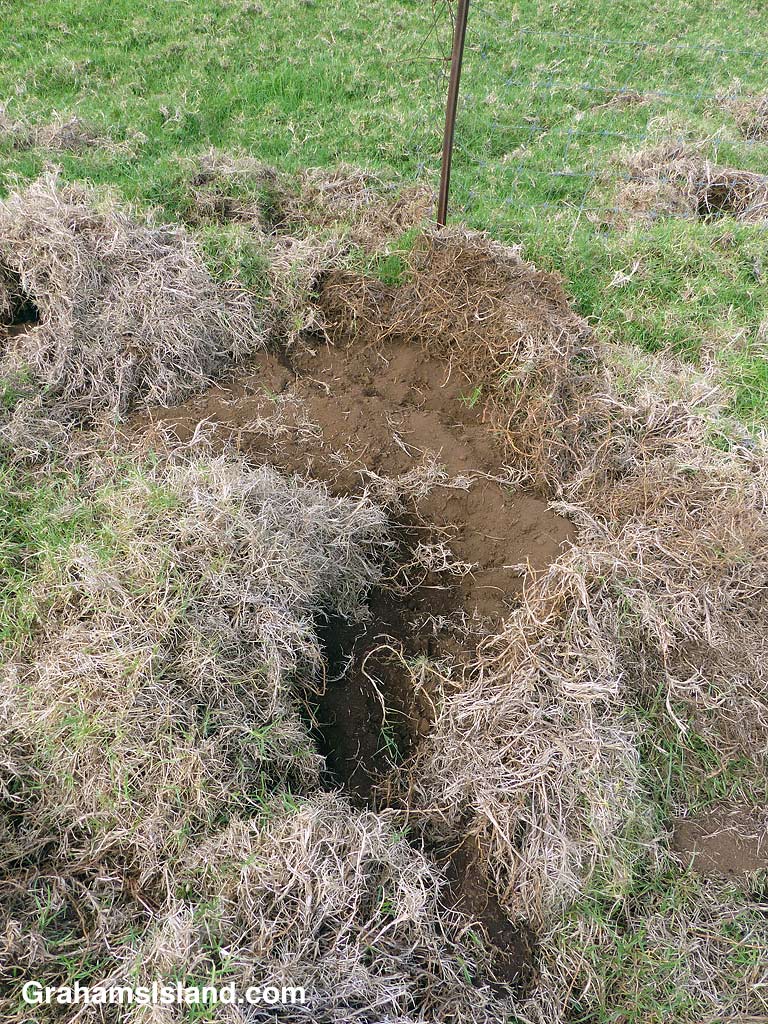 On an early morning hike at Pu’u Wa’awa’a, I saw this wild pig on the hillside above me. It was busy rooting around in the dirt, hence the brown snout. Wild pigs can do an enormous amount of damage in their foraging. The photo at right shows one of many areas alongside the trail that has been dug up by pigs. These areas are susceptible to erosion when it rains.