Category Archives: Animals

Gnat cloud

Gnat cloud and wind turbine

Gnat cloudDriving past Hawi Wind Farm, I unexpectedly ran into several clouds of gnats. I quickly rolled up the windows on my truck, not needing a cab full of gnats to influence my driving. Sometimes the clouds blended and made one big gathering, and I was reminded of murmurations of starlings, though perhaps not as dramatic.

It’s the first time I’ve seen anything like this since I’ve lived here. The clouds are made up of male gnats hoping to snag a mate. The large numbers give them visibility so that the females can spot them. Of course, that doesn’t explain how the males can spot the individual females when they show up. Hmmm.

Posted in response to this week’s WordPress Photo Challenge ‘Unlikely.’


South Point Space Tracking Station

South Point Space Tracking Station dishes

Mauna Kea is well known for its telescopes. At 14,000 feet, with clear skies most nights of the year, it’s a perfect spot for astronomical observations. But it’s not the only space-related site on the island.

South Point Road is a narrow, 12-mile long highway that cuts through pasture land on the way to the southernmost point in the U.S.A.. It seems a most unlikely spot to run across these two dishes, in a field, just east of the road.

A little research revealed that the facility is operated by the Swedish Space Corporation’s Universal Space Network. It’s a remote operated station for space tracking and communications. I’ve never seen anyone there, but I like to think that the many cattle around, perhaps inspired by Gary Larson, plan on using the facility when they finally lift off for the moooooon.

Posted in response to this week’s WordPress Photo Challenge ‘Unlikely.’

South Point Space Tracking Station

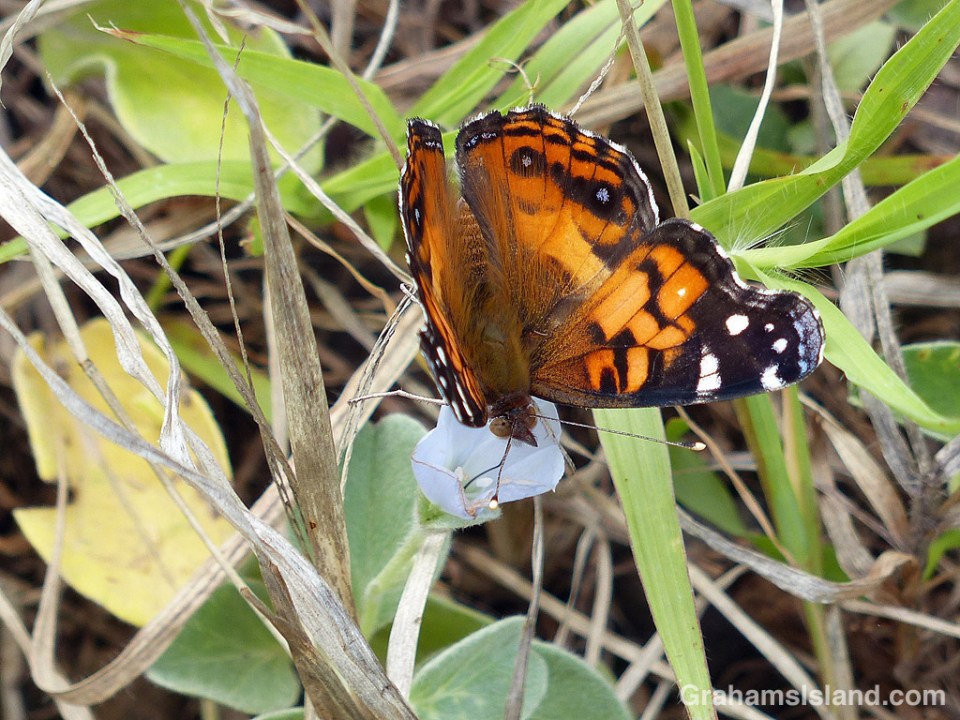
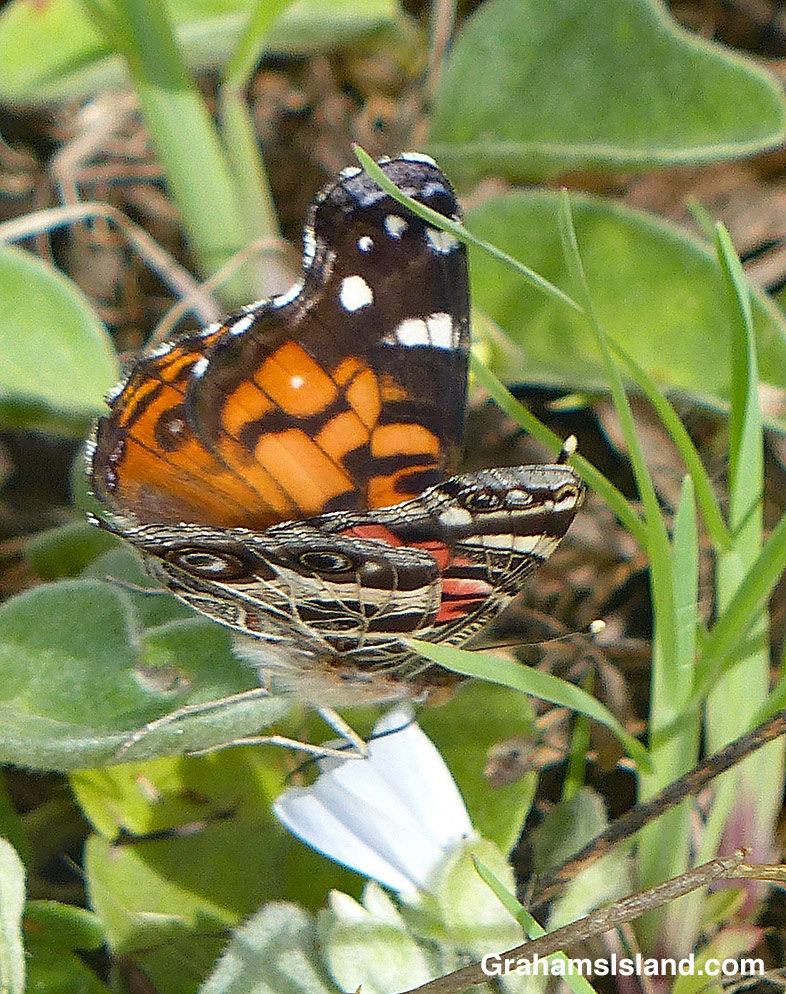
American painted lady butterfly

American Painted Lady Butterfly feeding

American Painted Lady ButterflyA while back, I posted photos of a painted lady butterfly (Vanessa cardui) here. The American painted lady butterfly (Vanessa virginiensis) is similar, but with some noticeable differences.

On the upper-side, the American painted lady markings are more pronounced on both the forewings and hindwings. On the underside, the same is true, with the American painted lady’s color standing out more. In addition, the hindwings have two large circles as opposed to the four smaller circles of the painted lady.

The American painted lady is also known as simply American lady or painted beauty. Alternative names for the painted lady butterfly are cosmopolite or cosmopolitan.

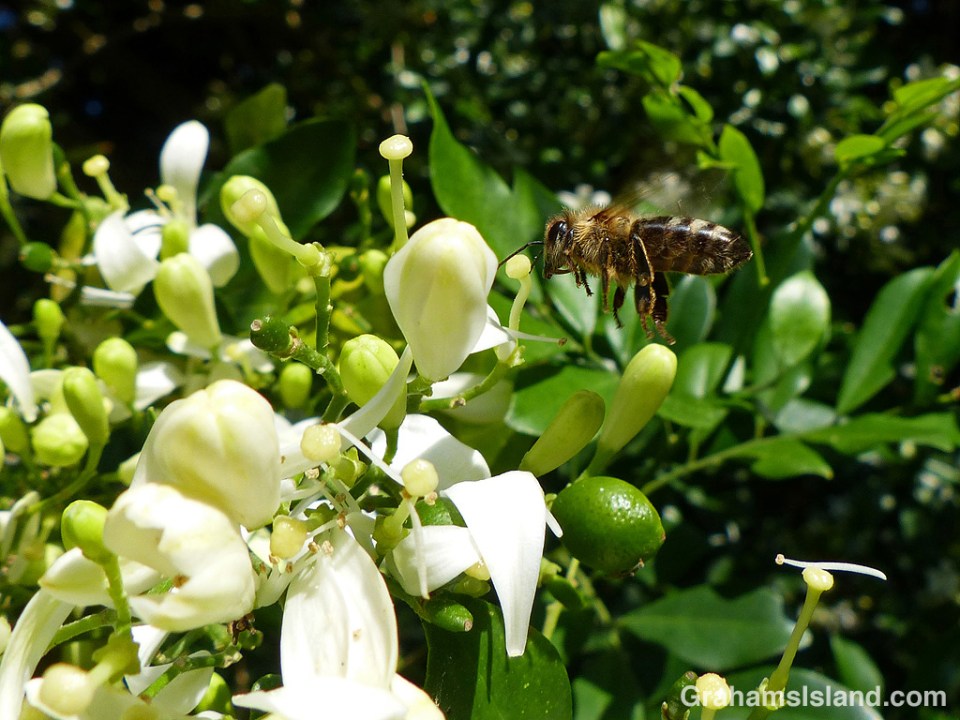
Blooming mock orange

Bee flying to a mock orange

Bee on a mock orangeThree or four times a year, the mock orange in the yard comes into bloom with a prolific show of small, white flowers and wonderful fragrance. During these times it’s a bee magnet and the whole tree buzzes from morning to night.

Posted in response to this week’s WordPress Photo Challenge ‘Prolific.’

Giant centipede

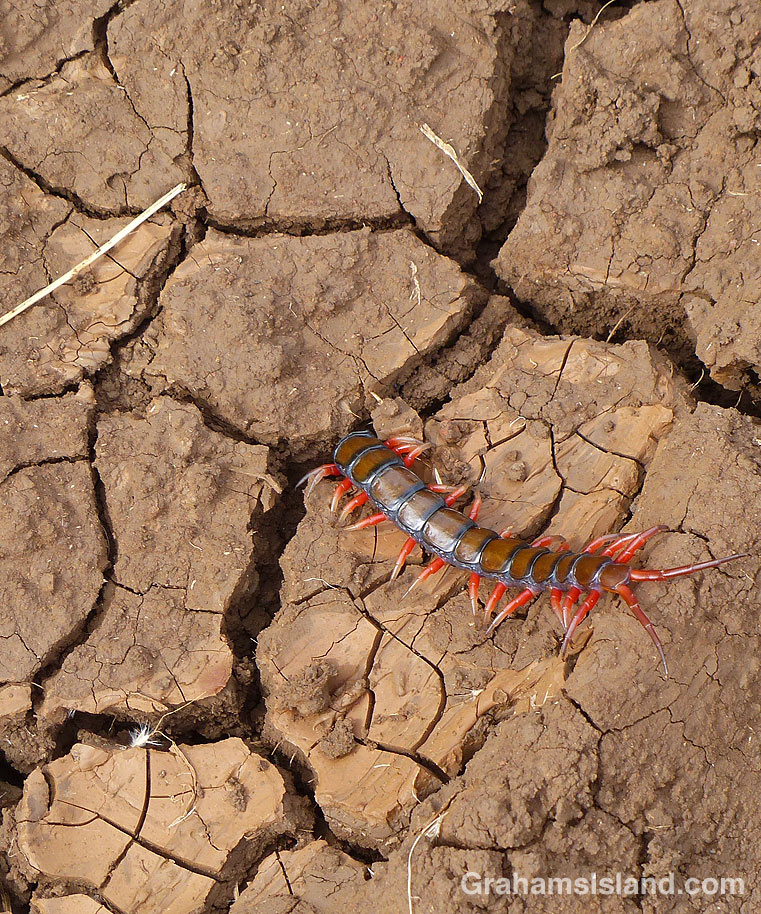
Centipede Scolopendra subspinipes

Centipede exploringThis centipede (Scolopendra subspinipes) is also known as the Vietnamese centipede, Asian forest centipede, and Chinese red-headed centipede, among other names. Some of these names are unprintable when uttered by someone who has just been bitten by one. The bite can cause extreme pain and can be dangerous if a person is allergic to the venom, but is not generally considered life-threatening.

The venom is delivered through a pair of modified legs, known as forcipules, located just behind the centipede’s head. For this reason, it’s useful to figure out which end is the head, but this isn’t always immediately apparent, as both ends have some similarity in appearance.

The centipede is the alpha creepy-crawly here in Hawaii. This one was about five inches long, but they can be much longer. (For anyone who has the nerve to read a story — and see a photo — about one of these that measured in at 14.5 inches long, click here.)

This was a good place to spot this centipede, outdoors on a dirt road. There are few worse feelings than spotting a centipede in the house, scurrying across the floor (they move fast), and disappearing into a tiny, inaccessible crack. This means that a general understanding that centipedes live in and around dwellings is replaced by the certain knowledge that there’s one in the same room.

Since most bites occur from unexpected encounters, such as when a centipede has crawled into someone’s shoe, or in a towel, or made itself comfy in a bed, when I see a centipede inside, I usually become more vigilant for a while.

I haven’t been bitten yet, but I know the chances are it won’t happen when I see a centipede, or when I’m being vigilant. It will be when I’m engrossed in something, such as writing on my computer, and I lean back and wonder, in a last moment of innocence, ‘what the heck is that tickling my neck?’ Aaaaaaargh.

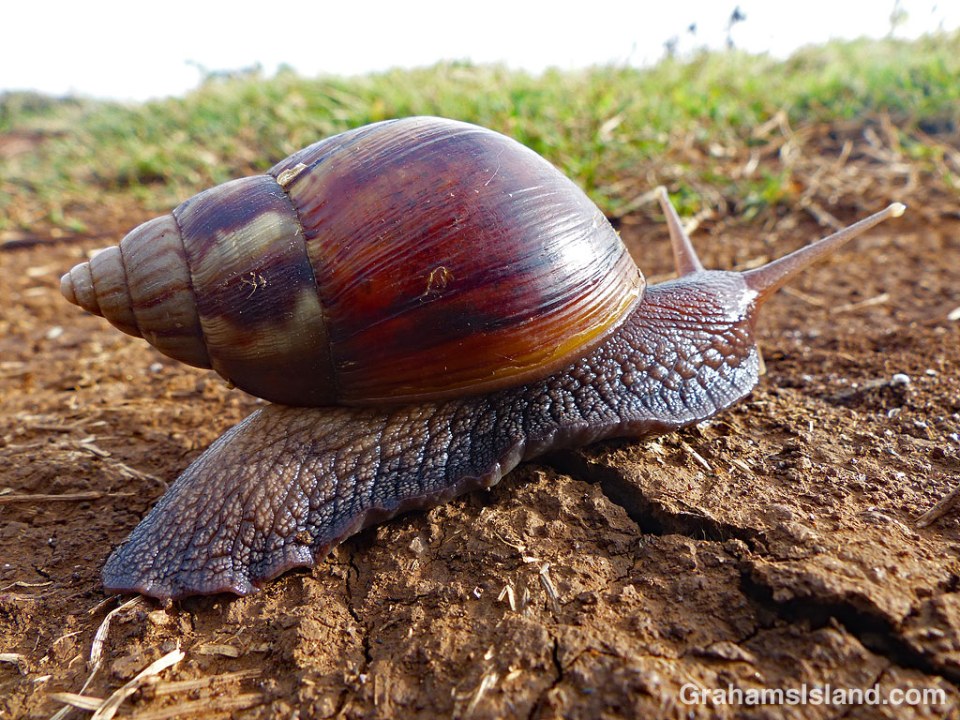
Giant African land snail

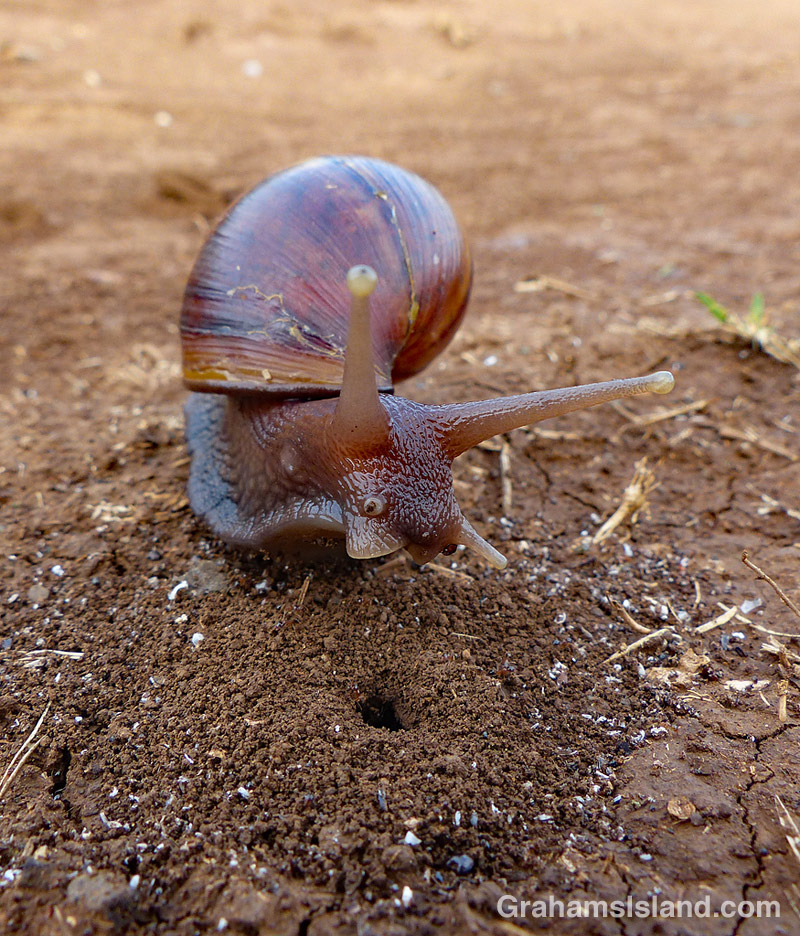
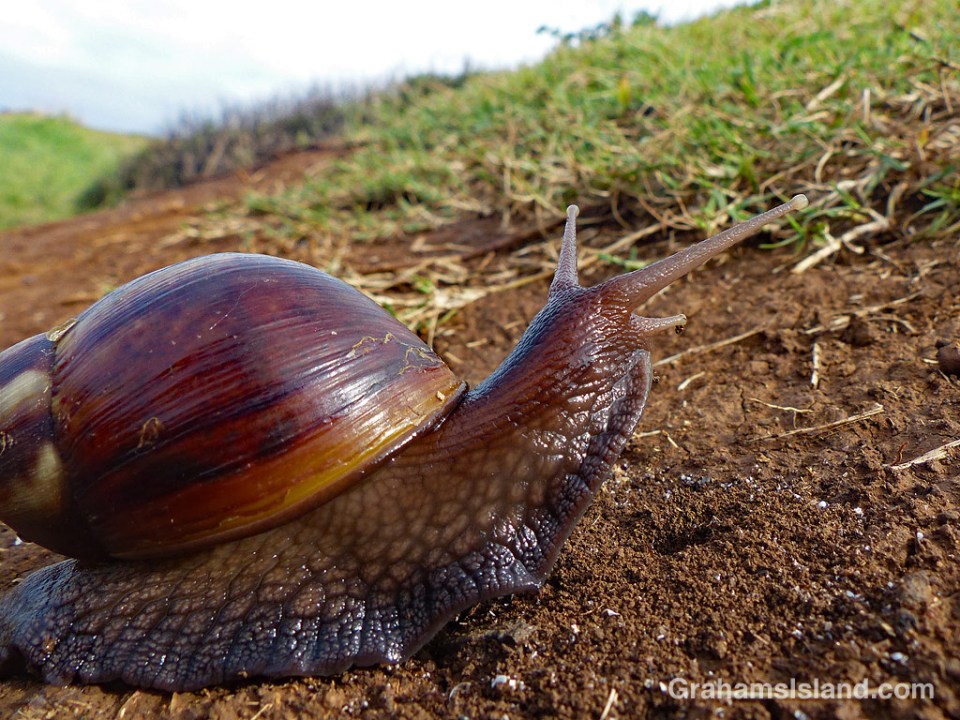
Giant African Land Snail on the moveGiant African Land Snail and ants nest

This giant African land snail’s shell is about three inches long, but some adults grow a shell eight or more inches in length, with 7 to 9 whorls. Their size and attractive shells make these snails popular in the pet trade. In some places, the snails are used for food.

Thus endeth the positive news. On the downside, the giant African land snail is considered one of the world’s top 100 invasive species. Besides being a mighty muncher of fruits, vegetables and other vegetation, it carries pathogens damaging to a wide range of plants. It carries human pathogens, too. Oh, and it has a negative impact on native snails.

However, like most of us, it wanted no part of an ants nest, as seen in the photos in the middle and below.

Giant African Land Snail