Category Archives: Photo Challenges

Ohia Lehua flower

This week’s Sunday Stills challenge theme is ‘Country or State Flower.’ See more offerings here.

The country flower for the USA is the rose and I don’t have photos of those. The state flower for Hawaii is the hibiscus and, while I have lots of those, they’re all of Chinese hibiscus (Hibiscus rosa-sinensis). The state flower is the native yellow hibiscus (Hibiscus brackenridgei) and I have none of those. The native hibiscus is not often seen in the wild and is currently considered an endangered species, but it is used as an ornamental in domestic gardens.

Having struck out on the two proper responses to this challenge, I’ve chosen to post photos of the official flower of the Big Island, the red ʻōhiʻa lehua (Metrosideros polymorpha). A member of the myrtle family, ʻōhiʻa lehua is endemic to Hawaii. It’s one of the first trees to colonize lava flows. It’s able to survive in such a tough environment because its roots grow down into lava tubes and other voids in the lava and tap into the moisture there.

Recently, ʻōhiʻa trees have been attacked by a fungus which can cause the trees to die within a very short time. This disease, known as Rapid ‘Ohi’a Death, is caused by two new types of Ceratocystis fungus.

Colorful pahoehoe lava

This week’s Friendly Friday challenge theme is ‘Art Unexpected.’ See more responses here.

This was a timely topic since, a couple of days ago, I went for a hike in Hawaii Volcanoes National Park. I headed out on the Puna Coast Trail, one of several longer trails west of Chain of Craters Road, that I haven’t explored before. (I’ll do a post about the trail once I’ve gone through the way-too-many photos I took that day!)

One of the highlights of the trail was the extensive areas of colorful pahoehoe lava. I’ve lived here a while now and I know lava doesn’t just come in basic black. I’ve seen lighter and darker flows; I’ve seen flows with a brown tint; I’ve seen flows with hints of red or green in them. But prior to this hike, I had never seen flows with such a variety of vibrant colors.

Instant Hawaii has a description of different types of lava (here) and they say “All the differences in pahoehoe flows stems completely from the temperature of the lava as well as chemical composition. Since both can change during a flow – it is possible to get all types of pahoehoe flowing from a single flow, over time.” I would also say that, what they call ‘quiet flow’ lava, is an apt description of these areas. When I was walking over them I thought they seemed harder and more metallic than the surrounding black pahoehoe lava, which tends to crunch a bit when walked on.

But the other thing I thought, as I found myself continually stopping, stooping, snapping photos, was that these flows were art, Madame Pele’s art, and that wasn’t something I was expecting when I set out on the hike.

For more information about Hawaii Volcanoes National Park, go to nps.gov/havo/.

Mauna Kea telescopes

This week’s Sunday Stills challenge theme is ‘Near and Far.’ See more offerings here.

The photo above shows a distant view of some of the telescopes atop Mauna Kea, silhouetted against an early morning sky. Below is a closer look at the Gemini Northern Telescope, which sits a little way north of the summit of Mauna Kea.

Trumpetfish and yellow tangs

This week’s Friendly Friday challenge theme is ‘Sea Creatures.’ See more responses here.

I go snorkeling two or three times a week and feel fortunate to see a great variety of sea creatures while I’m out. Some of these can be quite unusual or exotic. I recently saw my first titan scorpionfish, and threadfin jack juveniles are weird and wonderful. And then there was my one and only encounter with a pyrosoma.

But for this challenge, I’ve opted to go with some fish I see most times I get in the water. Yellow tangs are probably the most noticeable reef fish around. Bright yellow, they putter around in the shallows, and are easily visible in the water and from shore. Trumpetfish look nothing like yellow tang, but often take on a yellow color and blend in with shoals of yellow tang in the hopes of surprising small fish, which are their main prey.

In these photos, a trumpetfish is doing just that. While it might seem like it would be pretty obvious that the long trumpetfish is quite different from the rest of the shoal, when seen from the front, which is the business end of the trumpetfish, the distinction isn’t so great. And if the trumpetfish can get close enough, it will suck its prey in and devour it.

Black-crowned night heron catches a fish

This week’s Sunday Stills challenge theme is ‘For the Birds.’ See more offerings here.

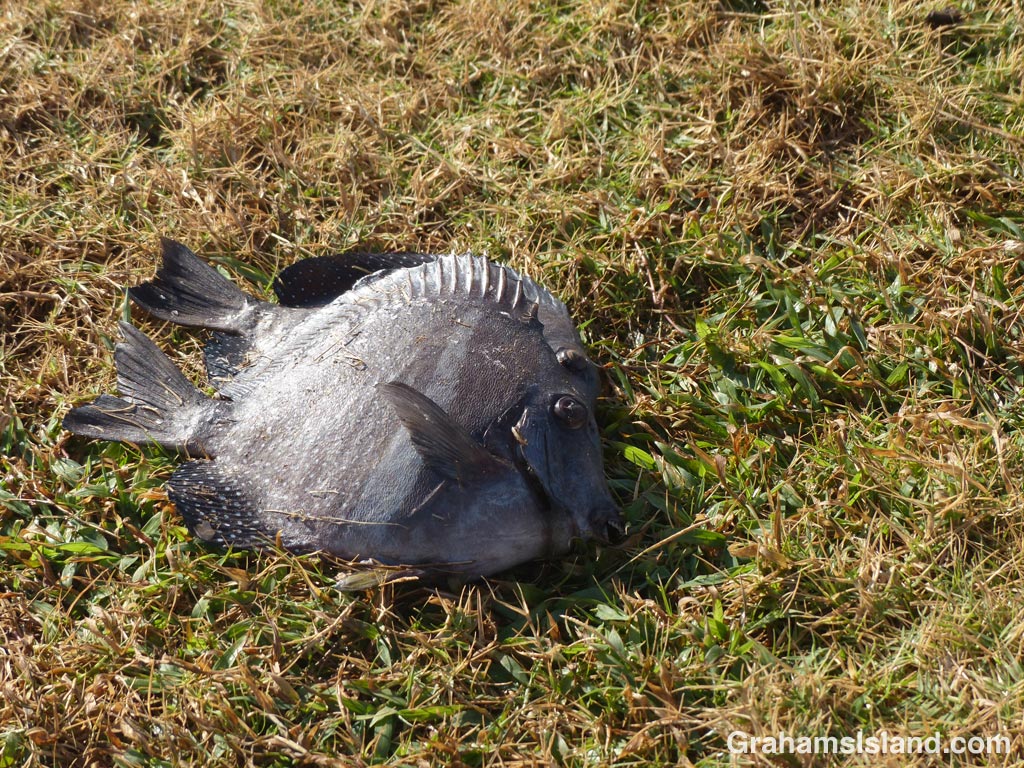
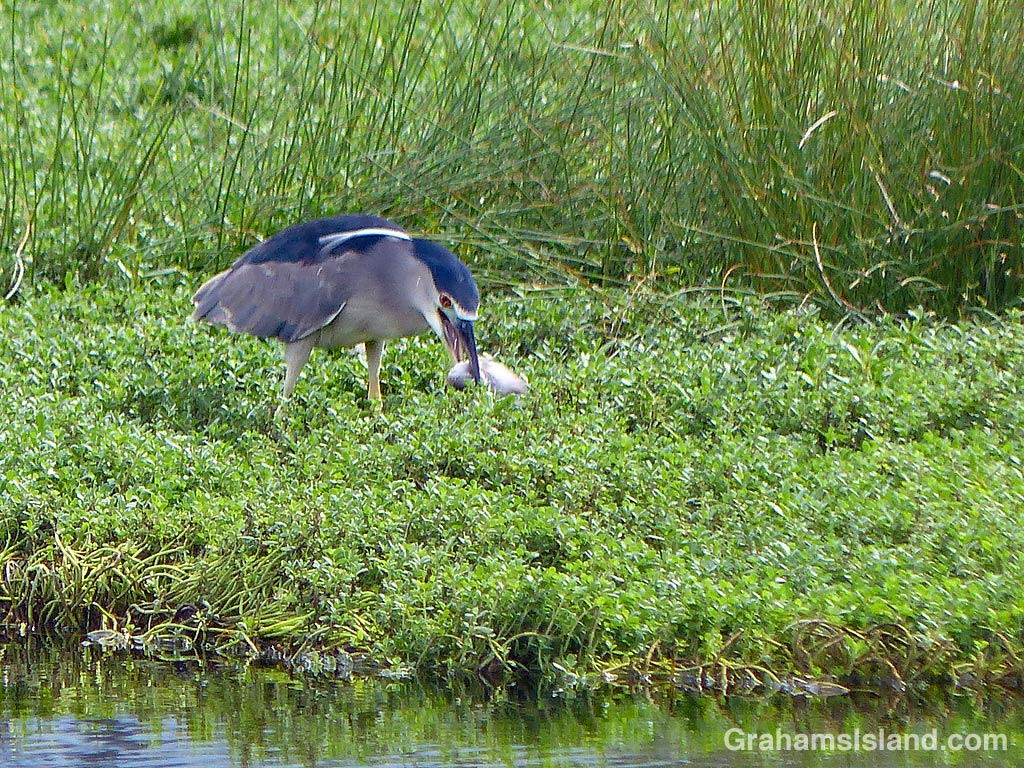
Bird baths and bird feeders are a couple of subjects for this theme and these photos are of what is, in effect, a bird feeder. It’s a fish pond at Hualalai Resort and where there’s a fish pond, there will likely be herons. I saw half a dozen perched around one of the ponds there, but this adult black-crowned night heron was the only one I saw catch anything.

It lunged its beak into the water and pulled this good-sized fish out onto the bank. After a few minutes of tossing the fish around to get it lined up properly, the bird swallowed it whole. The photo at right shows the fish on its way down.

Cattle and egrets

This week’s Friendly Friday challenge theme is ‘Odd Couples.’ See more responses here.

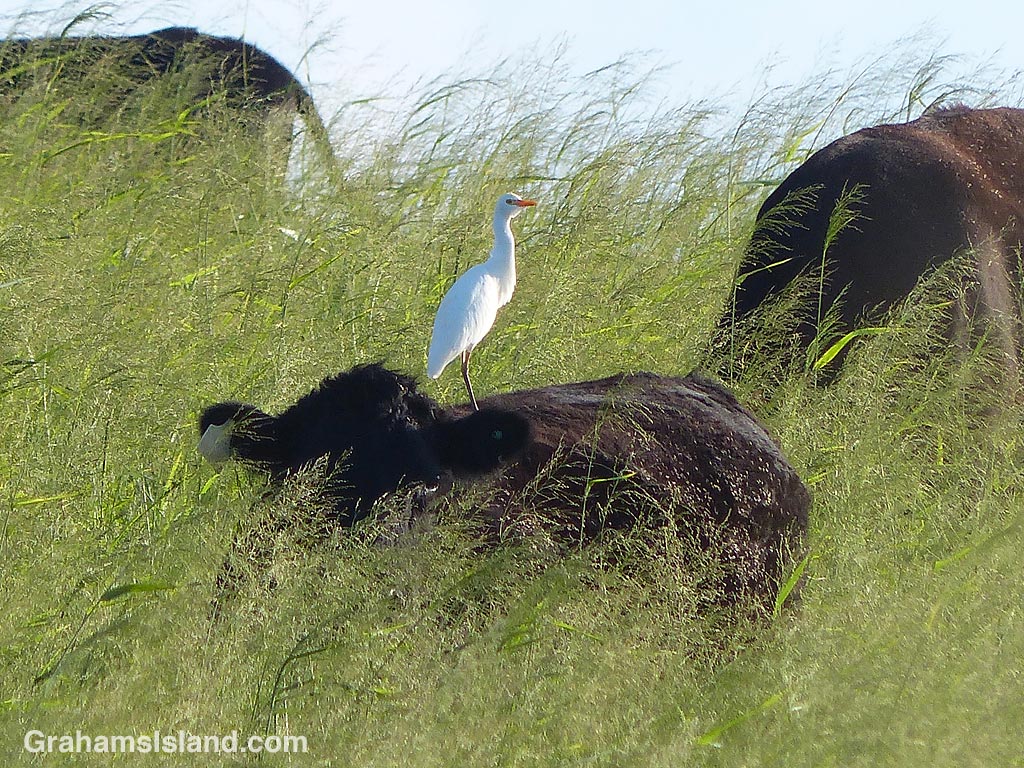
It’s common to see cattle egrets in the company of cattle and yet they still make an odd pairing – the bulky, stolid cow or bull and the slender, flighty cattle egret. The benefits for the cattle egret are clear. They catch insects and other prey disturbed by the grazing cattle (or horse, sheep, goat, etc.). But they also remove flies and ticks from the cattle themselves, which also benefits the cattle.

The cattle also don’t seem to mind being used as a perch. I imagine the egret above giving directions: ‘take a left up ahead buddy.’ The one in the middle is switching allegiances. Below, gotta find someplace with a view when in the tall grasses.