Category Archives: Photo Challenges

First Big Island visit

Pololu beach

Turtle at PunuluuTropical foliageLava flowingThis week’s Friendly Friday challenge theme is ‘Turning point.’ (See more responses here.) Since this is a photo blog about the Big Island it seems appropriate to post some photos from my first visit here in 2010, a visit which was the catalyst for the move to the island. There was no ‘ah ha’ moment, but these photos give a general idea of some of the things that appealed.

The top photo is Pololu beach on the North Kohala coast. Second photo is a Hawaiian green turtle resting on the black sand beach at Punalu’u County Beach Park. Third photo is tropical foliage next to a small cascading stream. Fourth photo shows some small lava breakouts in the flow that was active at that time. Conveniently, that activity was about 100 yards from the parking area and only 10 feet or so beyond where I was standing. The bottom photo is a view of Two Step, a popular snorkeling spot, from Pu’uhonua o Hōnaunau National Historical Park.

Two Step from Place of Refuge

A pueo flying

Pueo flying

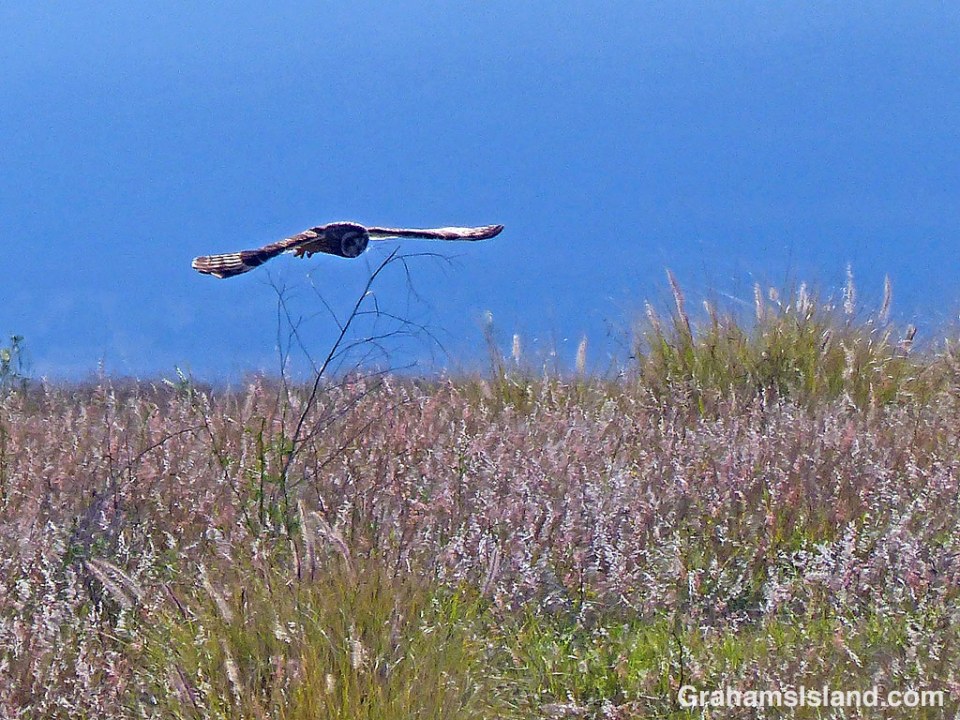
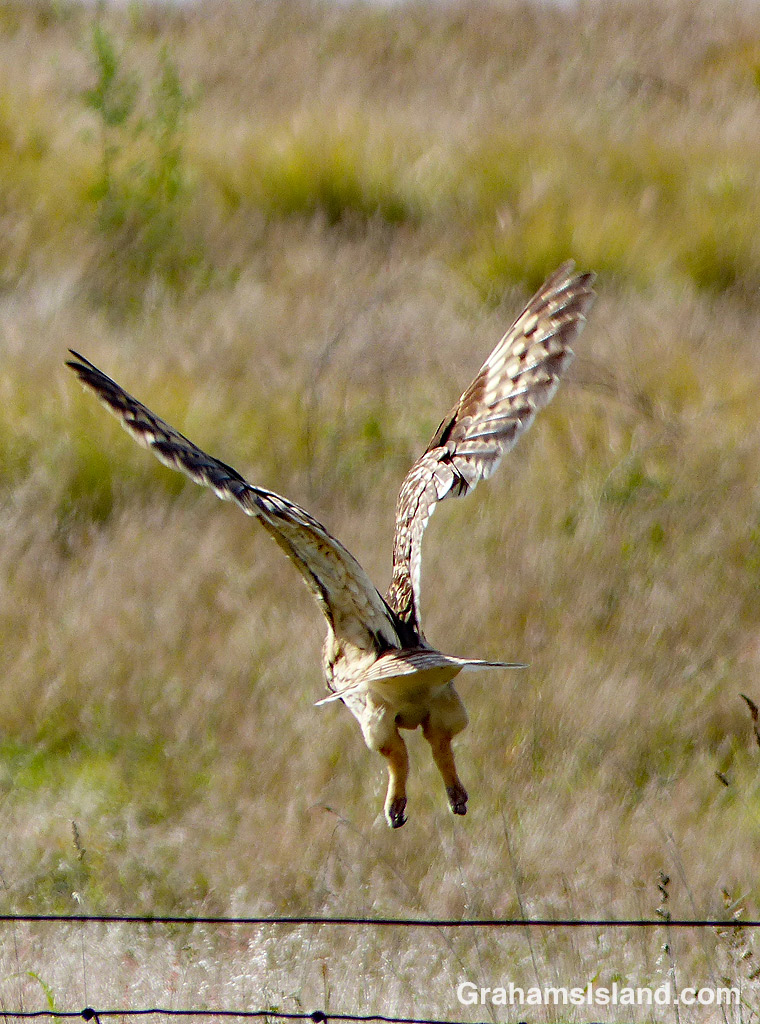
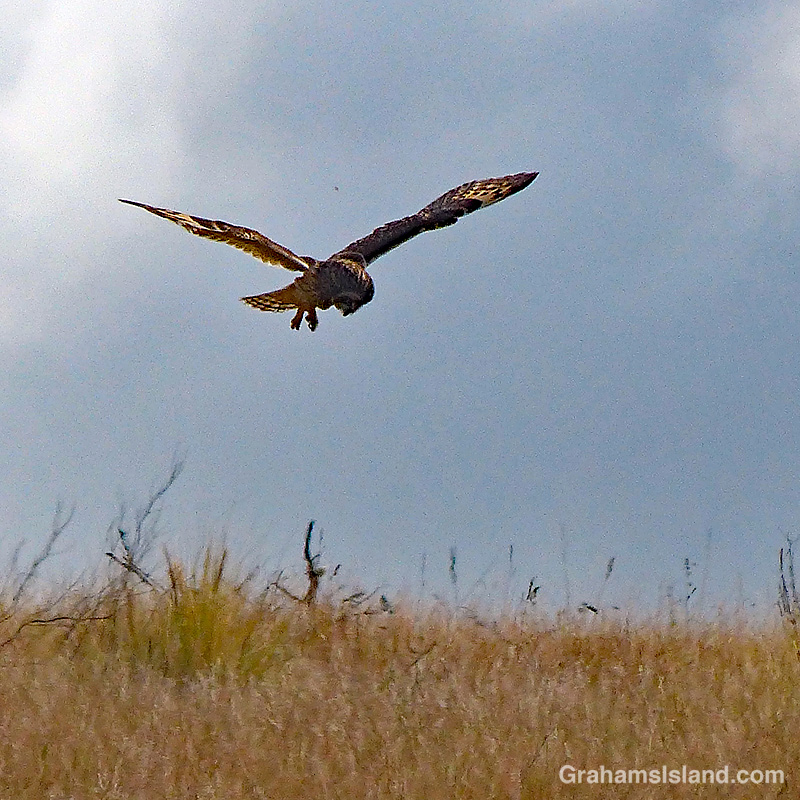
Pueo take offPueo hoveringThis post is in response to two photo challenges, which I could say is killing two birds with one stone, but given the subject matter, that would be most inappropriate. This week’s Sunday Stills challenge theme is ‘Flight’ (see more responses here), and this week’s Friendly Friday challenge theme is ‘Dreamy’ (see more responses here).

The ‘flight’ response is more immediately obvious. This is a pueo (Hawaiian short-eared owl) flying. In the top photo it’s cruising over pastureland. In the middle is its initial launch into the air. Below that, hovering above something promising in the grass. And at the bottom, a dive to take a better look.

These photos also work for the ‘dreamy’ response for two less apparent reasons. The first is that I’ve always had flying dreams, less frequently these days, but still every now and again. The thought of gliding above the landscape, as in the top photo, is very pleasing for me. The second reason is that seeing pueo is still a somewhat surreal, dreamy event. Owls are often nocturnal, but pueo are active during the day. In the air they are accomplished fliers, gliding, hovering, diving with little apparent effort. At rest, they look very dignified as they sit, keeping watch, head swiveling a disconcerting 360°.

These photos are of the same pueo, seen on a recent drive along Old Saddle Road, southeast of Waimea. I’ll post other photos of this bird once I’ve had time to go through them, but seeing it was a great, chance encounter at the end of my best ever day for seeing pueo.

Pueo dives

Fresh produce

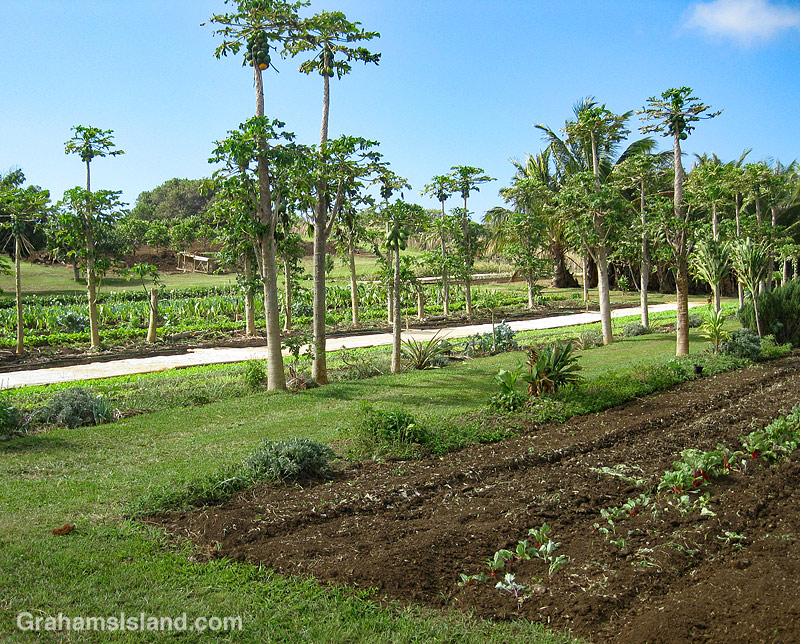
Sage Farms greens

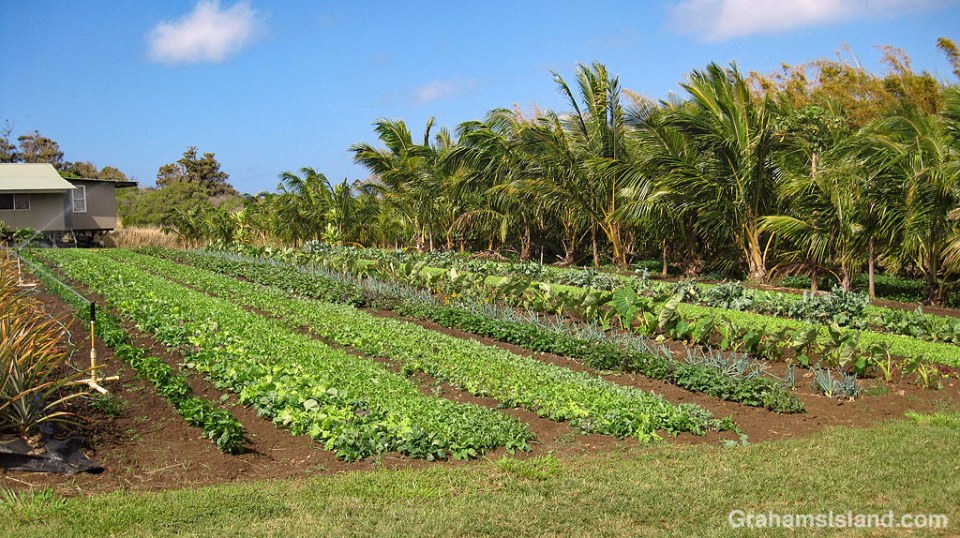
Sage FarmsOne of the vulnerabilities of living in the middle of the Pacific Ocean is that any big disruption of commerce, here or on the mainland, due to natural disaster or otherwise, could result in shortages here. Toilet paper and Spam would likely be the first things to be snapped up, but basic foodstuffs would soon follow. Having a variety of productive farms on the island would be a big help in such a situation.

Sage Farms, an organic farm that’s been in business here for 20 years, is one such enterprise. Their fruits and produce are available in local stores and farmers’ markets. The farm is one of a network of small growers in the area whose goal is to make the Big Island less dependent on imports from the mainland.

It might seem like farming would be easy in Hawaii. Most things grow readily, but that also includes weeds. In addition, pests also thrive and can be voracious. Currently, rat lungworm is a big concern. Recently, students at Kohala Middle School showed that a slug which carries rat lungworm parasites is now established in this area. This slug is just the latest challenge to the farmers of the area and the island in general.

Posted in response to this week’s Sunday Stills challenge on the theme of ‘Fresh.’ See more offerings here.

Brown water

Brown water

After something of a dry spell, during which I was able to drive my truck out of the yard without sliding about, there’s been a lot of rain lately. My truck is back to sliding, but that’s a minor issue compared with what happens to all that rainfall.

What happens is that the rain hits the land and runs downhill. It channels into dry gullies. If the rain is heavy enough, flash floods occur and wash all before them – dirt, rocks, trees. But any kind of heavy or prolonged rain will wash earth and debris down the gullies. All those gullies lead to the ocean, channeled under roads by culverts (bottom photo).

When the runoff reaches the ocean, it forms a distinct area of dirty brown water in the blue Pacific Ocean (top photo). The contrast is striking and easily visible from miles away. Over time, the brown and blue water will begin to mix until the delineation is gone, but part of that process is the dirt from the brown water settling to the ocean floor.

This kind of runoff is one of many threats to coral reefs around the Big Island. It’s not just dirt in the runoff, but also pesticides and other chemicals that can be washed down into the reefs, damaging the coral. There are hundreds of gullies and only a few places have erosion prevention measures to help mitigate this pollution.

So while Hawaii may be considered paradise, it has its share of challenges. And the problems associated with runoff and pollution are more visible and obvious than most.

Posted in response to this week’s Friendly Friday challenge on the theme of ‘Contrasts.’ See more responses here.

Brown water and culvert

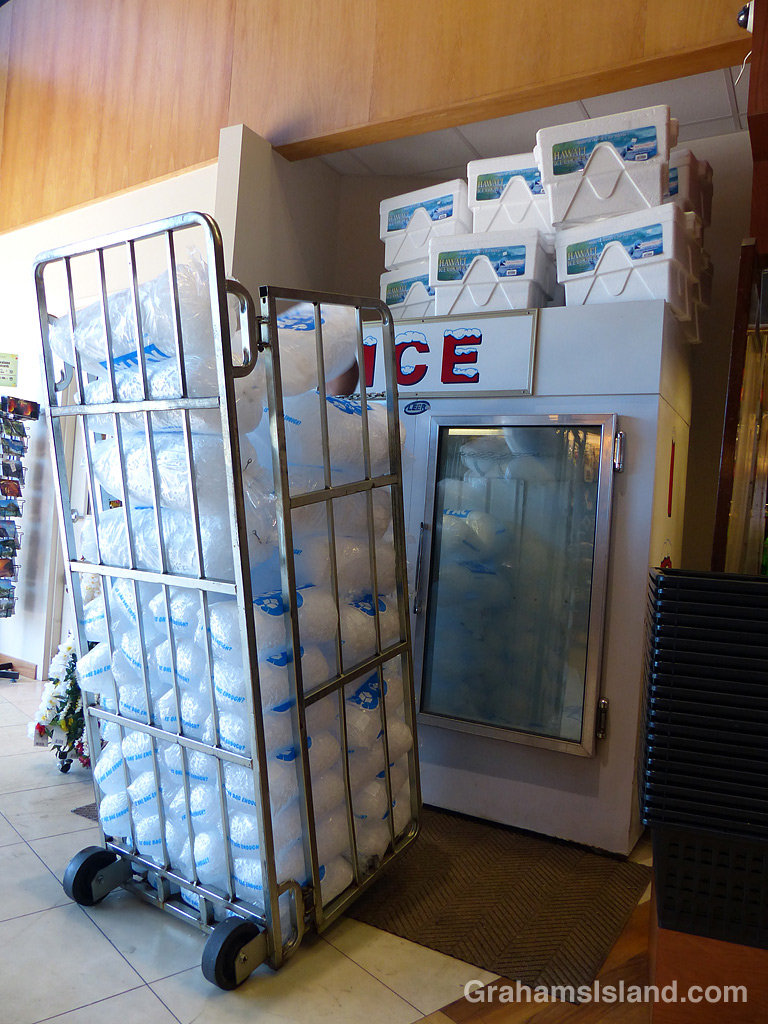
The iceman cometh

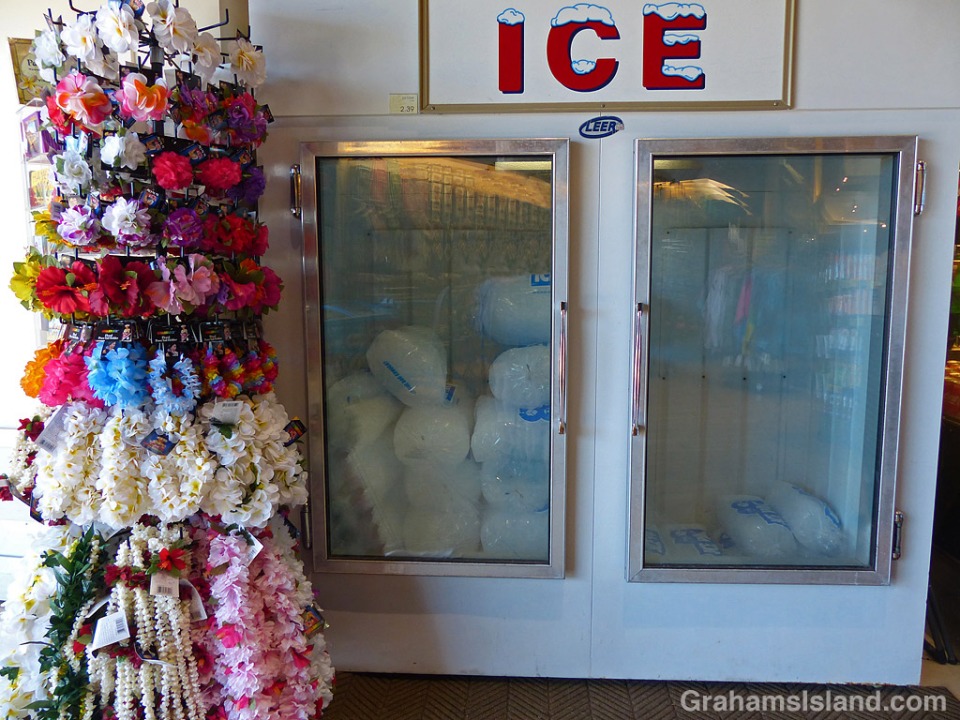
The Ice freezer

The iceman comethThis week’s Sunday Stills challenge theme is ‘Frozen.’ (See more responses here.) Usually, when I post in response to a challenge, I hunt through my files to see what I have that fits. With this theme, I thought about a photo of snow on Mauna Kea, but I had none in my files and Mauna Kea was bare. While much of the U.S. battles winter blasts of one kind or another, Hawaii chugs along in its usual warm to very warm range. Last week, an unusual north wind dropped temperatures into the low 60s and – gasp – even the 50s. Oh, how we whined about the cold. But, ‘frozen?’ No.

So I thought of a few options and went out to see what I could shoot. Luckily, my first stop at a local grocery store met my needs. Most gatherings in Hawaii are outdoors and while barbecues feature in most of them, coolers are a must for all. Going to the beach? You’ll need a chair, towel, and cooler. To the local park? Picnic fixings, games for the kids, and a cooler. In your own backyard? Barbecue and cooler. And when I say cooler, it’s usually plural.

All those coolers need ice and most stores have ice freezers to meet those needs. This one was handily placed next to a display of silk flower leis, a Hawaiian party accessory. And, as if that wasn’t enough, moments after I took the first photo, the ice delivery man wheeled in fresh supplies and gave me a look, wondering why this strange person was taking photos of his freezer.

Manta ray magic

Manta Ray and reflections

Manta Ray closeThis week’s Friendly Friday challenge theme is ‘Comfort Zone.’ (See more responses here.) In my youth, swimming in the sea wasn’t something I enjoyed. This wasn’t because I was afraid, but rather that I was so skinny, I was instantly cold when I got in. Here in Hawaii, that’s no longer a problem. I’ve added a few pounds and the water’s warmer, so when I go snorkeling, I feel at home. There can be strong currents, big waves, and sharks with more sharp teeth than seems necessary, but I don’t worry about any of this. I try not to do stupid things in the water, but instead enjoy putting along and watching the fish.

Lately, I haven’t been able to get in as much and, because of a series of large swells, when I have, the water quality hasn’t been great. A couple of days ago I popped down hoping to cash in on some calm waters before a new swell filled in. Alas, the swell was bigger than the previous day, with some large sets rushing in and crashing ashore.

I thought the day was doomed, but got in anyway and immediately couldn’t see a thing. The water was all stirred-up sand. But visibility is often better farther from shore so I swam out. It did improve and by the time I got to one of the areas I usually visit, the visibility was OK, if not exactly great. By way of compensation, lots of fish were active, milling around near the surface and in deeper waters.

I was checking out these fish when I glanced to one side and saw this manta ray coming my way, not 20 feet away. It was a big one, with a wingspan of 8 to 10 feet. I hadn’t seen it before, but it was traveling fast enough that I wasn’t surprised by that. I snapped a couple of quick photos (including the one below) and then it was past and heading into the murk. I turned to follow.

One thing I’ve learned is that it’s mostly a futile activity chasing fish of any kind. In the water, I’m a model T Ford in a world of turbocharged Ferraris. The manta was swimming with little effort but easily outpacing me. But I noticed that it was heading into the bay and I thought that if I cut straight across the bay, I might see it again as it swung out.

Sadly, the visibility got worse the farther I went and I resigned myself to not seeing it again, right about the time the manta emerged from the gloom heading toward me. It cut across in front of me and I took the middle photo. It says something about how close the manta was that I was able to get a decent photo in such murky water.

Once again the manta disappeared with languid ease, heading south. I followed for a bit before I gave up and started looking around to see what else was in the water. Moments later the manta reappeared, again heading my way. Again it slipped by in front of me (top photo). Again, I followed, lost it, and then saw it coming toward me. The manta ray was clearly curious, checking me out, wondering this thing what in the water was that apparently could barely swim.

After it disappeared again, I waited a while but didn’t see it again and headed back to shore. When I got out, I saw another swimmer about to get in. “Did you see it?” he asked. I told him what had happened. “It’s still there,” he said, and then got in to see if he could find it.

Sure enough, the manta was visible from shore, its back showing through disturbed water, and its wingtips occasionally breaking the surface. As I watched, the manta ray swam back and forth, staying in the center of the bay, not that far from shore. I’d been in the water with it for about half an hour, and watched from the shore for another 20 minutes. When I left, it was still there.

I’ve been on a manta ray tour and there are others that take snorkelers to swim with the dolphins or to watch whales, but there is nothing quite so exhilarating or rewarding as a chance encounter. I headed out with low expectations and little enthusiasm, and returned energized. It’s moments like this that make living in Hawaii, indeed just living, worthwhile.
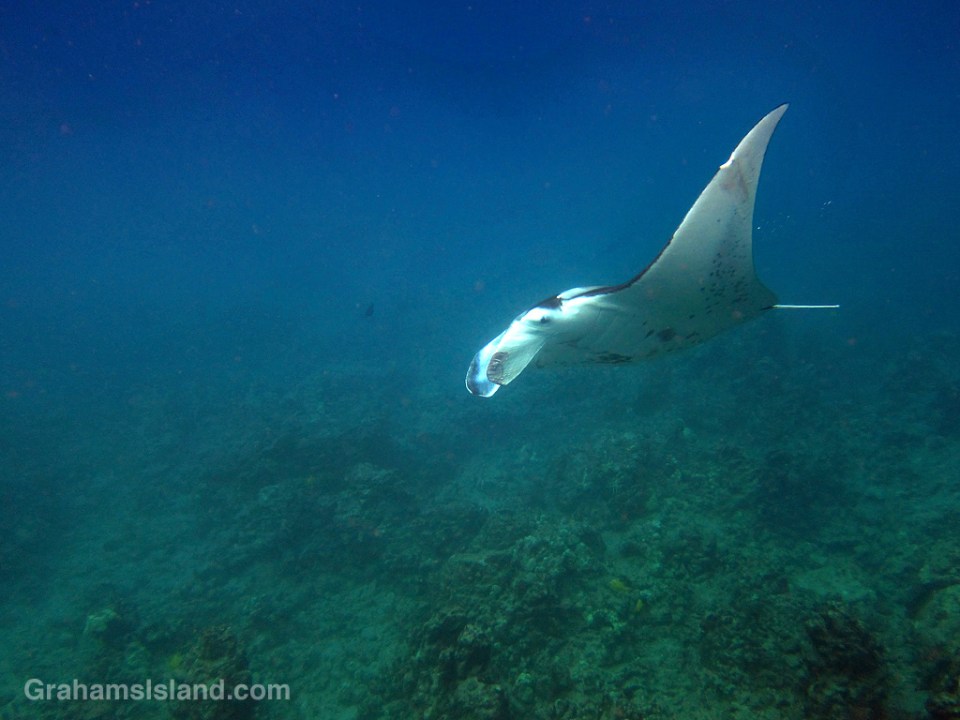

Manta Ray

Pohoiki fires

Pohoiki bench and lava

Yesterday I posted here about revisiting Pohoiki, also known as Isaac Hale Beach Park. Today, in response to this week’s Sunday Stills challenge on the theme of ‘Fire,’ (more responses here) I’m posting a couple more photos from that visit. Being perverse, I’ve chosen photos with no fire in them.

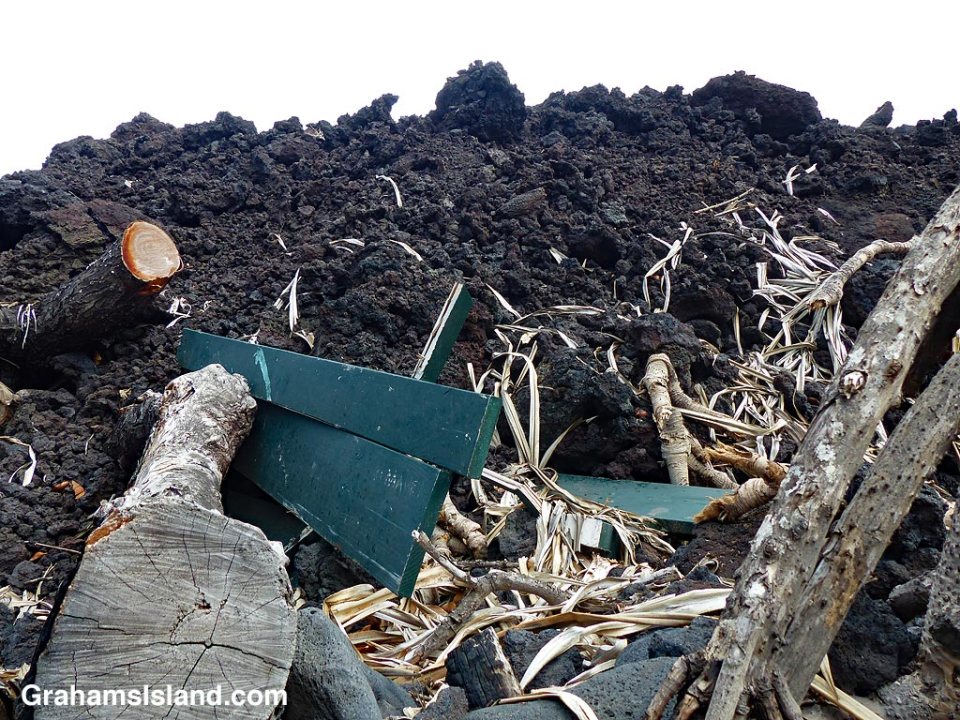
The top photo shows where the flow from the 2018 Kilauea eruption came to a halt, in the park’s picnic area. It has swallowed up one of the picnic tables, as well as some surrounding trees. What I find interesting about this is that neither the table, nor the trees, caught fire. I think this is because, by this time, the supply of lava had already stopped reaching the extremities of the flow and, consequently, those areas had already cooled considerably to below the temperature needed to cause combustion.

The bottom photo has a simpler, fire-related appeal. It could easily be captioned, ‘the barbecue pit meets the mother of all barbecues.’

Pohoiki barbecue pit and lava

Pohoiki revisited

Pohoiki boatramp

Pohoiki breakwater markerIt’s been a while since I was last at Pohoiki, also known as Isaac Hale Beach Park. One reason for this is that it’s about as far away from where I live as is possible on the island. But back in July 2016, I went down there at an ungodly hour to board a boat and go see lava flowing into the ocean. I wrote about that trip here and here. At the park were restrooms, picnic tables, and a boat launch ramp protected by a small breakwater.
Last year, Pohoiki was in the news because it was where the flow from the 2018 Kilauea eruption finally ground to a halt, about 100 yards short of the boat ramp. A few days ago, I decided to revisit the park and see the changes that had taken place.

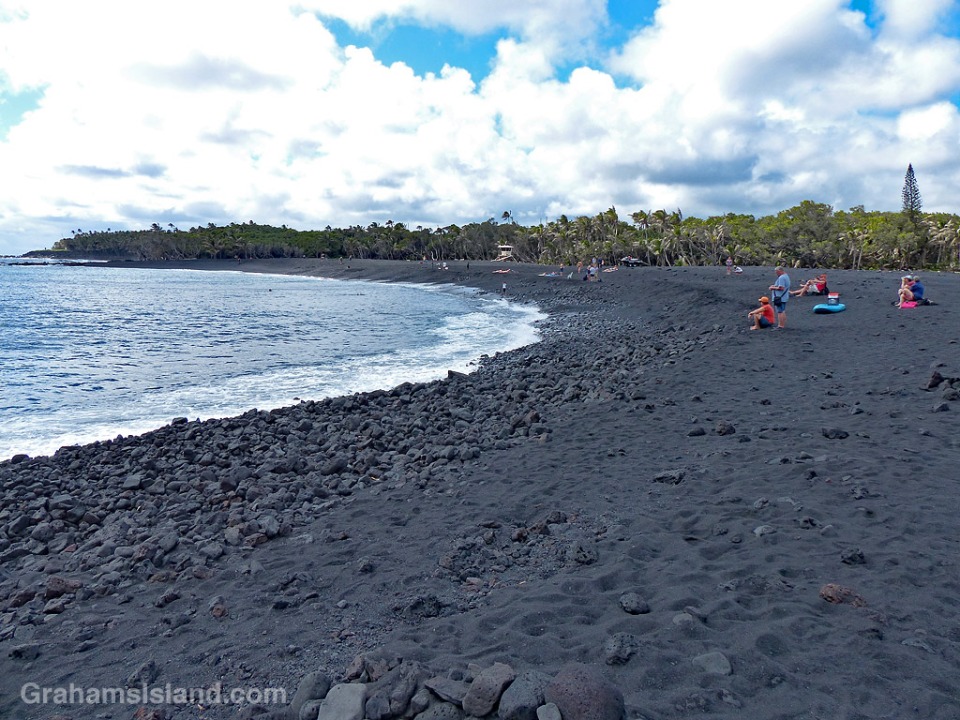
Driving into the park, the cooled lava flow could be seen, stretching down the side of the grassy picnic area (bottom photo). But what I really wanted to see was the boat ramp and the black sand beach at the bottom of the park. They did not disappoint.

The boat ramp, previously used to launch quite large boats, including the lava tour catamaran of 2016, now leads to a small lagoon (top photo). (Note the signs on the left of the photo.) This lagoon is perfect for swimming or sailing model boats, but as a boat launch ramp it has one big drawback. There’s now a long, deep, curve of black sand separating the ramp from the ocean (photo below). This beach began forming during the eruption, but I was surprised by how substantial it was. It’s rocky in places and the sand is quite coarse, but it is unquestionably a beach and it looks like it’s here to stay.

An indication of the beach’s substance can be seen in the second photo. The red triangle on a pole marked the end of the breakwater. Now it’s deep in sand. The breakwater is still there, but almost entirely buried.

The beach was formed by lava pouring into the ocean. Some of it solidified into large chunks, but a lot was quickly broken into smaller pieces and fine sand. (In the postings about my 2016 trip, one of the photos shows a black sand beach forming at the base of the flow.) A good deal of this sand was carried a short way down the coast to form this new beach.

I don’t have a good photo of the park before these changes, but the local newspaper has an aerial view here that shows the features I’ve mentioned. In that photo, the boat ramp, breakwater, and rocky shore can be seen at the bottom. Top left is the restrooms building that is also top left in the bottom photo here. The paths and picnic tables can also be seen.

I’d expect that on my next visit, all these new features that I’ve mentioned will still be there, but there is one caveat. If there’s a new eruption in this area, then everything could change. It’s one of the facts of life of living near an active volcano.

Posted in response to this week’s Friendly Friday challenge on the theme of ‘Revisited.’ See more responses here. Tomorrow, I’ll post a few more photos in response to the Sunday Stills photo challenge.

Pohoiki beach

Pohoiki picnic area