


The Overlook vent, in Halema’uma’u Crater at the summit of Kilauea Volcano, has been active since 2008. The level of the lava in the vent goes up and down, mostly 100 feet or so below the crater floor.
Last week, I was looking at the daily activity report and saw that the level was just 30 feet or so below the crater and lava was again visible from Jaggar Museum for the first time since April, 2015. My wife and I had visited during that previous viewing window and thought we’d like to do so again, particularly if the level rose until lava spilled onto the crater floor.
Next day, the level had dropped 40 feet. So much for that. The day after, it was back up 30 feet. We decided to monitor the situation. The lava kept rising, and over the weekend spilled out beyond the vent. Then it went down again. Then it came up again. Etcetera, etcetera.
On Monday, the lava spilled out over the crater floor and we thought about going early Tuesday, but the level dropped and we decided to wait. Tuesday morning, lava was spilling out. We decided to definitely go Wednesday morning (yesterday).
As noted in the previous post here, the issue is that the volcano is about 100 miles from where we live, a two-and-a-half to three-hour drive. Last time we got up at midnight to begin the journey. This time, we gave ourselves an extra hour’s sleep, trading that for breakfast at Ken’s in Hilo at 3 a.m..
So alarms went off, coffee was made, and tiramisu eaten (breakfast of champions), and we hit the road. Happily, the trip over was made under a mostly clear, starlit night and we rumbled into the Jagger Museum parking lot right on schedule at 4:30 a.m.. This time we were better prepared with actual warm clothing. With clear skies and a moderate breeze, it was chilly, especially for Hawaii.
There were already several people there, but not as many as in 2015, so it was easy to find a good viewing spot. Alas, we didn’t get to see lava spilling out because, as I learned later, the volcano had begun a mild deflationary phase (going down) after spilling out in even earlier hours of the morning.
Still, it was worth the journey. For a while, the lava lake was quite active, bubbling away and throwing up spatters in several different areas. One of the things I like about the lava lake, when it’s visible, is that the surface is mostly dark, but it’s cut through by ever-changing lines of bright lava. Sometimes, lava will burst forth from these lines in a frothing hotspot. Other times, a line might disappear as activity moves elsewhere.
These photos show activity along the crater wall (top), a hotspot on the edge of the pool (second photo), morning light seeping in above the volcano (third photo), an active hotspot in the center of the lava lake (bottom).
Posted in response to this week’s WordPress Photo Challenge ‘Lines.’


 When I was out walking in downtown Honolulu, I came across this scene. Someone had had turned on a hose up the street and the ensuing temporary river caused an instant influx of this hoard of white king pigeons.
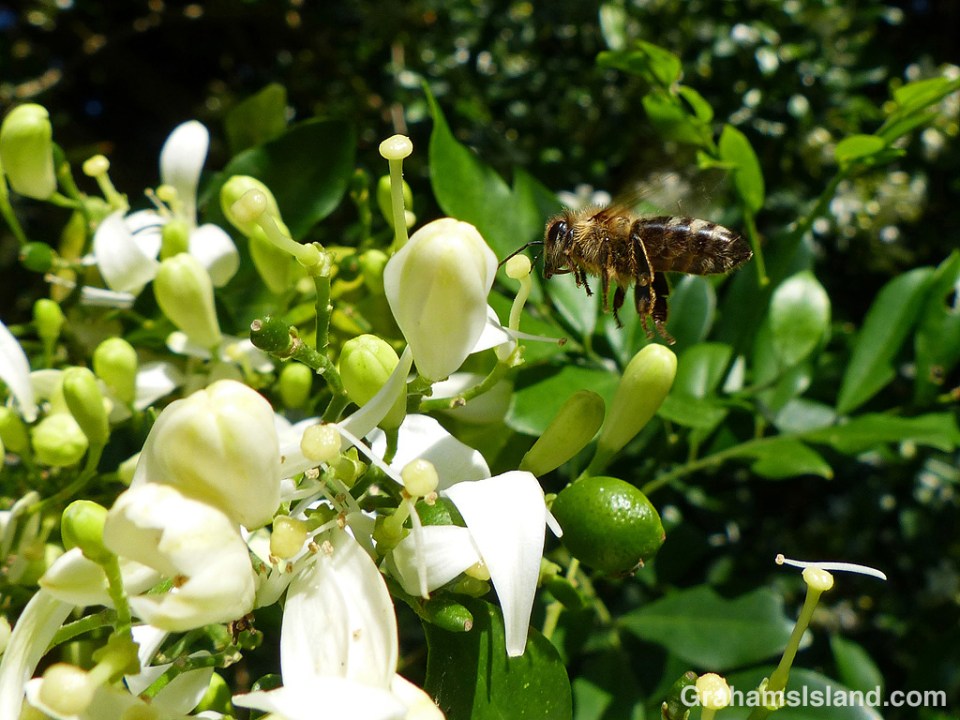
 Three or four times a year, the mock orange in the yard comes into bloom with a prolific show of small, white flowers and wonderful fragrance. During these times it’s a bee magnet and the whole tree buzzes from morning to night.
 Yellow tang are one of the most noticeable fish on the reef, in part because of their bright color, and in part because of their prolific numbers. These fish are also very popular in the aquarium trade, but because they can’t be bred in captivity, all aquarium yellow tang are collected from the wild.


 Graham's Island