Category Archives: Photo Challenges

Mauna Kea snow

Snow covers the summit of Mauna Kea

This week’s posts are in response to the WordPress photo challenge on the theme of ‘transient.’

Despite the tropical latitude of the Big Island, Mauna Kea can get snow at any time of year. It’s always fun to see the mountain with a white coating. In the winter it sometimes sticks around for a while. At other times of the year it’s usually here today, gone tomorrow.


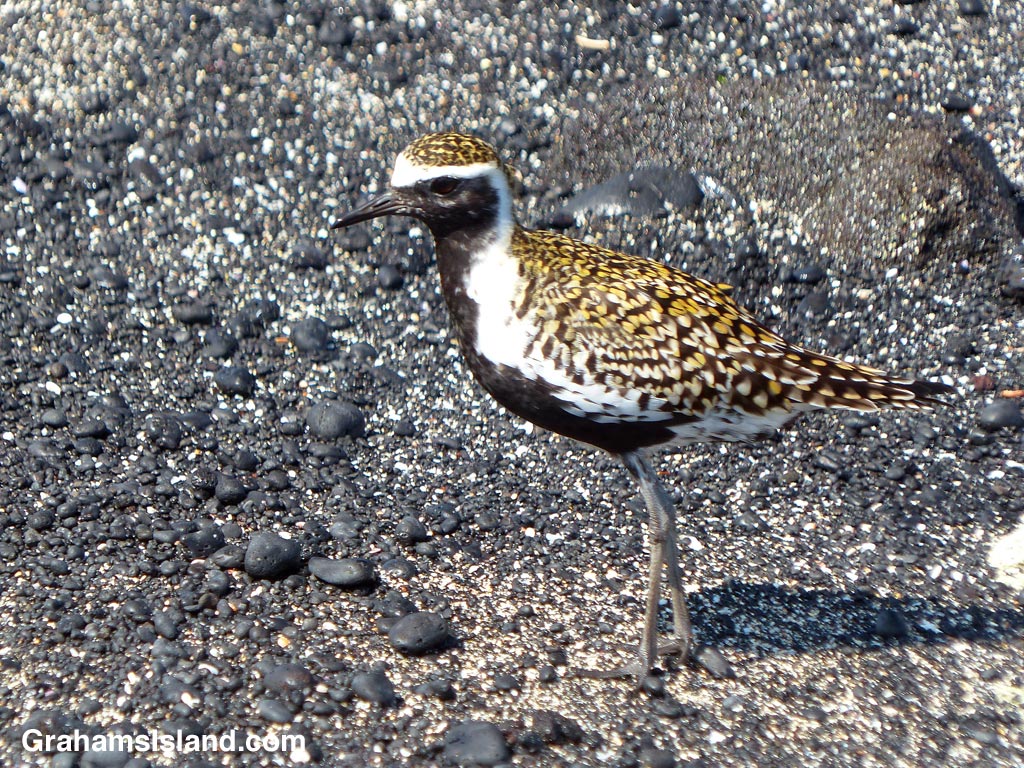
Pacific golden-plover

A Pacific Golden Plover with summer plumage.

A while ago I did a week’s worth of posts in response to a WordPress photo challenge on the theme of ‘evanescent.’ I thought I’d take a similar approach to this week’s theme, ‘transient,’ which is basically a synonym of evanescent.

Migrating birds are transient, in that they spend time in one area where they breed before moving to regular wintering grounds. The Pacific golden-plover is one such bird. After wintering in Hawaii, these birds fly north to spend May, June, and July at breeding grounds in the Arctic. Not only that, but this is one bird that dresses for the occasion! Normally, a mostly brown bird with flecks of yellow (as seen here), its summer plumage takes on this splendid black and white frontage.

Kamehameha Day ceremony in Kapaau

A lei is draped over the spear of the statue of King Kamehameha 1 in KapaauA hula group performs on front of the statue of King Kamehameha 1 in KapaauA group pays its respect to the statue of King Kamehameha 1 in Kapaau

Yesterday was Kamehameha Day, celebrating Kamehameha 1, the king who first united the Hawaiian Islands under one leader. There’s a statue of the king at Kapaau in North Kohala, and this was the scene of a ceremony honoring him.

The ceremony began in steady rain, but the weather brightened so that proceedings ended in bright sunshine. After opening blessings, various groups approached the statue and paid their respects to the king. This was followed by the draping of leis on the statue. Finally, a hula performance in front of the statue concluded events – at least as far as this ceremony was concerned. An hour or so later, there was a parade featuring representatives of all the Hawaiian islands, and for the rest of the day, there were events and music in a local park.

The top photo shows a lei being draped over the king’s spear. The lei is made up of plumeria blossoms. The leis draped over his extended arm are mostly made up of ti leaves. In the second photo, members of one of the groups honoring the king performed a hula in front of the statue. Third, I think this is the order of Kamehameha presenting an offering which was carried up and placed at the base of the statue. Below, a red plumeria lei is hoisted over the king’s spear. Bottom, after all the lei were placed on the statue, another hula performance concluded events.

For more information about the Kamehameha Day and the statue, go to kamehamehadaycelebration.org.
For more information about the Kamehameha’s history, go to nps.gov/puhe/learn/historyculture/kamehameha.htm.

A lei is draped on the statue of King Kamehameha 1 in KapaauA hula group performs on front of the statue of King Kamehameha 1 in Kapaau

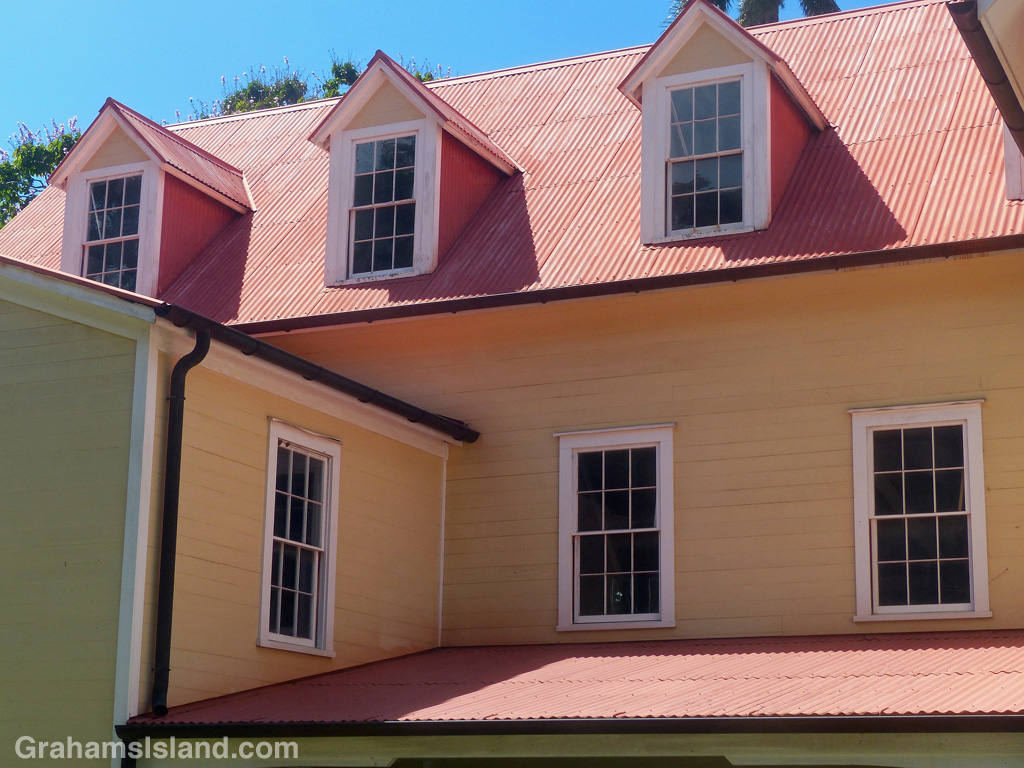
Kohala Girls School shadows

The old Kohala Girls School sits on land at ‘Iole in North Kohala.

The old Kohala Girls School sits on land at ‘Iole in North Kohala. ‘Iole is one of the few remaining ahupua‘a, a pie-shaped division of land stretching from the mountain to the ocean. It’s now managed by Kohala Institute as a retreat center and the recently renovated school is part of that setup.

I like the geometric order of the building – the squares of the windows, the straight lines of the roof and siding – as well as the light and shadows.


Helicopters circle Pu’u O’o vent

Tour helicopters circle Pu'u O'o vent on the Big Island of Hawaii

During a recent hike on the Nāpau Trail in Hawaii Volcanoes National Park, one accompaniment was the throb of helicopter engines. The active flow from Pu’u O’o vent, and its ultimate outpouring into the ocean, is a great attraction for visitors and locals alike.

One way of seeing these events is on a helicopter tour and, as I sat at the Nāpau overlook, I noticed there was a clear order to those helicopter visits. A pair would arrive from the west, one a bit behind the other. One would circle the vent, the other visit the ocean entry. Then they’d switch. After 10 or 15 minutes, the two helicopters would head off to the northeast and soon after, the next pair would arrive.

For more information about Hawaii Volcanoes National Park, go to nps.gov/havo/.
 For more information about Kilauea Volcano and it’s eruptions, go to hvo.wr.usgs.gov/kilauea/history/main.html.


Cattle and egrets

A cow chats with two cattle egrets.

I’m not sure one could call cows and cattle egrets friends. When cows graze, cattle egrets snaffle bugs stirred up in that process, but I don’t know of anything the egrets do for the cows in return.

However, this photo has a friendly feel to it. I picture the cow saying, ‘So you can fly, right? Could you teach me how?’ The egrets look suitably nonplussed at the suggestion.

Feel free to suggest your own caption in the comments.

A pushmi-pullyu eel?

two whitemouth moray eels wedged into the same space behind a clump of coral
At first I thought this was something straight out of Doctor Dolittle, a pushmi-pullyu eel. Alas, no. Instead, it’s two whitemouth moray eels wedged into the same space behind a clump of coral. While whitemouth moray eels are a fairly common sight in the water, this is the first and only time I’ve seen two together. I don’t know whether this proximity was related to breeding. Perhaps they were just helping each other stay warm! Looks like they must be pretty good friends.

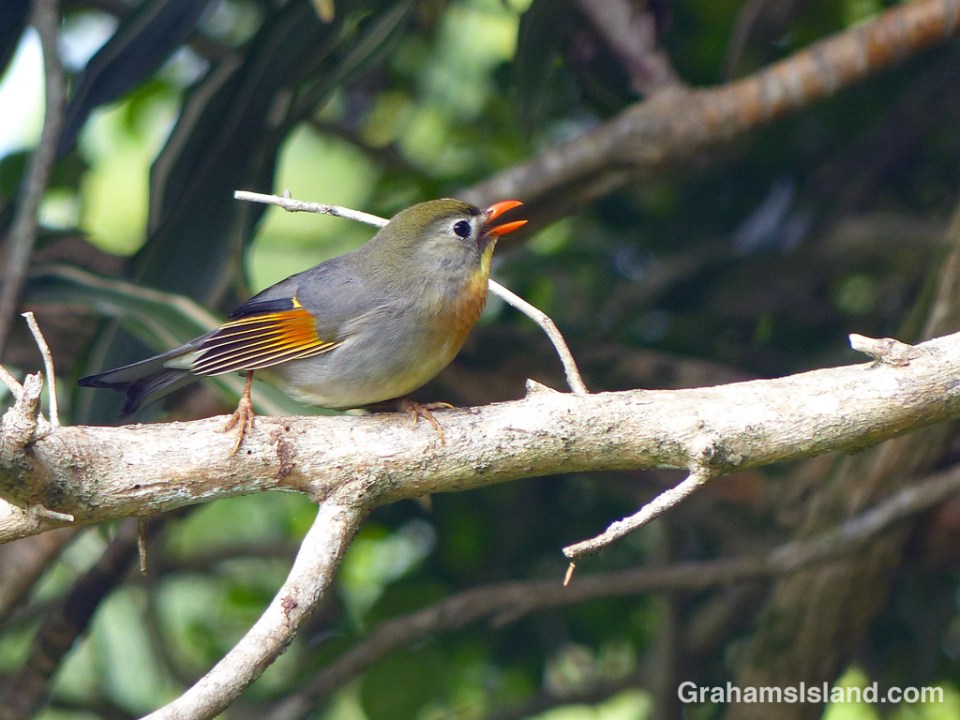
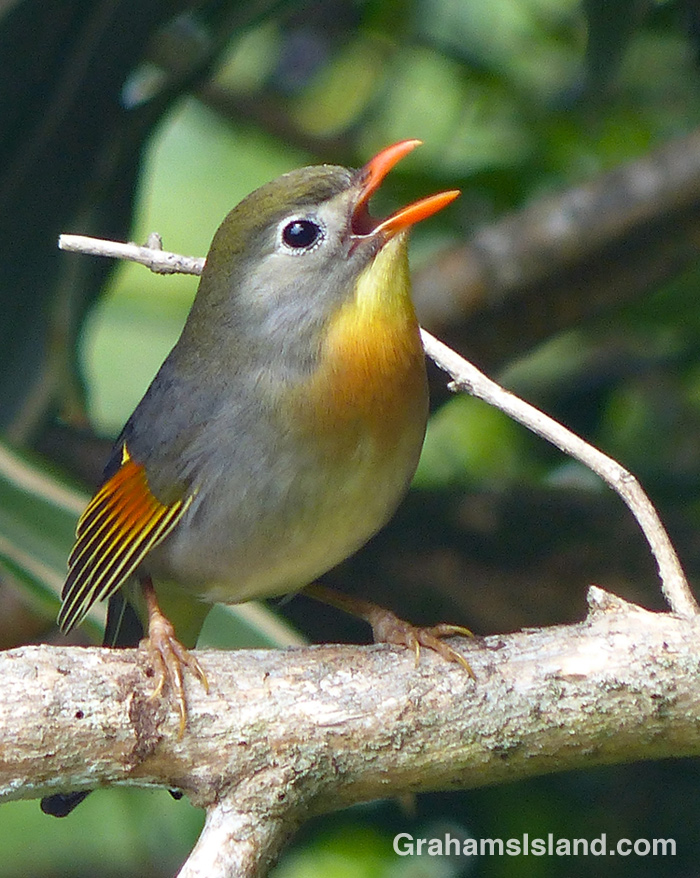
Red-billed leiothrix

A Red-billed Leiothrix sings on a branchA Red-billed Leiothrix sings on a branch
This is the last of my series of posts in response to this week’s WordPress photo challenge on the theme of ‘evanescent.’

Picture the scene: I’m sitting quietly in my living room when a small shape flits past a window accompanied by a harsh chittering. I jump up, grab my camera and rush outside. As I do so, I turn the camera on, adjust settings and figure out the best place to intercept the bird that just flew by. I go around the house and sure enough, the sound is loud. And there it is, in the hedge. I raise the camera, but its gone. Over there now. I move, refocus. There it is again. I snap a photo. Gone again. I do this a couple more times, and then it goes quiet. There’s no more movement. The bird’s moved on.

Now repeat this scene, a couple of times a week and you have my experience with the red-billed leiothrix. It’s such a beautiful bird, but all my efforts had produced was a collection of photos of bits of wing, disembodied beaks, barely discernable blurry shapes, or just bare branches and leaves. The jittery, hyperactive birds were evanescent, quickly disappearing from sight time after time.

So imagine my surprise when this one showed up. It was one of a pair. The other one, true to its kind, instantly disappeared into a bush. But this one appeared not to have read the leiothrix operation manual. It stayed on this branch, in full view, for a couple of minutes. True, it wasn’t ever exactly stationary, it’s head going from side to side every two seconds. And it called out continuously, probably wanting to know why its partner was skulking in the bush. Somewhere the message must have got through because the bird joined its partner and the two of them, true to form, flitted off from branch to branch, through the hedge and disappeared from view.