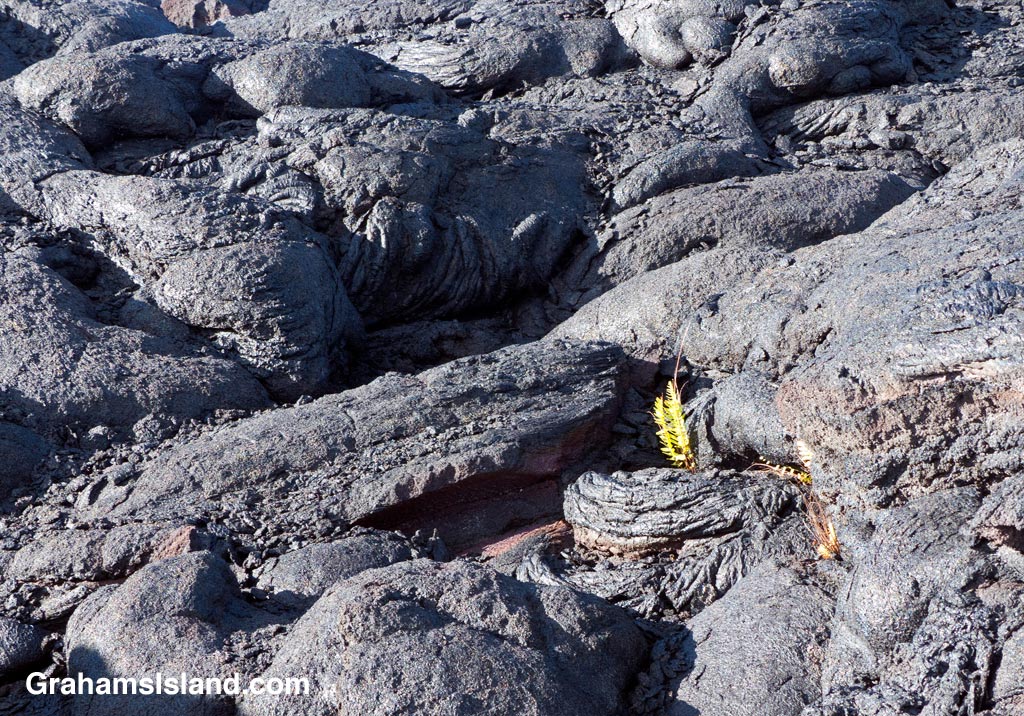
A fern gets a toehold in a field of lava. I like the resilience of the fern, daring to grow in such a hostile place. I also like the texture of the lava, a hard rock and yet crumbly as well. I can almost hear it crunching underfoot.

A fern gets a toehold in a field of lava. I like the resilience of the fern, daring to grow in such a hostile place. I also like the texture of the lava, a hard rock and yet crumbly as well. I can almost hear it crunching underfoot.
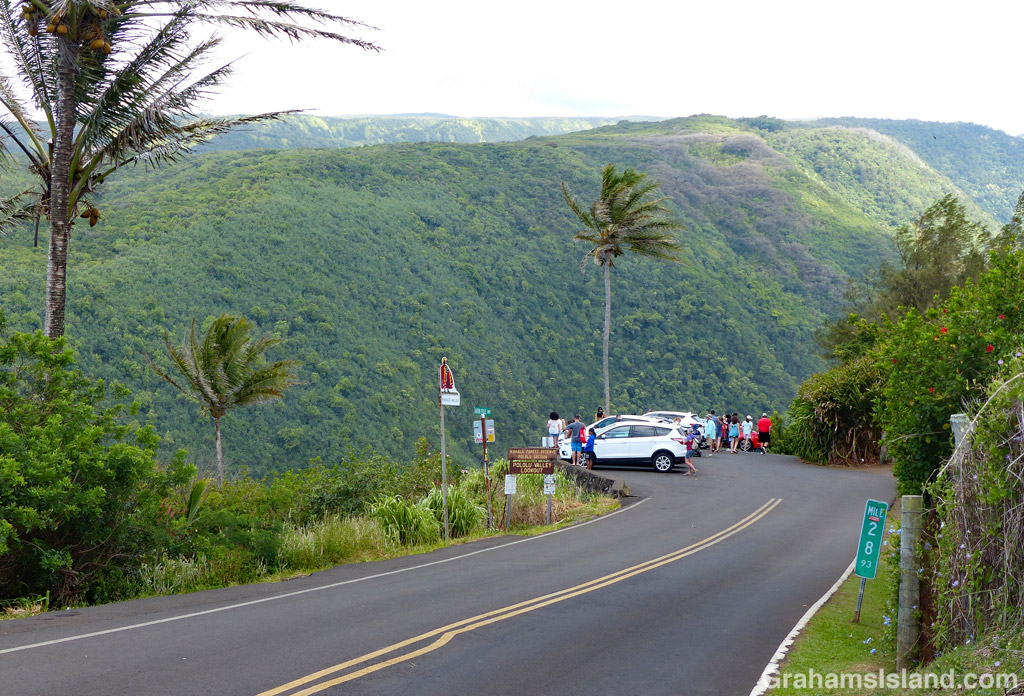
There’s satisfaction in reaching the end of the highway. Highway 270, also known as Akoni Pule Highway, ends at the Pololu lookout. From there, a steep trail leads down to Pololu beach and valley. Parking at the end of the road is tight and there’s no good place to turn around, but plans are afoot for a new parking area and toilets about a hundred yards up the road. If and when that happens it will be a marked improvement on the current setup.

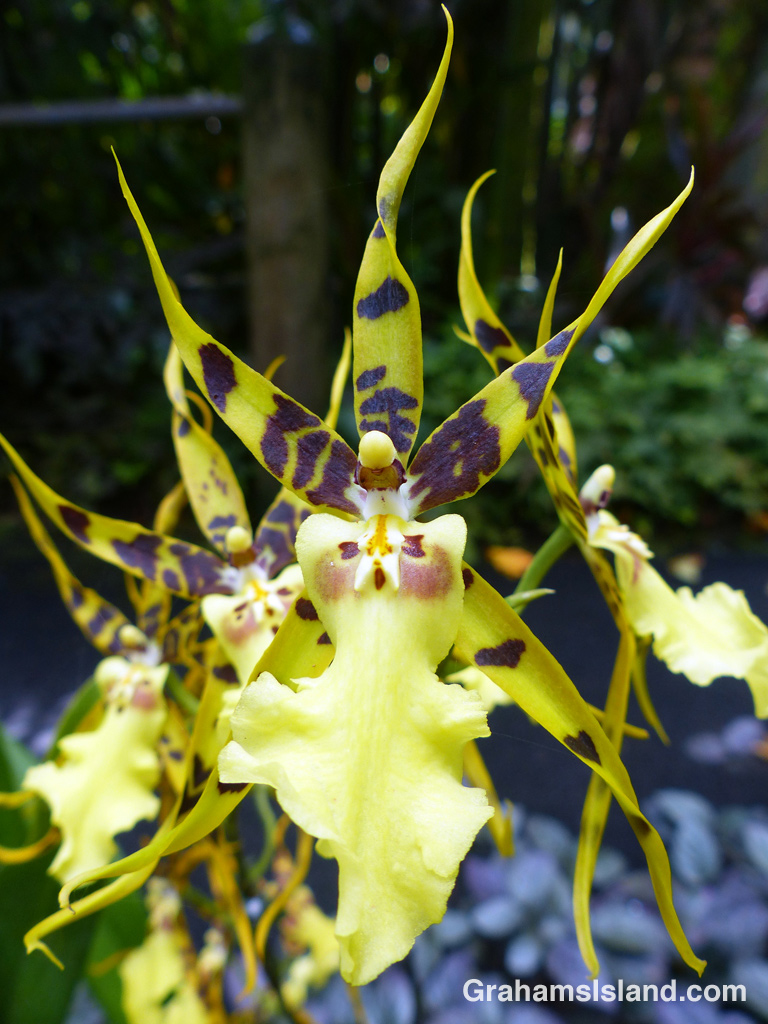
A lot of the plants, fish, and birds that I see on the Big Island are new to me, but I find it satisfying to identify them. It’s often not straightforward. Striking colors or patterns that I think will be easy to place can often prove elusive. Juvenile birds and fish might look nothing like their parents. Other times, a mostly undistinguished look might pop up first in my search.
Orchids are a big challenge since there are numerous hybrids. I’m pretty confident this is Aliceara Pacific Nova not just because it matches photos online, but also because there was a tag at the base of the plant, a useful search tip I’m happy to pass along here.


I got a good deal of satisfaction spotting, and photographing, this yellow-billed cardinal taking its morning bath. I guess that could be considered a bit creepy. Certainly, the bird’s expression in the bottom photo, just before it flew off, suggests it wasn’t best pleased by my presence.

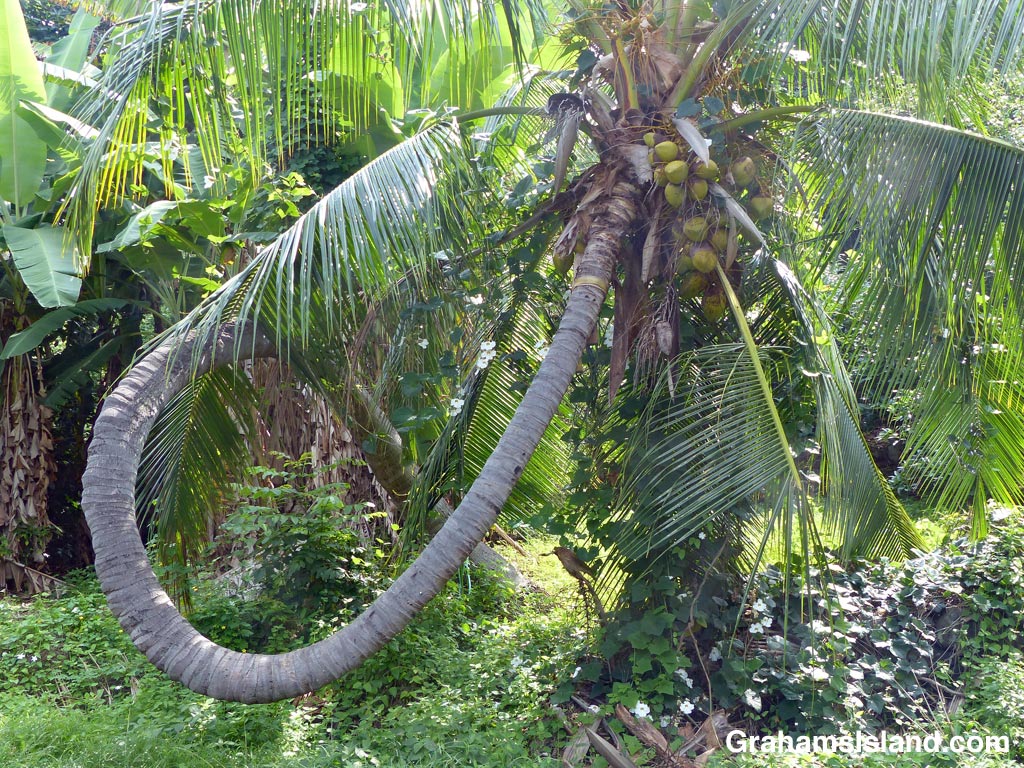
Most people are familiar with the image of palm trees towering over golden Hawaiian beaches. This is not one of those. It’s taken an unusual path, twisting down and around and up again, but none the worse for its circuitous route.
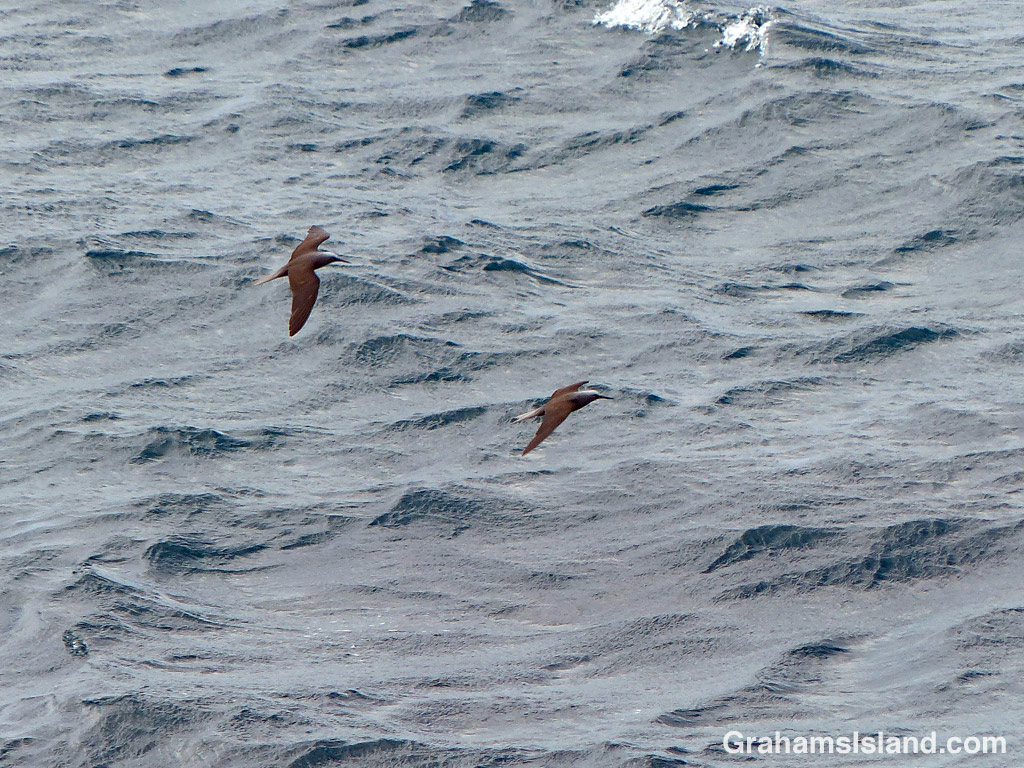
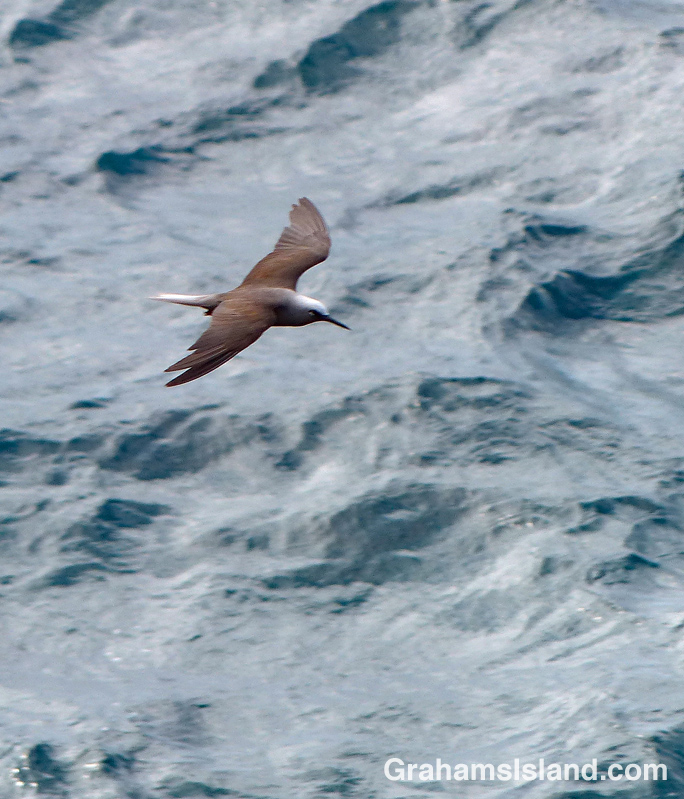
Photographing birds is always a challenge for me, especially when they’re in flight. Hawaiian noddies are tricky because they tend to skim the water as they fly along the coast. When I do see them, they’re usually as close as they’re going to get and, by the time I have my camera organized, the best I can hope for is a blurry photo of some tail feathers.
What was unusual on this day was that, while I saw the noddy in about the same relative position as I had other times, it was higher up, dipping below the cliff and then climbing up again. As it was heading into the wind, it was making slow progress and I thought I had a chance. But each time I was about to get the bird in shot and in focus, it would slide away again. However, each time it reappeared, it got closer to where I was.
Where I was standing, the cliff dipped toward me, and when the bird swooped in to that recess (still evading my camera) I felt sure I would be able to capture it when it flew out again. I was ready, I was focused, but no bird. I was pretty sure it hadn’t sneaked by, out of sight. Then I realized that the chances were I’d stumbled on the bird’s roost. I couldn’t see the cliff face so I waited and a few minutes later two noddies flew out, circled around, and returned to the cliff.
Eventually, four birds came out, and while they looked a similar size, I suspect two of them were chicks that were about ready for independent life. It was still a challenge getting the birds in the frame, and I didn’t help myself by switching my focus from one bird to thinking I could get all four in shot, and back again.
In the end, I was happy to have a few decent photos and more happy to have had the time just watching them circling and swooping, dipping and diving, before swinging back to their roost.
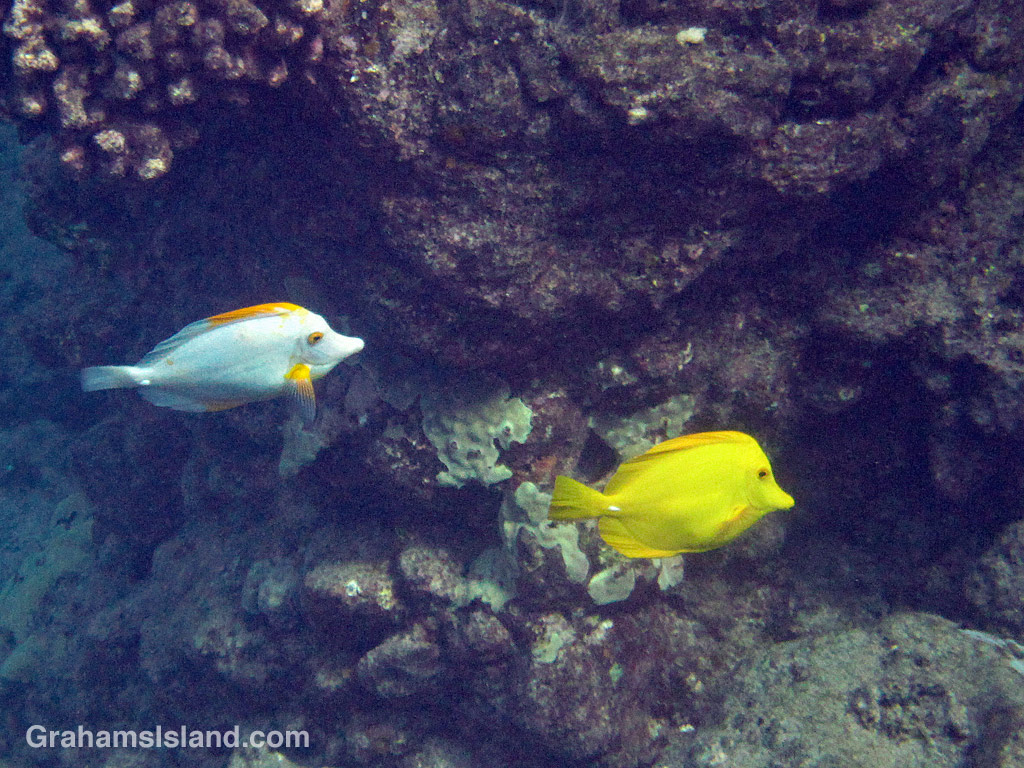

Yellow tang are one of the staple reef fish in Hawaii. They often putter around in large shoals in the shallows, and since they’re entirely bright yellow, except for a white tail spine, they’re easily visible from shore. The white variation seen here is very unusual. I’m not sure why some are white, but I’ve read that it might have to do with stress or disease.
These photos were taken in the same location, a few months apart, but I think it’s the same fish as the markings appear identical.

Since this week’s WordPress photo challenge is ‘collage,’ I thought I’d see just how much I’ve forgotten about Photoshop Elements, or how much I never knew. The answer is a lot, on both counts. Still I had fun figuring a few things out and I like this collage of turtle photos, taken the last time I was at Kiholo.

