I was watching a pair of Gray Francolins and their four chicks when something spooked them. The parents ran away. The chicks, still too small to cover ground quickly, dived for cover. Three disappeared into a clump of grass, but the fourth ended up under the overhang of a large rock. That’s the one in this photo.
Like any young bird, it instinctively knew to find cover, remain still, and make no noise. I watched it for a while and the only movement it made during that time was, if I moved, it briefly opened its eyes. I think of all newborns and youngsters as a species renewing itself and moving forward.
Posted for Becky’s Squares: Move Forward, Reconstruct, Renew, and/or are Burgeoning. See more responses here.
This week’s Sunday Stills challenge theme is ‘Groups of Any Kind.’ See more responses here.
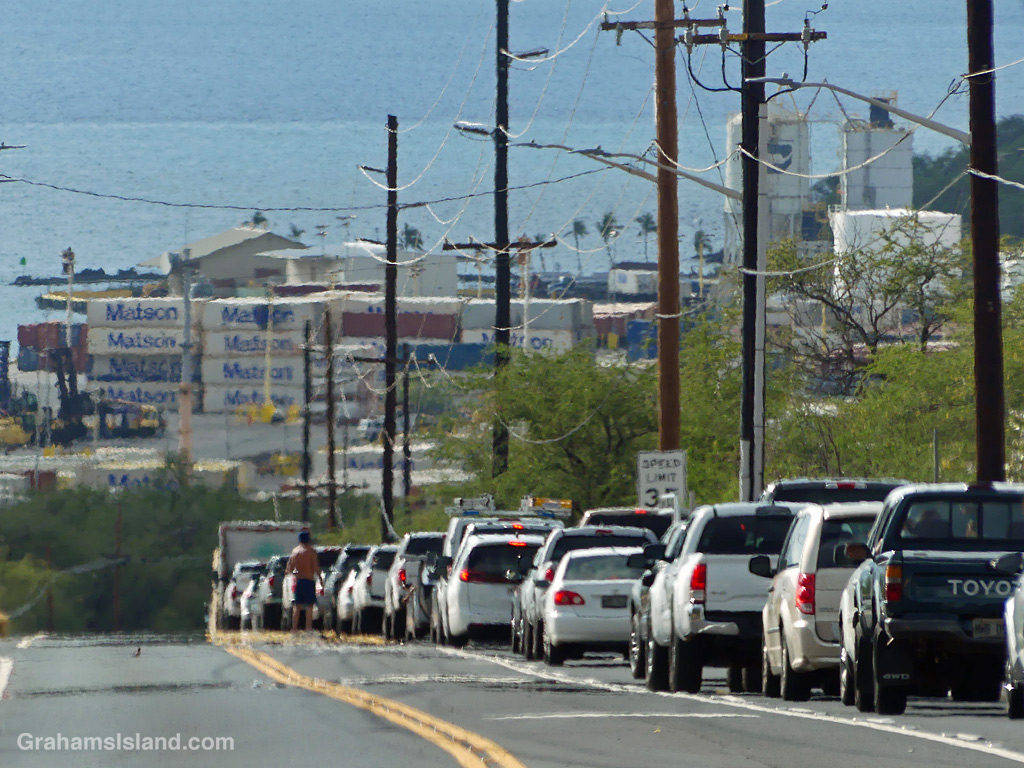
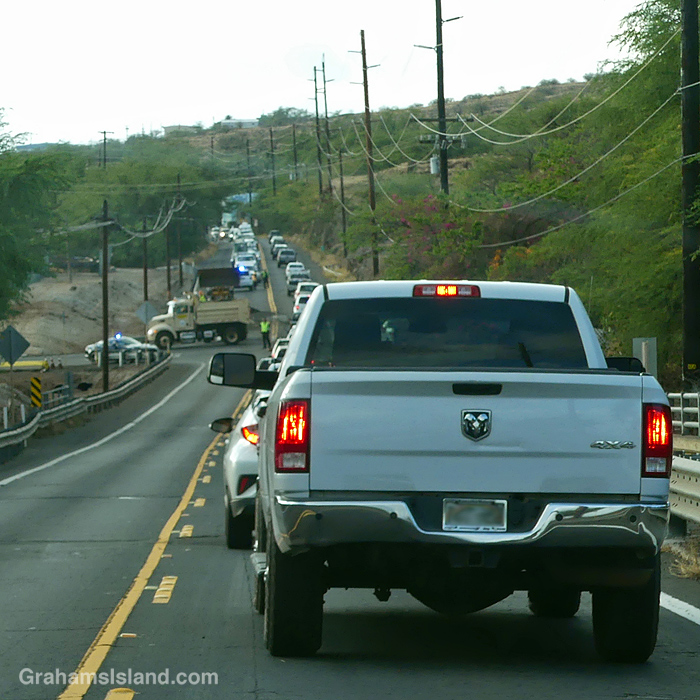
One day last week, late in the afternoon, the driver of a dump truck carrying asphalt, lost control of his vehicle on the road into Kawaihae. He careened across the road, into a guard rail, and overturned, spilling the asphalt onto the highway.
No one was hurt, but the highway was closed in both directions. This is the highway I take to go to and from work. I’d heard about the accident before I set off for home, but there were conflicting versions about whether one lane was closed or both.
It wasn’t long before I was in a line of backed up traffic, but even then it wasn’t clear whether the highway was closed or not, since a fair number of vehicles kept coming from the opposite direction. However, the longer I was in the line, the more clear it became that these vehicles were driven by people turning around and getting out of the jam. Some of these were likely people who were headed to Kawaihae for some reason that wasn’t urgent. Others were surely those who lived up where I do who figured it would be quicker to take the long way home. I’ve done that before (here) for a brush fire, and once stuck it out for an overturned semi (here).
This time, I decided to wait it out with my group of fellow delayed travelers. It was interesting to watch what people did. Some got out of their cars and chatted. Others took the exit to Spencer Beach Park for a more relaxing wait. Still others waited, gave up, and turned around to seek alternatives. A few cars did just that only a few minutes before a retrieval vehicle with the damaged dump truck aboard, passed by. Shortly thereafter, traffic started moving through from the other side of the holdup. Then it was our turn.
The backups were quickly cleared and I got home two hours after I left work. Had I turned around as soon as I saw the backup, I might have been home in 90 minutes. My normal commute is about 30 minutes. But I wasn’t too put out. Back home, I was still able to relax with a nice glass of wine. The dump truck driver, who caused the delay, probably wishes he’d done that too. He was arrested for suspicion of driving under the influence of an intoxicant!
Also posted for Becky’s Squares: Move Forward, Reconstruct, Renew, and/or are Burgeoning. See more responses here.
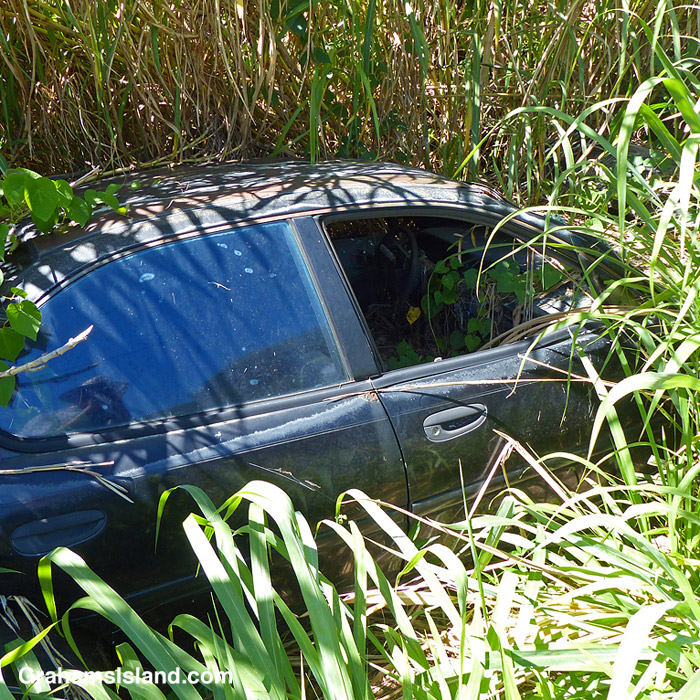
Bushboy has popped up with a second Weekend Puzzler (here) asking us to supply the obscurest photo to match the title or lyrics of the song All The Tired Horses.
This car used to have a good deal of horsepower, but they got tired right out, fell into a deep sleep, and have yet to wake up again.
Also posted for Becky’s Squares: Move Forward, Reconstruct, Renew, and/or are Burgeoning (more responses here), because this car’s going to need a lot of renewing before moving forward again!
Floating marine debris can be a menace to ocean wildlife, being swallowed by, or wrapping around everything from fish to turtles to whales. But it can also be repurposed by little fish into a relatively safe haven for them as they negotiate those dangerous early days of life.
Here, a variety of small sergeant fishes have found some cover under a clump of line.
Posted for Becky’s Squares: Move Forward, Reconstruct, Renew, and/or are Burgeoning. See more responses here.
May sees the welcome return of Becky’s Squares. This month’s theme is Move Forward, Reconstruct, Renew, and/or are Burgeoning (see more responses here). I couldn’t resist starting with this one, if only for the headline.
Vehicles in Hawaii are required to pass a safety inspection every year. This sticker is put on when the vehicle passes and also indicates when it will need to be renewed. This one is good for another eight months.
Also posted for Bushboy’s Last on the Card. See more responses here.
The photo number isn’t 140, but this still works. Watch out for that tub!
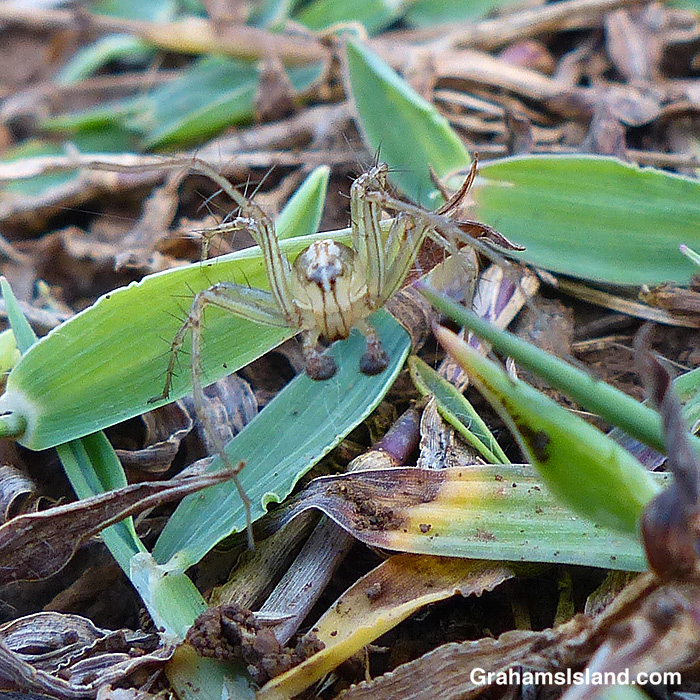
An itsy bitsy, teeny weeny Striped Lynx Spider.
The idea of The Numbers Game is to enter a number into the search bar of your computer and then post a selection of the photos that turn up. This week’s number is 140. Captions are on the photos.
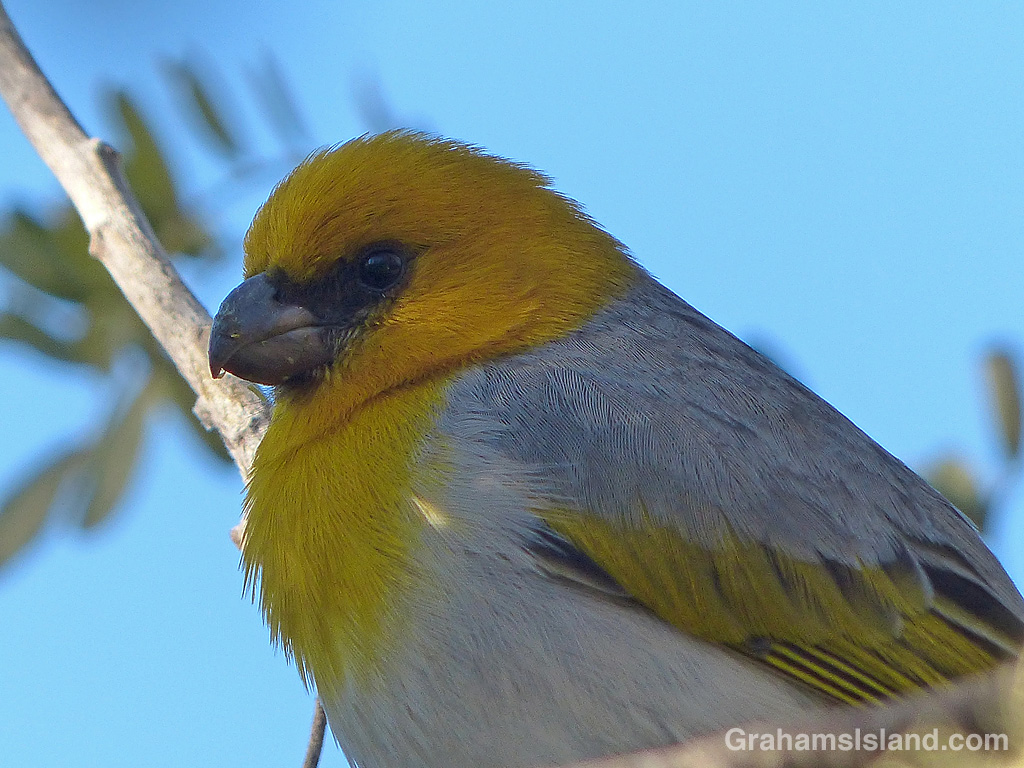
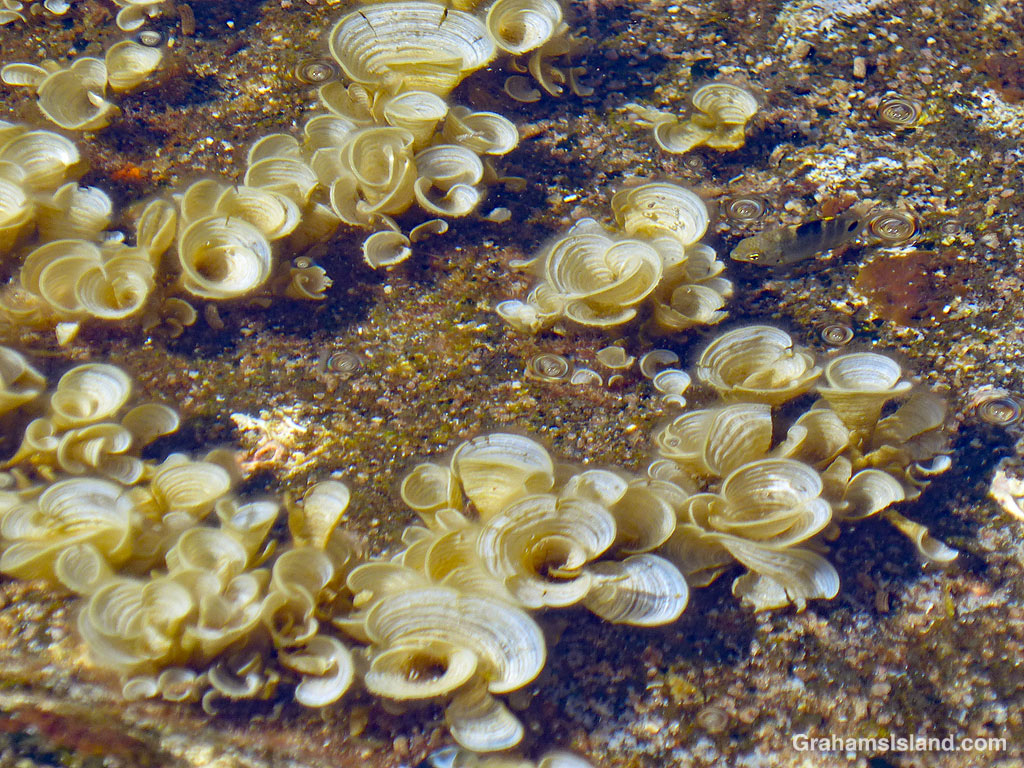
An endangered Palila, a bird found only on the Big Island, Hawaii.Rainbow over North Kohala.Little fish and Padina japonica seaweed in a tide pool.A fireweed control moth (Secusio extensa).Sunrise over North Kohala.