This week’s Sunday Stills color challenge theme is ‘Amethyst.’ See more responses here.
With no immediate ideas for this challenge, I plumped for some odds and ends from my flower folders. First up is a ‘vase’ of vincas followed by a Doritaenopsis orchis (Yu Pin Dream Girl). Then we have the leaves of a Persian Shield plant and finally a water lily surrounded by reflections.
Also posted in response to this month’s Becky’s Squares challenge theme of ‘Odd.’ See more responses here.
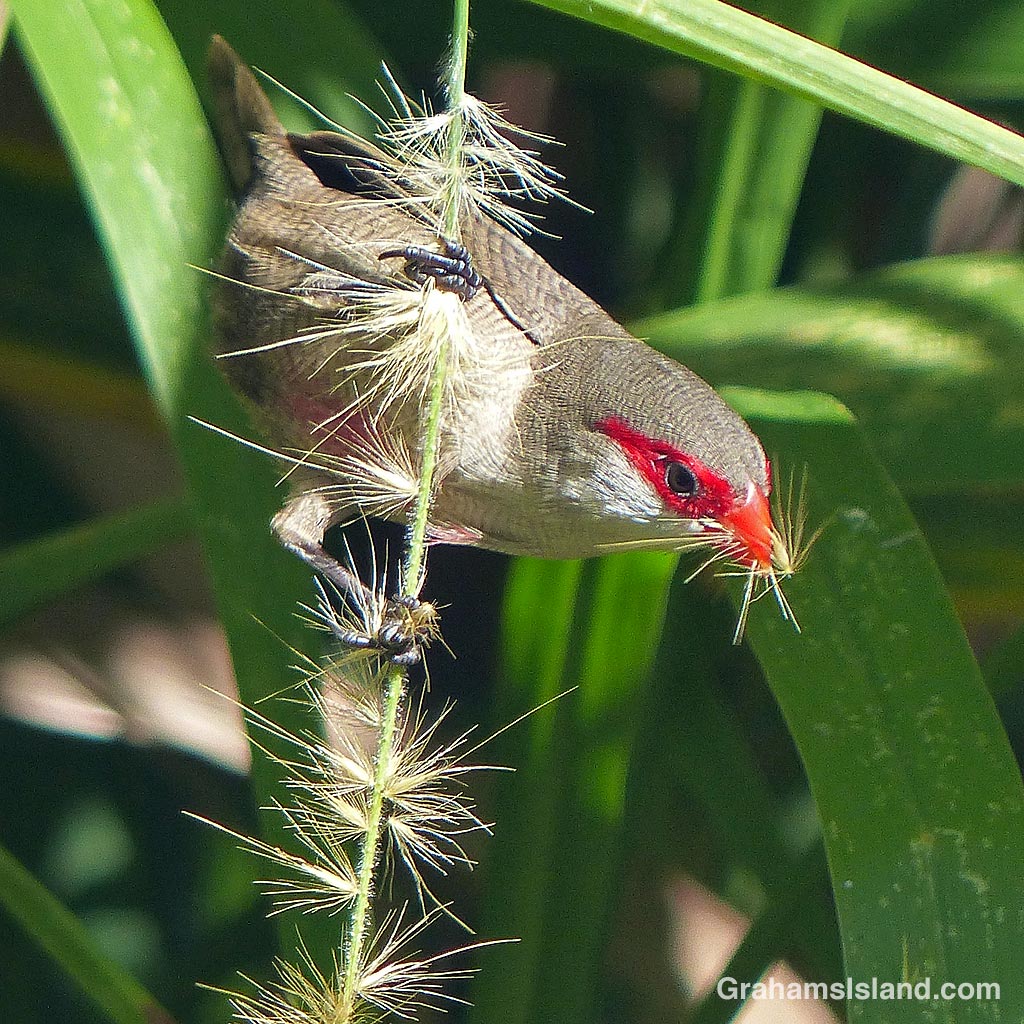
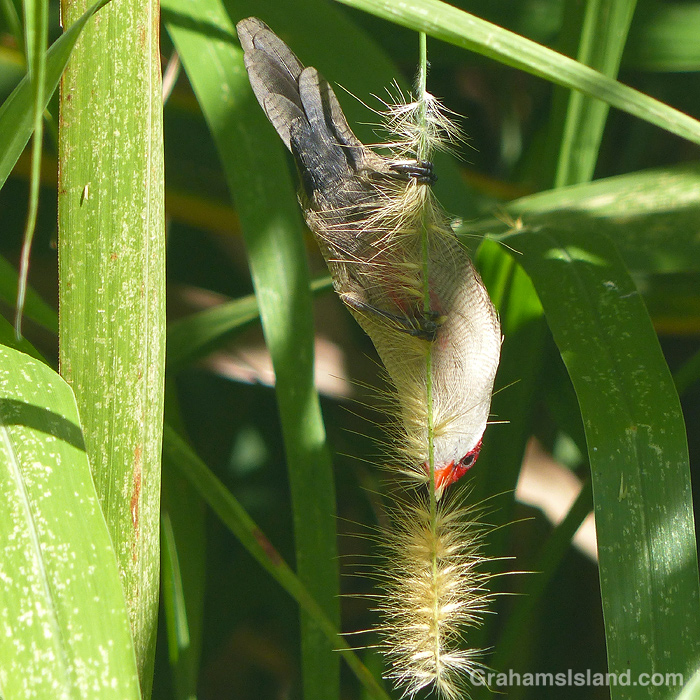
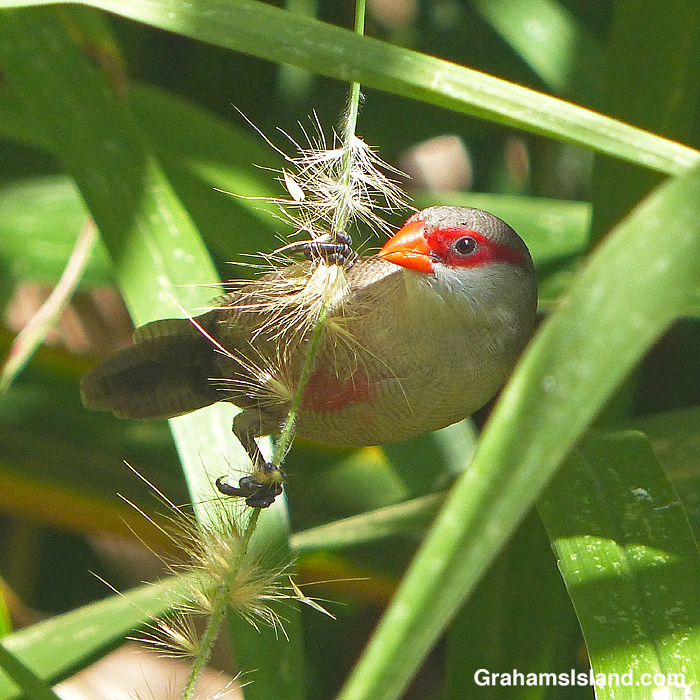
This week’s Sunday Stills challenge theme is ‘Feed the Birds.’ (See more responses here.) We don’t put bird feeders out here so I was going to go with a selection of birds feeding out and about. But a few days ago, I was reminded that, while we don’t put out bird feeders, it doesn’t mean we don’t have them around.
Right now, the cane grass bordering the property has gone to seed and has been attracting birds. Seeing them is one thing; getting photos another. The cane grass is up to 10 feet high and the little birds that feed on them are notoriously skittish and will take off in an instant. I’ve found my bathroom window to be a good spot for photography – as long as it’s clean! The window looks out at the level of a lot of seed heads, but they’re usually in motion because of the wind and the little birds working them over. And other stalks of cane grass swish back and forth, obscuring my view of the birds and playing havoc with my focusing.
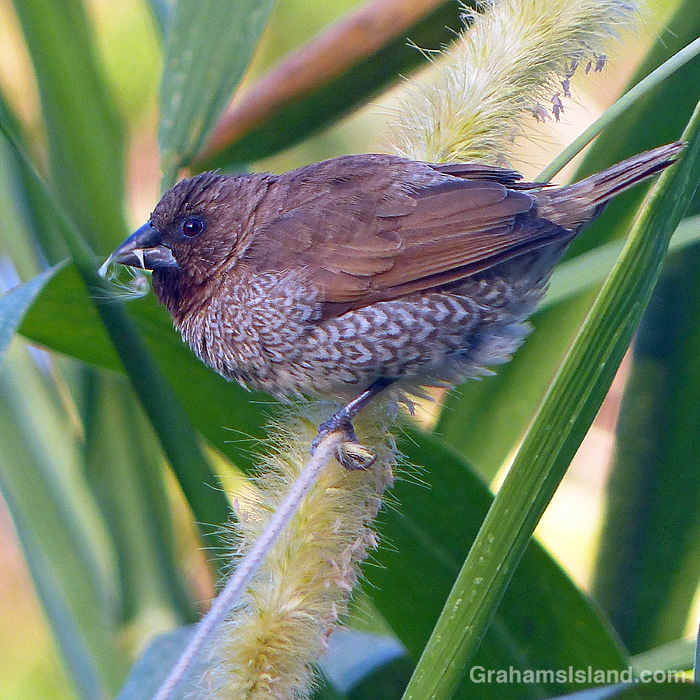
However, I was lucky enough to get photos of two recent visitors. The top trio of photos show a Common Waxbill stripping a seed head that was nicely illuminated and in an open spot right across from the window. The bottom three show a Nutmeg Mannikin. This one hopped around more, but stayed long enough that I was able to get several photos.
Both waxbills and mannikins generally travel in small flocks. This waxbill was the only one I saw clearly, but I saw others flitting about and could hear them in the vicinity. The odd thing about the mannikin was that it was the only one I saw or heard. Also, as the sun went down, I went outside to see if I could get better shots from a different angle. This bird did not seem bothered by my presence. Normally, mannikins would disappear at my appearance (I don’t take it personally!). I suspect this one was a juvenile that was, hopefully temporarily, separated from the flock and hadn’t learned about the many dangers facing it.
Also posted in response to this month’s Becky’s Squares challenge theme of ‘Odd.’ See more responses here.
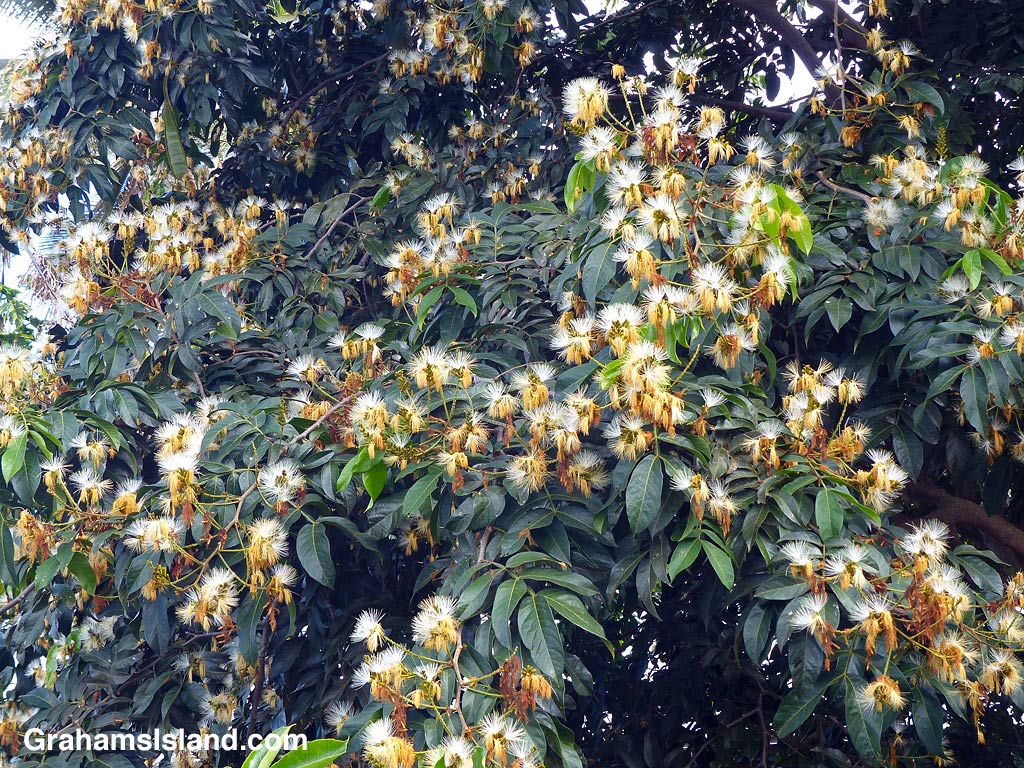
The Ice Cream Bean Tree (Inga feuillei) is native to northwestern South America. It gets its name from the pulp of the seed pod, which is sweet and edible. I sampled a pod from this tree and it does have a sweet, creamy flavor.
This week’s Sunday Stills challenge theme is ‘White.’ See more responses here.
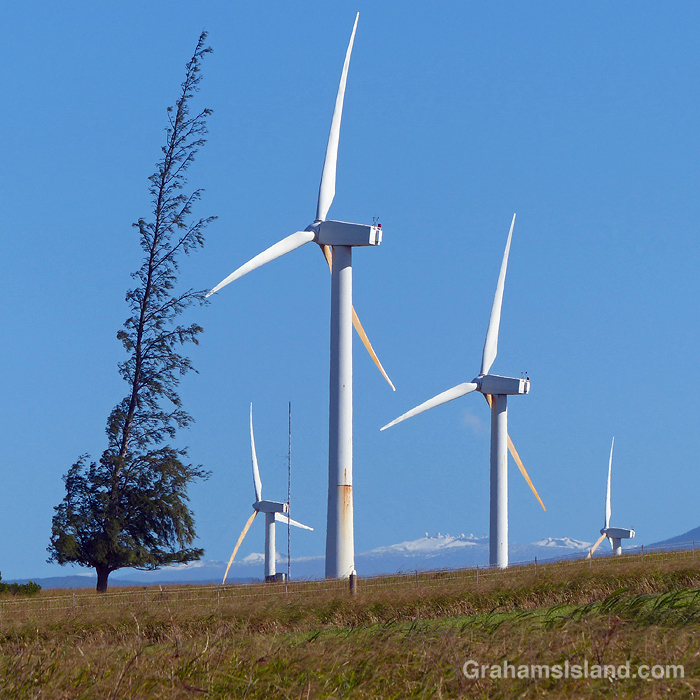
In the top photo, frothy surf barrels ashore at Upolu in North Kohala. Below that, a cattle egret surveys the scene in the middle of a water fountain. The third photo shows turbines at Hawi Wind Farm against a backdrop of snowy Mauna Kea. And the bottom photo features a bee collecting on a Maiapilo flower.
I saw this female Sonoran Carpenter Bee (Xylocopa sonorina) in an Agave Attenuata and at first thought she was dead. But when I went out to look, she moved a bit, then burrowed deeper into the plants and disappeared from sight. I saw her three days in a row on the same plant and then she must have moved on. I’m not sure exactly what she was doing there. She didn’t appear to be collecting pollen but might have been doing so, albeit very slowly!
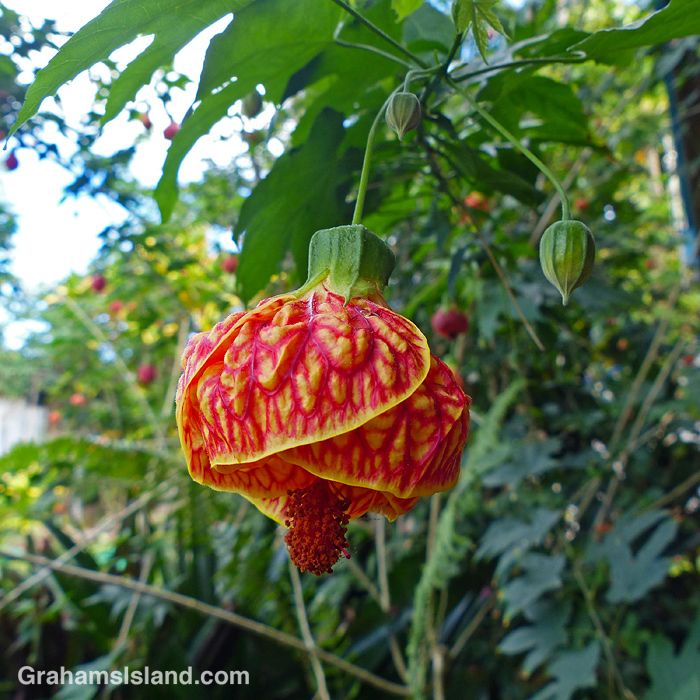
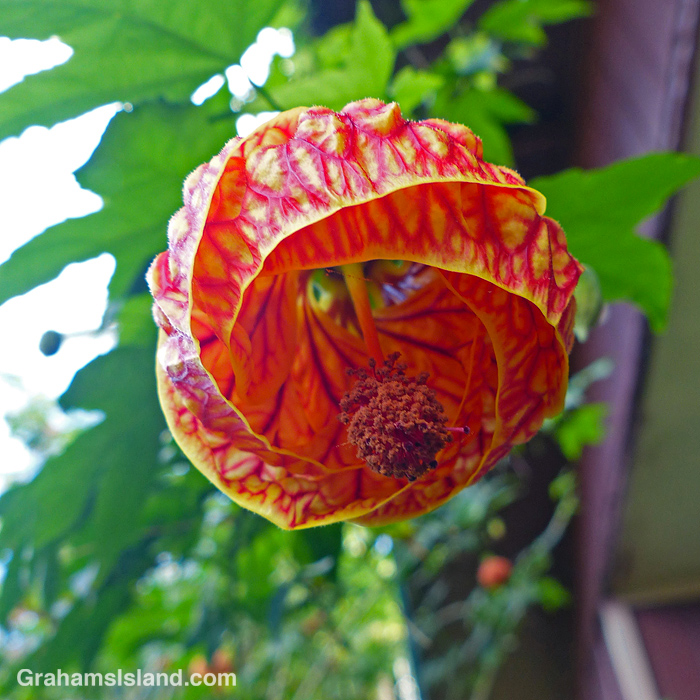
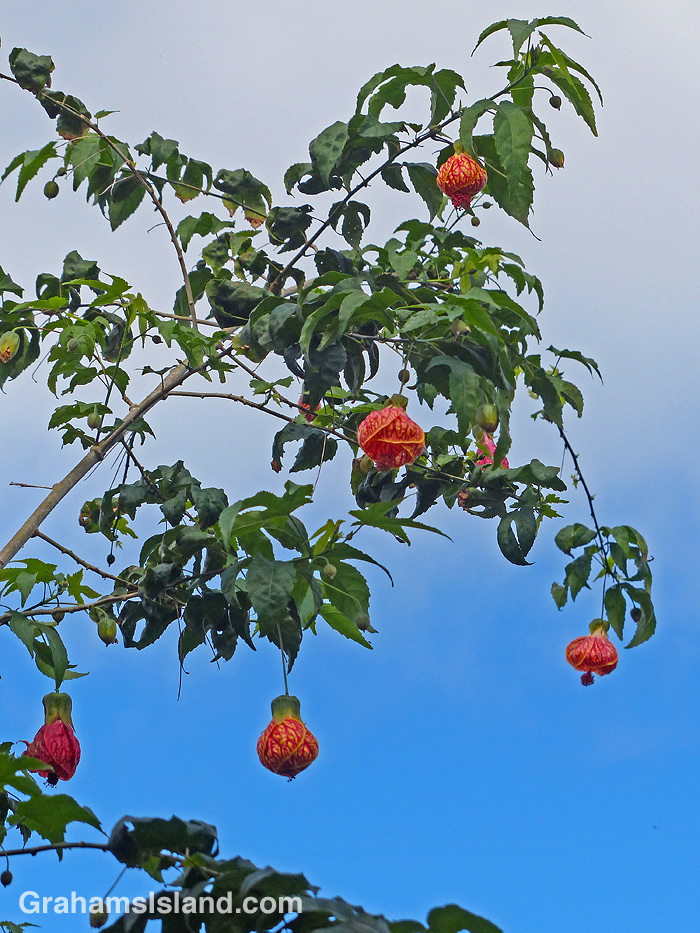
I noticed these gorgeous flowers when I went to get my hair cut. Abutilon Red Tiger is a hybrid shrub that does well in Hawaii. it’s sometimes called Lantern Flower or Chinese Lantern, though that name is also used for other plants.
This is the time of year when Plumeria produce buds, which will become flowers in the next week or two. There were a few leaves on this tree, but most will fill in after the flowers bloom.
It’s not hard to spot Agave Sisalana when they put their flower stems 20 feet or so into the air. The problem with that, in a place like North Kohala, is that the trade winds have a tendency to knock them over. They can block roads and driveways, but they’re not like giant trees. They’re pretty easy to cut up and remove.
Even when they’re laying horizontal, so long as there’s some attachment to the ground, the plant will survive and produce flowers.











 Graham's Island