Category Archives: Flowers

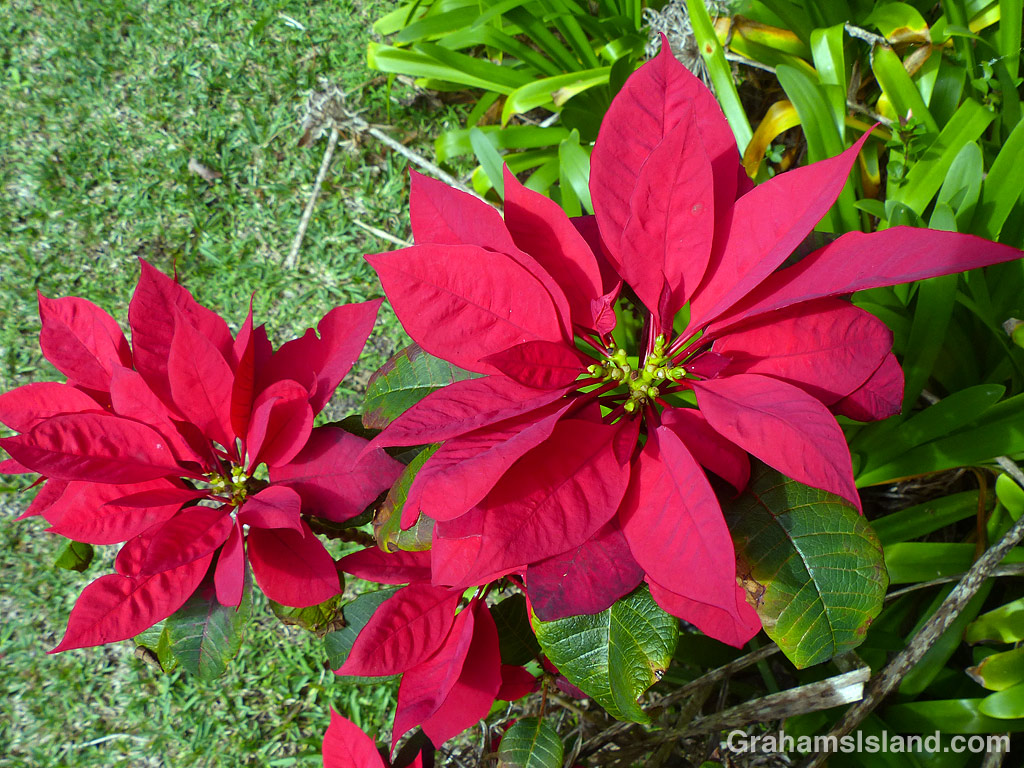
Poinsettia

This week’s Friendly Friday challenge theme is ‘Red and Green.’ See more responses here.

Poinsettias (Euphorbia pulcherrima) have been associated with Christmas for centuries in Mexico and Central America, where the plant hails from. The plant was introduced to the United States in the 1800s, but it wasn’t until the last century that the Christmas link really took off. This was mostly due to savvy marketing tactics by the Ecke family, which had a monopoly on the poinsettia market thanks to their discovery of a secret grafting method which produced a denser plant and wasn’t duplicated until the 1990s.

The red ‘flowers’ are actually bracts, which hold the fairly insignificant flowers. On the Big Island, their brilliant displays are quite common on the west side of the island, where they can be seen as bushes and trees.

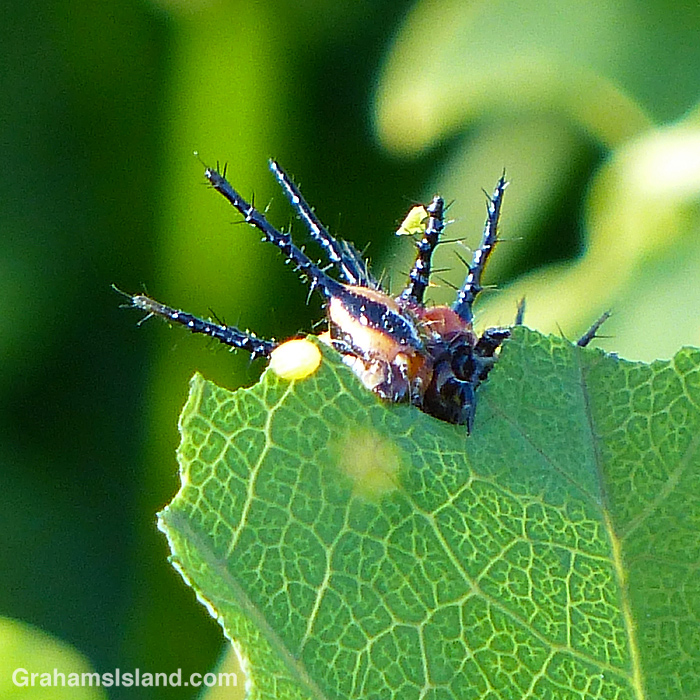
Still a few bugs in the system

Passion vine butterflies lay eggs on passion vine leaves because that’s what the caterpillar is going to eat. Mostly, a butterfly will lay one egg per leaf so some passion vines have developed yellow spots to try and convince butterflies that the leaves are already egg laden. I haven’t seen this strategy working too well.

Once a caterpillar emerges it will begin a life of voraciously eating passion vine leaves. There’s an early video game quality about this as the mouth chomps back and forth across the leaves, cutting one arc after another.

However, despite the presence of caterpillars, butterflies continue to lay eggs on the leaves. So what happens when a caterpillar comes across an egg? It makes no distinction and down goes the egg. So long cousin Billy!

Milo flowers

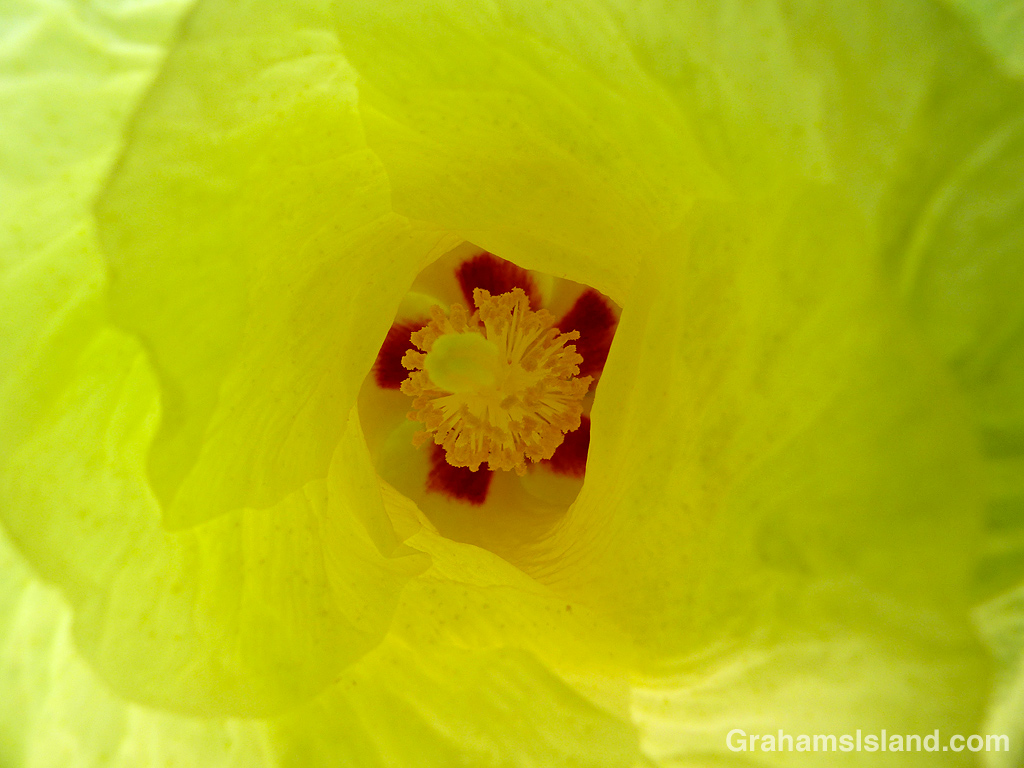
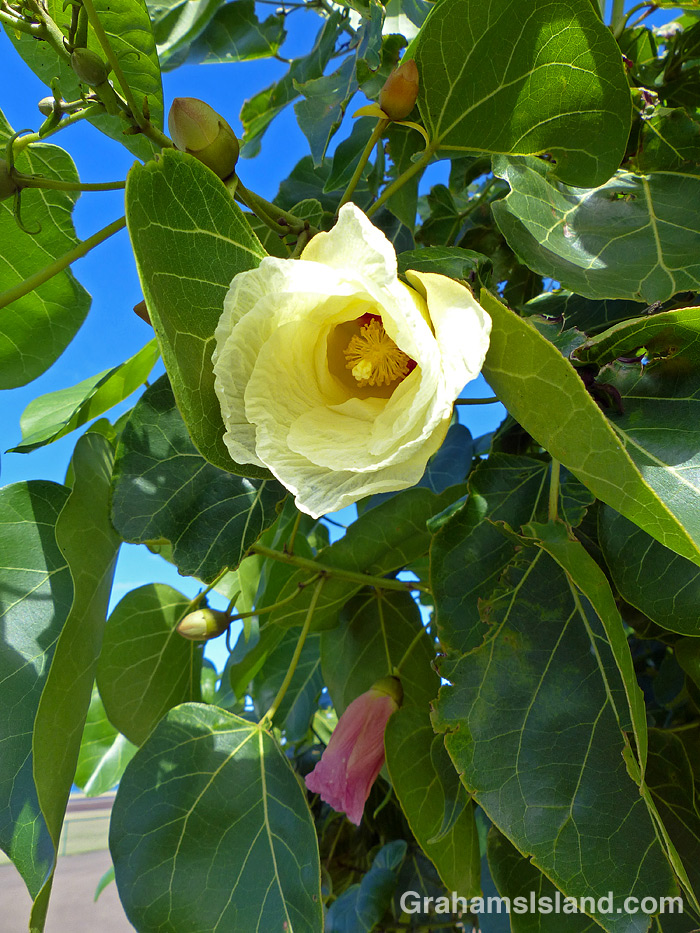
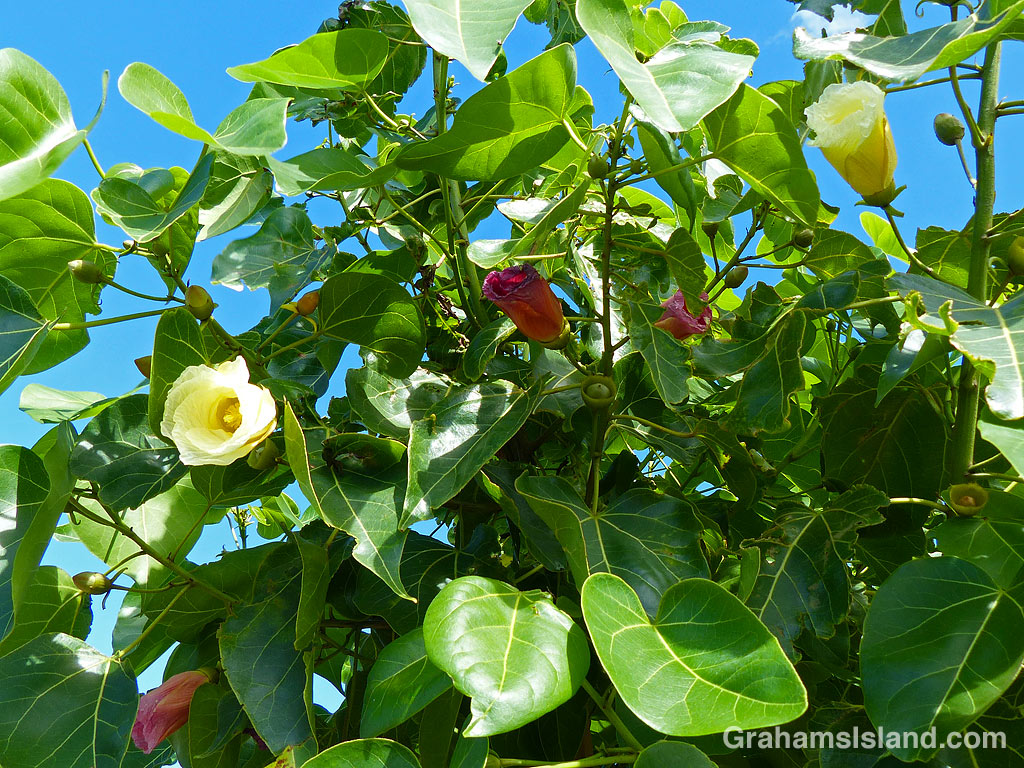
The milo tree (Thespesia populnea) is a canoe plant, brought to Hawaii by the early Polynesians, though it was probably already here before then and so is considered indigenous.

The flowers, which don’t open fully, start out a delicate yellow with red patches at the base, becoming dark pink later. The flowers are followed by green seed capsules which dry to brown.

Auburn orchid

This week’s Sunday Stills challenge theme is ‘Auburn.’ See more responses here.

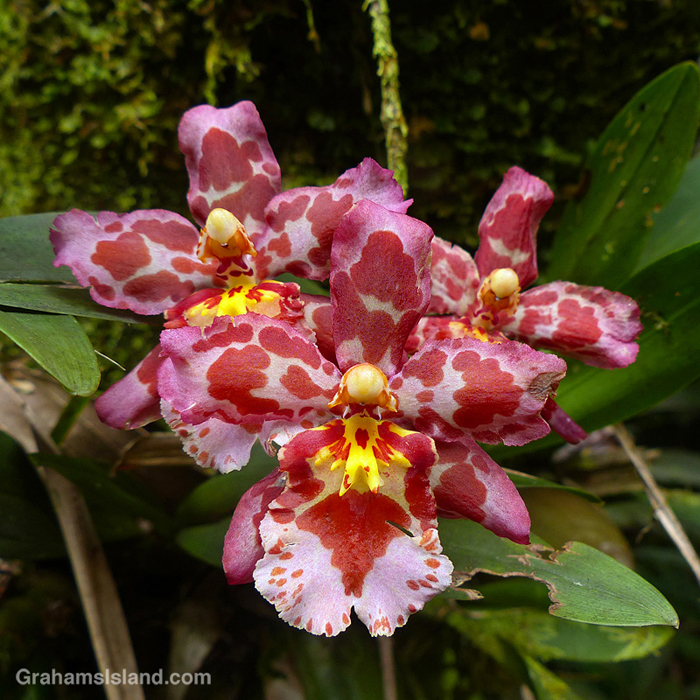
I have to confess that color is not my strong suit, hence some of my clothing choices. So when it came to picking a photo for this theme, I wasn’t sure what color I was looking for. A casual search revealed a lot of different shades loosely covered by that name. In the end, I opted to go with the official RGB color value (165 red, 42 green, 42 blue).

Armed with that information I ditched my original choice of a dirt road, thrilling photo though it is, and opted for this orchid. I’m not sure what kind of orchid it is, but I know for a fact that within those darker areas of the petals are several areas that are officially auburn.

Tropical leaves

The bright red bracts of a tree poinsettia (Warszewiczia Coccinea) contrast with the mass of green leaves around it.

This week’s Sunday Stills challenge theme is ‘Leaves.’ See more responses here.

This gave me an excuse to post more photos from Hawai’i Tropical Bioreserve & Garden, which is still closed at this time. For more information about Hawai’i Tropical Bioreserve & Garden, go to htbg.com.

Sonoran carpenter bee

Sonoran carpenter bees are big. They’re the kind that, when I see one, I automatically flinch because I don’t want it to bump in to me and have it leave a bruise. Truth is, they’re pretty docile. This one is a female and has a stinger, but will only use it if provoked. Males are brown and somewhat smaller and don’t have a stinger at all.

Posted in response to Becky’s October Squares challenge theme of ‘Kind.’ See more responses here.

Ohelo ’Ai

Ohelo ’Ai (Vaccinium reticulatum) is an endemic shrub also known as the Hawaiian blueberry. It’s one of several kinds of native plant adapted to the harsh environment of a volcanic island. This plant was growing on a lava flow off Saddle Road, which is typical here. It does well in disturbed ground above 2,000 feet.

The berries, which are edible, are a food source for nenes, but I really like the delicate flowers and the leaves, which start out as a matching red.

Posted in response to Becky’s October Squares challenge theme of ‘Kind.’ See more responses here.