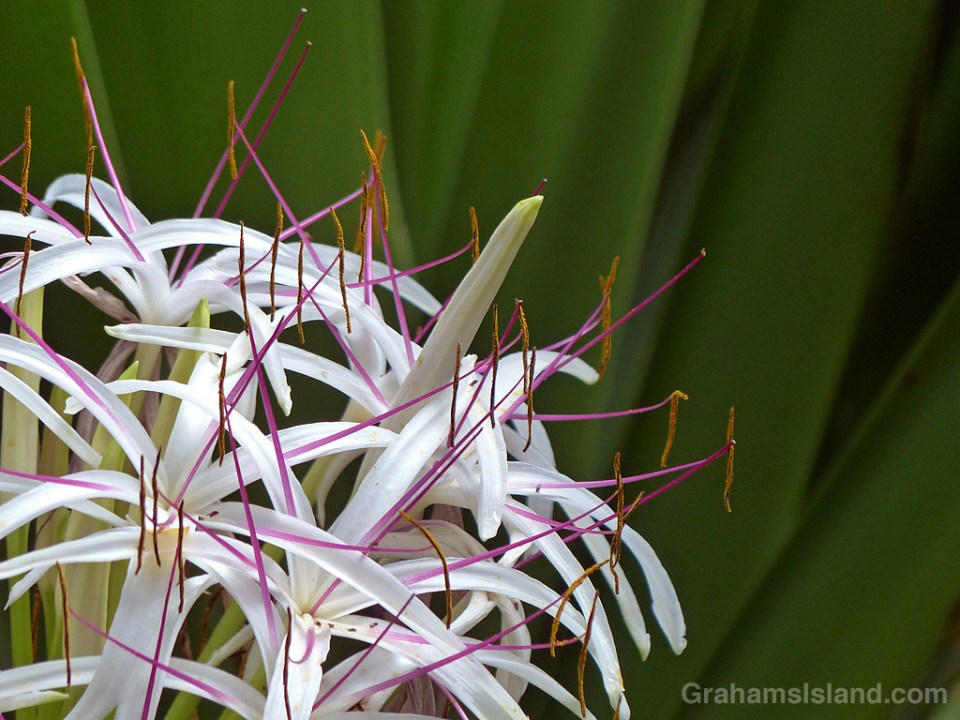
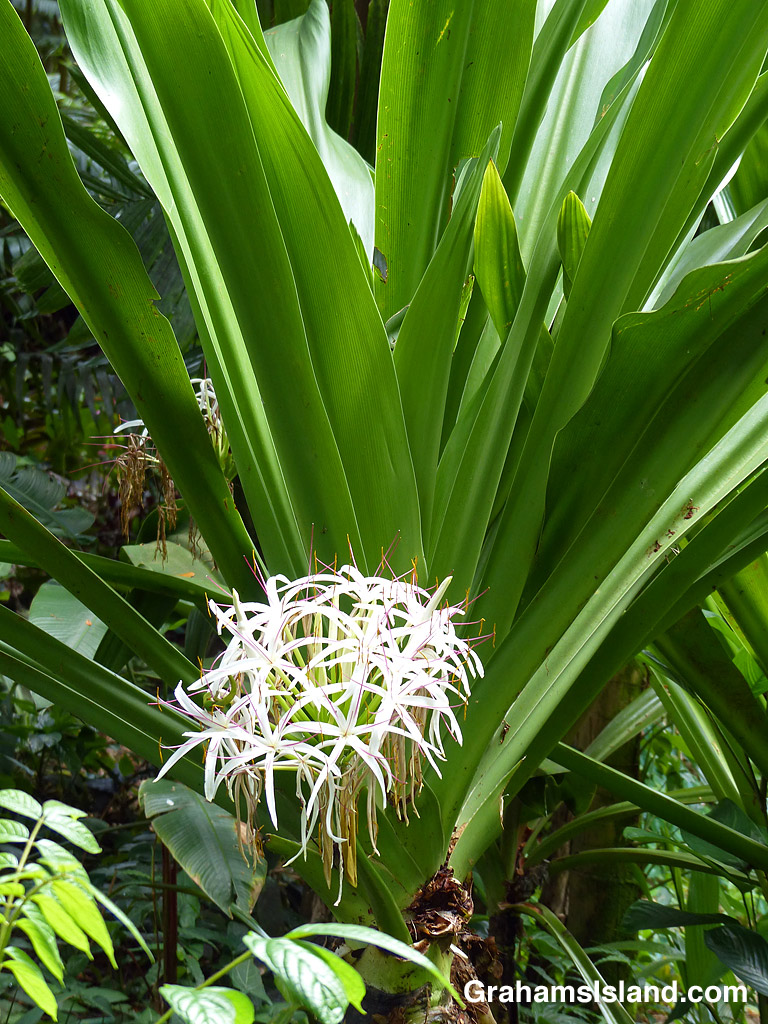
 Commonly known as spider lily, crinum asiaticum has beautiful, delicate flowers, and sword-like leaves. The flowers are popular with gardeners, though possibly not with those who have kids since the plant is poisonous.


Commonly known as spider lily, crinum asiaticum has beautiful, delicate flowers, and sword-like leaves. The flowers are popular with gardeners, though possibly not with those who have kids since the plant is poisonous.

A photo of a leaf of a monstera plant, probably monstera deliciosa, also known as the Swiss cheese plant. No prizes for figuring out why that is.
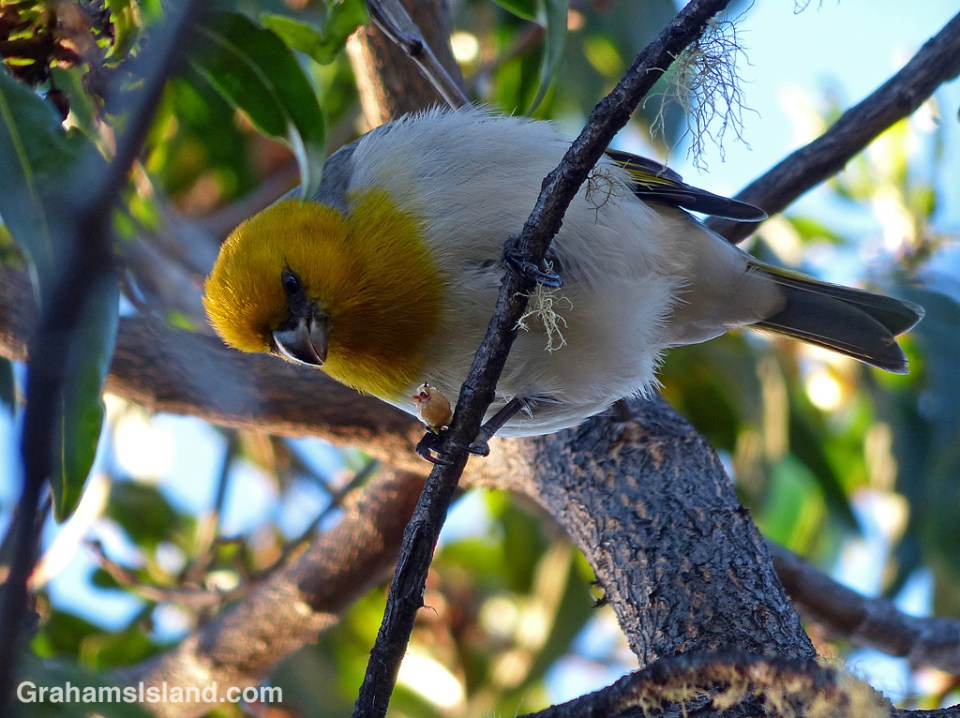
I’ve made a couple of recent visits to the Palila Forest Discovery Trail, on the slopes of Mauna Kea, in search of palilas, an endangered Hawaiian honeycreeper. On one of those visits I was lucky enough to see this bird.
I wrote here about the first time I saw palilas, in late 2017. Those birds were feeding on immature mamane seed pods, one of their main foods. But the bird in this photo has what I think is a naio flower in its grip. The fruits and flowers of naio, otherwise known as false sandalwood, are the other main foods of the palila.
For more information about palila and the Palila Forest Discovery Trail, go to dlnr.hawaii.gov/restoremaunakea/palila-forest-discovery-trail/.
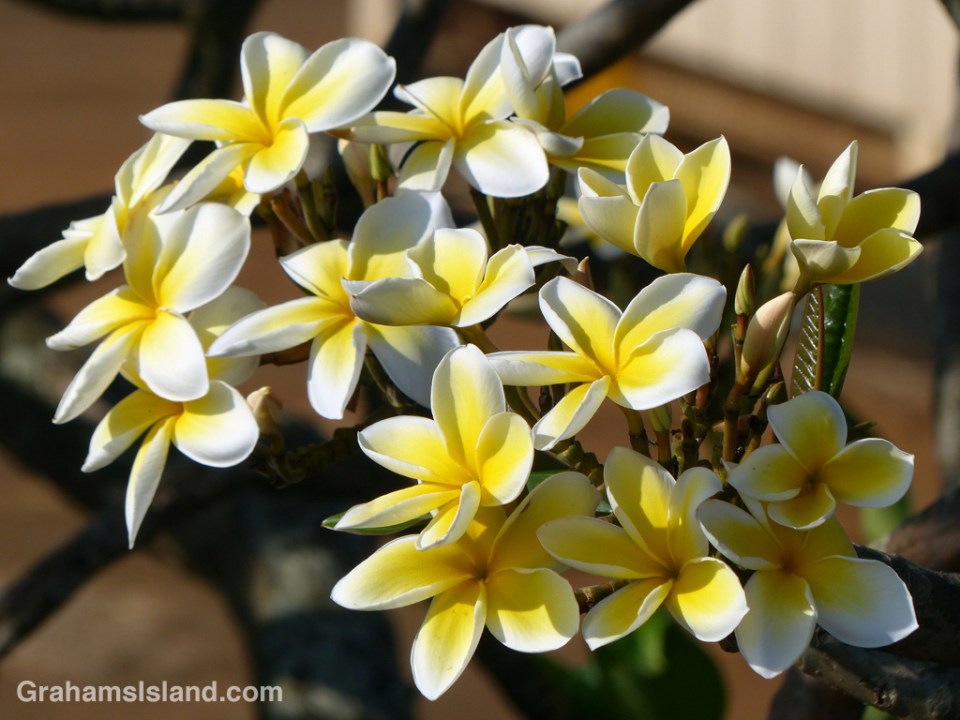
Plumeria rubra, otherwise known as frangipani, is similar in appearance to plumeria obtusa, otherwise known as Singapore plumeria. But where plumeria obtusa is evergreen, plumeria rubra is deciduous.
This is the time of year when plumeria rubra begins blooming again. The flowers appear before the leaves, starting in January around here. This photo, taken in spring of last year, shows the flowers well established with a few green leaves also showing.

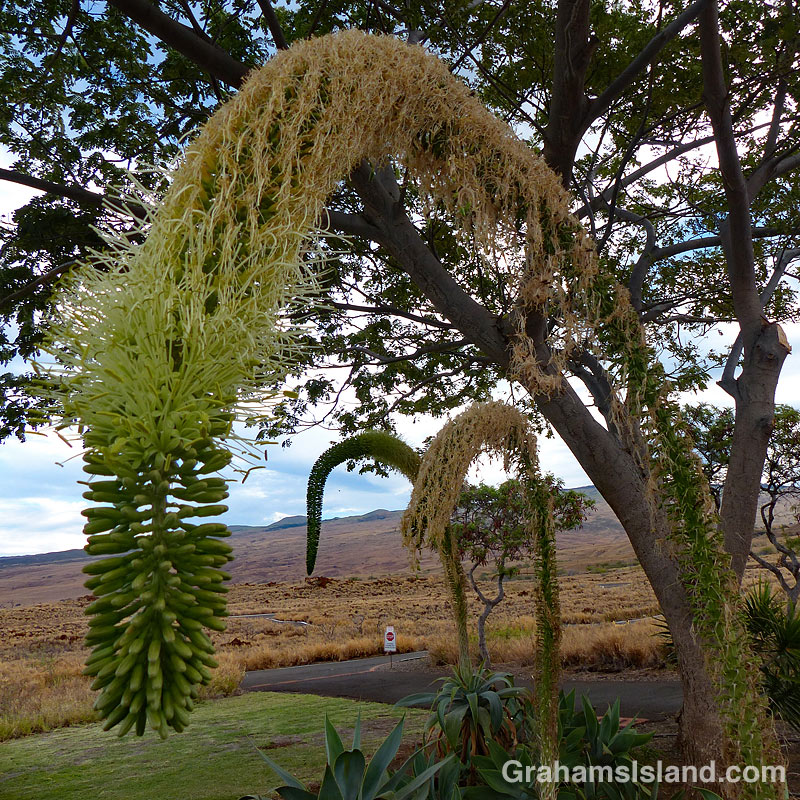
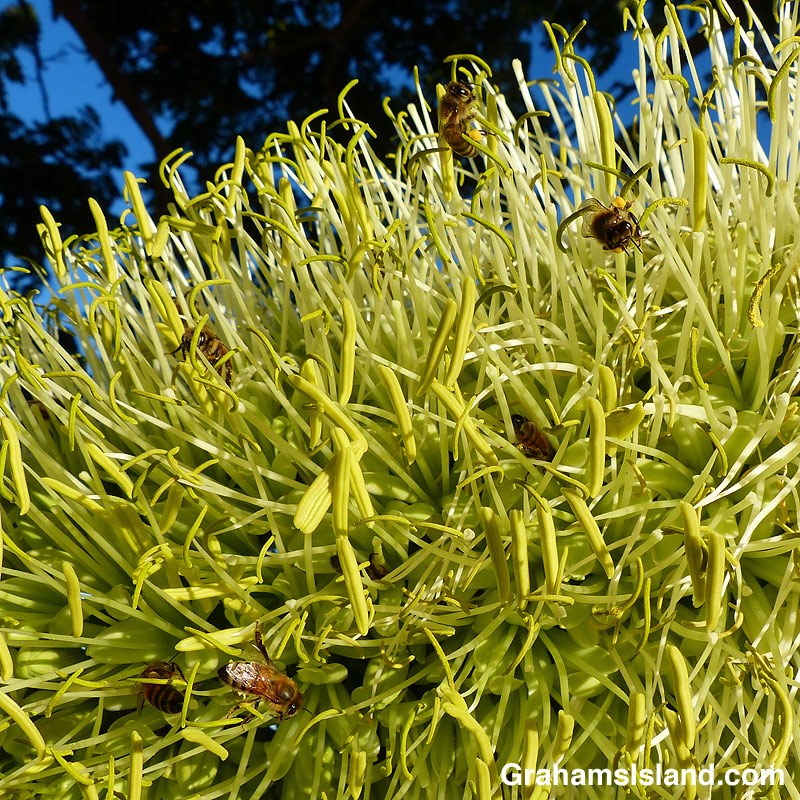 Agave attenuata is native to Mexico, but is commonly seen in Hawaii. It’s also known as lion’s tail agave, swan’s neck agave, or fox tail agave. These names stem from its long flower stalk which rises from the center of the leaves and arches over. Most agaves bloom and die, but agave attenuata blooms annually without dying. Also, unlike many other agaves, agave attenuata leaves don’t have leaves with sharp points or spiky edges.
The progression of the flowering process can be seen on one agave attenuata plant. In the second photo, starting at the base of the flowering stalk, there is a bare section where the flowering process has finished. Above that is a brownish section where small brown pods have been set. Some of these, that remain attached to the stem, will turn into green fruits. Near the end is the portion of the stalk that is currently flowering and at the end are buds that have yet to flower.
I was drawn to these plants, not just because of their striking flower stalks, but because in the mornings, bees were all over the plant. The top photo shows a bee clambering through a tangle of stamens and pistils. In the third photo, there were lots of bees working along the flowering portion of the inflorescence. Below, sometimes it’s hard work getting to grips with the task in hand.

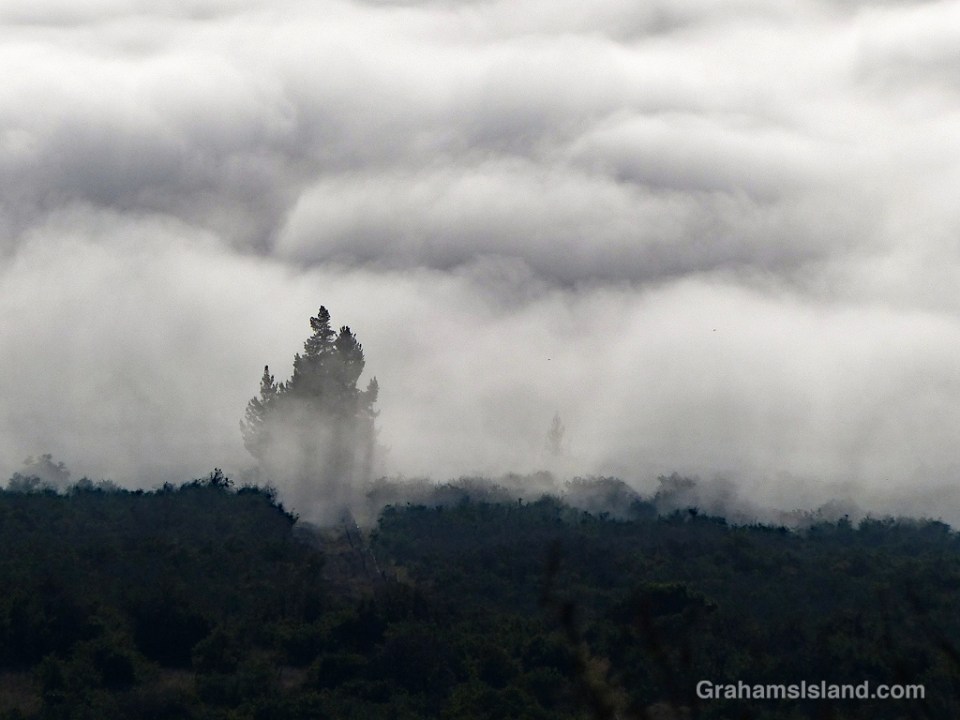
The last time I visited the Palila Forest Discovery Trail, on the southwest slopes of Mauna Kea, I didn’t see too many birds, but did enjoy looking down on the cloud layer covering the lowlands between Mauna Kea and Hualalai.
This tree sat on the slope of Mauna Kea at the point where the top of the clouds swirled around it, giving it a very ghostly appearance.
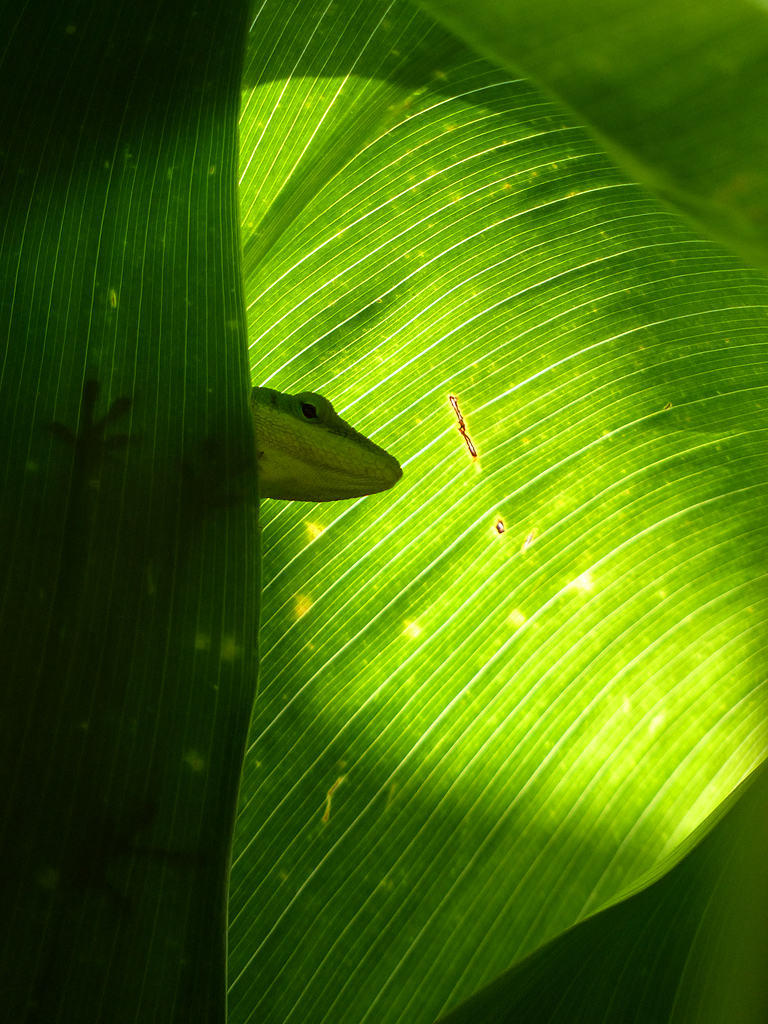 Ti plants grow well in Hawaii, so well that they can get out of hand. If they look like doing so, the prudent thing is to prune, but that has one drawback. Where you cut a stem of a ti plant, two new shoots will form. This means that trimming a ti plant is a temporary fix prior to it coming back stronger.
Despite this drawback, I like them quite a bit. The lines of the leaves make for interesting patterns and shapes, especially when the sun shines on them, or through them. They’re also popular with wildlife. Geckos and anoles spend a good deal of time sunning themselves on ti leaves, or resting on the edges with one eye peering over to see what else is around. In this photo, a green anole was doing just that, but found nothing worthwhile, just me pointing my camera at him.
 Graham's Island