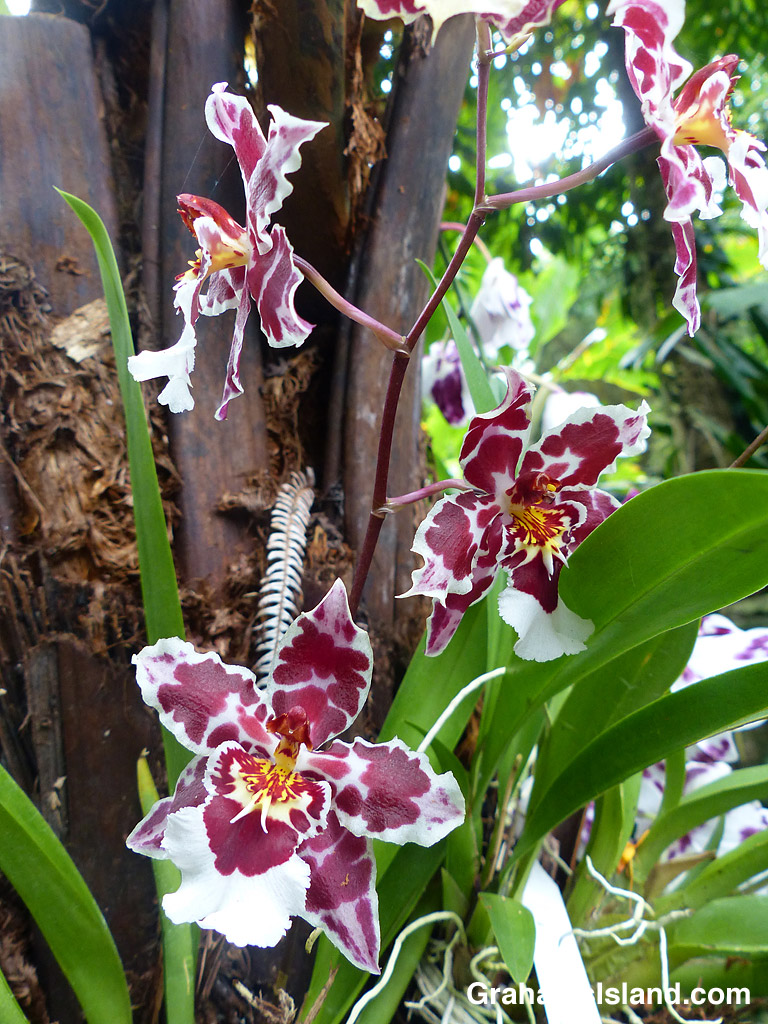
Wilsonara orchids are a kind of hybrid oncidium orchid. This one was at Hawaii Tropical Botanical Garden. For more information about Hawaii Tropical Botanical Garden, go to htbg.com.

Wilsonara orchids are a kind of hybrid oncidium orchid. This one was at Hawaii Tropical Botanical Garden. For more information about Hawaii Tropical Botanical Garden, go to htbg.com.
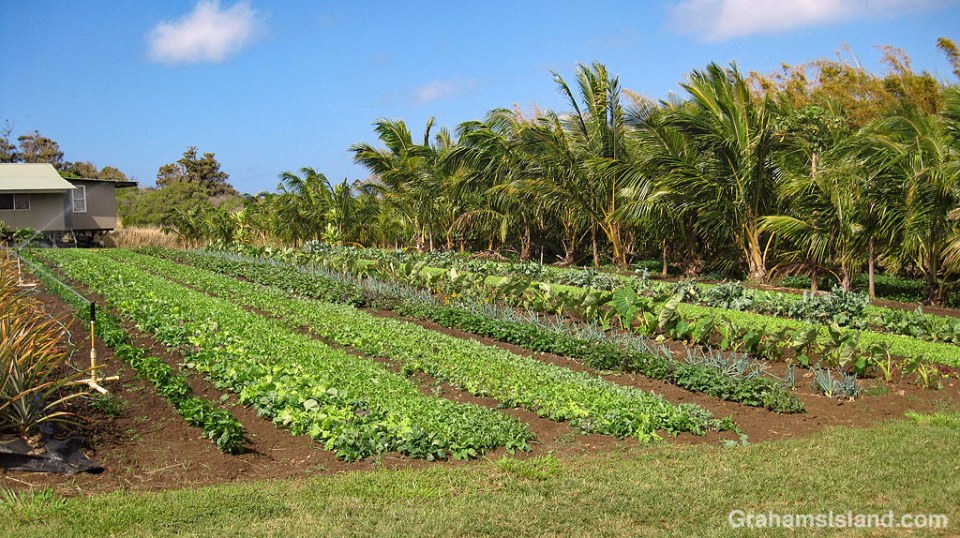
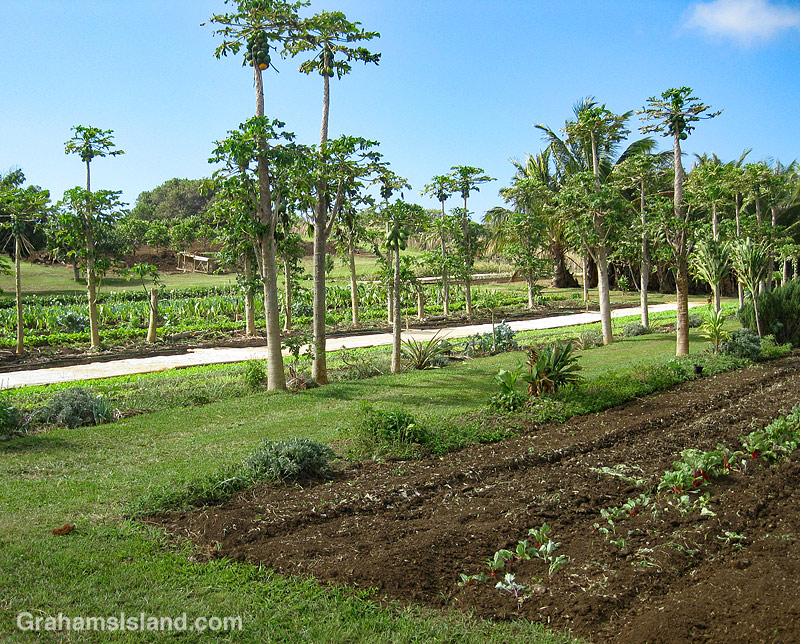 One of the vulnerabilities of living in the middle of the Pacific Ocean is that any big disruption of commerce, here or on the mainland, due to natural disaster or otherwise, could result in shortages here. Toilet paper and Spam would likely be the first things to be snapped up, but basic foodstuffs would soon follow. Having a variety of productive farms on the island would be a big help in such a situation.
Sage Farms, an organic farm that’s been in business here for 20 years, is one such enterprise. Their fruits and produce are available in local stores and farmers’ markets. The farm is one of a network of small growers in the area whose goal is to make the Big Island less dependent on imports from the mainland.
It might seem like farming would be easy in Hawaii. Most things grow readily, but that also includes weeds. In addition, pests also thrive and can be voracious. Currently, rat lungworm is a big concern. Recently, students at Kohala Middle School showed that a slug which carries rat lungworm parasites is now established in this area. This slug is just the latest challenge to the farmers of the area and the island in general.
Posted in response to this week’s Sunday Stills challenge on the theme of ‘Fresh.’ See more offerings here.

When I see mourning geckos out and about during daylight hours I worry for them. They’re nocturnal and daytime is the domain of the gold dust day gecko, which has winnowed the numbers of other geckos in Hawaii.
I like mourning geckos for the patterns on their skin and their eyes, which are metallic-looking. This gecko has, at some point, lost its tail, and grown a new one, but the new colors haven’t quite filled in and the break point is clearly visible.
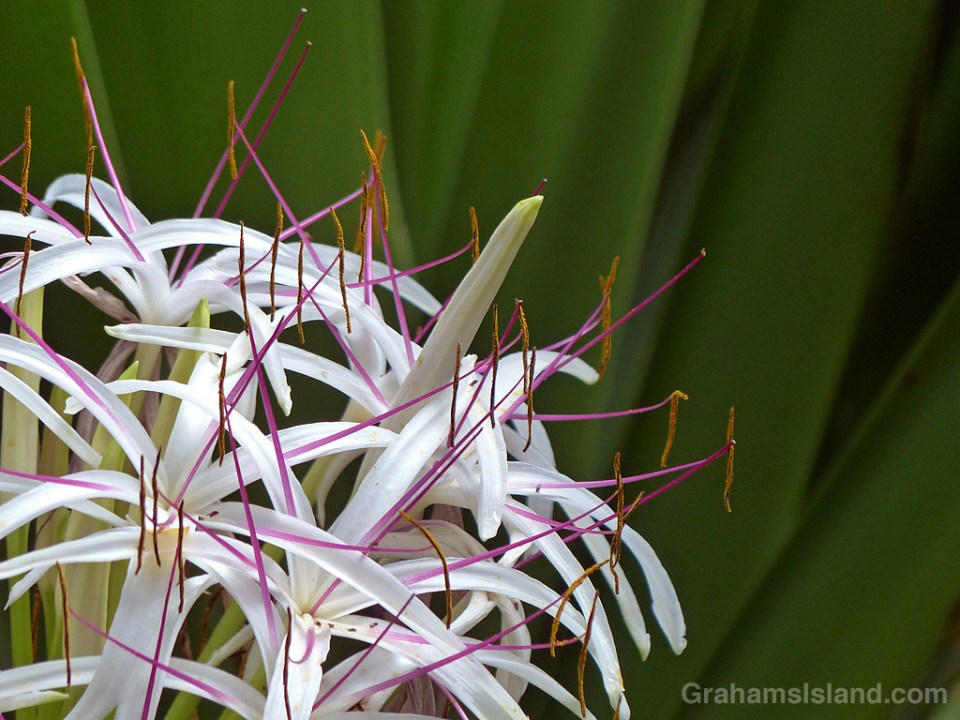
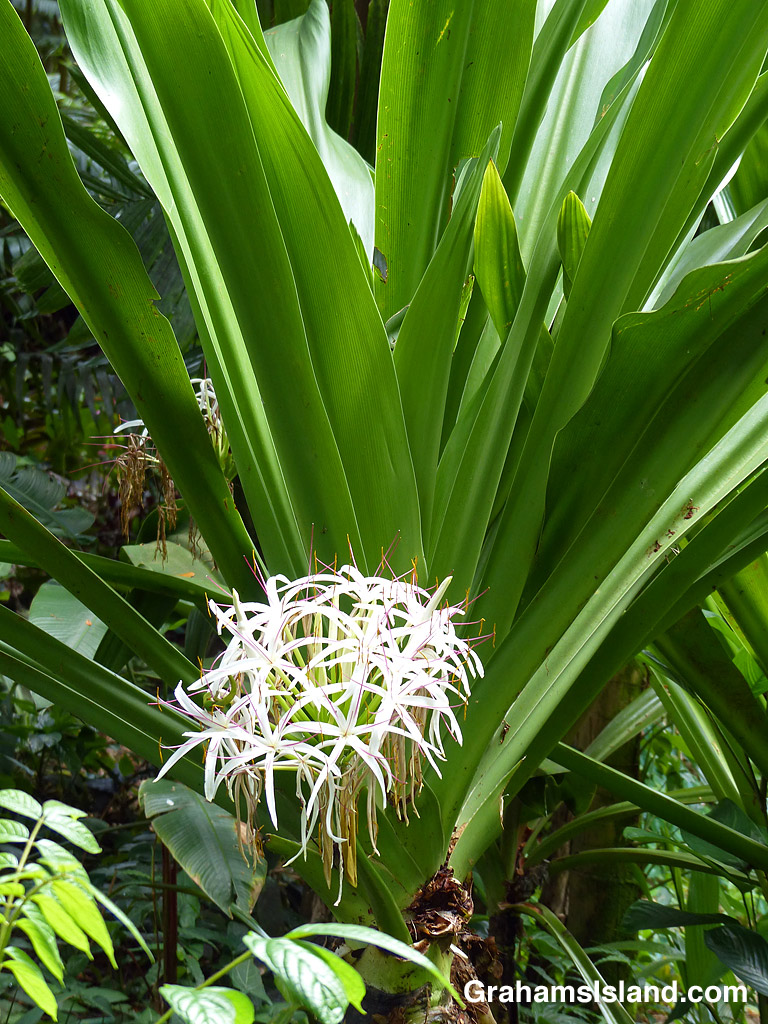 Commonly known as spider lily, crinum asiaticum has beautiful, delicate flowers, and sword-like leaves. The flowers are popular with gardeners, though possibly not with those who have kids since the plant is poisonous.


A photo of a leaf of a monstera plant, probably monstera deliciosa, also known as the Swiss cheese plant. No prizes for figuring out why that is.
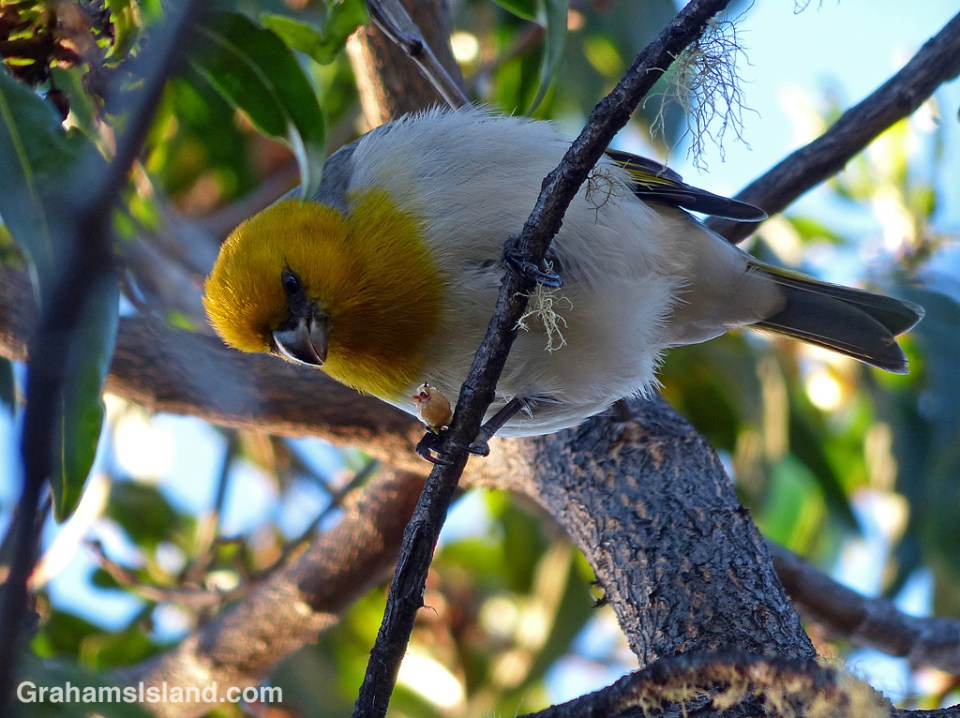
I’ve made a couple of recent visits to the Palila Forest Discovery Trail, on the slopes of Mauna Kea, in search of palilas, an endangered Hawaiian honeycreeper. On one of those visits I was lucky enough to see this bird.
I wrote here about the first time I saw palilas, in late 2017. Those birds were feeding on immature mamane seed pods, one of their main foods. But the bird in this photo has what I think is a naio flower in its grip. The fruits and flowers of naio, otherwise known as false sandalwood, are the other main foods of the palila.
For more information about palila and the Palila Forest Discovery Trail, go to dlnr.hawaii.gov/restoremaunakea/palila-forest-discovery-trail/.
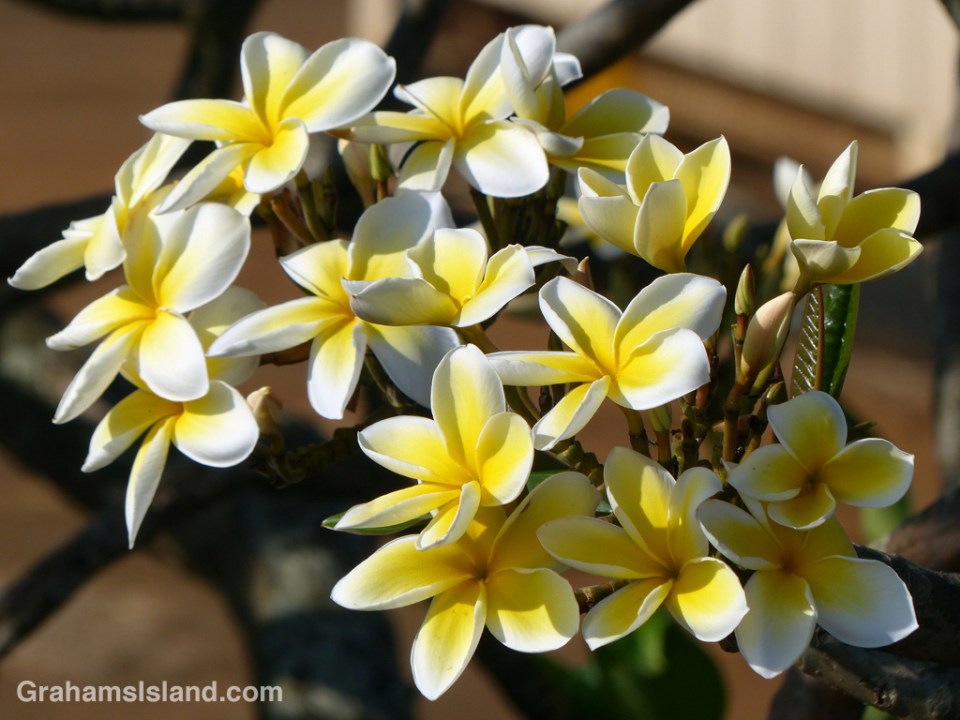
Plumeria rubra, otherwise known as frangipani, is similar in appearance to plumeria obtusa, otherwise known as Singapore plumeria. But where plumeria obtusa is evergreen, plumeria rubra is deciduous.
This is the time of year when plumeria rubra begins blooming again. The flowers appear before the leaves, starting in January around here. This photo, taken in spring of last year, shows the flowers well established with a few green leaves also showing.

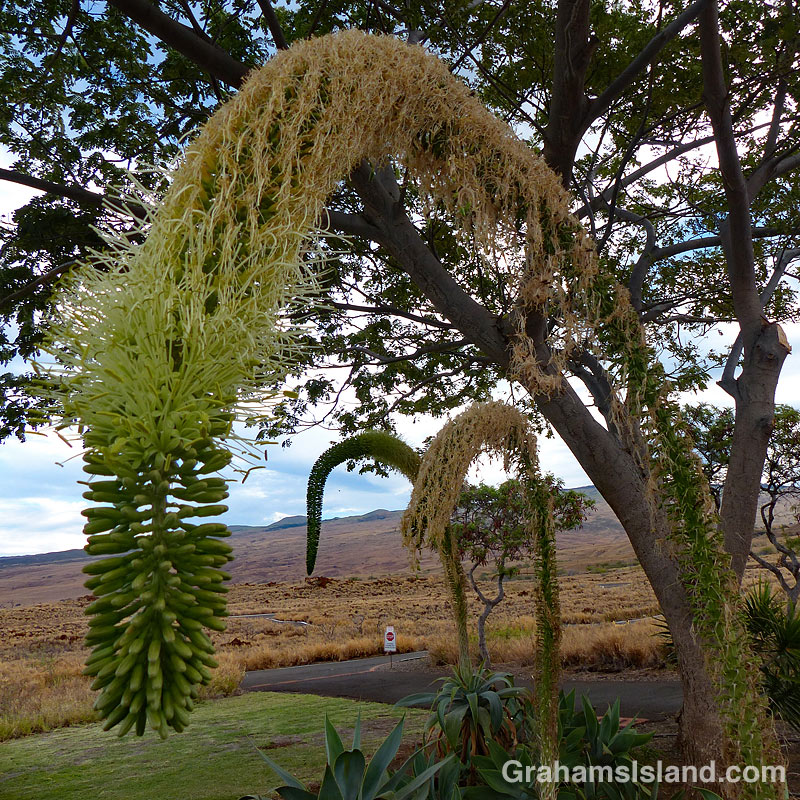
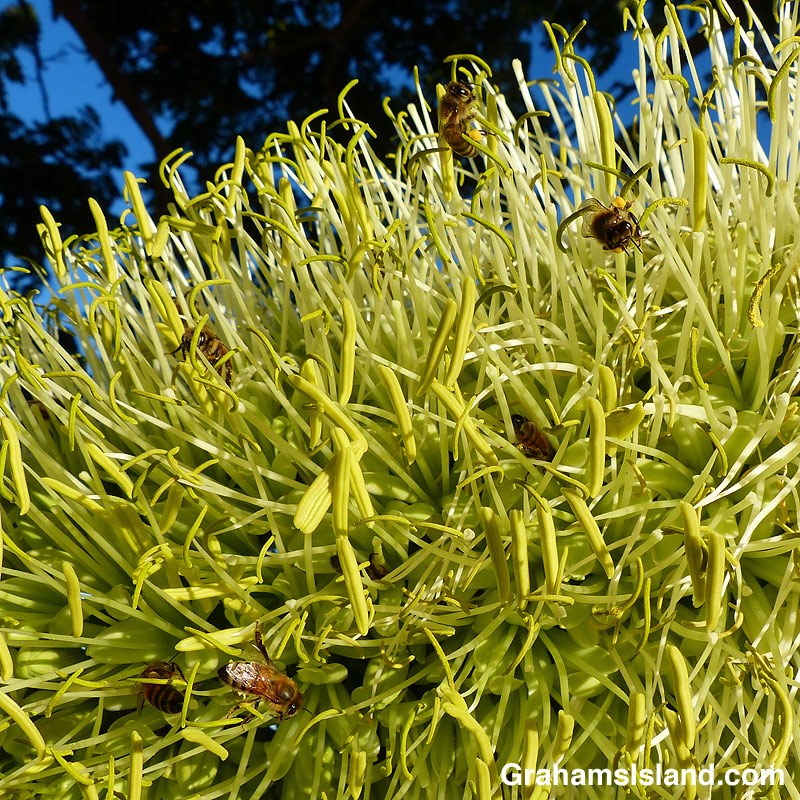 Agave attenuata is native to Mexico, but is commonly seen in Hawaii. It’s also known as lion’s tail agave, swan’s neck agave, or fox tail agave. These names stem from its long flower stalk which rises from the center of the leaves and arches over. Most agaves bloom and die, but agave attenuata blooms annually without dying. Also, unlike many other agaves, agave attenuata leaves don’t have leaves with sharp points or spiky edges.
The progression of the flowering process can be seen on one agave attenuata plant. In the second photo, starting at the base of the flowering stalk, there is a bare section where the flowering process has finished. Above that is a brownish section where small brown pods have been set. Some of these, that remain attached to the stem, will turn into green fruits. Near the end is the portion of the stalk that is currently flowering and at the end are buds that have yet to flower.
I was drawn to these plants, not just because of their striking flower stalks, but because in the mornings, bees were all over the plant. The top photo shows a bee clambering through a tangle of stamens and pistils. In the third photo, there were lots of bees working along the flowering portion of the inflorescence. Below, sometimes it’s hard work getting to grips with the task in hand.


