
 On the first decent day after a long spell of grey, wet weather, I headed up to the Palila Forest Discovery Trail, just off Saddle Road on the lower slopes of Mauna Kea. I figured that even if the weather let me down, it’s a drive that I enjoy, so it would be OK regardless.
However, the closer I got to my destination, the less promising it looked. When I got to the junction, where a 4-mile dirt road leads to the trailhead, I almost turned around since it seemed unlikely there would be anything to see. The mountain looked shrouded in cloud, but since it’s only a 15-minute drive and the road didn’t look too muddy or washed out, I thought I’d give it a go.
When I pulled into the deserted parking area, the sky was grey, the air was damp, but it wasn’t actively raining and the visibility was OK, so I set out on the mile-long loop trail. As usual, I could hear a fair number of birds. It’s just spotting them that’s the trick there. But there are a couple of places on the trail that seem to get a lot of action and this day was no exception, including my first photos of a Hawaii ‘elepaio (Chasiempis sandwichensis sandwichensis).
Oahu, Kauai, and Hawaii Island each have their own species of the endemic ‘elepaio, which is a member of the flycatcher family. The Big Island version is more boldly marked than the other two and this one obligingly set down in a mamane tree not too far away, affording me a decent view and the opportunity to take photos.
One tidbit that I found interesting about the bird is that when ‘elepaio were seen to frequent a given koa tree, this was a sign to canoe makers that the tree was likely insect infested and unsuitable for making a canoe.
For more information about Palila Forest Discovery Trail, go to dlnr.hawaii.gov/restoremaunakea/palila-forest-discovery-trail/.
Posted in response to this week’s WordPress Photo Challenge ‘Unlikely.’



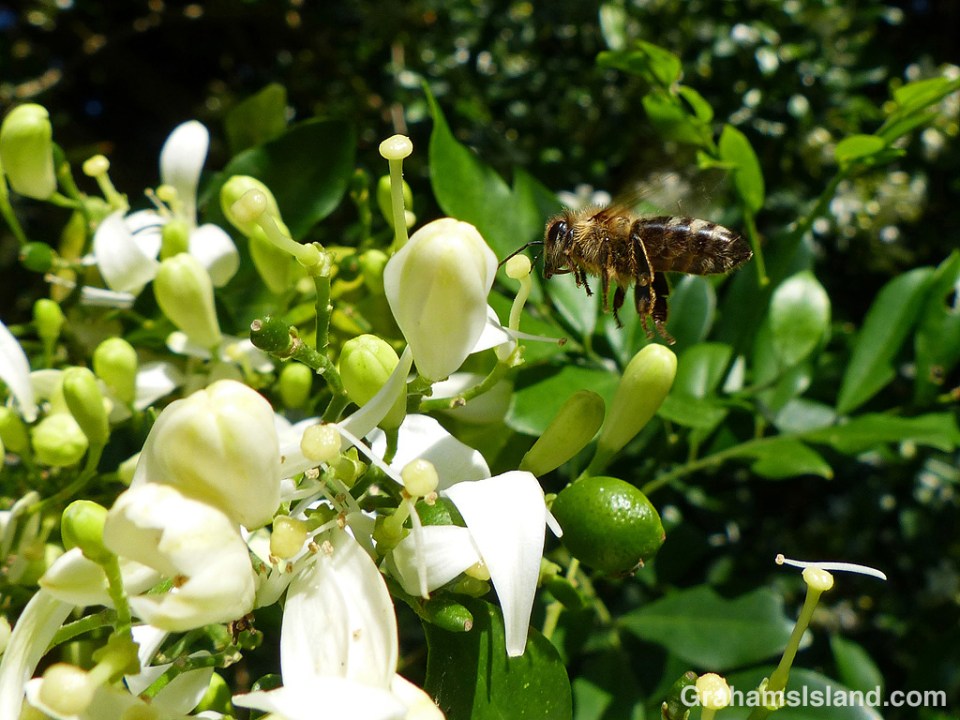
 Three or four times a year, the mock orange in the yard comes into bloom with a prolific show of small, white flowers and wonderful fragrance. During these times it’s a bee magnet and the whole tree buzzes from morning to night.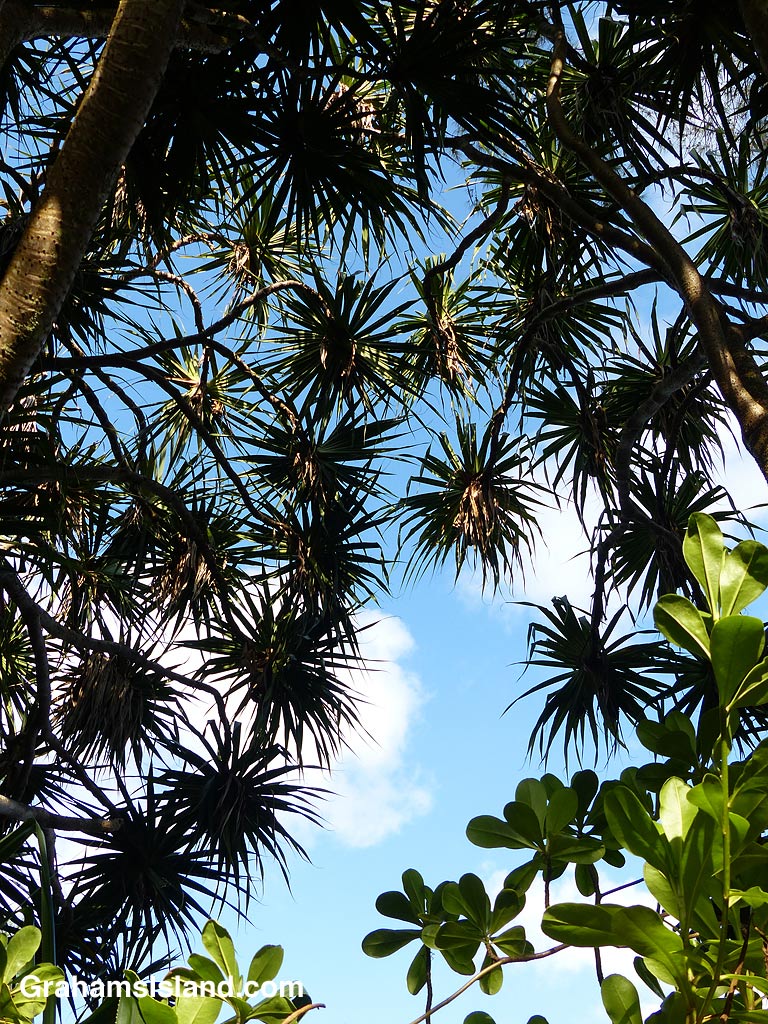

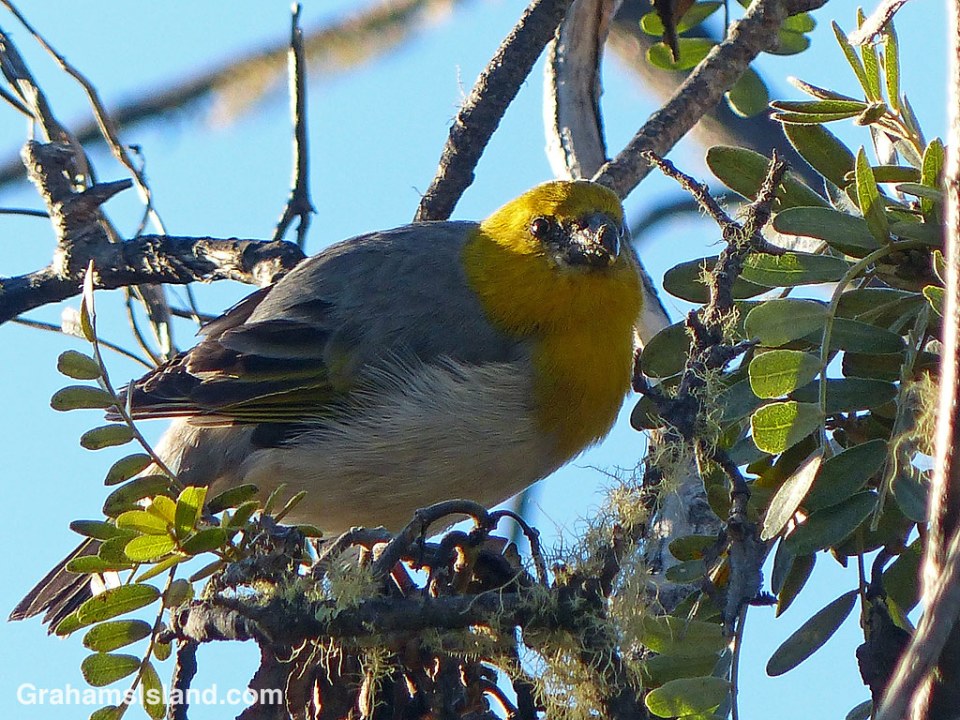
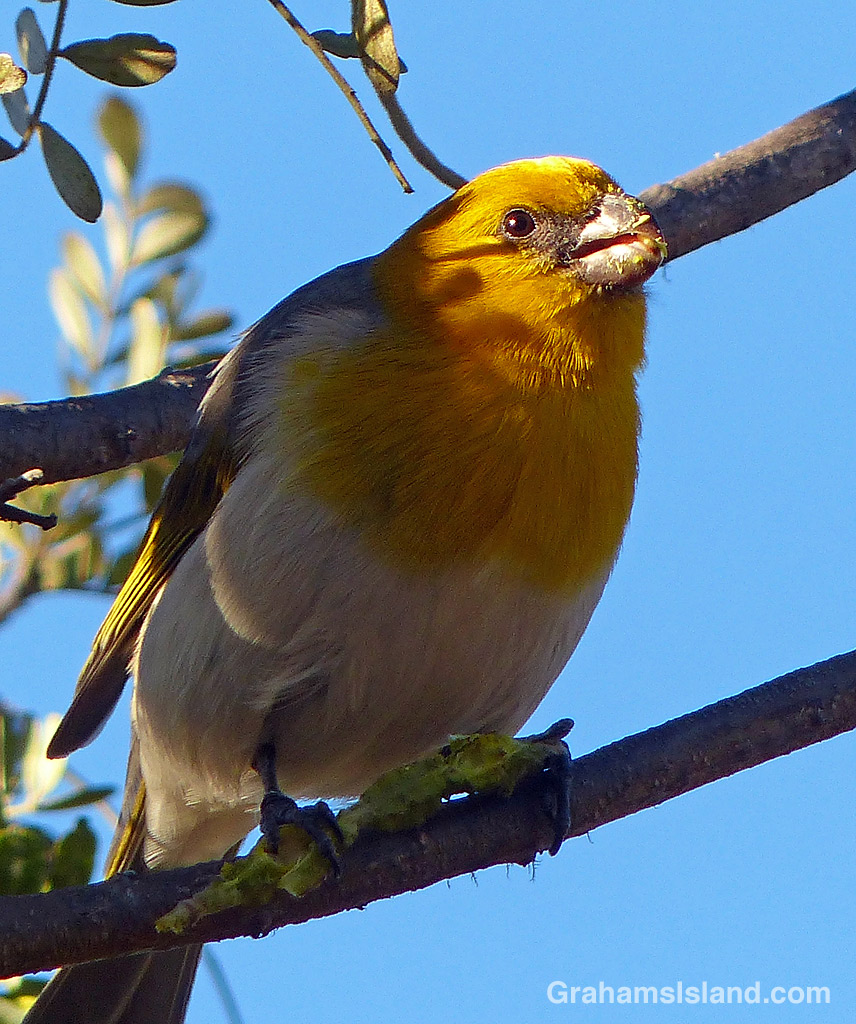 I haven’t ever been a real birder, but since moving to Hawaii I’ve been more drawn to them. Because of this interest, one of my favorite places to visit on the Big Island is the Palila Forest Discovery Trail. Opened in July, 2016, this one mile loop trail passes through Mauna Kea’s unique, high-elevation dry forest.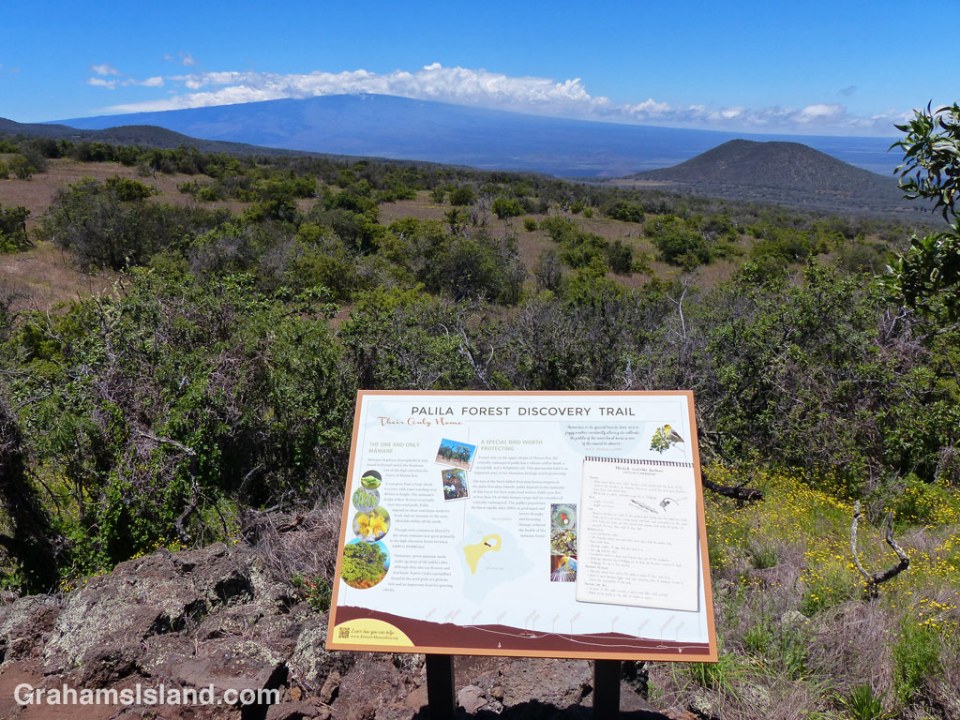
 Graham's Island