 The lesser grass blue butterfly (Zizina otis) was first seen in Hawaii on Oahu in 2008 (for an article, or most of an article, about the find, click here). They’re now well established on the Big Island as well.
Lesser grass blues are very small, with a wingspan no more than ¾-inch. With wings folded up they’re the size of a small fingernail. They also fly close to the ground, within a foot or two.
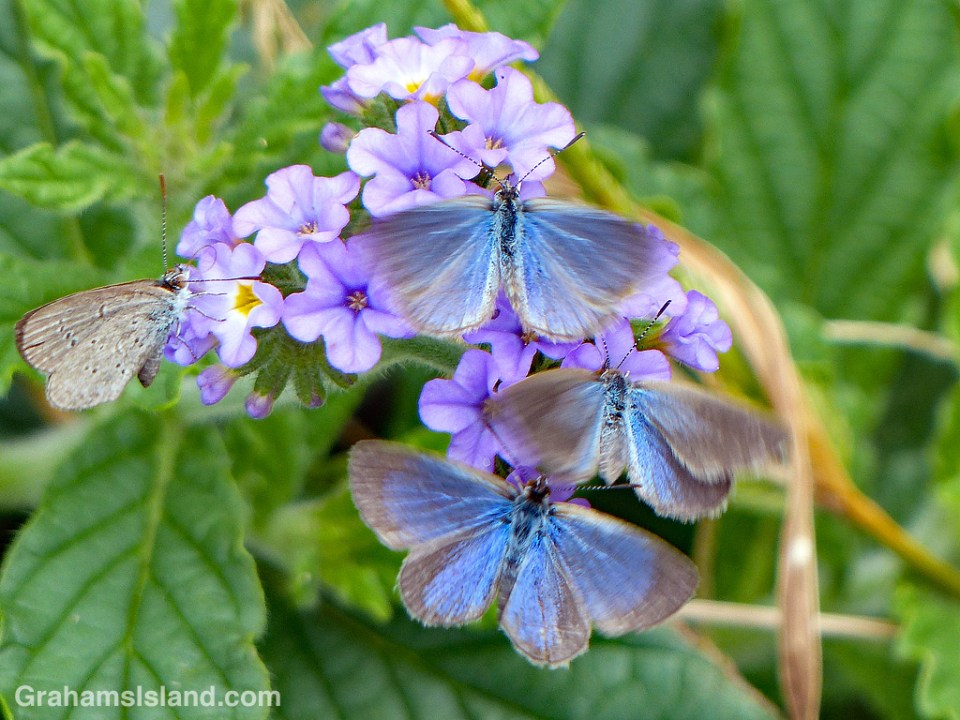
Lately, I’ve been seeing them in large numbers on these blue heliotrope (Heliotropium amplexicaule) flowers. When I say ‘seeing them,’ what I mean is that when I walk past a patch of these flowers, a host of lesser grass blues will flutter up from the flowers, dance around in a tizzy for a few moments, and then settle back down again. When they do this, it’s like blue confetti being thrown (a few inches) into the air.
I’ve tried to capture this image with my camera, but haven’t been able to (and I’ve taken LOTS of photos). The butterflies are so small, I’m tall, and the effect is fleeting. But the top photo gives an idea of what’s going on, with three lesser grass blues homing in on the small blue heliotrope flowers while a fourth has already found a spot.
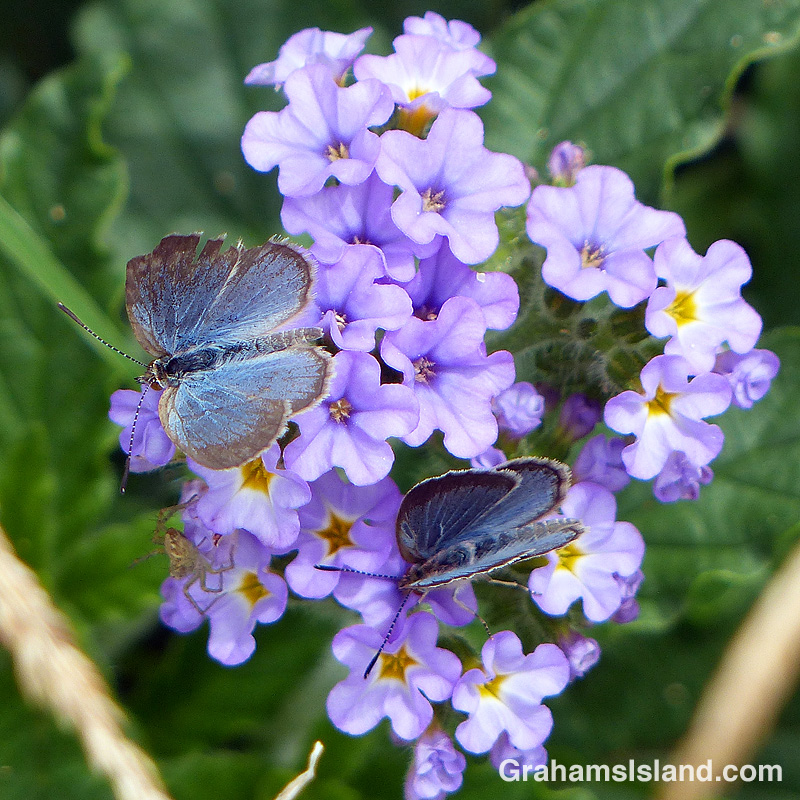
It wasn’t until I processed the photos at home that I noticed the spider in the second photo. I don’t know what it made of all the butterfly activity. I hope they weren’t its prey.


 Clerodendrum paniculatum is known as the pagoda plant. When I last visited Hawaii Tropical Botanical Garden in mid July it seemed like there were fewer plants in bloom than when I’ve visited at other times of the year. But the pagoda plants were rampant and putting on quite a show.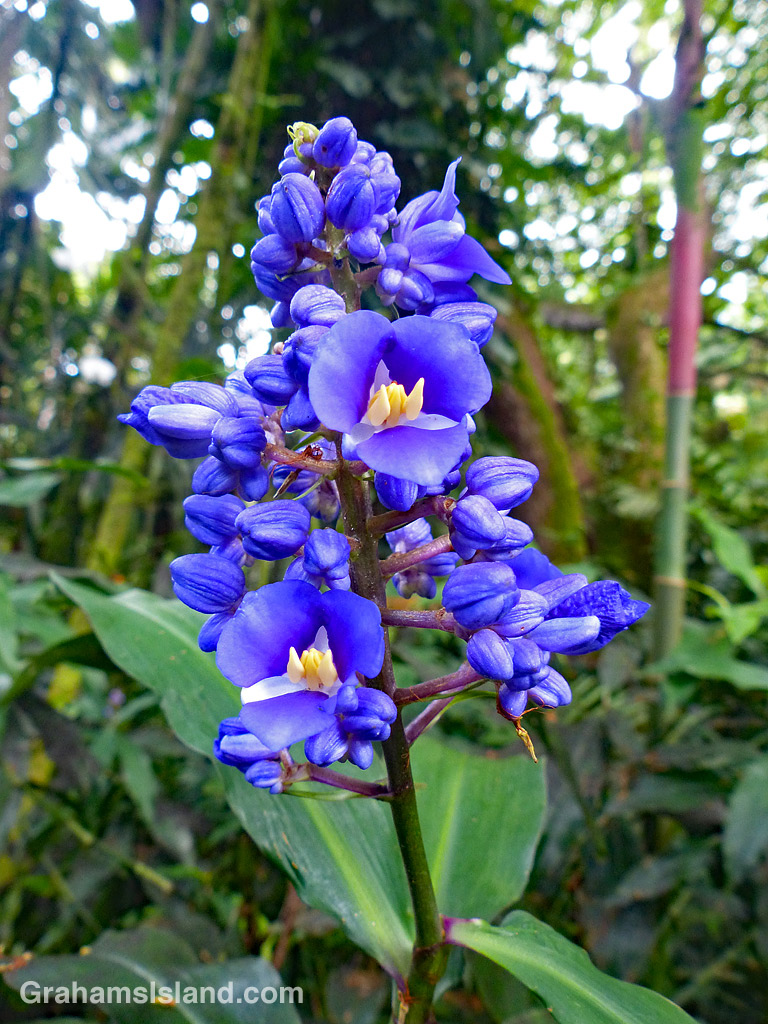
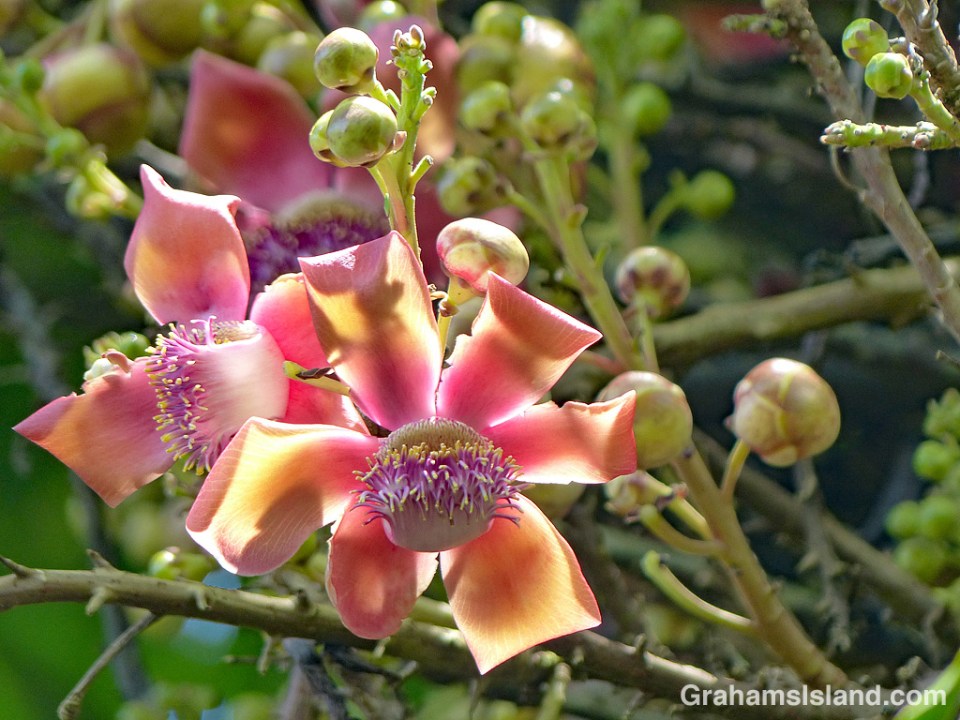
 I’ve posted a photo of a cannonball tree (Couroupita guianensis) before,
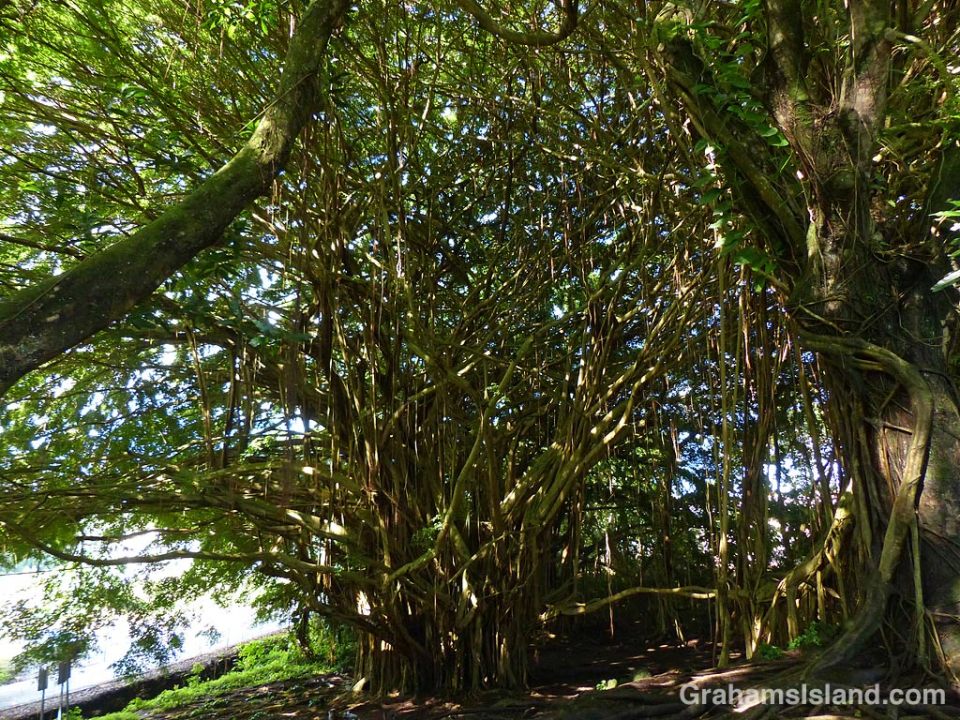
 The main attraction of Wailuku River State Park, in Hilo, is Rainbow Falls. But at the top of the hill are these huge banyan trees.