Category Archives: Plants

Sausage tree

A sausage tree (Kigelia Africana) on the Big Island of HawaiiThe fruits of a sausage tree (Kigelia Africana) on the Big Island of Hawaii

The sausage tree (Kigelia Africana), as its botanical name suggests, is an import from Africa. It’s also one of the easiest trees to identify. Long stems hanging from the branches bear first the flowers, then the large, sausage-shaped fruits. These fruits can be as much as 2 feet long and weigh up to 15 pounds, though usually they’re somewhat smaller. Not the place for a picnic though.

The bottom photo shows stages in the transition from a flower beginning to bloom, to shedding petals, to fruit forming.

Flowers form and become fruit on a sausage tree (Kigelia Africana) on the Big Island of Hawaii

Signs: Do not climb

A sign on a mimosa tree forbids climbing

This week’s posts are in response to the WordPress photo challenge on the theme of ‘transient.’

This sign is attached to one of two mimosa trees near King Kamehameha’s statue in Kapaau. The trees are huge with the kind of bumps and hollows that invite exploration. They’re believed to be more than 100 years old.

Not long after taking this photo, I was somewhat taken aback to see the trees almost devoid of foliage, the limbs hacked back. It turns out that one of the trees basically split in two, took out power and water lines, a chunk of the other tree, and blocked the road. It was, as they say in potboilers, rotten to the core. The cleanup is still in process, but will likely involve the removal of both trees, more than a century old, but transient in the larger scheme of things.


Fruit flies on a mango

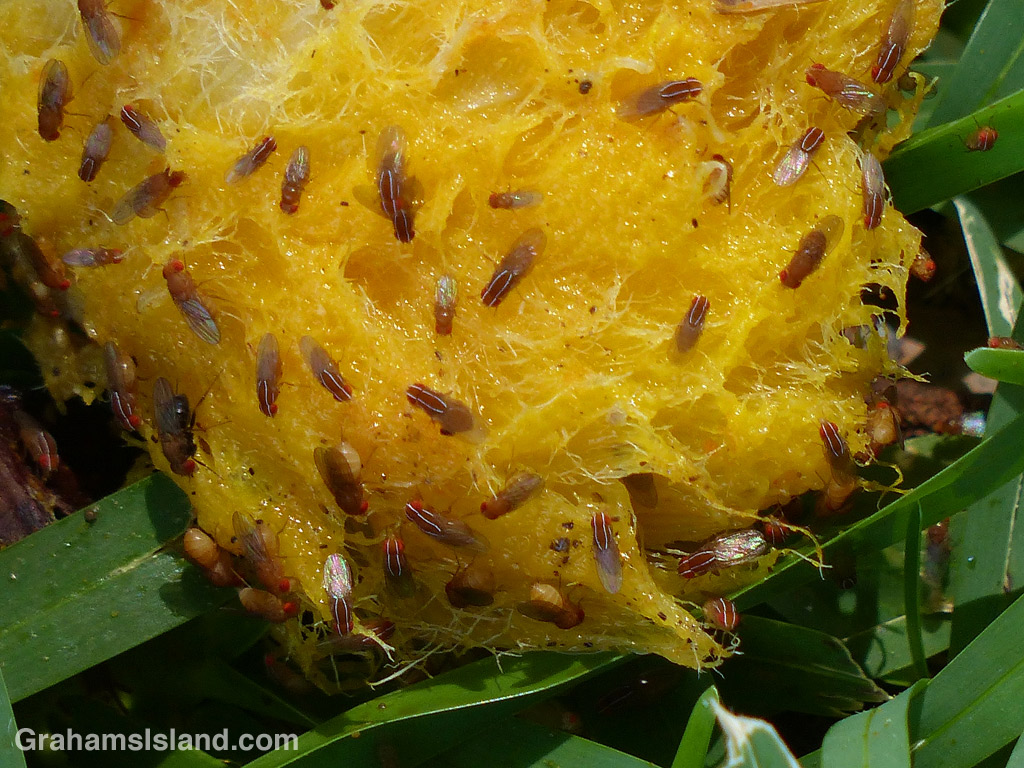
Fruit Flies feed on a mango

This week’s posts are in response to the WordPress photo challenge on the theme of ‘transient.’

This little scene could be considered transient on three counts. First is the fact that this is a mango that has fallen from the tree. In the life cycle of a mango, it’s a very short interval between ripening on the tree and rotting on the ground. Second, this mango has clearly been chewed over by one of the transient wild pigs that pass through from time to time, more so during mango season. And third, these fruit flies won’t be around long either, having a lifespan in the region of 30 days.

This fruit fly, also called the vinegar fly, is probably Zaprionus ghesquierei, an invasive species known to have reached Hawaii. Zaprionus indianus also looks like this, but hasn’t been seen in Hawaii yet, as far as I know.

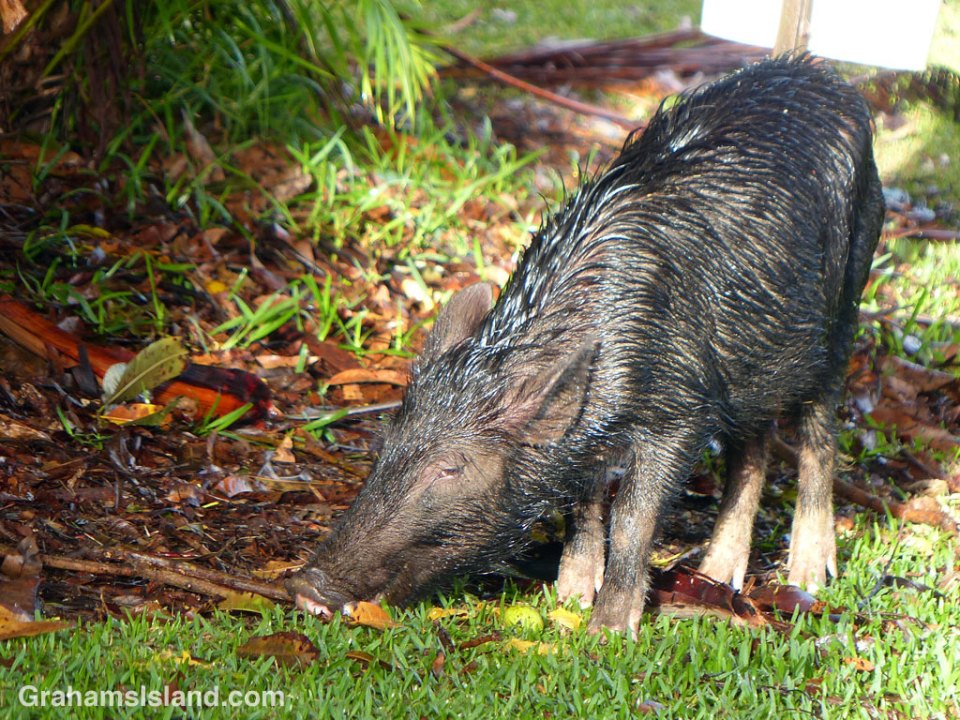
A wild pig snacks on mangoes

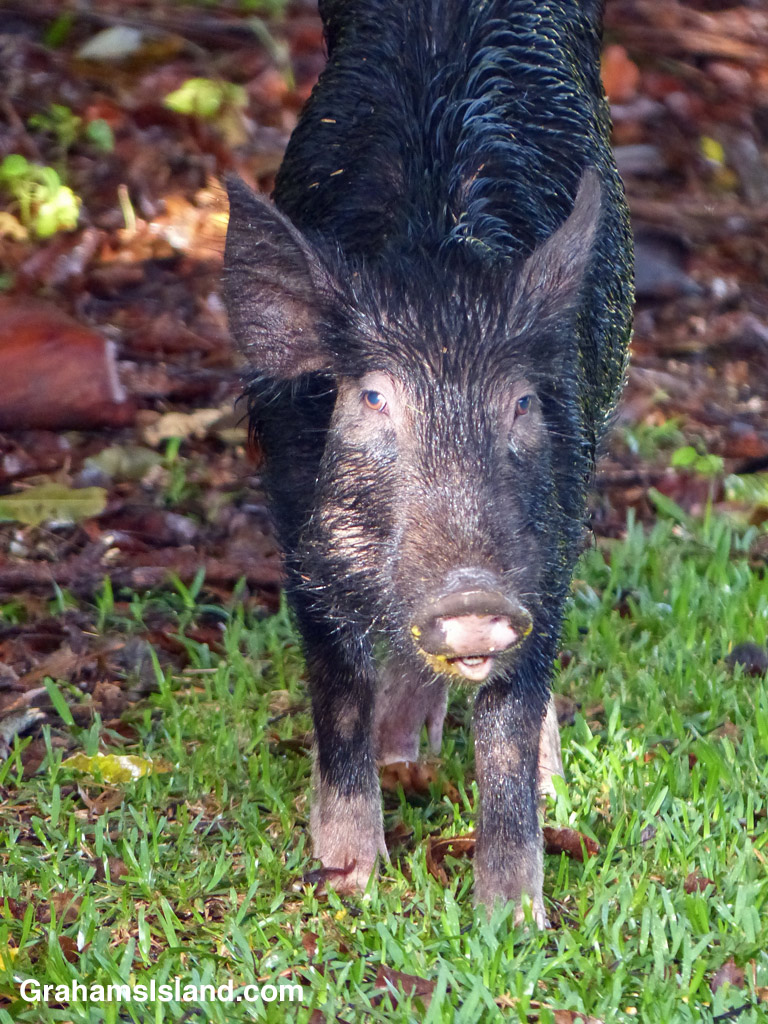
A wild pig snacks on fallen mangoesA wild pig that has been eating fallen mangoes

If yesterday’s post was a hog in name only, today’s is the real thing.

It’s mango season again. While the tree in the yard isn’t quite as bountiful as last year, it’s still dropping mangoes often enough to make me cringe when I walk under its canopy. I try to pick up the fruit on a daily basis, but don’t always succeed. Not that it remains on the ground long.

Fallen mangoes are a draw to numerous birds, which can be seen pecking away most times I look out of the window. And, of course, the wild pigs love them. They usually visit overnight and all I see of their visit is a littering of chewed mango pits.

This pig was an early morning visitor, but still around well after sunrise. When I saw it, I got my camera, eased out of the back door, and started snapping. I never know how creatures will react to my presence. Some, such as grey francolins, scurry off as soon as they think something’s going on. This pig, on the other hand, didn’t seem too bothered, snuffling her way across the yard in my direction until she looked me in the eye and decided enough was enough, scooting through the hedge into the neighbor’s yard.

Notice, in the second photo, the mango lipstick on the pig.

Hawai‘i ‘amakihi

A Hawaii Amakihi about to feed on mamane flowers.A Hawaii Amakihi about to feed on mamane flowers.

‘Amakihi are endemic honeycreepers and the different islands have slightly different versions of the bird. The Hawai‘i ‘amakihi is very similar to the Maui ‘amakihi, but the O‘ahu and Kaua‘i birds have more noticeable differences. They’re one native bird that has adapted relatively well to changing habitat and introduced diseases including avian malaria.

This one was feeding from bright yellow māmane flowers at the Palila Forest Discovery Trail on the southwest slope of Mauna Kea.