

Ulei (Osteomeles anthylidifolia) has lovely, fragrant flowers. It’s indigenous to Hawaii and is a member of the rose family. Speaking of which, correct pronunciation is important (oolayee). Otherwise, it will likely sound like the aforementioned part of the male anatomy!
Category Archives: Plants
Better Days: Gravesite

In Hawaii Tropical Botanical Garden, north of Hilo, this gravesite sits close to the ocean, surrounded by tropical foliage. The wording on the sign reads:
Long ago, Onomea Bay was a fishing village, became a rough-water seaport in the 1800’s, and later was inhabited by Portuguese, Chinese, Japanese and Filipinos who came here to work in the sugar cane fields and to help build the Onomea Sugar Mill. In the early 1900’s, Onomea was deserted and vegetation grew so densely that few signs of habitation could be seen.
When our Founder and his tireless helpers were first clearing this area, they discovered this olden and dignified gravesite. We have never been able to authenticate the origin, although some old-timers believe the gravesite may have belonged to a caretaker’s family, since a cement-made gravesite would not have pre-dated the 1900’s.
Our commitment is to forever preserve this resting place with the utmost care and respect.
Hawaii Tropical Botanical Garden
For more information about Hawaii Tropical Botanical Garden, go to htbg.com.
A lonesome palm, a moody sky
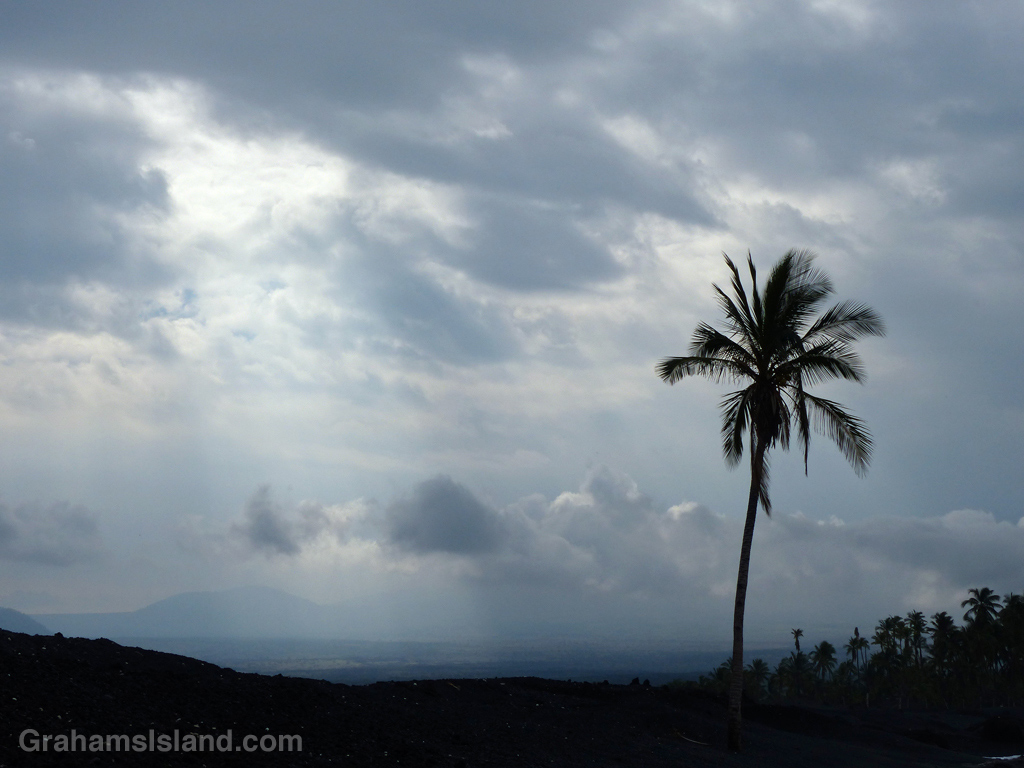
The lone palm at Keawaiki stands out against a cloudy sky.
Orthosiphon aristatus

Orthosiphon aristatus is better known in the U.S. as Java tea or cat’s whiskers, which I think is particularly fitting. This one was at the Hawaii Tropical Botanical Garden just north of Hilo on the east side of the Big Island.
For more information about Hawaii Tropical Botanical Garden, go to htbg.com.
Abstracts: Eucalyptus logs

Eucalyptus logs, stacked ready for export, make a colorful pattern.
Crinum asiaticum

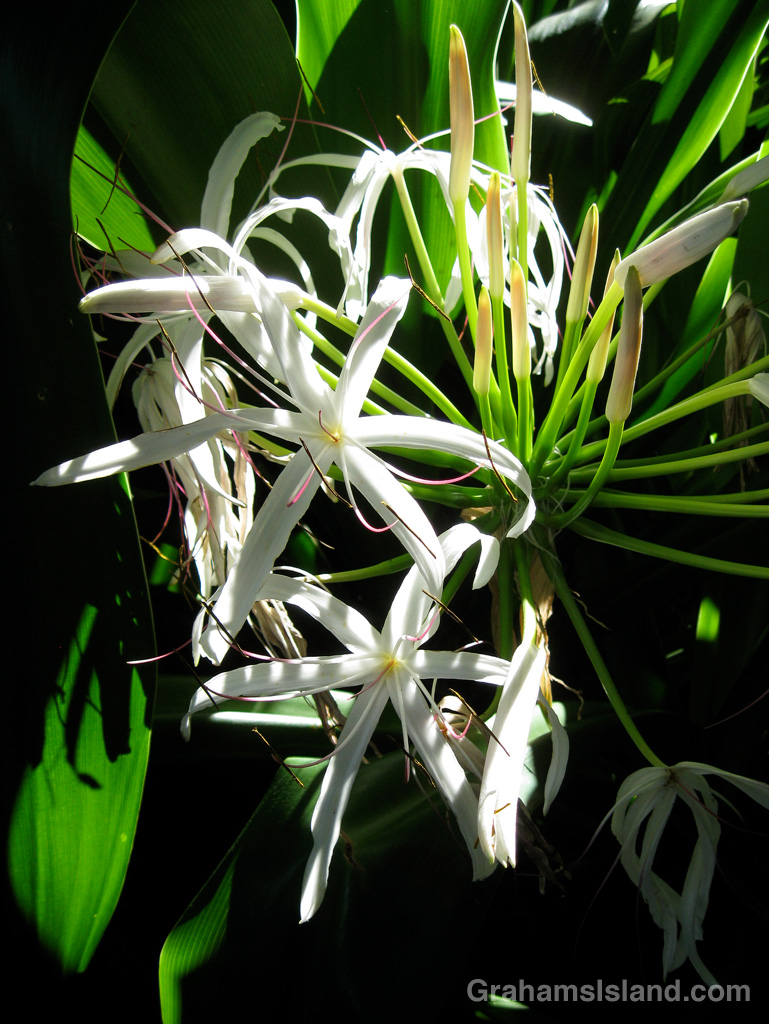
Crinum asiaticum, or spider lily, is common in Hawaii. Apart from its showy flowers, it is noteworthy for all parts of it being poisonous.
Squirrel’s tail
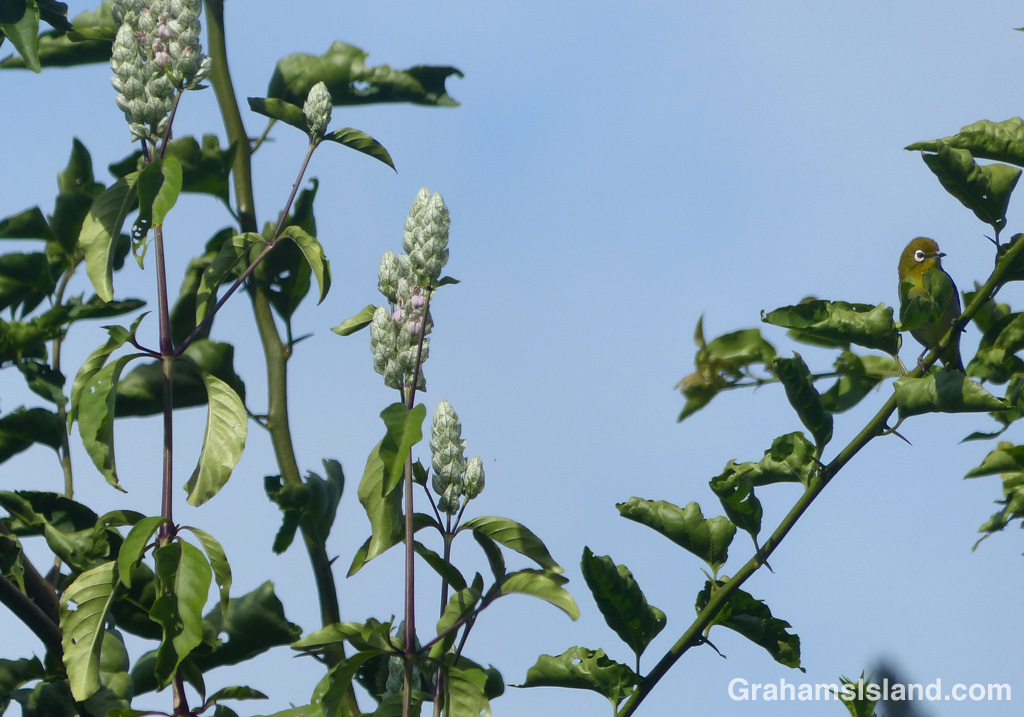
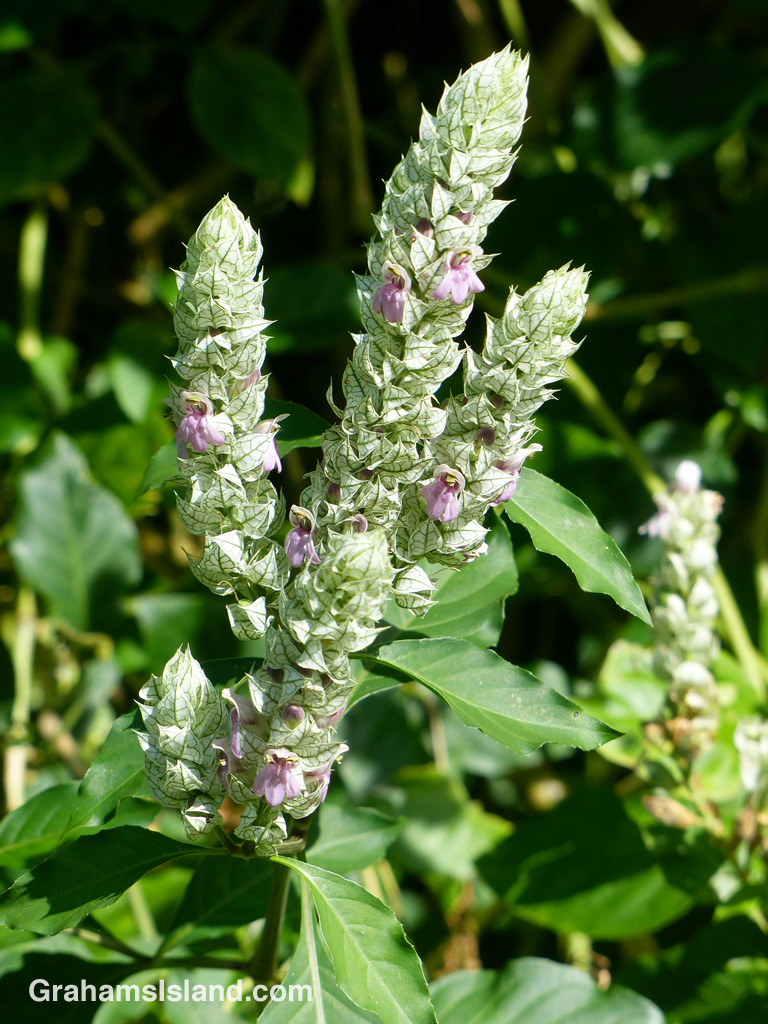
Squirrel’s tail (Justicia betonica) is a fairly common plant on the Big Island. It can grow into a quite large shrub with pink flowers on distinctive stalks. This one offered a handy perch for a Japanese white-eye.
Morinda citrifolia
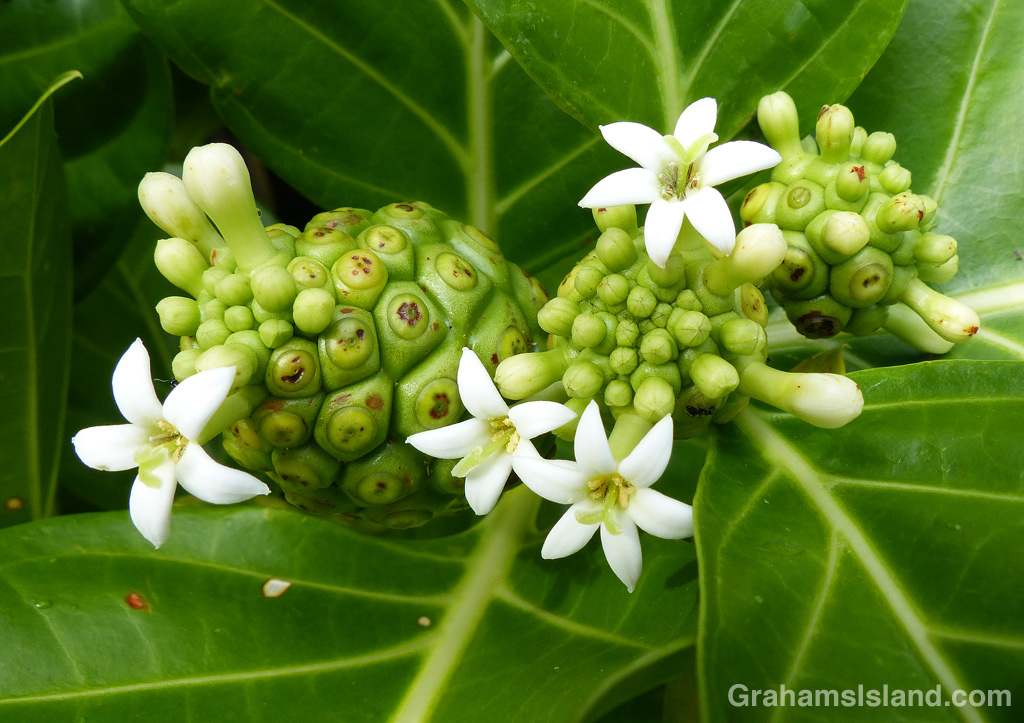

Morinda citrifolia is also known as Noni or Indian Mulberry. The flowers generally have 5 lobes, but this can vary, as this plant shows. The flowers emerge from what will become the fruit, which will end up white or yellowish.
The fruit is edible and used for medicinal purposes, but usually in a juiced form. There’s a good reason for this. As is noted on Wildlife of Hawaii’s plant page, “The ripe, white fruit has a nauseatingly bad smell, very much like fresh vomit mixed with rancid garbage. Avoid smelling it if you have a weak stomach.” Duly noted!
This plant was next to one of the Golden Ponds of Keawaiki.
 Graham's Island