For Bushboy’s Last on the Card photo challenge for April (more responses here), I have this rose grape (Medinilla magnifica). It’s a gorgeous flower, but considered something of a noxious weed in Hawaii.

For Bushboy’s Last on the Card photo challenge for April (more responses here), I have this rose grape (Medinilla magnifica). It’s a gorgeous flower, but considered something of a noxious weed in Hawaii.
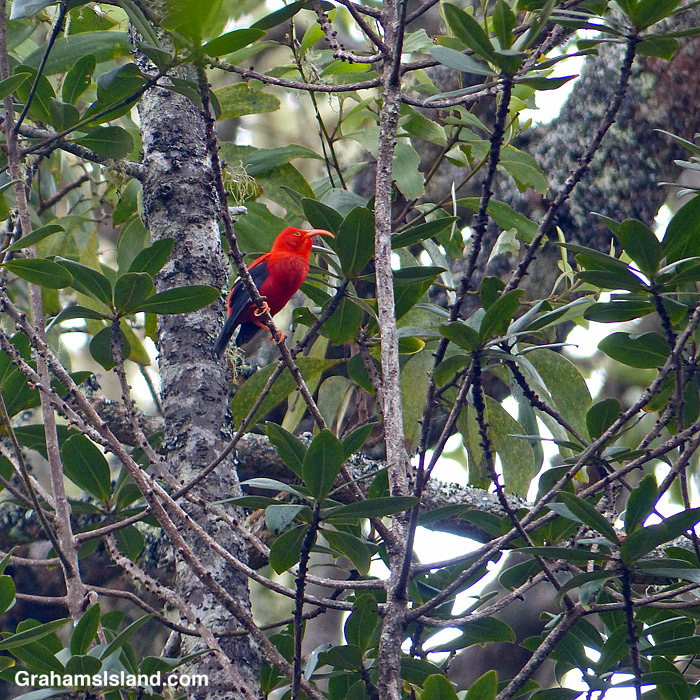
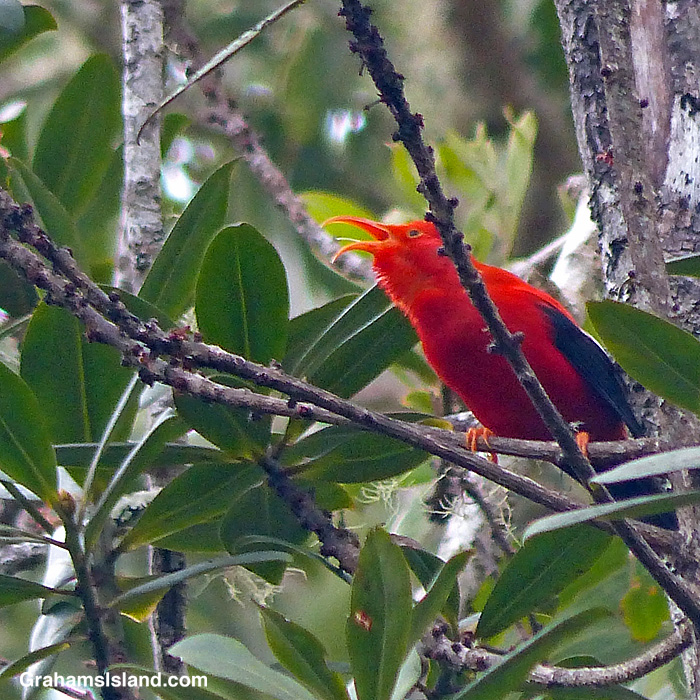
On my last hike on the Pu’u O’o Trail, off Saddle Road, I soon ran into a man and his son staring at a tree a short distance away. The man explained that they’d seen an i’iwi, a native Hawaiian honeycreeper, fly into the tree and were hoping to see it again. I waited with them for a while, but saw nothing and decided to move on.
A little later I ran into two men coming out of a kipuka, a cluster of old vegetation that has been bypassed by lava flows. One of them, looking pretty pleased, held out his camera and said they’d just seen an i’iwi and he’d got some good photos. He mentioned the spot where they’d seen the bird, so I headed into the trees to have a look. Nothing. It was beginning to look like it was going to be one of those days where everyone else has a wonderful experience except me!
But not long after, I saw a flash of red and then this bird settled on a branch and began to add its song to the loud chorus of bird songs in the kipuka. One thing about i’iwis is that if they’re around, they’re easy to see, their bright red plumage standing out against the green background.
After the bird flew off, I carried on with my hike. When I returned half an hour later, the bird song in the kipukas had diminished considerably and I didn’t see or hear anymore i’iwis.
Posted in response to Becky’s April Squares challenge theme of ‘Bright.’ See more responses here.
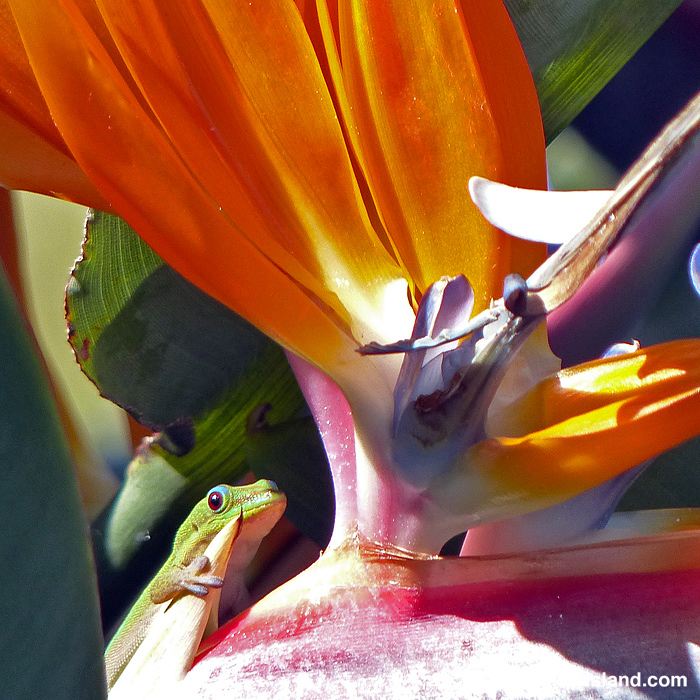
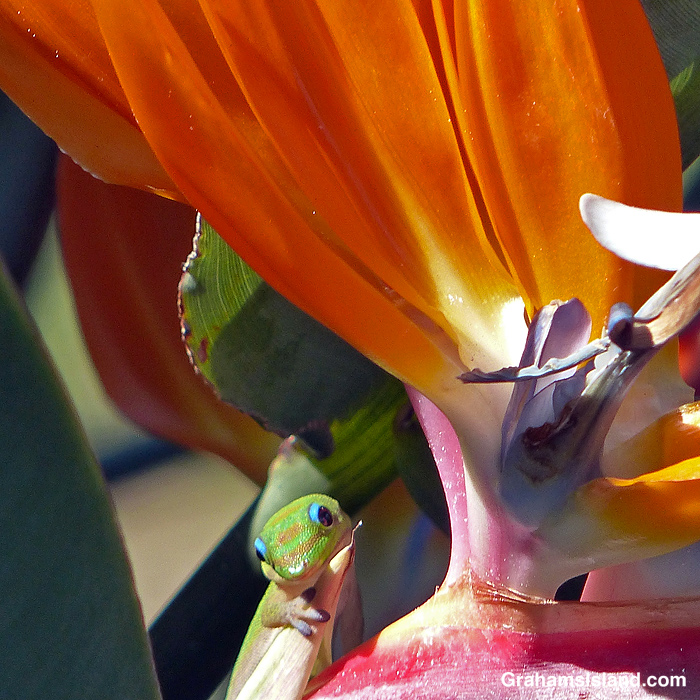
This week’s Sunday Stills challenge theme is ‘National Kids and Pets Day.’ See more responses here. I mentioned to Terri that I might have a hard time with this one, not having kids or pets, and she suggested I could use the ‘pet’ geckos around here.
So here’s a gold dust day gecko playing hide and seek with me from a bird of paradise flower.
Also posted in response to Becky’s April Squares challenge theme of ‘Bright.’ See more responses here.

In the heart of downtown Hawi, there’s a telephone pole surrounded by tradescantias. This is where Blake, a local resident, has his unofficial art gallery. The display changes quite frequently, but can always be relied upon to feature bright colors.
Posted in response to Becky’s April Squares challenge theme of ‘Bright.’ See more responses here.
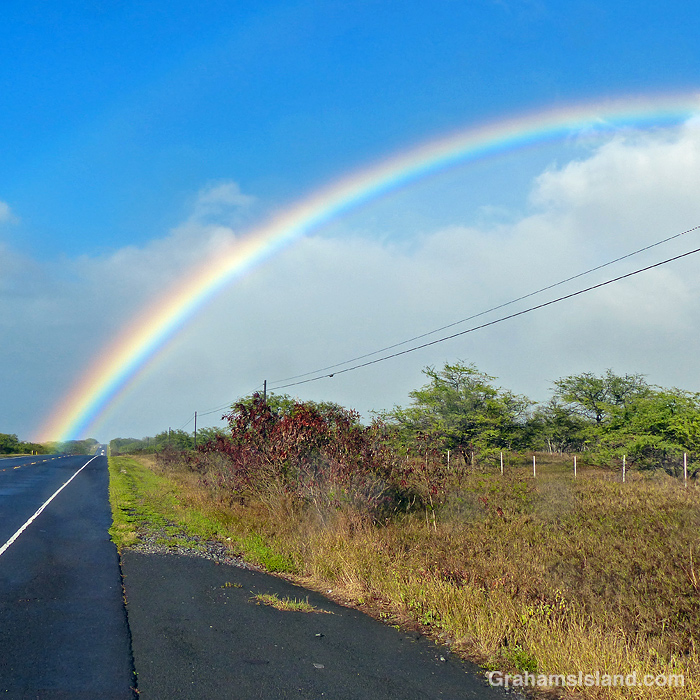
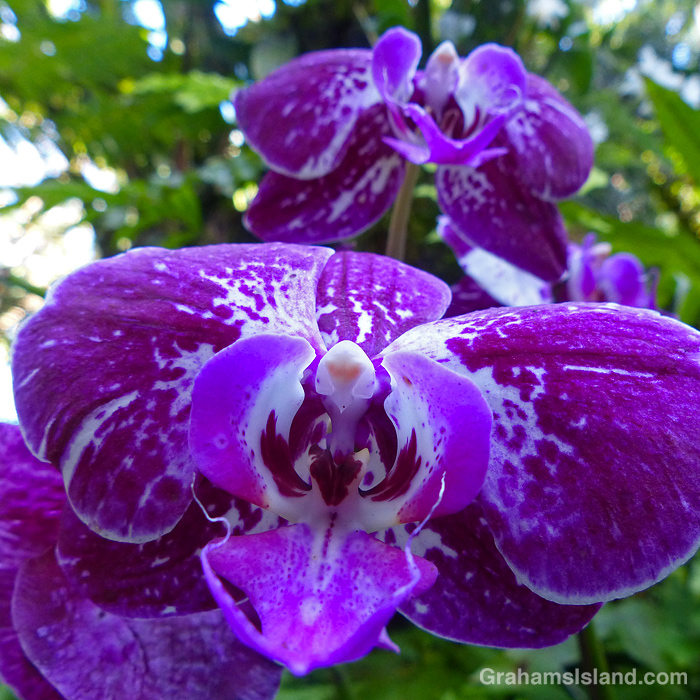

The seventh and final installment of my rainbow colors in response to Becky’s April Squares challenge theme of ‘Bright.’ (See more responses here.) ‘Violet’ also happens to be this week’s Sunday Stills challenge theme, which is what gave me the rainbow series idea in the first place. (See more responses here.)
My last rainbow spans the main highway to North Kohala. This is a good spot to see rainbows in the afternoon. It’s cloudy and wet toward Kohala Mountain on the right, sunny and dry down by the coast on the left.
This phalaenopsis orchid falls somewhere in the violet/purple range. This was another instance where I looked up the official RGB color values for violet and found quite a range of possibilities.
The final photo has a Japanese white-eye sampling the good things on offer in a Japanese aloe flower, backed up by a bold and bright splash of violet bougainvillea flowers.


The third of my rainbow colors in response to Becky’s April Squares challenge theme of ‘Bright.’ (See more responses here.)
Today’s rainbow was taken from Kohala Mountain Road and looks down towards the southern edge of Waimea.
In the middle, a bright yellow saffron finch perches on a bare branch of a plumeria. There were zero leaves on this tree and only a few budding flowers, such as the one next to the finch.
And finally, the yellow robe of the painted statue of King Kamehameha I in Kapaau.
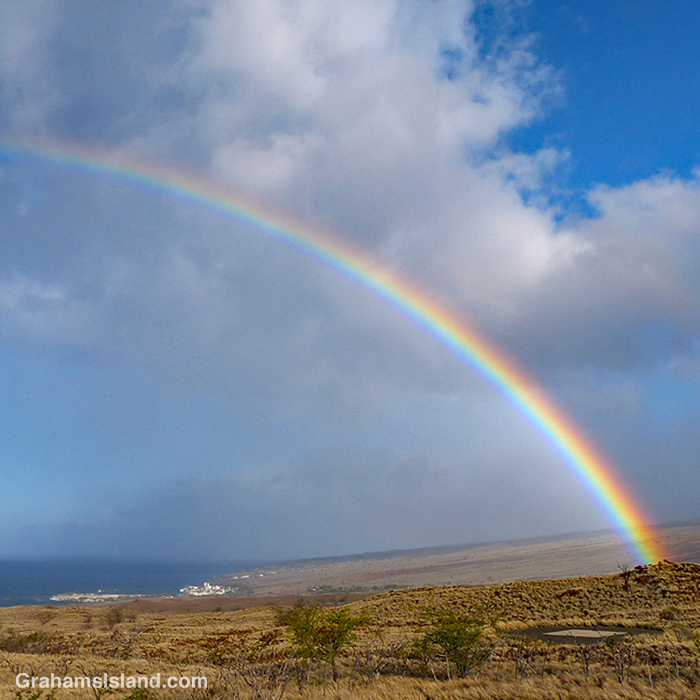
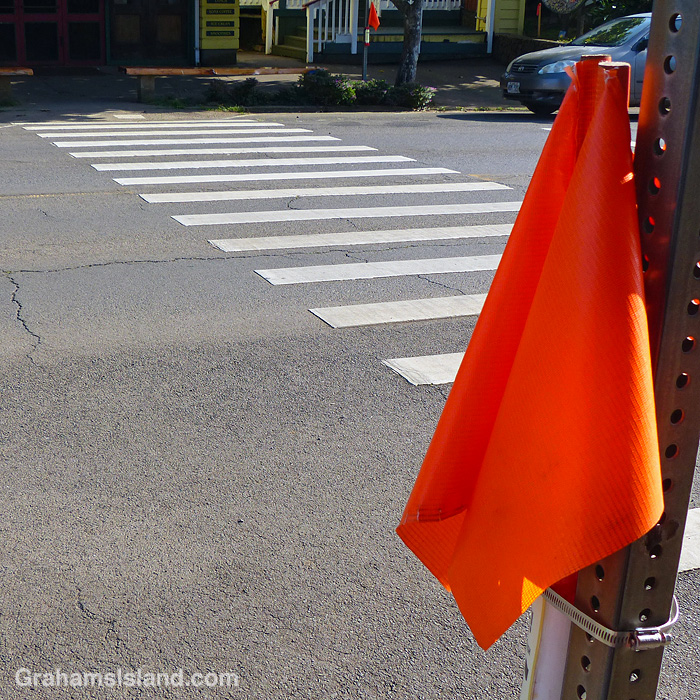

This is the second of my little series of rainbow colors in response to Becky’s April Squares challenge theme of ‘Bright.’ (See more responses here.)
In the top photo, a rainbow arcs over the port of Kawaihae.
Below that are orange flags available for waving while crossing the street. I haven’t yet felt the need to use them, still being able to leap out of the way of drivers focused on their phones! Actually, drivers here are pretty good about stopping for people to cross the street. I’m more surprised by how many people will just step out into traffic 20 feet up from the crosswalk. Then they look aggrieved if you fail to stop instantaneously.
The bottom photo shows the lovely flower of the kou tree (Cordia subcordata). Kou is indigenous to Hawaii but is also a canoe plant, brought here by Polynesian settlers. It likes the sun and grows along the coast.
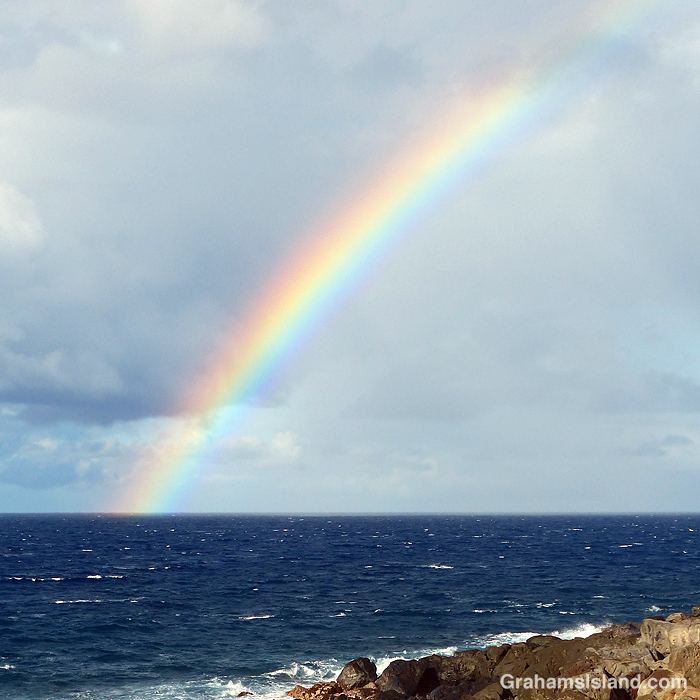
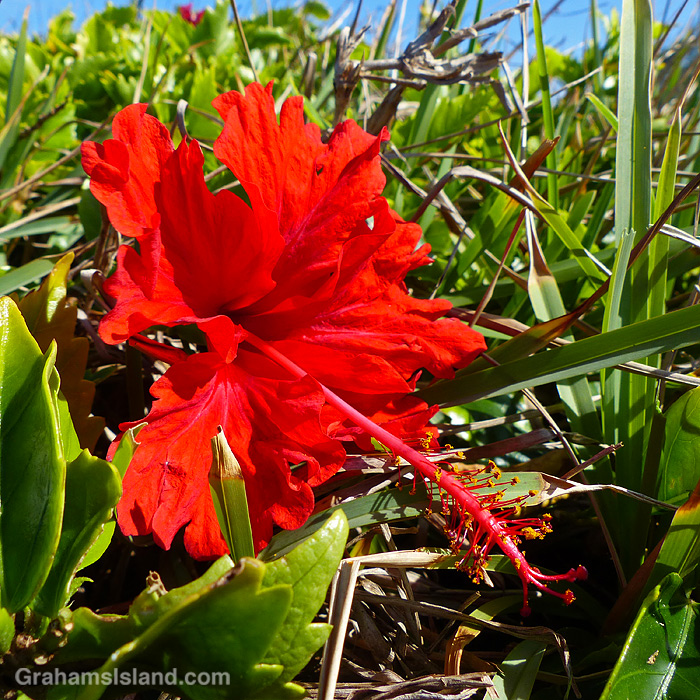
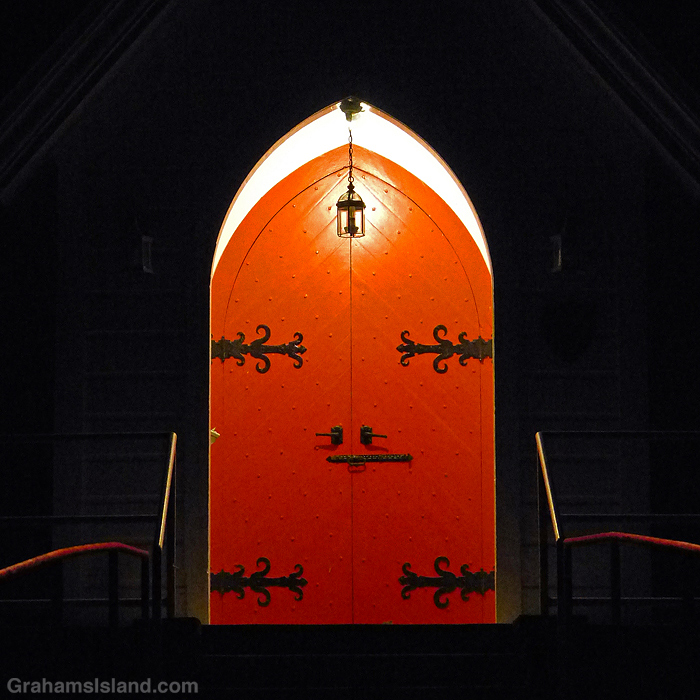
This month’s Becky’s Squares challenge theme is ‘Bright.’ (See more responses here.) Since I plan to post some bright colors in response, I thought I’d do that using a rainbow theme.
I’m starting with a rainbow off the north Kohala coast followed by a bright red hibiscus flower growing wild on that same coast. The third photo shows the front door of St. Augustine’s Episcopal Church in Kapaau, illuminated by a single bright light.