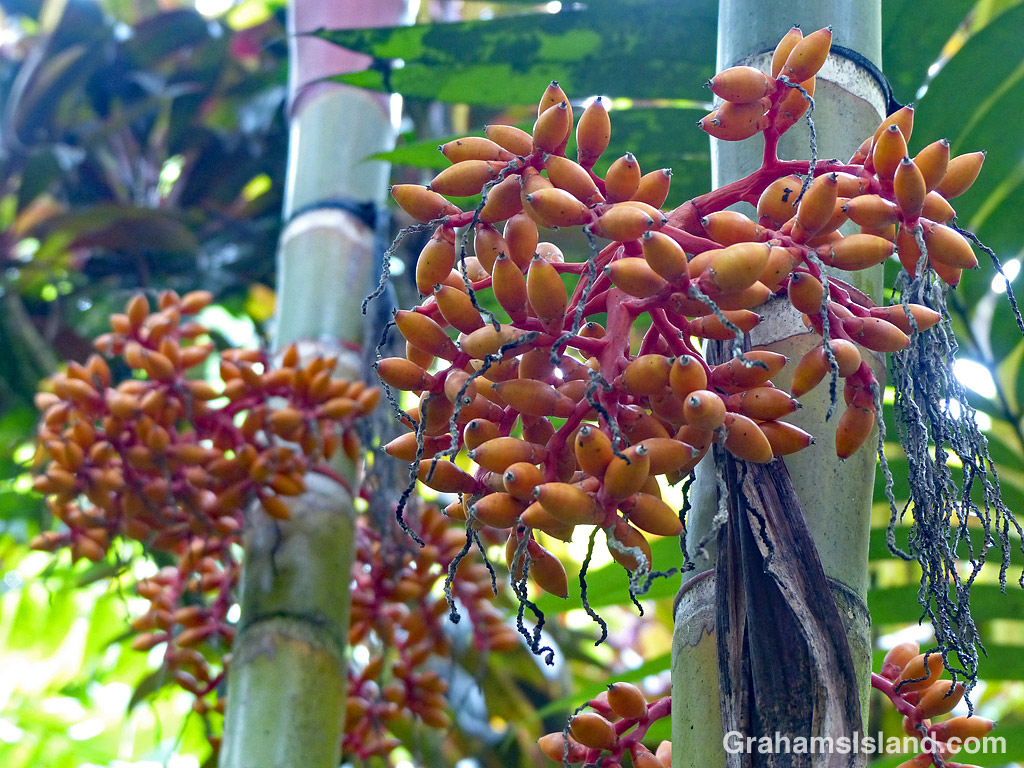
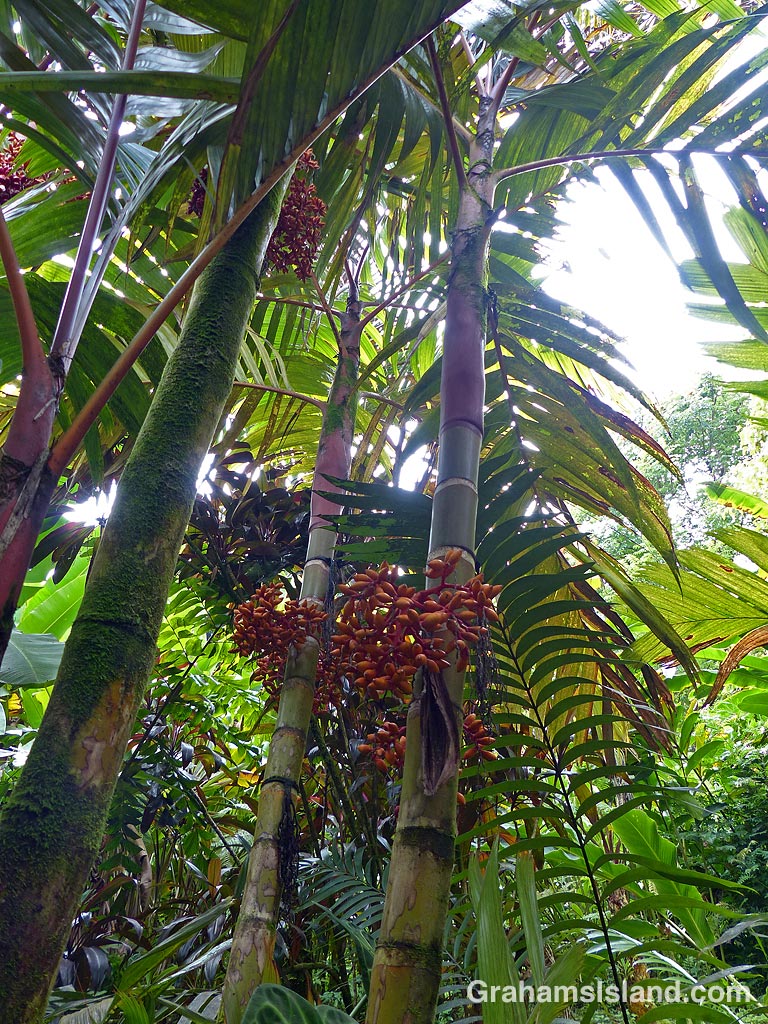
Pinang Yaki (Areca vestiaria) is originally from eastern Indonesia. With its red crownshaft and orange fruits, it’s a colorful palm. But these colors vary depending on the tree’s elevation with a higher elevation leading to more vibrant colors.

Pinang Yaki (Areca vestiaria) is originally from eastern Indonesia. With its red crownshaft and orange fruits, it’s a colorful palm. But these colors vary depending on the tree’s elevation with a higher elevation leading to more vibrant colors.
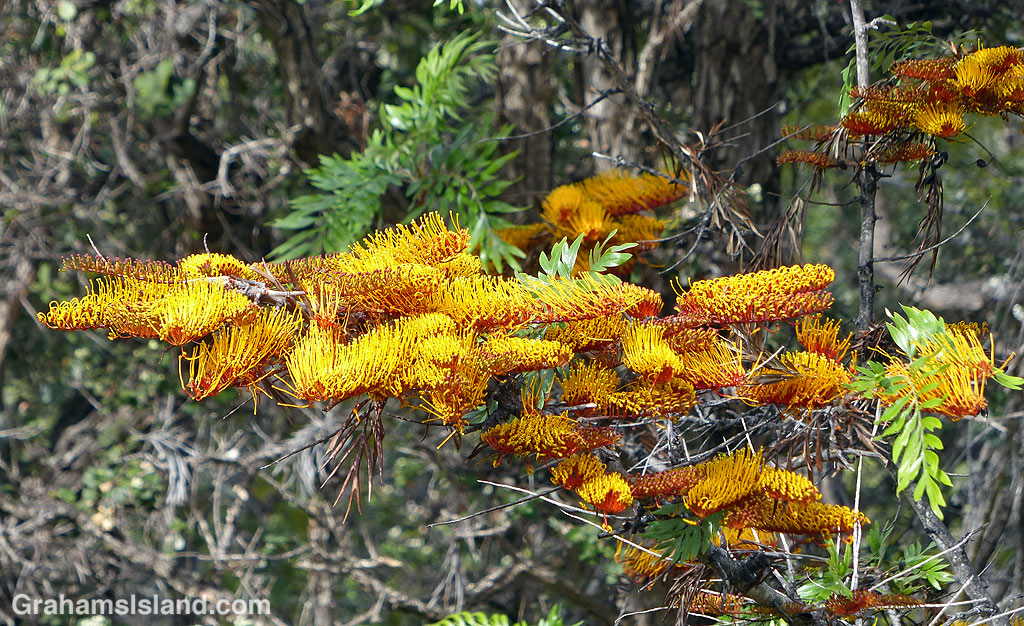
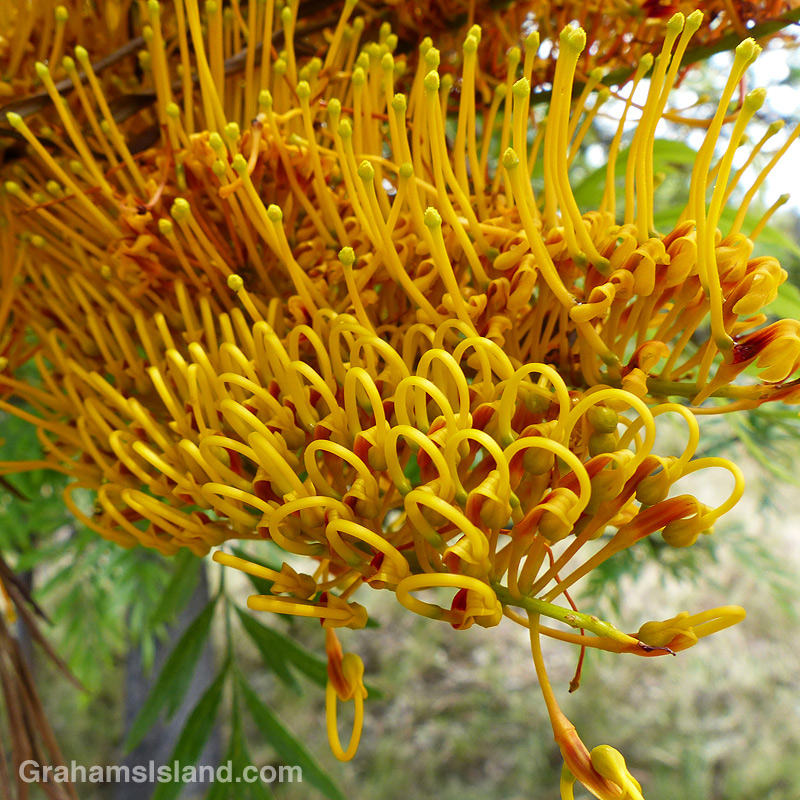
Silk oaks (Grevillea robusta) come from Australia’s east coast, but are well established here. Rather too well actually. They’re fast growers and can outcompete native species, in particular ohia trees. In some places, silk oaks will have their trunks ringed to kill the tree in order to give those native species a better chance of survival.
At this time of year, silk oaks are blooming and their orange flowers put on a brilliant display. They look like giant toothbrushes, or rather groups of flowers look like that, for the toothbrushes are made up of many individual flowers. The flowers themselves are popular with birds, bees and other insects, but both the flowers and wood can cause allergic reactions so have to be handled with caution.

This fiery skipper butterfly was feeding on top of a cluster of tree heliotrope flowers, some open, some about to bloom. It was one of a host of insects buzzing around the tree.
Posted in response to Becky’s April Squares challenge theme of ‘Top.’ See more responses here.
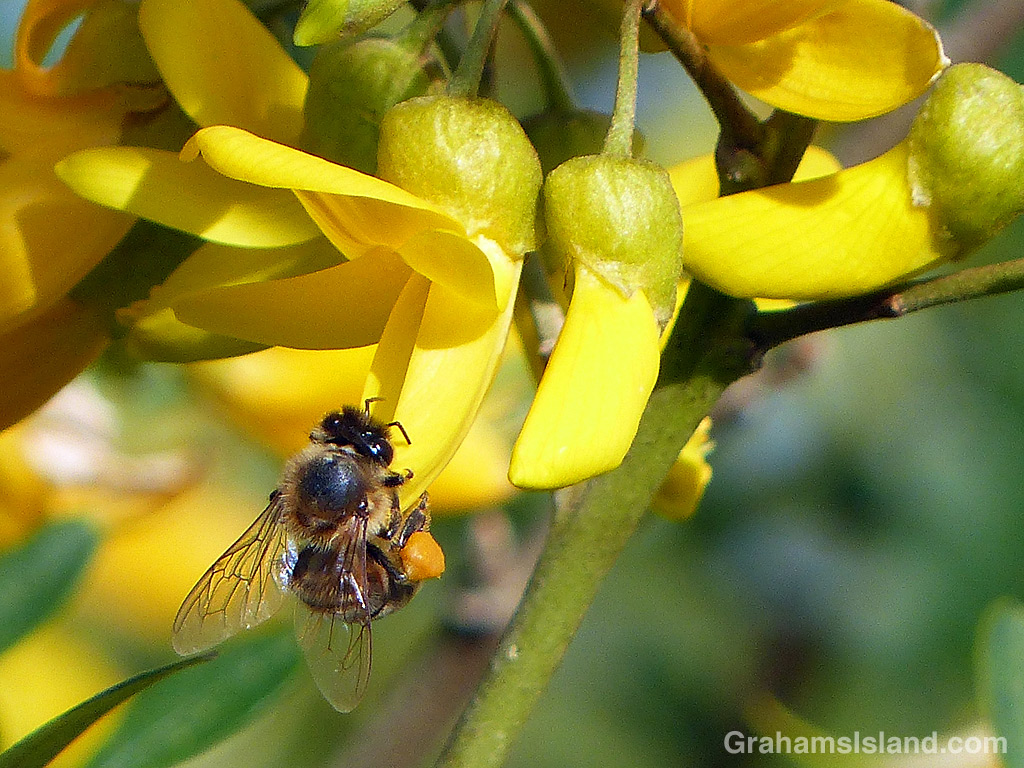
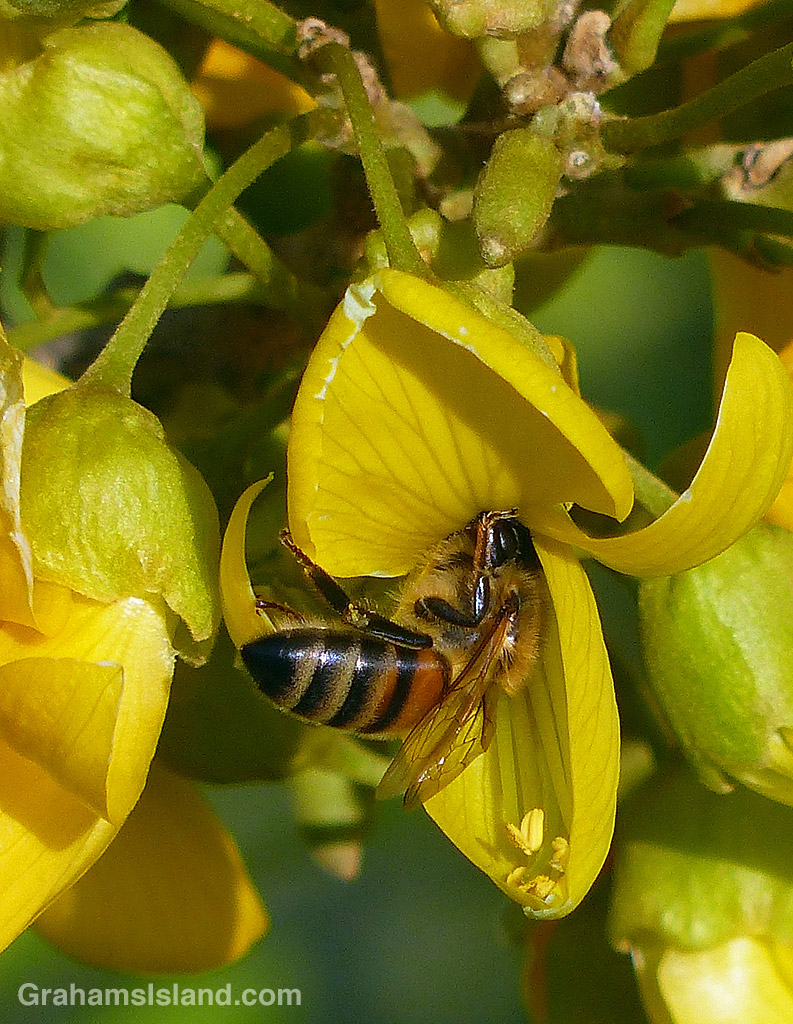
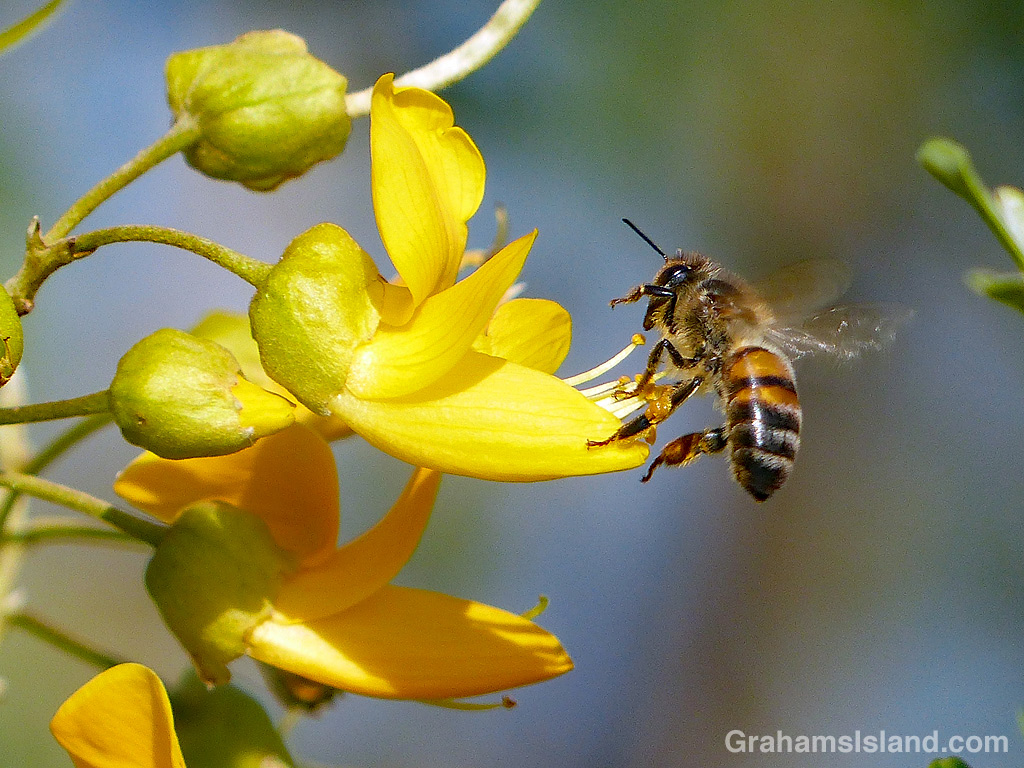
This week’s Friendly Friday challenge theme is ‘Yellow.’ See more responses here.
This is a good excuse to post more photos of bees foraging on bright yellow māmane flowers. Māmane (Sophora chrysophylla) is endemic to Hawaii, but while its flowers attract many insects, the seeds are highly toxic. The endangered palila, one of the last endemic Hawaiian honeycreepers, is a bird that feeds mostly on the māmane’s immature seed pods without any ill effect.
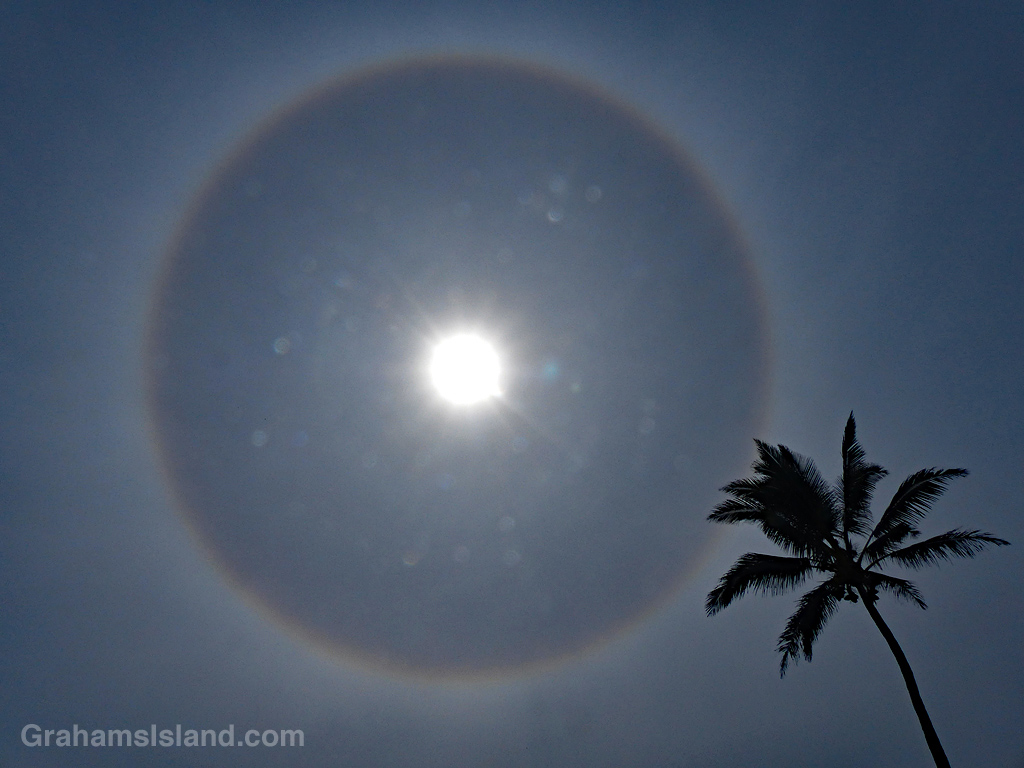
I was about to set out on one of my regular walks at Upolu, when I looked up and saw this halo around the sun. It’s the first I’ve seen here (which doesn’t mean there haven’t been others).
In days of yore, halos were considered a sign of impending bad weather. In this case, there’s some evidence to back that up. The ice crystals that cause halos are found in clouds, high in the troposphere, and these clouds are often a sign of an approaching weather front. Sure enough, the next day was fairly wet though, ironically, not in the area where I saw the halo.
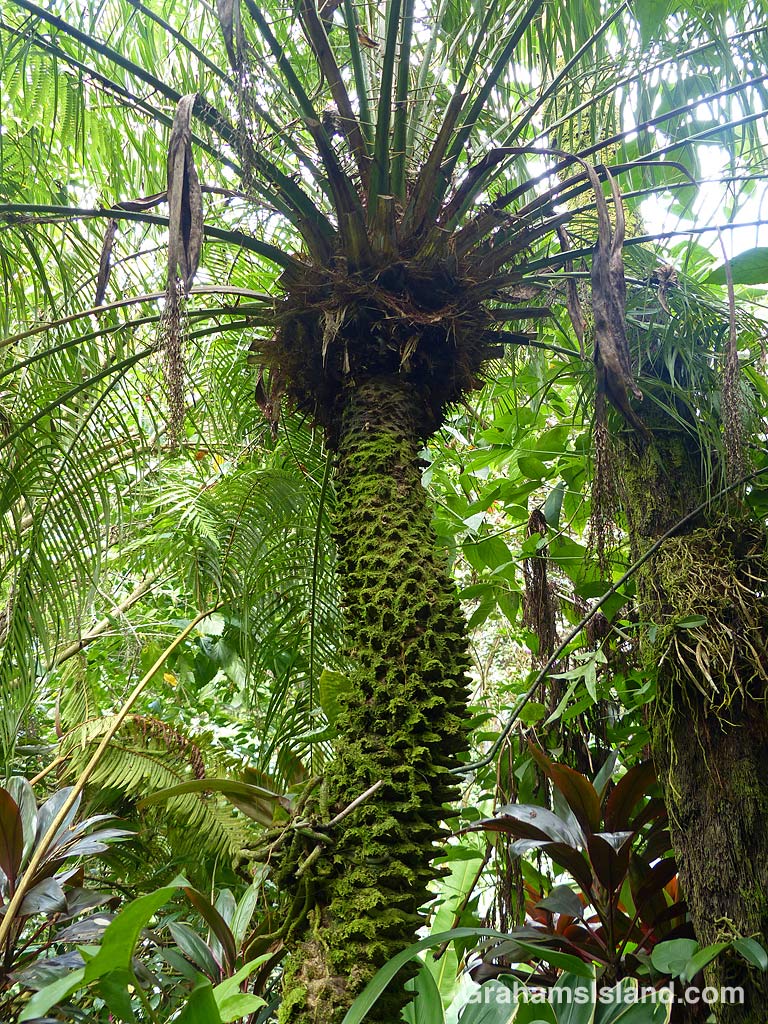
This is a dwarf date palm (Phoenix roebelenii), which I like particularly for its nobbly trunk. It hails from Vietnam and Thailand an is also known as pygmy date palm or miniature date palm


This week’s Sunday Stills challenge theme is ‘Country or State Flower.’ See more offerings here.
The country flower for the USA is the rose and I don’t have photos of those. The state flower for Hawaii is the hibiscus and, while I have lots of those, they’re all of Chinese hibiscus (Hibiscus rosa-sinensis). The state flower is the native yellow hibiscus (Hibiscus brackenridgei) and I have none of those. The native hibiscus is not often seen in the wild and is currently considered an endangered species, but it is used as an ornamental in domestic gardens.
Having struck out on the two proper responses to this challenge, I’ve chosen to post photos of the official flower of the Big Island, the red ʻōhiʻa lehua (Metrosideros polymorpha). A member of the myrtle family, ʻōhiʻa lehua is endemic to Hawaii. It’s one of the first trees to colonize lava flows. It’s able to survive in such a tough environment because its roots grow down into lava tubes and other voids in the lava and tap into the moisture there.
Recently, ʻōhiʻa trees have been attacked by a fungus which can cause the trees to die within a very short time. This disease, known as Rapid ‘Ohi’a Death, is caused by two new types of Ceratocystis fungus.

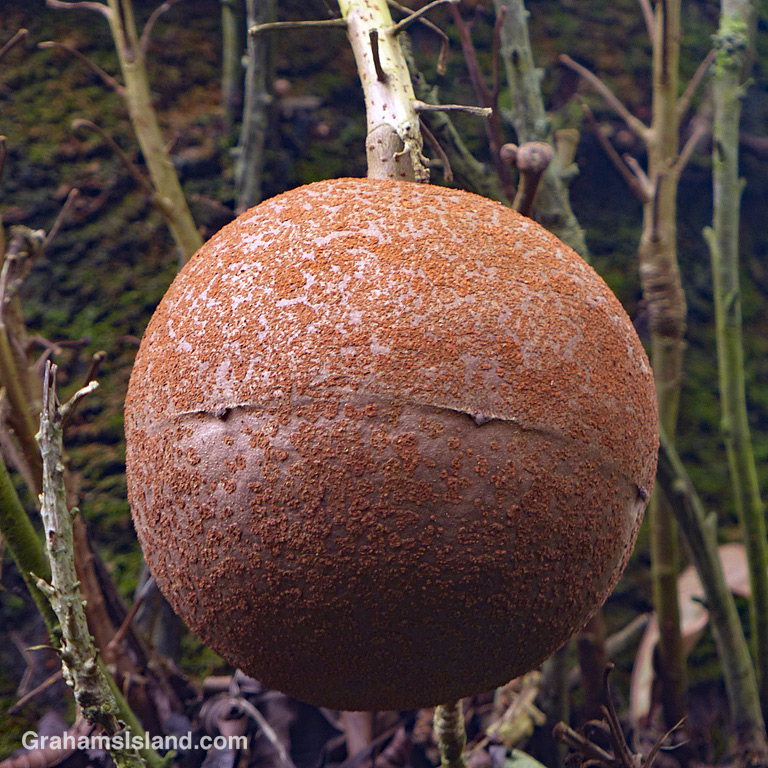
I have posted photos of the flower of the cannonball tree (Couroupita guianensis) before (here, here, and here). But the flowers aren’t what gives the tree its name. It’s the woody cannonballs that are its fruit.
In these photos, a cannonball tree is loaded with fruit. The flowers, and subsequent fruits, grow directly off the trunk. And the fruit itself, well it’s not hard to see why it gets its name. When the fruit falls from the tree it usually breaks open. The pulp and seeds are eaten by animals which go on to disperse the seeds.
 Graham's Island