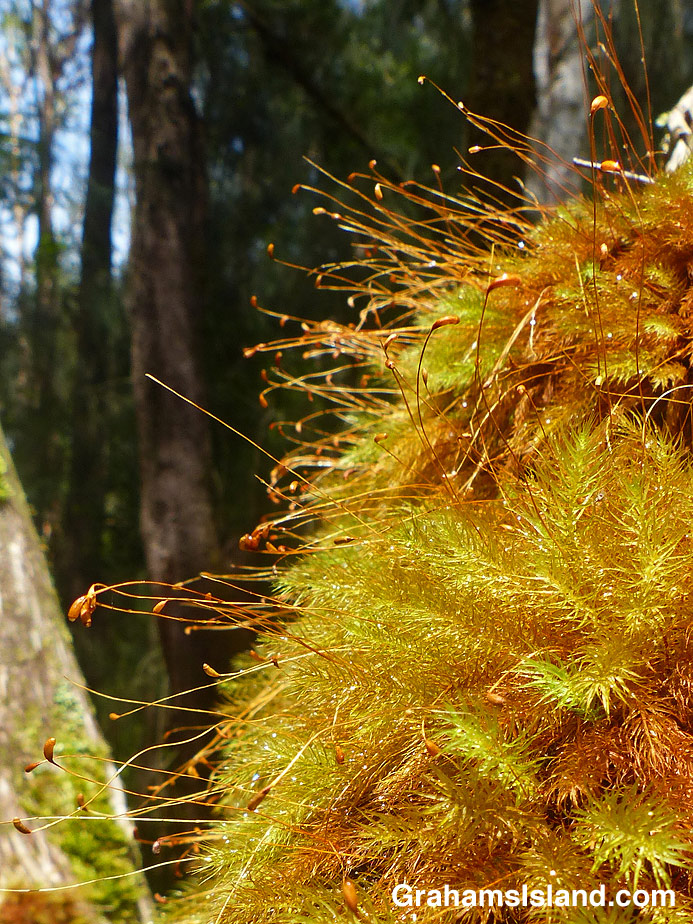
Moss grows on a tree in the Kalōpā State Recreation Area, on the northern end of the island. Hawaii might be in the tropics, but the elevation of Kalōpā, combined with it being on the wet side of the island, means it is home to vegetation more associated with my former home in the Pacific Northwest.
This week’s Sunday Stills challenge theme is ‘Our National Parks.’ See more responses here. There are two national parks on the island. One is Hawaii Volcanoes National Park which encompasses Kilauea Volcano and Mauna Loa Volcano. The other is the somewhat lesser known Pu’uhonua o Hōnaunau National Historical Park, which is also known as Place of Refuge.
There are two parts to the park, which are separated by an imposing rock wall. On the inland side of the wall are the grounds where Hawaiian royalty made their home. The water side of the wall was the place of refuge. Anyone who had broken the law or kapu faced the death penalty, but if they could reach a place of refuge they would be forgiven by a priest and allowed to return to their normal lives.
At one end of the wall is the Hale o Keawe temple, surrounded by ki’i (wooden statues). This structure houses the bones of many Hawaiian royalty or ali’i, which are believed to give the place great power or mana.
For more photos and information on this site about these parks, click on the tags for Pu’uhonua o Hōnaunau National Historical Park or Hawaii Volcanoes National Park at the bottom of this page.
For more information about Pu’uhonua o Hōnaunau National Historical Park, visit https://www.nps.gov/puho/index.htm. For more information about Hawaii Volcanoes National Park, go to nps.gov/havo/.
Tulip trees (Spathodea campanulata) were introduced from tropical Africa. When blooming the flowers can be red, orange, or yellow. Tulip trees can grow to be very tall, up to 80 feet, and with their prolific, vibrant flowers they’re easy trees to spot in otherwise largely green forests. Newly fallen flowers also look great on a lawn.
What I like about tropical foliage is not just its rampant nature, but also its splashes of color. Here, red leaves and anthuriums stand out from the numerous shades of green.
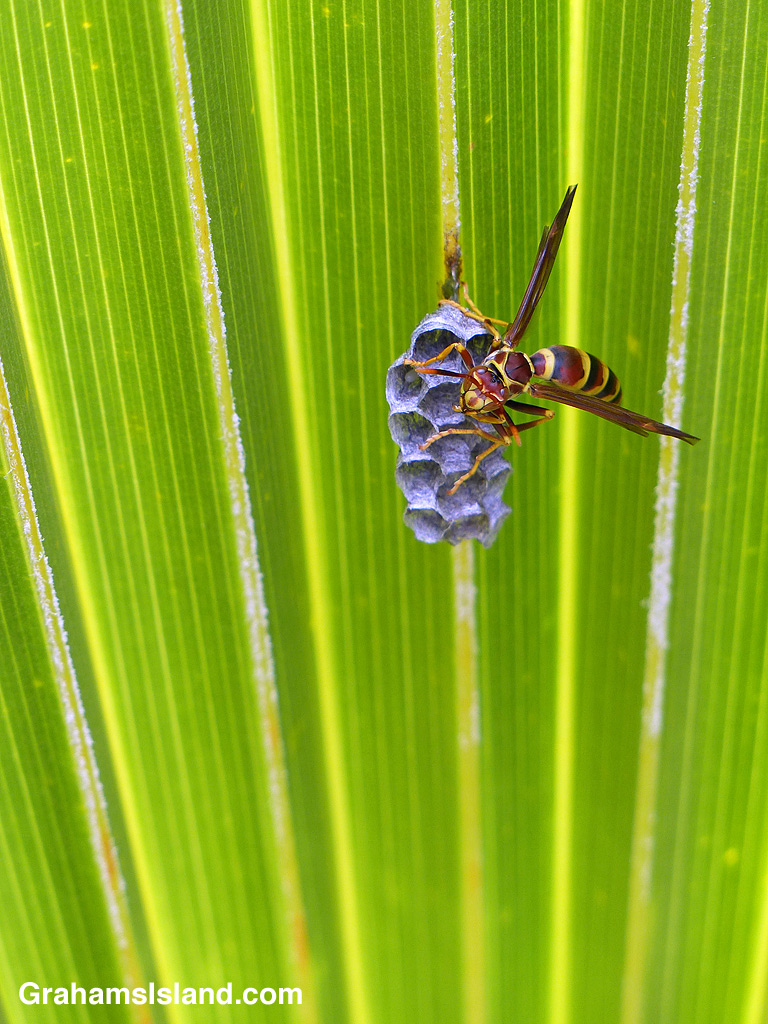
This paper wasp was working on a new nest attached to a loulu palm (Pritchardia affinis). In one of the cells – the top one of four on the left side – an egg has already been deposited.
I don’t know who Christa is or was, but there were a couple of things that struck me about this image.
The sign and the swing’s rope and seat were in excellent condition in stark contrast to the tree, which was dying and deliberately so. The channel around the trunk, below the sign, is intended to kill the tree, probably a silk oak, which can take over and crowd out native trees.
And then there’s the location, not far from the old quarry near the foot of Pu’u Wa’a Wa’a. It’s more than a mile down the hill to the nearest habitation, a ranch that runs livestock in this area. So, an isolated spot for Christa’s playground, but a wonderful location too, with views to the Pacific and surrounded by birds and animals, both domestic and wild.
Posted in response to this week’s Sunday Stills challenge on the theme of ‘Playground.’ See more responses here.
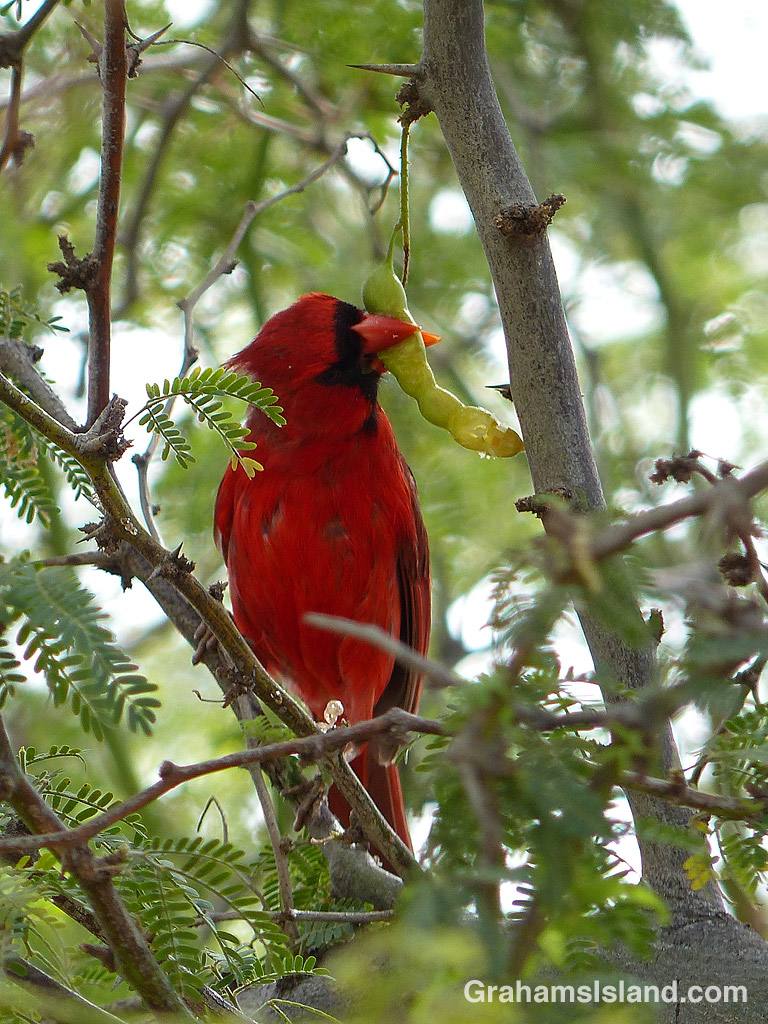
I spotted this male northern cardinal wrestling with a kiawe seed pod, but had to leave before I could see how the duel ended. I suspect the cardinal won. He was certainly putting in enough effort to do so.







 Graham's Island