Category Archives: Hawaiian History

Sugar cane

North Kohala was a significant center for Hawaii’s sugar industry through the boom years in the 1800s until its decline in the first half of the 20th century. Now, sugar cane is being put to a new use in the area – rum production.

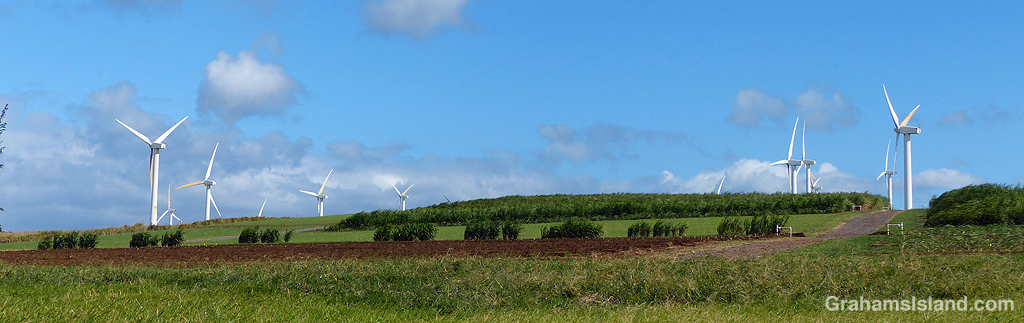
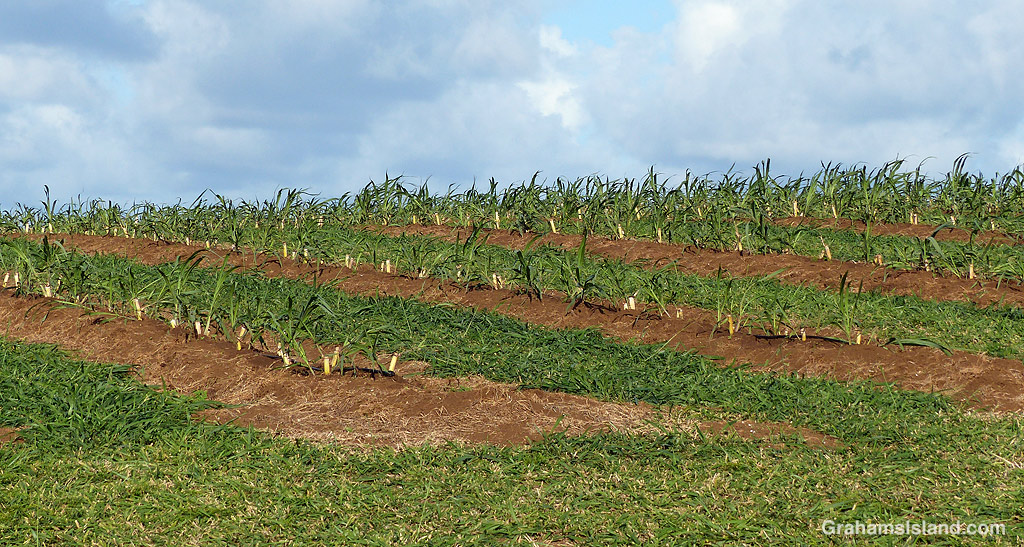
The photos show sugar cane being grown in the fields below Hawi wind farm. This isn’t just any kind of sugar cane. These are heirloom varieties, derived from canoe plants – plants brought to Hawaii by the original Polynesian settlers. Now they’re being used in the production of rum agricole.

Rum agricole hails from the Caribbean, particularly the island of Martinique. Regular rum is made from molasses, but rum agricole uses fresh sugarcane juice. The people behind Kuleana Rum have begun producing the Caribbean-style rum here on the Big Island. They have a distillery in Kawaihae, about 17 miles down the coast, and have opened Kuleana Rum Shack, a bar and restaurant in Waikoloa.

For more information about Kuleana Rum, go to kuleanarum.com. Posted in response to this week’s Sunday Stills challenge on the theme of ‘Spirit.’ See more offerings here.

North Kohala libraries

The new public library in North Kohala, Hawaii

Today’s post is in response to this week’s Sunday Stills challenge on the theme of ‘For the Love of Reading & Books.’ See more offerings here.

The top photo shows North Kohala’s relatively new public library, which opened in 2010. The library features wind and photovoltaic energy systems as well as a rainwater catchment system. These features helped it gain LEED Gold Certification, the first state building in Hawaii to do so.

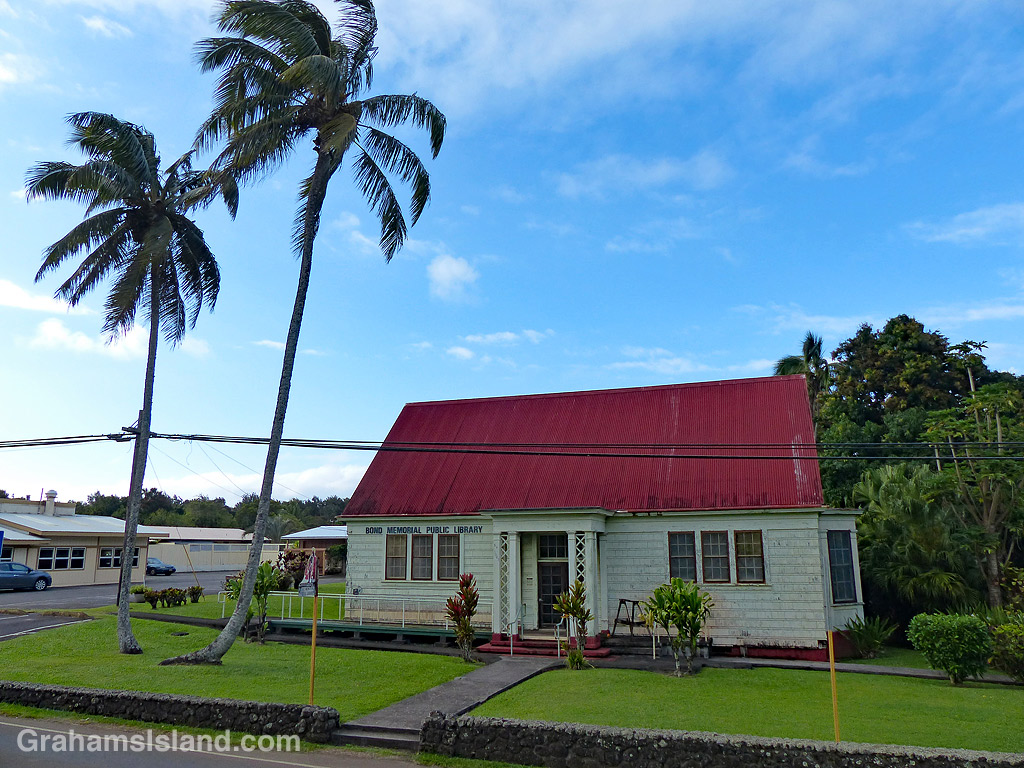
The photo below shows the Bond Memorial Library, which served the area from 1929 until the new library’s opening. This building was much smaller – 1,610 sq.-ft. as opposed to 6,000 sq.-ft. for the new building.

When the library moved from the old building to the new, more than 1,000 volunteers lined the road to move the books by hand over the mile plus distance. This echoed the story of King Kamehameha the Great who organized a human chain 20 miles long to carry rocks from Pololu Valley to build Pu’ukohola Heiau near Kawaihae, though I don’t think King Kamehameha’s rock carriers were volunteers.

Back in 2014, there were plans to convert the old Bond Memorial Library to a cultural/historical museum for the area, but nothing has happened yet and the old building still sits there, unused as far as I can tell.

The old Bond Memorial Library in Kapaau, Hawaii.

A walk through downtown Honolulu

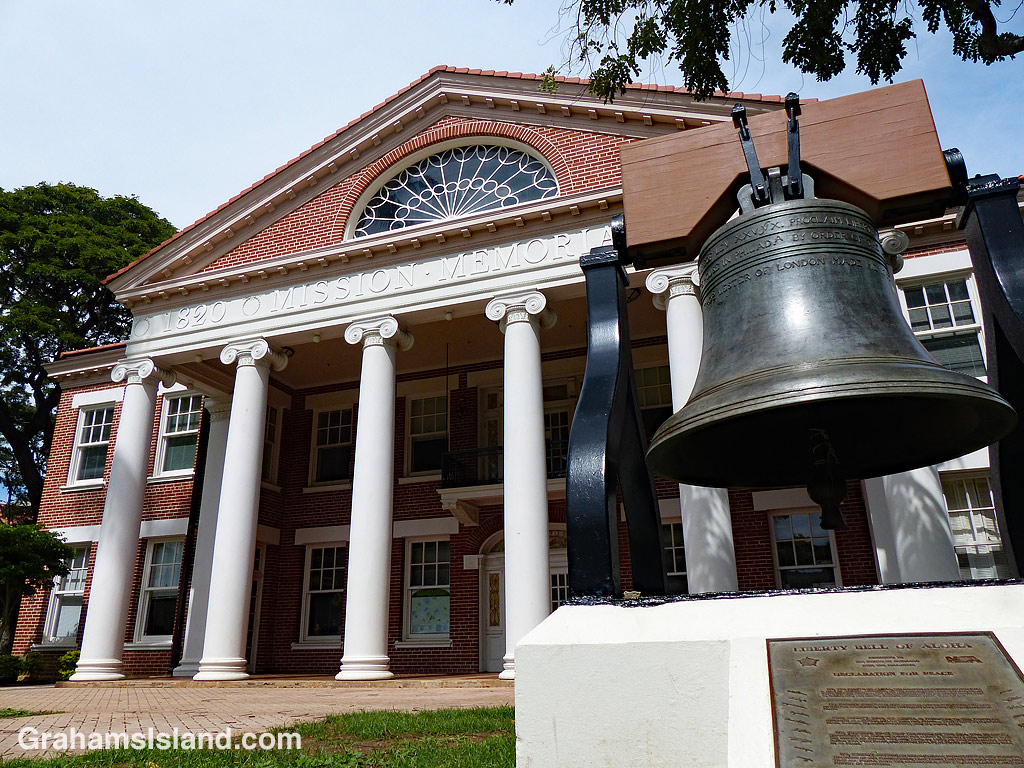
The Mission Memorial Building was built to commemorate the 100th anniversary of Protestant missionaries in Hawaii, something of a mixed blessing for the locals.
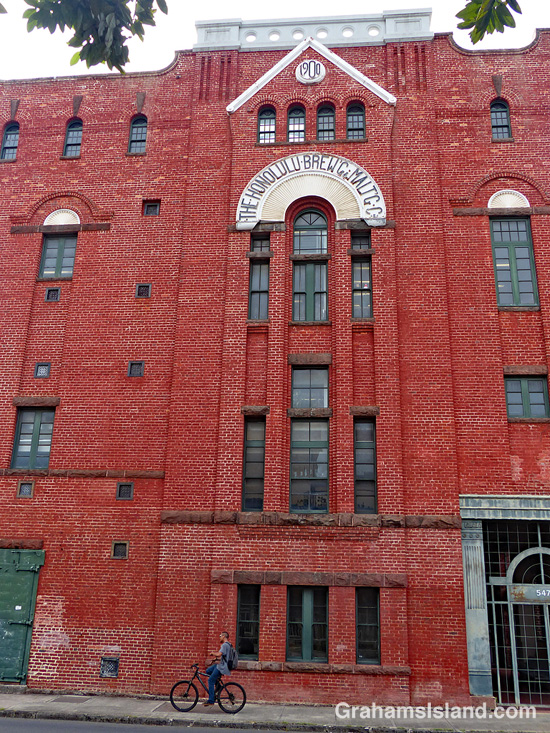
The lovely red brick Hawaiian Brewing Company building.

This week’s Friendly Friday challenge theme is ‘Photo Walk.’ (See more responses here.) I thought of a few options, but my visit to Honolulu last year seemed to fit the bill. After I’d conducted my business there, I spent the rest of my time on a photo walk through downtown.

I’ve posted some photos from this walk before. To see them just scroll to the bottom of the page and click on ‘Honolulu’ in the tags.

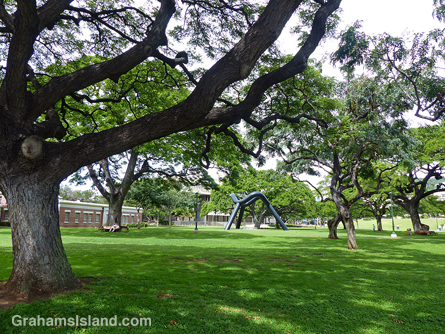
The Sky Gate sculpture was built to celebrate the celestial event known as “Lahaina Noon,” which is when the sun is directly overhead and vertical objects cast no shadow. This occurs twice a year in Hawaii, usually in May and July. In the case of this sculpture, the wavy top casts a perfectly round shadow on the ground.
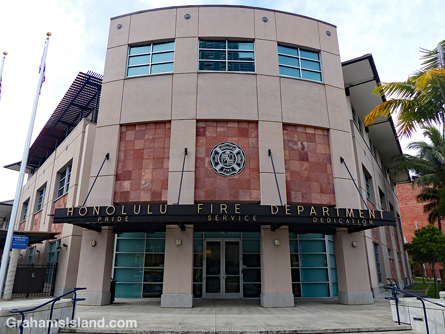
The art deco entrance to the Honolulu Fire Department headquarters complex.
These water fountains at the Hawaii State Capitol building are shaped like hibiscus blooms, which are the state flower.
Two contrasting tower buildings with a plane flying overhead.
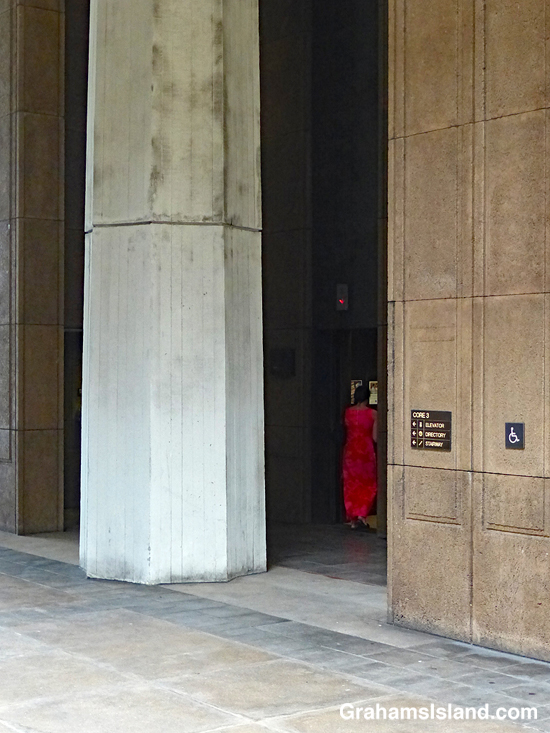
A woman in red enters an elevator at the Hawaii State Capitol building.
Little Bo Peep has sheered her sheep apparently.
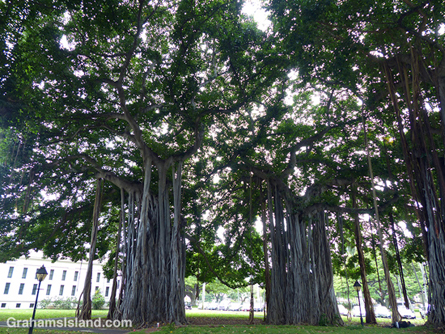
Huge banyan trees in the grounds of ‘Iolani Palace.
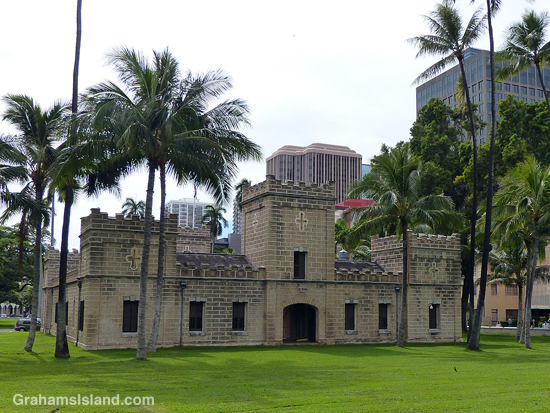
‘Iolani Barracks housed the Royal Household Guard.
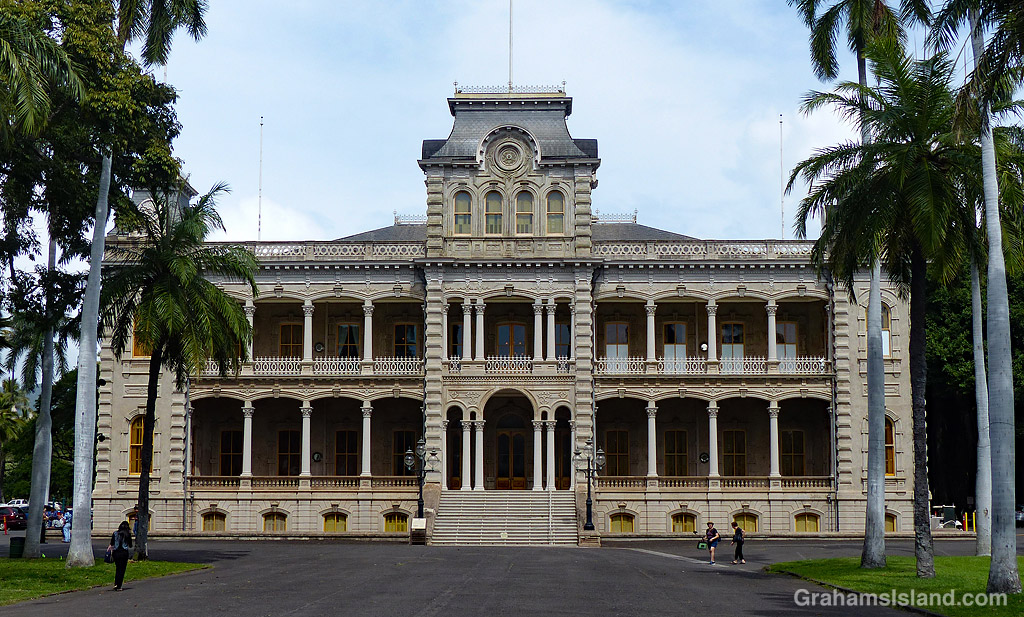
‘Iolani Palace was the home of Hawaiian royalty until they were overthrown by American businessmen backed by the U.S. military.
This was something of a mixed blessing for the locals.

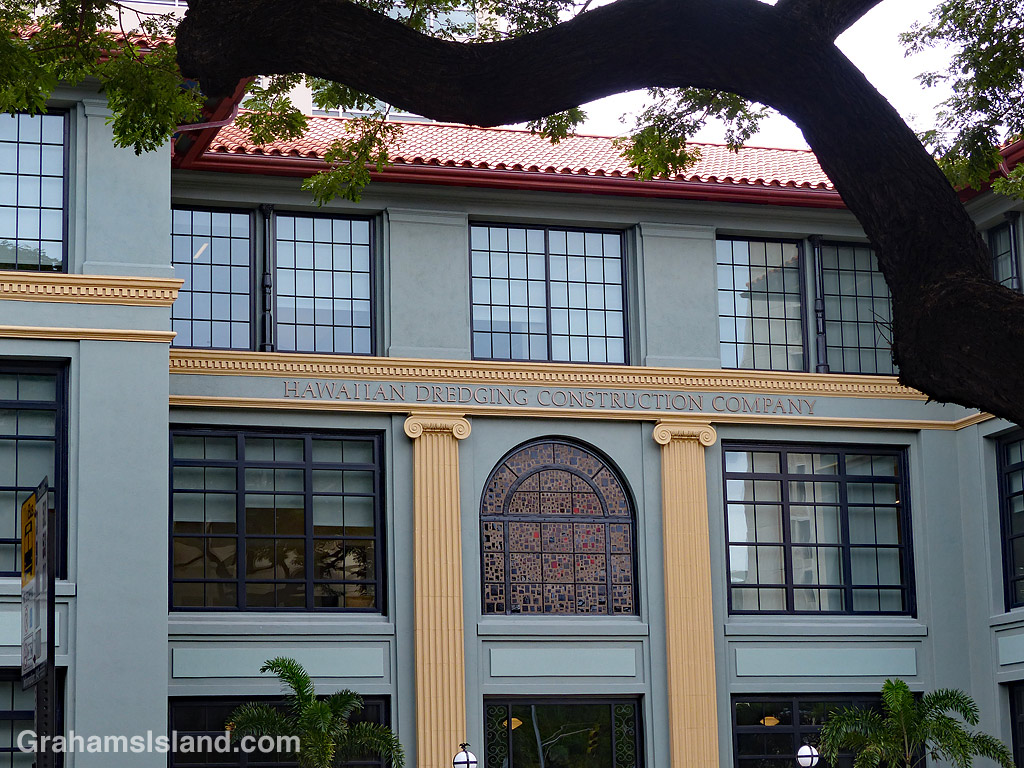
Hawaiian Dredging Building, Honolulu

hawaiian dredging building honolulu

hawaiian dredging building honolulu windowThis week’s Sunday Stills challenge theme is ‘Window.’ (See more responses here.) I thought I’d post some photos from my trip to Honolulu last year since the city is full of interesting buildings and is window rich.

This one is the Hawaiian Dredging Building. It was built in 1929 for the Pacific Commercial Advertiser, which later became The Honolulu Advertiser. That newspaper ceased publication on June 6, 2010 when it was merged with The Honolulu Star-Bulletin and became The Honolulu Star-Advertiser. For most of its history the building was known as the News Building or the Advertiser Building.

The Hawaiian Dredging Construction Co. purchased the building in 2016 and, following an extensive renovation, made it the company’s headquarters and renamed it the Hawaiian Dredging Building. The distinctive mosaic window above the entrance is a notable feature of the building.

hawaiian dredging building honolulu front

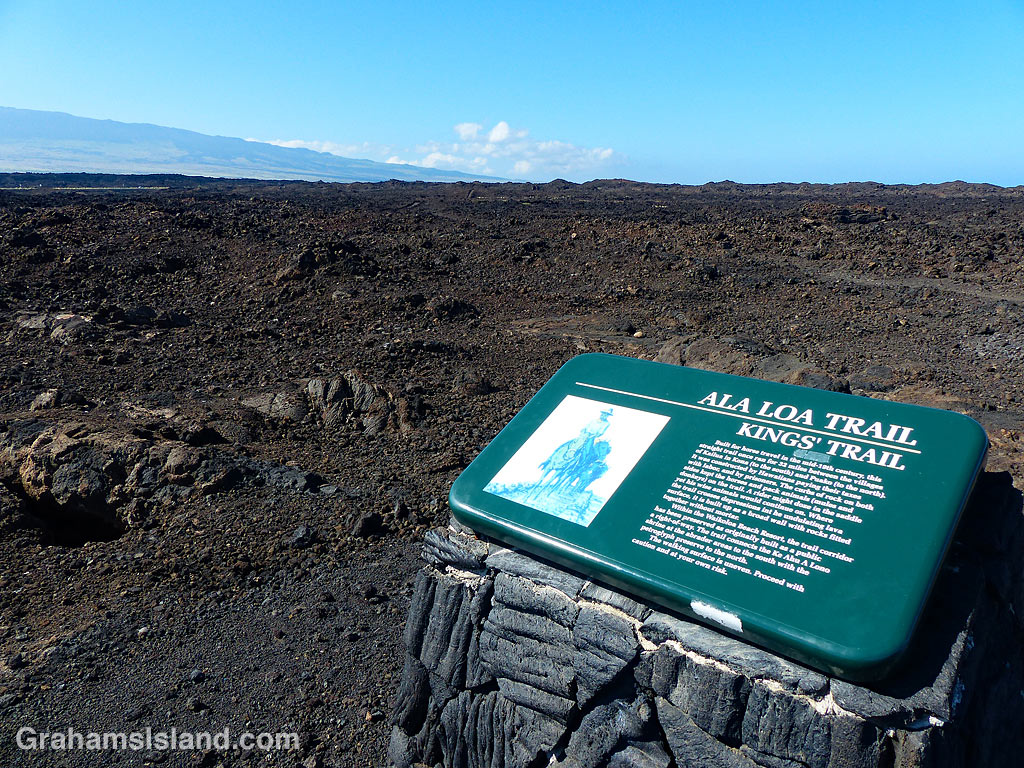
Kings’ Trail

kings trail ala loa

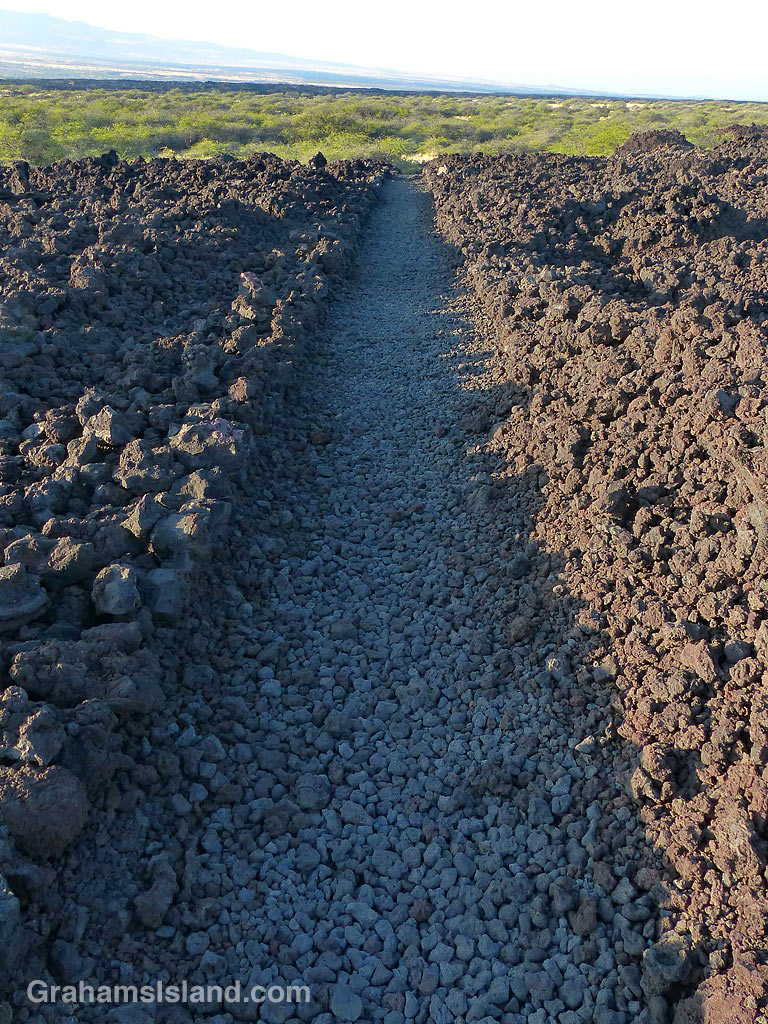
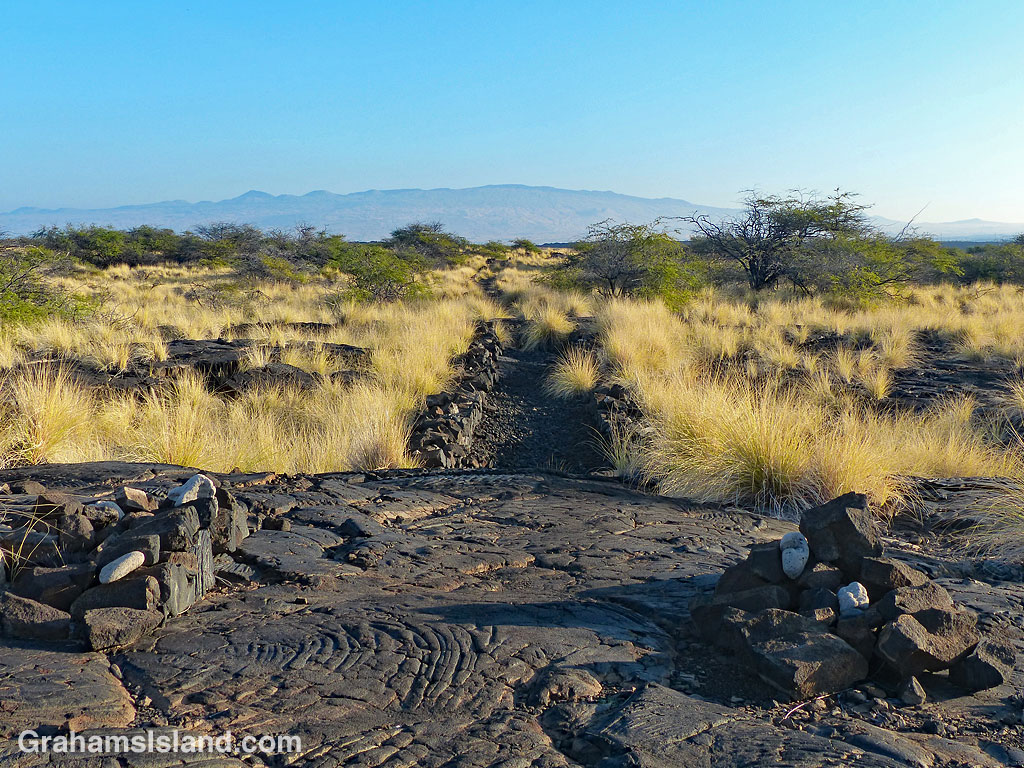
kings trail straightThe Kings’ Trail, is more properly known as the Ala Kahakai Trail (shoreline trail) or the Ala Loa Trail (long trail). The trail was created in the 1800s and stretched 175 miles from Upolu, at the northern tip of the island, down the west coast and up the south coast, to Kalapana in the southeast corner.

It passed through 220 ahupuaʽa, which were land divisions stretching from the ocean to the mountains. This meant that each ahupuaʽa contained the necessary resources to sustain its inhabitants.

These days, some sections of the trail are open for hiking, but others cross private land. The goal is to reopen as much of the trail as possible to public use. These photos are of parts of the trail passing down the Kohala coast. In many places the trail is ramrod straight to make passage easier, though the surface is often uneven.

Posted in response to this week’s Friendly Friday challenge on the theme of ‘Pathways.’ See more responses here.

kings trail

Hawi

Downtown Hawi

Hawi shopsHawi is the northernmost town on the Big Island. Together with Kapa’au, two miles to the east, it’s the main population center in North Kohala. This area was a center of sugar production from the mid 1800s to the early 1900s. Today, it’s geared towards tourism and agriculture.

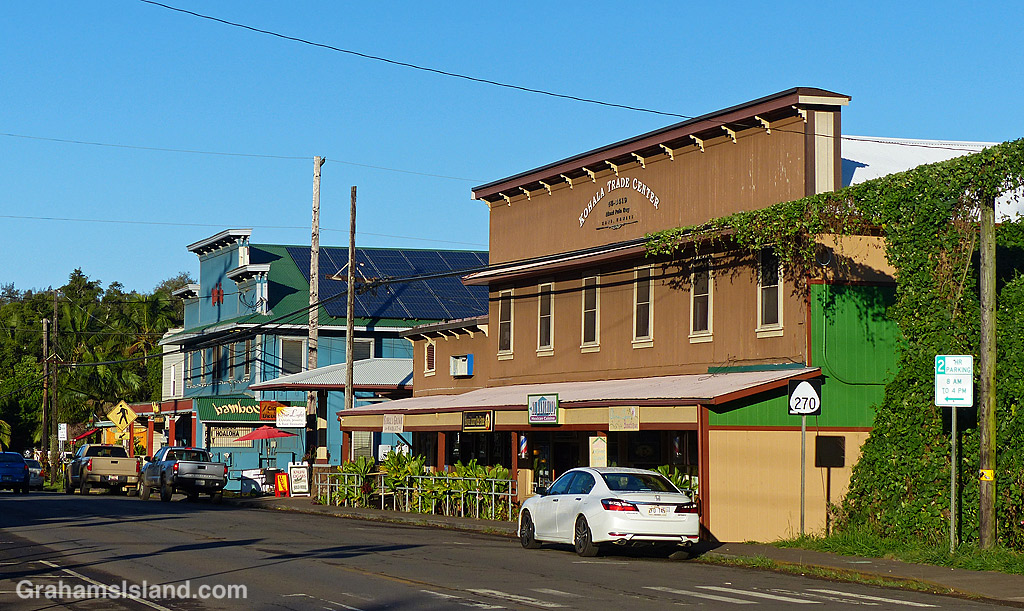
Hawi’s population of around 1,000 is mostly located in areas above or below Akoni Pule Highway, which is the main road through town. The highway itself is where commercial activities are found, as seen in these photos.

In the top photo, the blue building houses the Bamboo Restaurant. This was the former home of K. Takata Store, the area’s main grocery store, which now occupies a newer building midway between Hawi and Kapaau. On the right of this photo is a vine climbing up a pole and along the power lines. I’m not sure what this vine is, but it’s everywhere, and periodically workers from the power or phone company pass through and hack at the lower reaches of it, killing off the higher parts engulfing the wires – at least until it (very quickly) grows back.

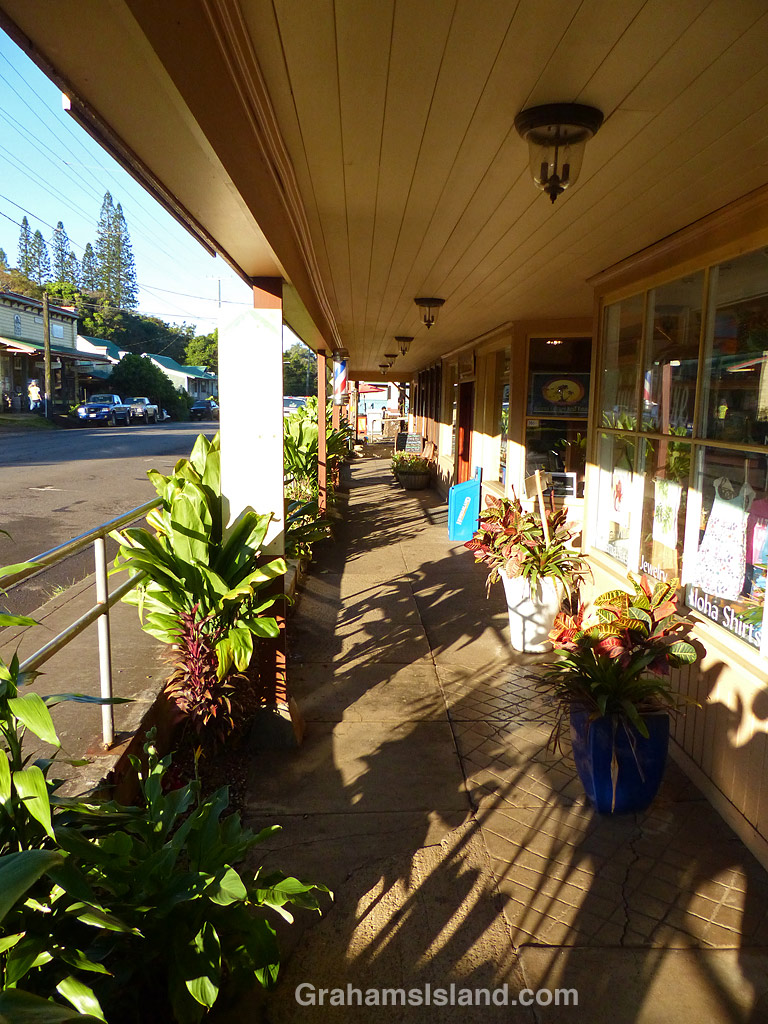
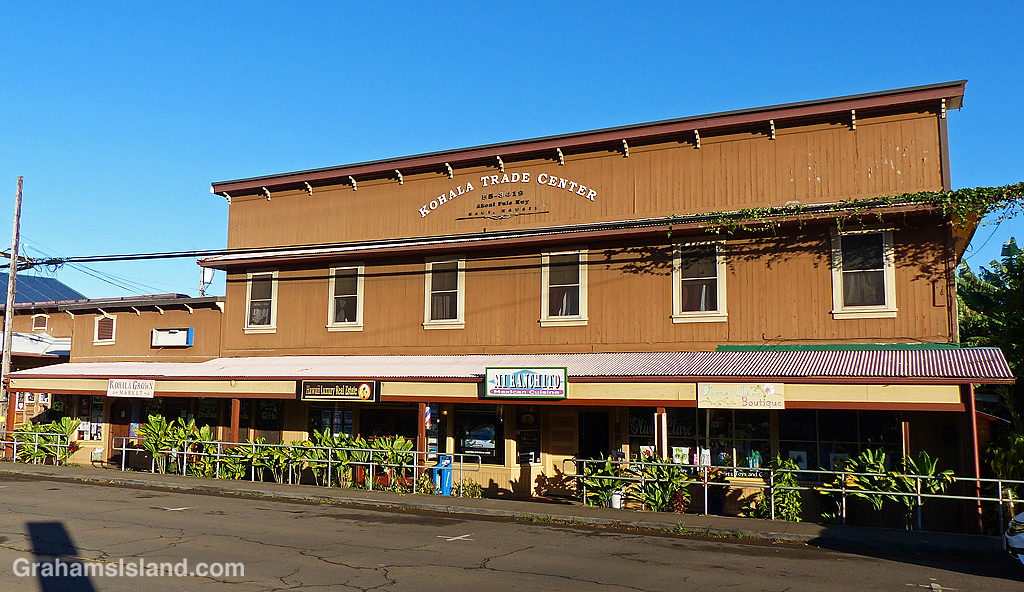
The Kohala Trade Center building is home to several smaller businesses and features the covered walkway at right which passes by the storefronts lining the street, but slightly below street level.

For its size, Hawi is quite a bustling place, popular with tourists and with a strong local community. But it’s also the kind of place where a person can ride a horse through town and not be considered unusual or out of place, and I like that quite a bit.

Posted in response to this week’s Sunday Stills challenge on the theme of ‘In Your Town.’ See more responses here.

Kohala Trade Center Hawi

Place of Refuge pond

Place of Refuge pool

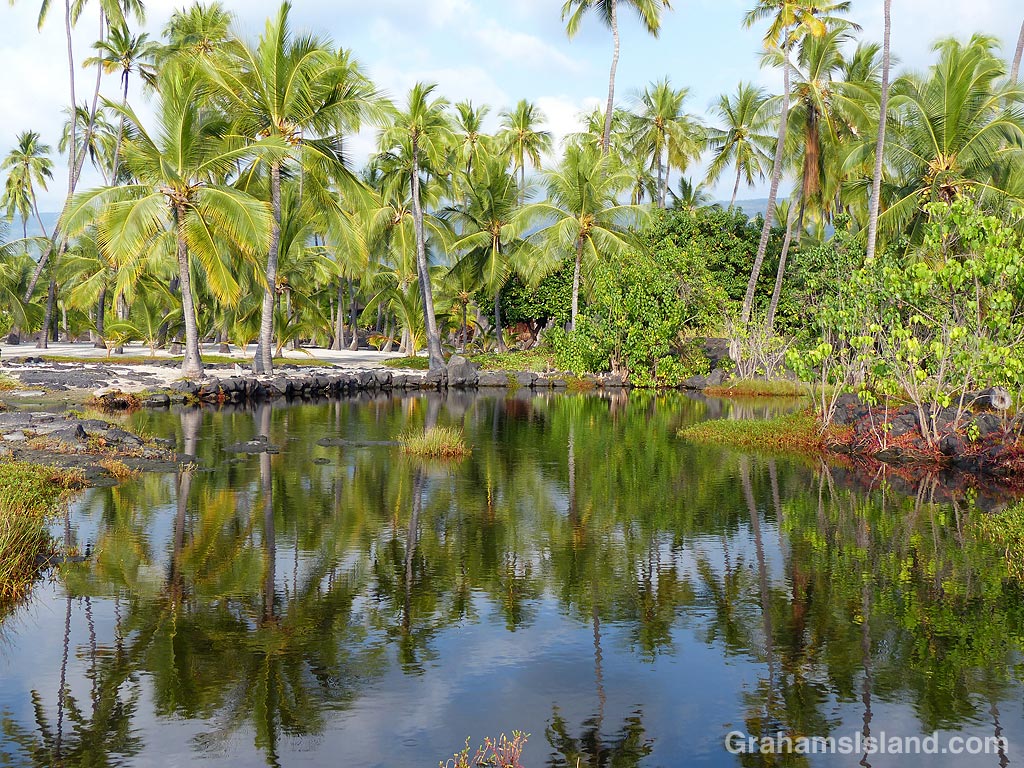
Palm trees are reflected in still waters at Pu’uhonua o Hōnaunau National Historical Park, otherwise known as Place of Refuge. This is one of the royal fish ponds, an anchialine pool in which fish were held for consumption by Hawaiian royalty.

For more information about Pu’uhonua o Hōnaunau National Historical Park, visit https://www.nps.gov/puho/index.htm.

Waipi’o Valley

Waipio Valley

Waipio Hi'ilawe FallsThis week’s Sunday Stills challenge theme is ‘Bucket List Images.’ (See more responses here.) Since I don’t have a bucket list that posed something of a problem for me, so I plumped for this image of Waipi’o Valley, since I might never see this view again.

Waipi’o is a valley on the northeastern slopes of Kohala Mountain. The valley is about one mile wide at the mouth and about six miles deep with walls that are around 2,000 feet high. It’s accessed by a steep, one-lane road that’s for four-wheel-drive vehicles only. On the left of the top photo, and in the second photo, is Hi’ilawe Falls which tumbles almost 1,500 feet into the valley.

Waipi’o means ‘curved water’ in Hawaiian and the valley is known as the “Valley of Kings.” It was the home of Hawaiian royalty until the 15th century and was a stronghold of King Kamehameha, who united the Hawaiian islands under one leader. In its heyday, the valley was home to somewhere between 4,000 and 10,000 people.

Those numbers dropped over time, but the valley remained well-populated until 1946 when a magnitude 8.6 earthquake in the Aleutian Islands triggered a massive Pacific-wide tsunami with waves ranging from 45–130 ft. high. Waipi’o Valley was hit by this tsunami, and though no-one was killed, most of the structures in the valley were destroyed. Today, the population is around 50 residents, though many more visit on a daily basis.