Category Archives: Hawaiian History

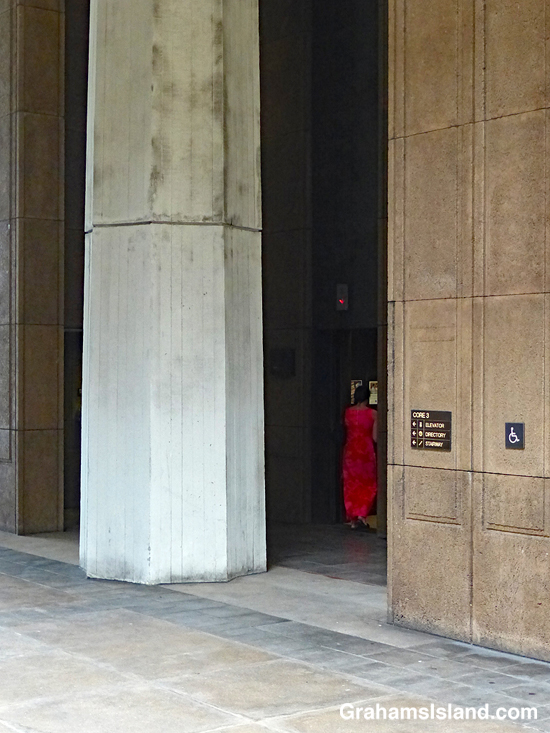
Hawaiian Dredging Building, Honolulu

hawaiian dredging building honolulu

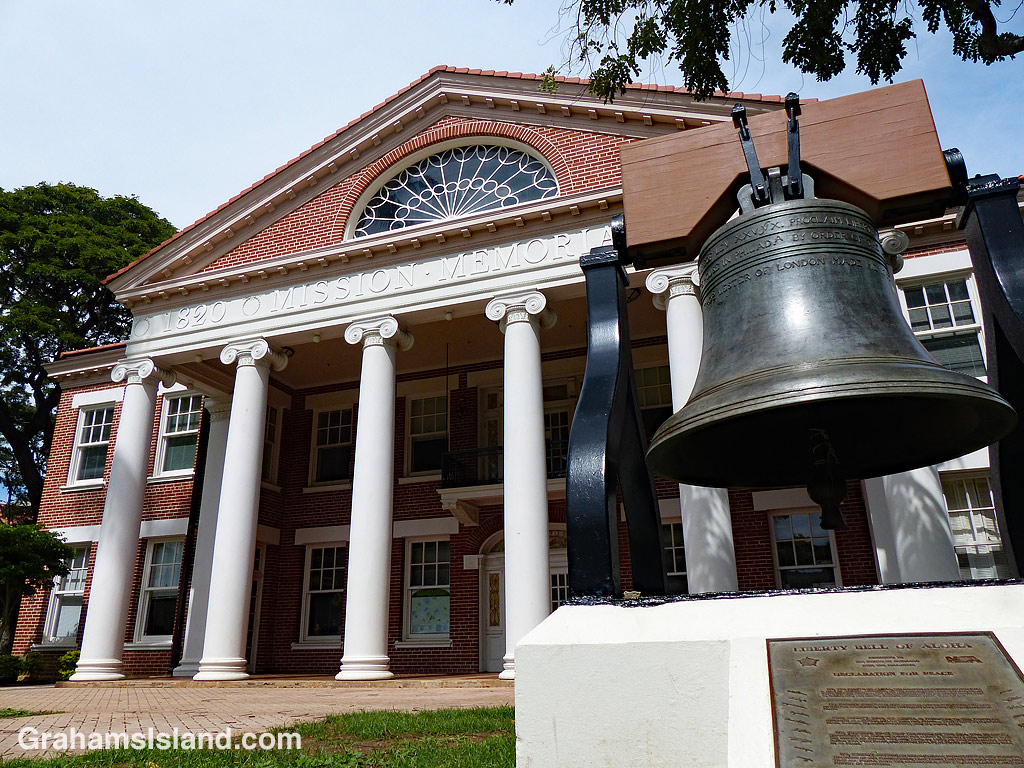
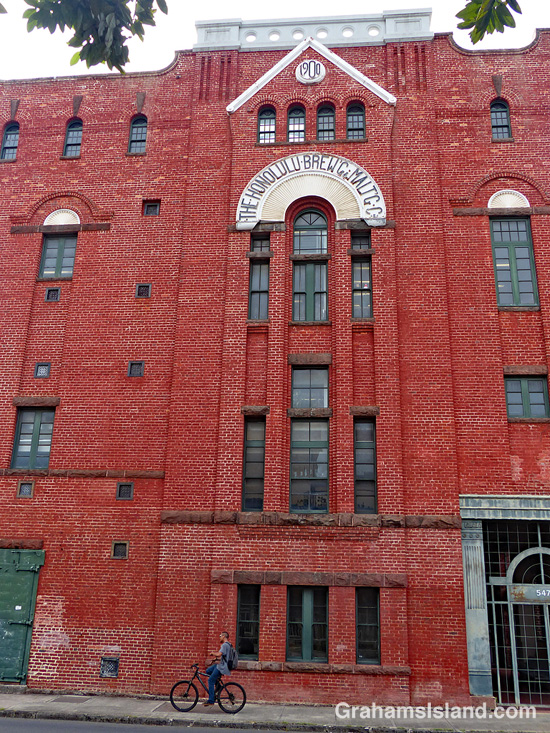
hawaiian dredging building honolulu windowThis week’s Sunday Stills challenge theme is ‘Window.’ (See more responses here.) I thought I’d post some photos from my trip to Honolulu last year since the city is full of interesting buildings and is window rich.
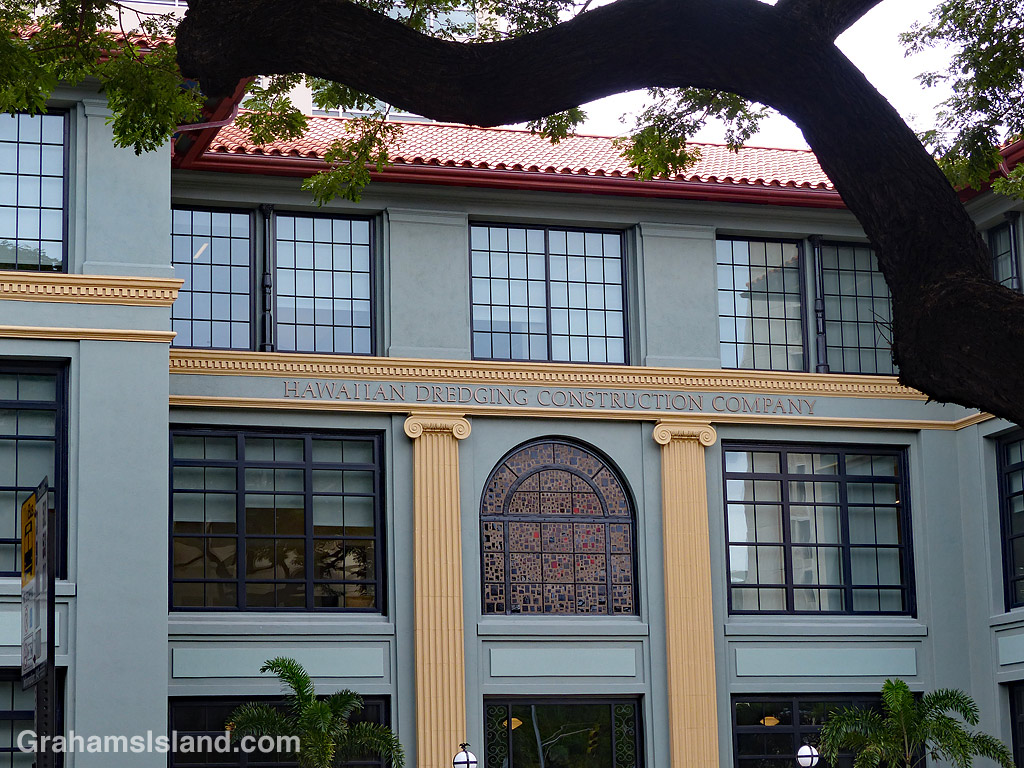
This one is the Hawaiian Dredging Building. It was built in 1929 for the Pacific Commercial Advertiser, which later became The Honolulu Advertiser. That newspaper ceased publication on June 6, 2010 when it was merged with The Honolulu Star-Bulletin and became The Honolulu Star-Advertiser. For most of its history the building was known as the News Building or the Advertiser Building.

The Hawaiian Dredging Construction Co. purchased the building in 2016 and, following an extensive renovation, made it the company’s headquarters and renamed it the Hawaiian Dredging Building. The distinctive mosaic window above the entrance is a notable feature of the building.

hawaiian dredging building honolulu front

Kings’ Trail

kings trail ala loa

kings trail straightThe Kings’ Trail, is more properly known as the Ala Kahakai Trail (shoreline trail) or the Ala Loa Trail (long trail). The trail was created in the 1800s and stretched 175 miles from Upolu, at the northern tip of the island, down the west coast and up the south coast, to Kalapana in the southeast corner.

It passed through 220 ahupuaʽa, which were land divisions stretching from the ocean to the mountains. This meant that each ahupuaʽa contained the necessary resources to sustain its inhabitants.

These days, some sections of the trail are open for hiking, but others cross private land. The goal is to reopen as much of the trail as possible to public use. These photos are of parts of the trail passing down the Kohala coast. In many places the trail is ramrod straight to make passage easier, though the surface is often uneven.

Posted in response to this week’s Friendly Friday challenge on the theme of ‘Pathways.’ See more responses here.

kings trail

Hawi

Downtown Hawi

Hawi shopsHawi is the northernmost town on the Big Island. Together with Kapa’au, two miles to the east, it’s the main population center in North Kohala. This area was a center of sugar production from the mid 1800s to the early 1900s. Today, it’s geared towards tourism and agriculture.

Hawi’s population of around 1,000 is mostly located in areas above or below Akoni Pule Highway, which is the main road through town. The highway itself is where commercial activities are found, as seen in these photos.

In the top photo, the blue building houses the Bamboo Restaurant. This was the former home of K. Takata Store, the area’s main grocery store, which now occupies a newer building midway between Hawi and Kapaau. On the right of this photo is a vine climbing up a pole and along the power lines. I’m not sure what this vine is, but it’s everywhere, and periodically workers from the power or phone company pass through and hack at the lower reaches of it, killing off the higher parts engulfing the wires – at least until it (very quickly) grows back.

The Kohala Trade Center building is home to several smaller businesses and features the covered walkway at right which passes by the storefronts lining the street, but slightly below street level.

For its size, Hawi is quite a bustling place, popular with tourists and with a strong local community. But it’s also the kind of place where a person can ride a horse through town and not be considered unusual or out of place, and I like that quite a bit.

Posted in response to this week’s Sunday Stills challenge on the theme of ‘In Your Town.’ See more responses here.

Kohala Trade Center Hawi

Place of Refuge pond

Place of Refuge pool

Palm trees are reflected in still waters at Pu’uhonua o Hōnaunau National Historical Park, otherwise known as Place of Refuge. This is one of the royal fish ponds, an anchialine pool in which fish were held for consumption by Hawaiian royalty.

For more information about Pu’uhonua o Hōnaunau National Historical Park, visit https://www.nps.gov/puho/index.htm.

Waipi’o Valley

Waipio Valley

Waipio Hi'ilawe FallsThis week’s Sunday Stills challenge theme is ‘Bucket List Images.’ (See more responses here.) Since I don’t have a bucket list that posed something of a problem for me, so I plumped for this image of Waipi’o Valley, since I might never see this view again.

Waipi’o is a valley on the northeastern slopes of Kohala Mountain. The valley is about one mile wide at the mouth and about six miles deep with walls that are around 2,000 feet high. It’s accessed by a steep, one-lane road that’s for four-wheel-drive vehicles only. On the left of the top photo, and in the second photo, is Hi’ilawe Falls which tumbles almost 1,500 feet into the valley.

Waipi’o means ‘curved water’ in Hawaiian and the valley is known as the “Valley of Kings.” It was the home of Hawaiian royalty until the 15th century and was a stronghold of King Kamehameha, who united the Hawaiian islands under one leader. In its heyday, the valley was home to somewhere between 4,000 and 10,000 people.

Those numbers dropped over time, but the valley remained well-populated until 1946 when a magnitude 8.6 earthquake in the Aleutian Islands triggered a massive Pacific-wide tsunami with waves ranging from 45–130 ft. high. Waipi’o Valley was hit by this tsunami, and though no-one was killed, most of the structures in the valley were destroyed. Today, the population is around 50 residents, though many more visit on a daily basis.

Pu’u O’o vent

Pu'u O'o vent

Pu'u O'o vent and steamPu'u O'o vent from aboveThis week’s Sunday Stills challenge theme is ‘Time.’ (See more responses here.) I had a couple of thoughts about this. The first is that the state of Hawaii is a kind of geologic timepiece. The Hawaiian islands exist because a magma source known as the Hawaii hotspot generates volcanic activity. This creates underwater seamounts that eventually break the surface to form new islands. Such a process is currently taking place with Lōʻihi Seamount, off the southeast coast of the Big Island. It’s about 3,000 feet below the surface but, if it continues its present activity, it will rise above sea level in another 10,000 to 100,000 years.

But if Hawaii is on a volcanic hotspot, why doesn’t it produce one volcano that just gets bigger and bigger? Well, the tectonic plate on which Hawaii sits is in constant motion to the northwest. So the volcanic activity generates an island, but as the plate moves, that island edges away from its creative source and the volcanic activity ceases. What happens then is that the winds and waves begin a long process of erosion until that island is reduced to an atoll and finally disappears below the ocean’s surface. We’re not talking months here. We’re talking millions of years for this process to take place.

Look at a map and you’ll see this chain of Hawaiian Islands stretching away to the northwest, the islands or atolls becoming progressively smaller until they disappear and return to being below-surface seamounts. And while I say this is a slow process, it can also be speedy. In October of this year, Hurricane Walaka ripped through the French Frigate Shoals, part of the northwest Hawaiian chain. Its passage completely removed the second largest island in the group, East Island, from the map. Researchers had been working there before the hurricane struck. After its passage, it was gone (more info here).

So Hawaii is an example of the geologic passage of time. But there’s another aspect of our view of time that is illustrated here. The photos are of Kilauea’s Pu’u O’o vent. Kilauea is one of the planet’s most active volcanoes and the Pu’u O’o vent had been more-or-less continuously active since 1983. Then, in May of this year, the activity in this vent, and in the summit vent at Halema’uma’u Crater, ceased. The magma drained from these places and traveled down the east rift zone of the volcano before emerging in a residential subdivision, Leilani Estates, in the southeast corner of the island. This new eruption produced a lava flow that reached the ocean, destroying more than 700 structures en route, but adding hundreds of acres to the Big Island coastline.

What’s the time aspect of this? Well, it’s part of the geologic time process noted above. But there’s another way of looking at it. Kilauea has been erupting so long and so regularly that it’s been a little bit taken for granted. “Oh, lava’s flowing into the ocean? You know, I’m really busy right now. I’ll catch it later.” “The summit vent is spilling onto Halema’uma’u Crater’s floor? I’ll check that out next time I’m down that way.”

I consider myself fortunate that I got to see the firehose of lava entering the sea after a cliff collapse (here). Next day, following another cliff collapse, it was no longer visible. And in April of this year I went down to see the summit lava lake (here) bubbling up to the crater floor and visible from Jagger Museum. Two weeks later, the level had dropped a thousand feet. It continued to fall.

I might never see these things again in my lifetime, but at the time, there seemed to be lots of time to visit. But even events happening in a long, geologic timeframe might occur in the space of a week, a day, even an hour. It’s a reminder to me that each moment is something fleeting, perhaps something special, something to pay attention to.

These photos are of Pu’u O’o vent in late September of this year. No lava is visible in the vent, but it’s still hot enough that rainfall generates steam, which is what’s visible here. It was quite dramatic to pass over this vent, which for 35 years has pumped lava out onto the surrounding landscape.

Pu'u O'o vent steam

Better Days: Wrecked bomber

Better-Days-Wrecked Bomber in trees

Better-Days-Wrecked Bomber in ravineOn the evening of Tuesday, February 25, 1941 this twin-engined B-18 bomber was part of a group of four aircraft on a night training mission. They had started out from Hickam Field on Oahu. Not far from Hilo the plane lost its port engine when a bearing failed. The pilot decided to try and reach Suiter Field (now known as Upolu Airport) at the island’s northern tip. It was not to be. Flying on only one engine, the plane lost altitude. The crew thought they were over the sea, but suddenly a mountain appeared in front of them. The pilot yanked on the flight yoke wheel and the plane stalled and flopped into the trees around 10 p.m.. Incredibly only one crewman was slightly injured.

Search aircraft from Hickam Field found the plane the next morning around 9 a.m.. The nose of the plane was hanging over a 75-foot deep ravine about 3,500 feet up on the northern side of Kohala Mountain. It was one of the most inaccessible places on the island. A rescue operation was started, but it was Thursday noon before it reached the crew.

Over the years, the aircraft has slid into the ravine which is where it rests today. As these photos show, the plane’s condition has deteriorated and it is increasingly being engulfed by trees. But it is still quite easily spotted from the air. On the ground, it remains one of the most inaccessible spots on the island.

It’s also worth noting that just nine months after this crash, almost all the B-18 bombers based at Hickam Field were destroyed on the ground during the attack on Pearl Harbor. 77 years on, this B-18, in its remote resting place, is one of only a handful remaining in existence.

For more information about this aircraft and the crash, search online for Big Island Bomber – hiavps.com or go to pacificwrecks.com/aircraft/b-18/36-446.html.

Better-Days-Wrecked Bomber

Place of Refuge from the water

Place of Refuge from the water

This is a view of Pu’uhonua o Hōnaunau National Historical Park, otherwise known as Place of Refuge. The pu’uhonua or place of refuge was a place that offered sanctuary to those who had broken laws or been defeated in battle. Reaching this spot meant they’d be spared and allowed to go home.

So this view is one that a young frightened warrior might see while trying to reach that spot. Hale o Keawe, the small structure with the steeply pitched roof, can be seen in the center of the photo. It sits on the edge of the pu’uhonua. To the right of it is safety; to the left death.

Fortunately that wasn’t my choice. I was just looking at fish.