In May of 1969, a series of earthquakes opened a large fissure alongside Chain of Craters Road in Hawaii Volcanoes National Park. This was the beginning of what is known as the Mauna Ulu eruption. For five years, lava poured forth in a series of eruptions. Chain of Craters Road, completed only a few years earlier, was buried for several miles. Landmarks along the road were destroyed or irrevocably altered. A swathe of forest disappeared in flame.
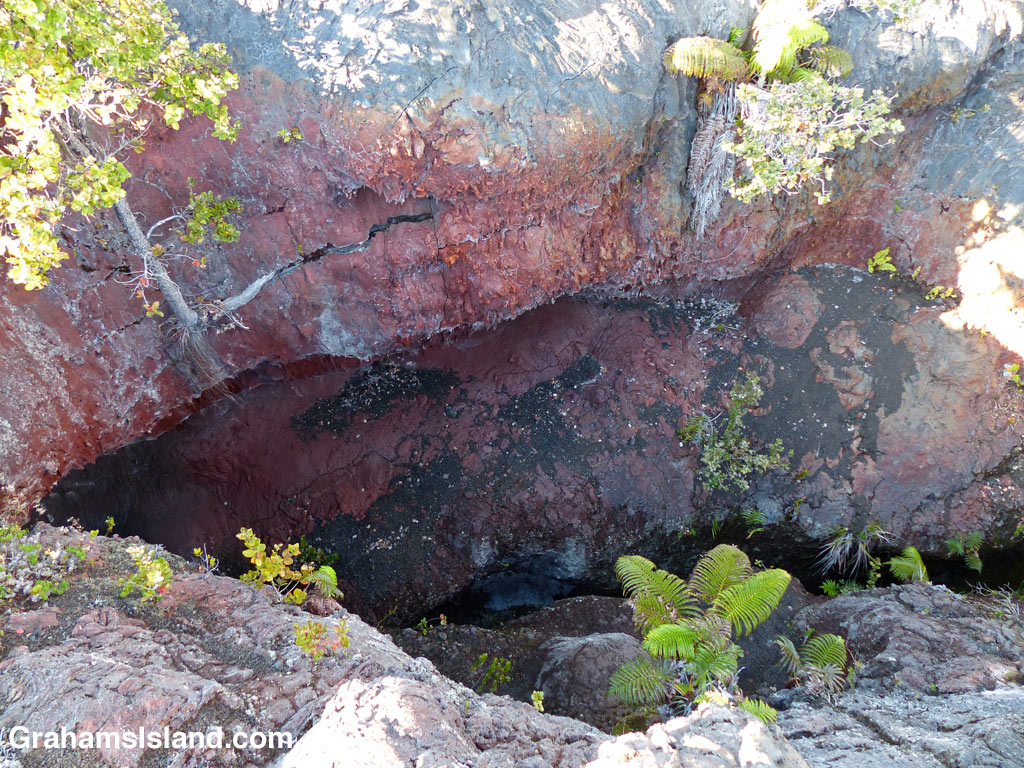
When the eruptions finally ceased, life soon began to reappear on the barren lava landscape. In this photo, vegetation has reclaimed a section of the original 1969 fissure. Roots are anchored in cool, moist cracks in the lava. The tree on the left is particularly striking. Having started out in a crack on a vertical face, it has reached up to the light and is going strong. I like to think it shows how resilient nature can be.
Ohia trees on the surface send roots down into lava tubes. These roots take in water from the tube’s cool, moist air. In return they offer one of the few sources of organic material and are home to a kind of cricket.
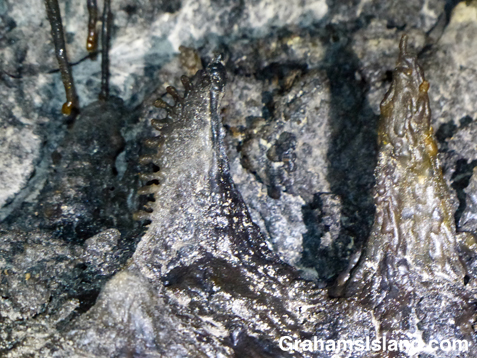
A puapo’o (literally ‘flower head’) lava formation. There’s still uncertainty about how these are formed. To the left are lava-sicles, the lava tube equivalent of stalactites.
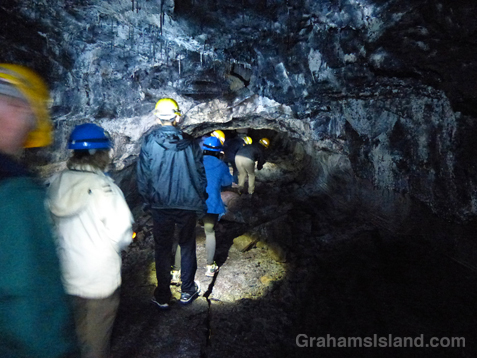
Mind your head. There’s a 25-foot-long low section.
As part of the National Park Service centennial celebration, Hawaii Volcanoes National Park has been offering a guided tour of Puapo’o lava tube. This tour has been offered in the past, but not for several years.
Puapo’o is a pristine lava tube meaning that its rock formations are intact and life in the tube is largely undisturbed. Contrast this with the park’s popular Thurston lava tube, where all the finer lava details have long since been broken off by visitors.
There’s a hike to the tube, which is deep within a forest rich in tree ferns.
The tube entrance is accessed by a ladder and then it’s on into the dark. Whereas Thurston lava tube is well lit and has a mostly flat floor for easy walking, Puapo’o, which is about a mile long, was lit only by our headlamps and rocks littered the tube floor. It’s not a tour for the claustrophobic or nervous.
The way out. Heading for the light.
Those rocks on the floor match recesses in the tube ceiling show where rock falls have happened. A month before, one of our rangers had been leading a tour when there was an earthquake, a common occurrence in the park. The group left the tube, but the next visit found a new rock fall.
We scrambled over rocks, and sat in the dark in a large, amphitheater-like part of the tube. As we progressed, the rangers pointed out different lava formations from lava-sicles to bathtub rings to puapo’os for which the tube is named. And even in this pitch dark place, there is life – moths, crickets, and spiders, one a huntsman and the other a tiny, near invisible thing that builds gossamer webs. Also, living on the tube walls, are unique microbial colonies, which are being studied for medical uses.
Eventually, we scrambled up a rocky slope and out through a narrow opening, back into the forest.
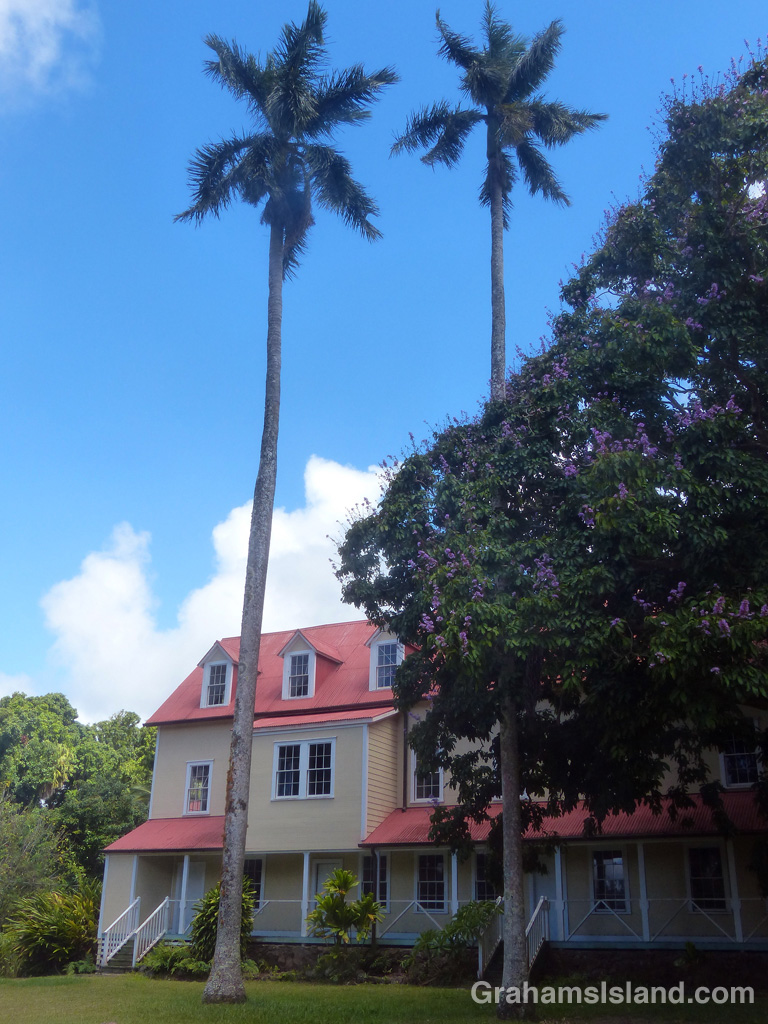
The Kohala Girls’ School was founded in 1874 by Ellen and Elias Bond, missionaries who came to the Big Island from Maine in 1840. It remained in operation until 1955. Since then the buildings saw only occasional use, but they are currently being renovated as part of the Grace Learning Center, an educational program of the Kohala Institute.
The land managed by the Kohala Institute is called ’Iole and is one of Big Island’s the last intact ahupua’a. An ahupua’a was a land division that stretched from the sea to the mountains, giving those who lived there access to everything they needed for self sufficiency.
This is the Hawaiian name for the wedgetail triggerfish or picasso triggerfish. It’s also the state fish of Hawaii.
Back in 1984, the legislature decided an official state fish was needed and public input was sought. Eight species made the shortlist to be voted on by the people. Not surprisingly, those of a serious bent thought one of Hawaii’s endemic species should get the nod and lobbied accordingly. But kids liked the humuhumu-nukunuku-ā-pua-a, which gets a line in the song ‘My little grass shack,’ and children’s hula groups, dancing to this song, won people over. It netted nearly twice as many votes as the runner up.
An attempt to ‘Boaty McBoatface’ the result failed and the humuhumu-nukunuku-ā-pua-a was ultimately confirmed as state fish.
In my attempts to identify what I see in the water, I use John P. Hoover’s book The Ultimate Guide to Hawaiian Reef Fishes, Sea Turtles, Dolphins, Whales, and Seals. His website is hawaiisfishes.com.
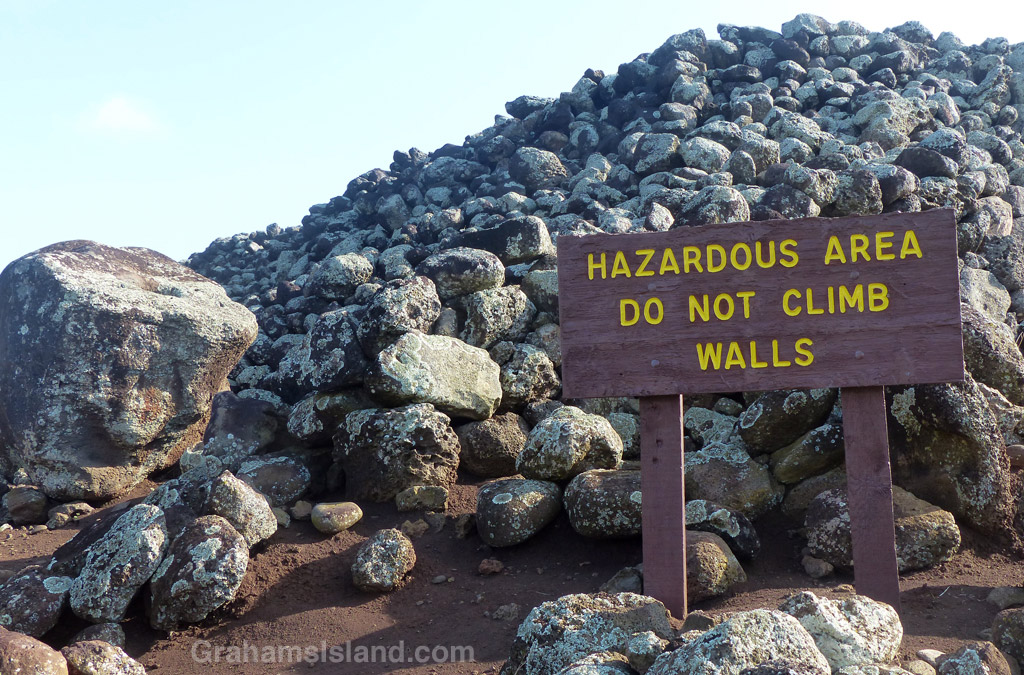
This sign greets visitors to Mo’okini heiau. The heiau dates back to the 11th or 12th Century when it was an important religious site where thousands of human sacrifices were carried out. A hazardous area indeed. I imagine there were many who would happily have risked climbing the walls in those days.
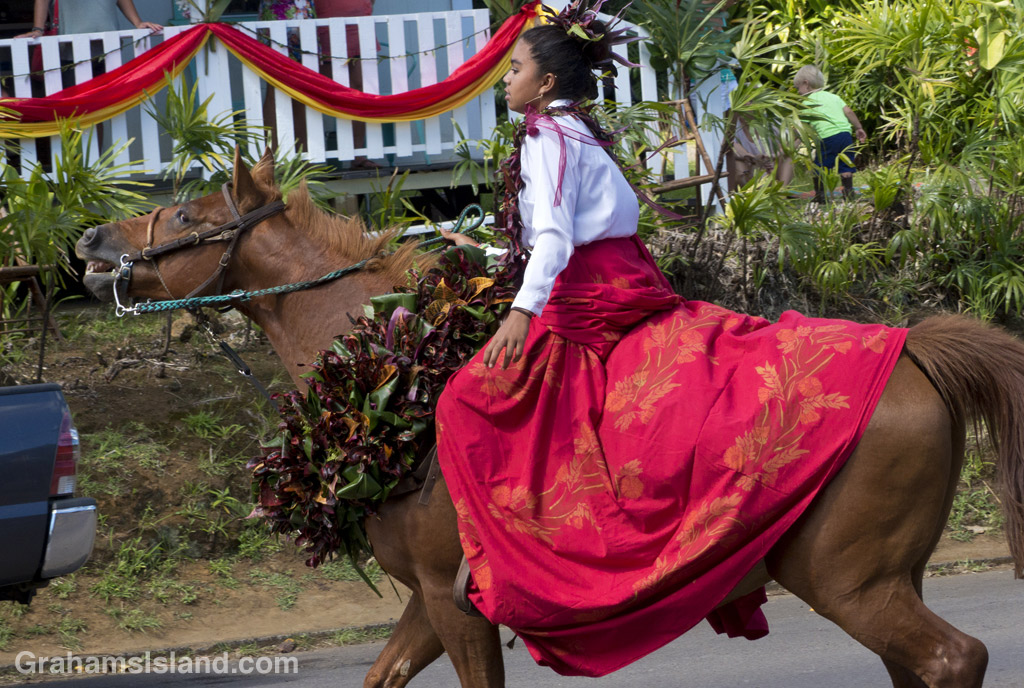
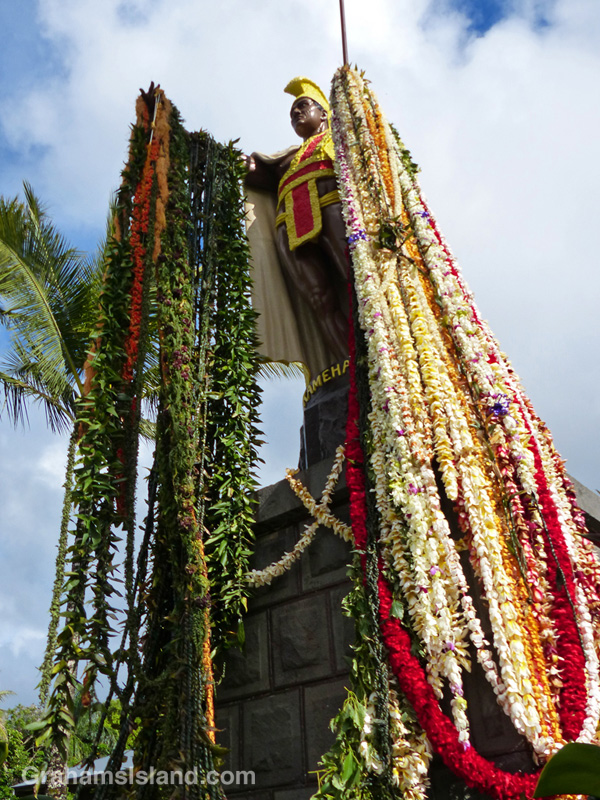
Yesterday was Kamehameha Day, celebrating Kamehameha 1, the king who first united the Hawaiian Islands under one leader. In North Kohala this involved a parade featuring representatives of all the islands and ceremonies during which the king’s statue in Kapaau is draped with leis.
The statue in Kapaau was commissioned in 1878 for display in Honolulu. But the ship transporting it from Europe caught fire and sank off of the Falkland Islands. A replacement statue was ordered, but before it was delivered, the original turned up. It had been salvaged and sold to a junk dealer in Port Stanley. There, it was recognized by a British ship’s captain who bought it and took it to Honolulu. The statue was in poor condition after its time in the sea and some rough treatment during its salvage and subsequent transport.
In the end, the Hawaiian government decided to erect the replacement statue in Honolulu since it was in better shape. The original was restored and sent to Kohala, which is where Kamehameha 1 was born. Unlike the statue in Honolulu, which features gold gilt, the Kohala statue is painted, a local preference which persists to this day.
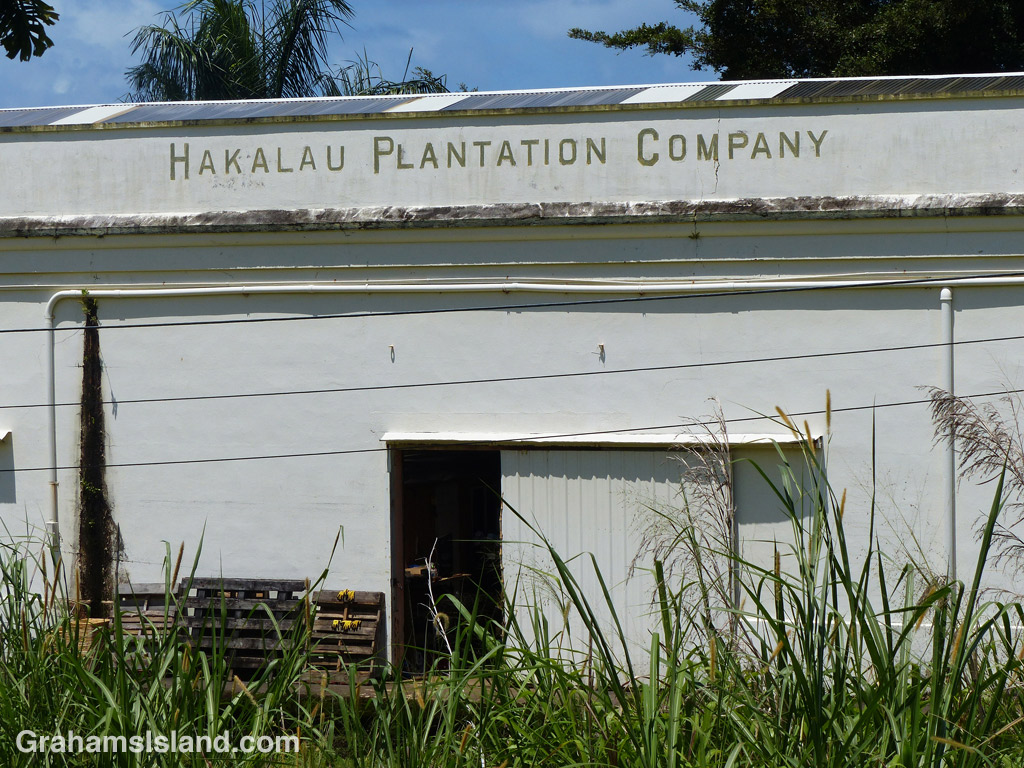
This is one of two remaining warehouses of the old Hakalau Plantation Company at Hakalau Point. This was one of several sugarcane plantations that dominated the Big Island. The sugar mill was located nearby, in the gulch at the mouth of the river. The mill was wiped out in a tsunami in 1946 and swiftly rebuilt in the exact same place!
The mill finally closed in 1974 and now the plantation company property is up for development. Hawaii County is mulling a proposal to buy this property and preserve the site. This process will likely go on for months, possibly years. At this stage, it could go either way. One thing is certain, similar situations will continue to crop up on the Big Island: there’s a lot of coastline and most of it is prime development real estate.
For more information about Hakalau and the Hakalau Plantation Company, go to hakalauhome.com.








 Graham's Island