
I enjoyed seeing this sign at Kaloko-Honokohau National Historical Park. I guess the storm was severe enough to knock the sign over.
For more information about Kaloko-Honokohau National Historical Park, go to nps.gov/kaho/index.htm.

I enjoyed seeing this sign at Kaloko-Honokohau National Historical Park. I guess the storm was severe enough to knock the sign over.
For more information about Kaloko-Honokohau National Historical Park, go to nps.gov/kaho/index.htm.
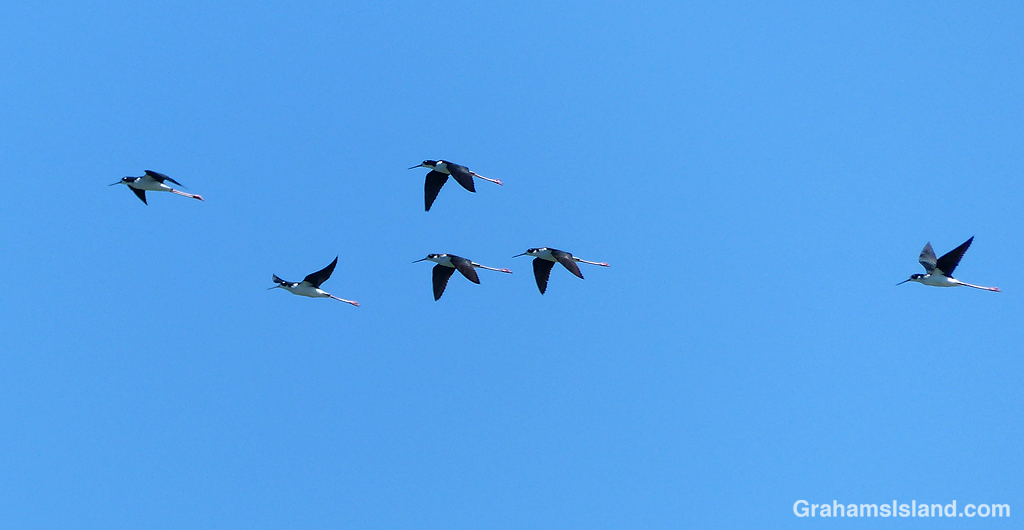
’Aimakapa Fishpond, in Kaloko-Honokohau National Historical Park, is a good place to see the endemic Hawaiian stilt. Mostly they’re seen wading in the shallows, probing the mud with their long beaks. On this day, however, they took to the air.
I enjoy taking photos of birds in flight, but it’s a challenge. Challenge number one is getting them in the frame. Then there’s the small matter of tracking them and getting settings right. I’m constantly experimenting with the best way to get the picture. Usually I find that by the time I’m organized they disappear behind some trees or settle down again on the flats.
This time the birds were unusually cooperative. They headed out over the water, circled back and returned from whence they came. And they did this more than once so I was able to get a bit of practice in.
I do like seeing birds shot, photographically speaking, against a clear blue sky, particularly the stilts with those long, pink legs. But I also like the context of the water and greenery surrounding the fishpond. I don’t know what the white birds are as this fleeting pass was as good a look as I got. They might be some kind of gull, though gulls aren’t especially common in Hawaii.
For more information about Kaloko-Honokohau National Historical Park, go to nps.gov/kaho/index.htm.

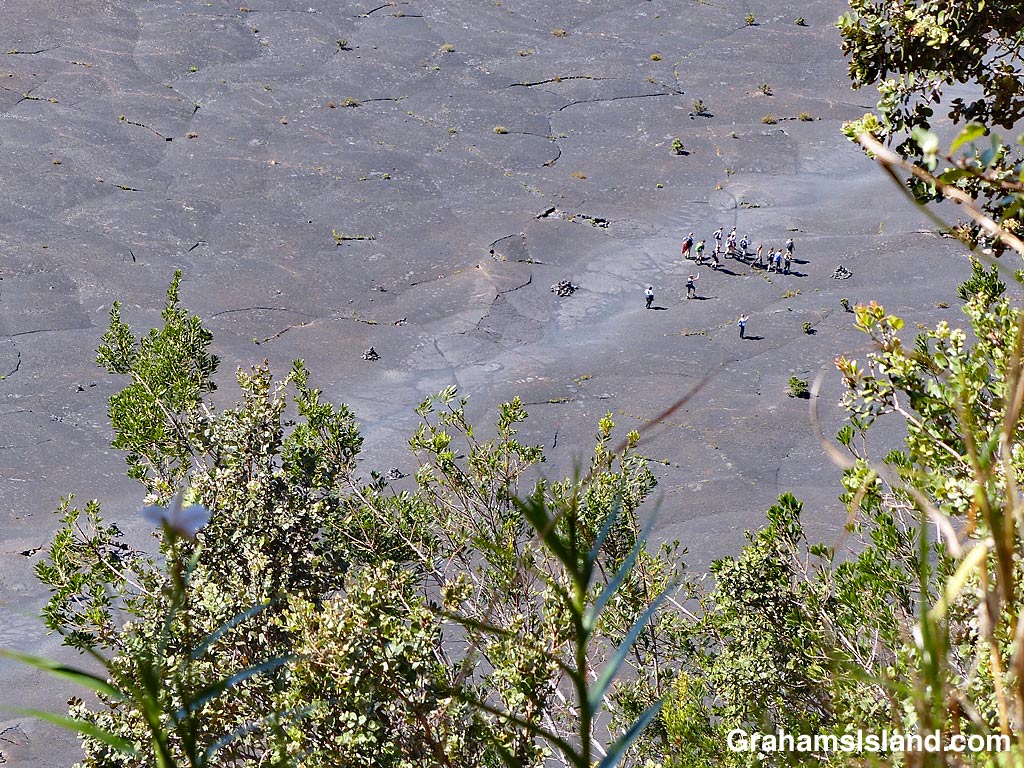

These views of the trail across Kilauea Iki Crater, taken from the rim of the crater, give some idea of the scale of Kilauea Volcano.
Above, a group of people, looking very small, walk the trail across the crater floor.
To the left, smoke and gases from the active vent in Halema’uma’u Crater can be seen. Halema’uma’u Crater is part of the Kilauea Caldera which is much, much bigger than Kilauea Iki Crater. And, yes, that same group is still visible on the trail in this second photo, along with several others hiking the trail.
For more information about Hawaii Volcanoes National Park, go to nps.gov/havo/. For more information about Kilauea Volcano and it’s eruptions, go to hvo.wr.usgs.gov/kilauea/history/main.html.
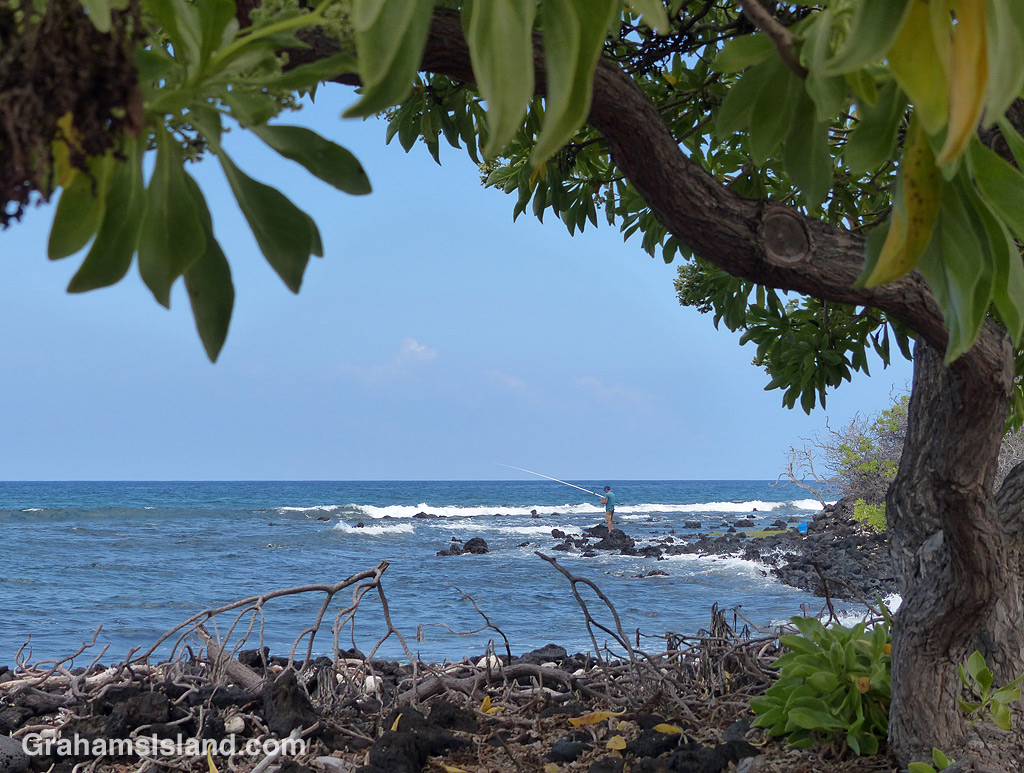
A man tries his luck fishing on the shore of Kaloko-Honokohau National Historical Park north of Kailua Kona.
For more information about Kaloko-Honokohau National Historical Park, go to www.nps.gov/kaho/index.htm.
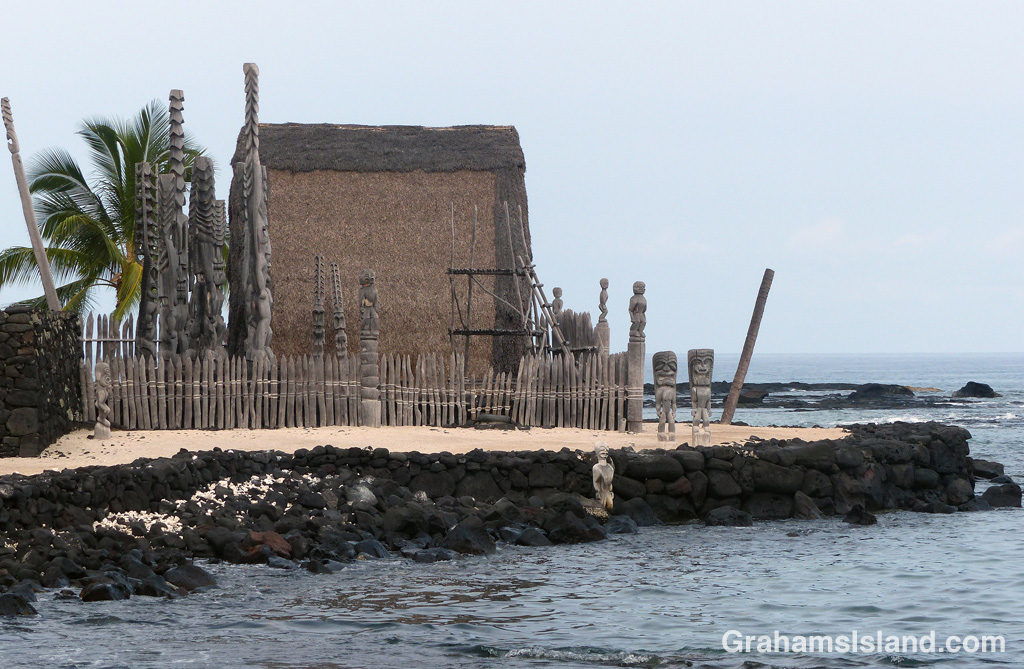
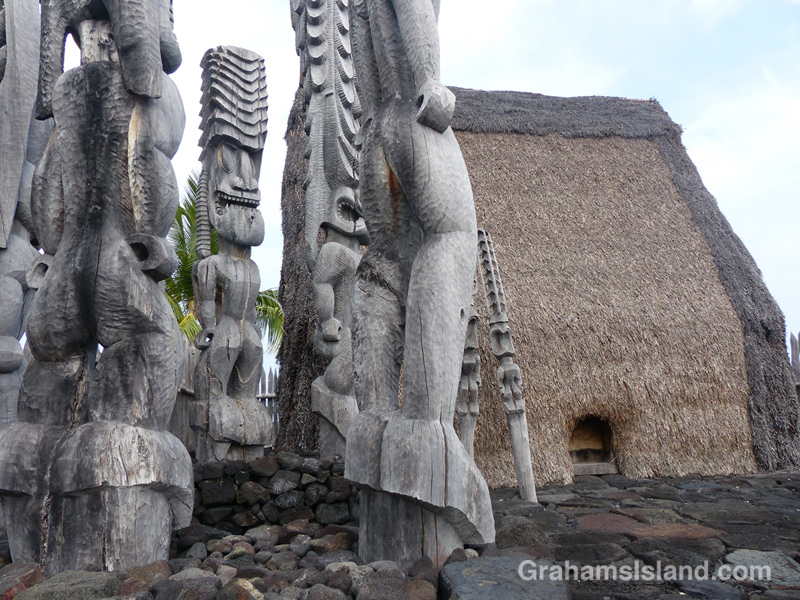
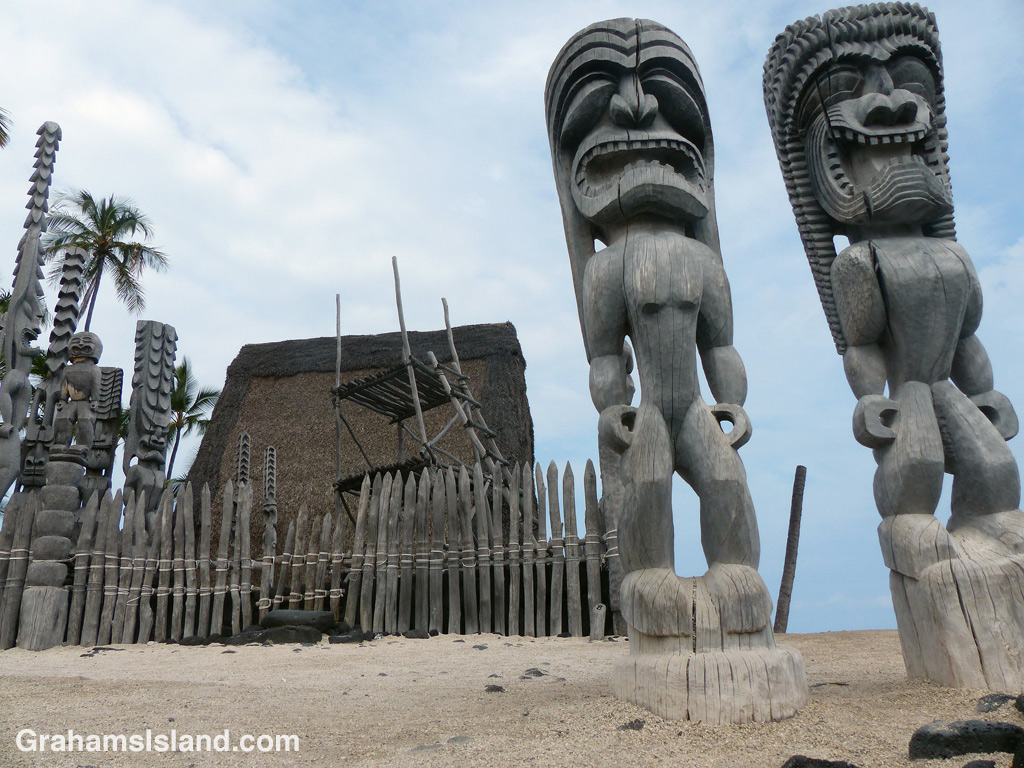
Pu’uhonua o Hōnaunau National Historical Park sits on the coast south of Kealakekua. It features a huge masonry wall that encloses the pu’uhonua or place of refuge. As the name indicates, this was a place that offered sanctuary to those who had broken sacred laws (kapu) or been defeated in battle. If they reached this place, they would be spared, absolved by a priest, and allowed to return home.
A large portion of the remainder of the park is known as the Royal Grounds where Hawaiian royalty (ali’i) lived. Hale o Keawe sits on the edge of the pu’uhonua and is a heiau that housed the bones of 23 of those ali’i. This gave the heiau tremendous mana, or spiritual energy. The wooden statues are ki’i representing Hawaiian gods. It’s an important structure, both culturally and historically.
For more information about Pu’uhonua o Hōnaunau National Historical Park, visit https://www.nps.gov/puho/index.htm.

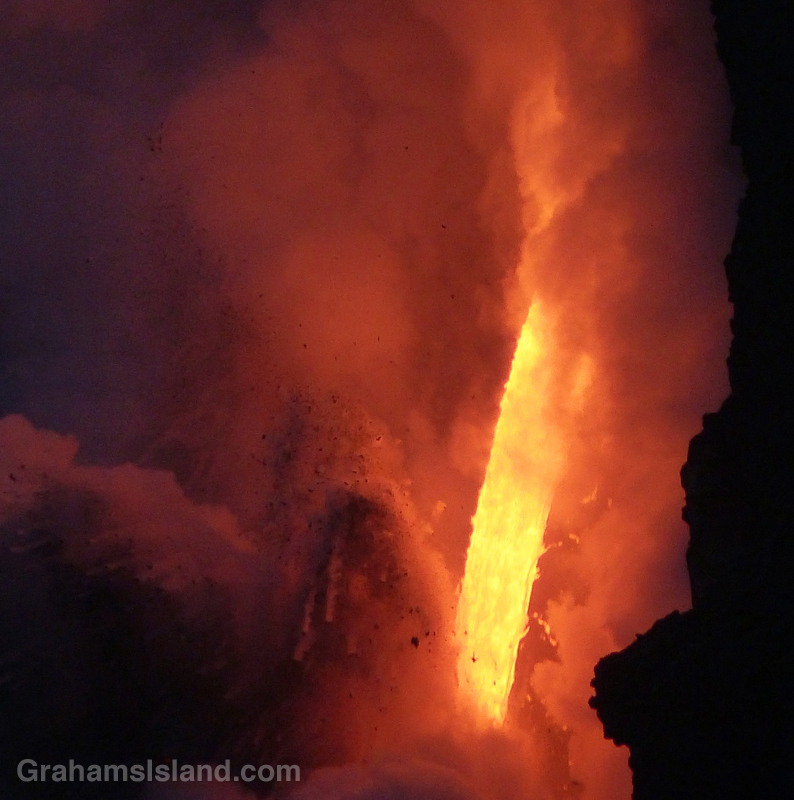

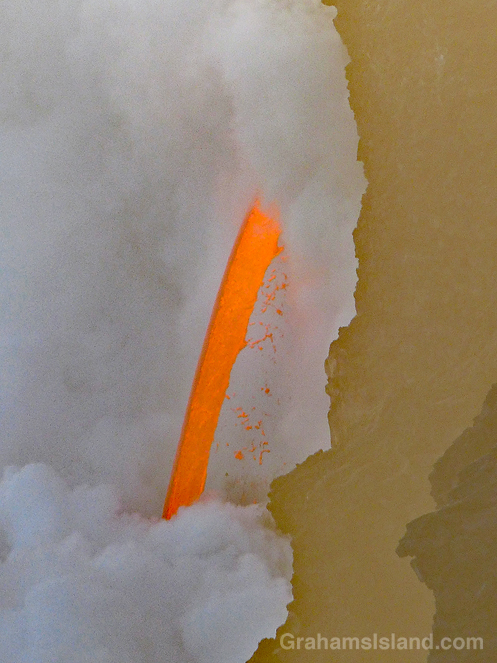
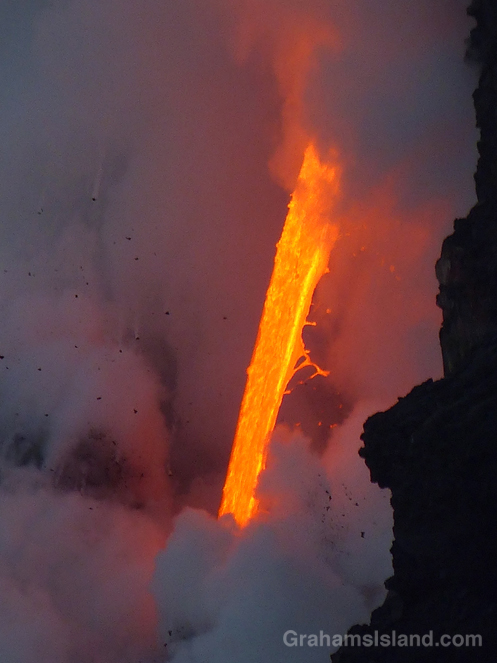
Since the theme of this week’s WordPress photo challenge is elemental, I thought I’d pull out a few more photos from my visit, earlier this year, to the lava flow from Kilauea’s Pu’u O’o vent.
This is the closest we get to seeing fire from the earth’s core, a roaring torrent of molten lava. Since I took these photos there have been cliff collapses that have ended this firehose effect. But the lava continues to flow and has formed a good-sized delta at the foot of the cliff. This delta is crossed by several large cracks, which run parallel to the coast. This means the whole delta is likely to collapse into the ocean in the near future, probably in explosive fashion.
Could be time for another visit!
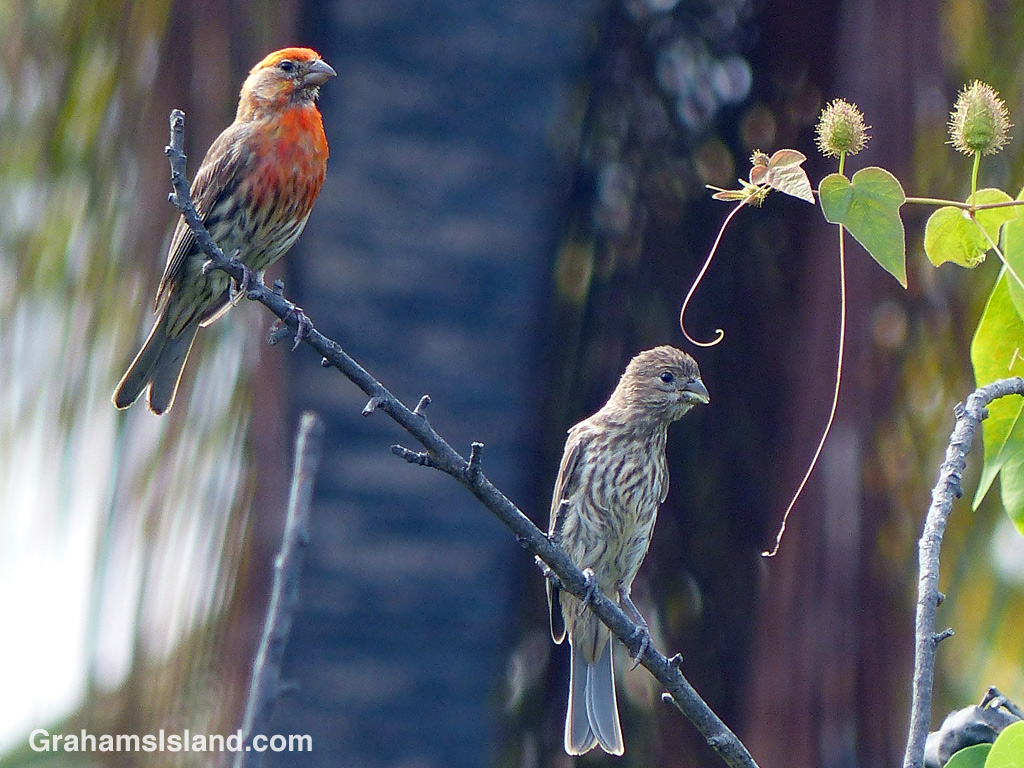
This pair of house finches, the male on the left and female on the right, was flitting about Pu’uhonua o Hōnaunau National Historical Park. They’re common birds here, as in many other places, but there’s something about this photo that I’m really happy with.
For more information about Pu’uhonua o Hōnaunau National Historical Park, visit https://www.nps.gov/puho/index.htm.
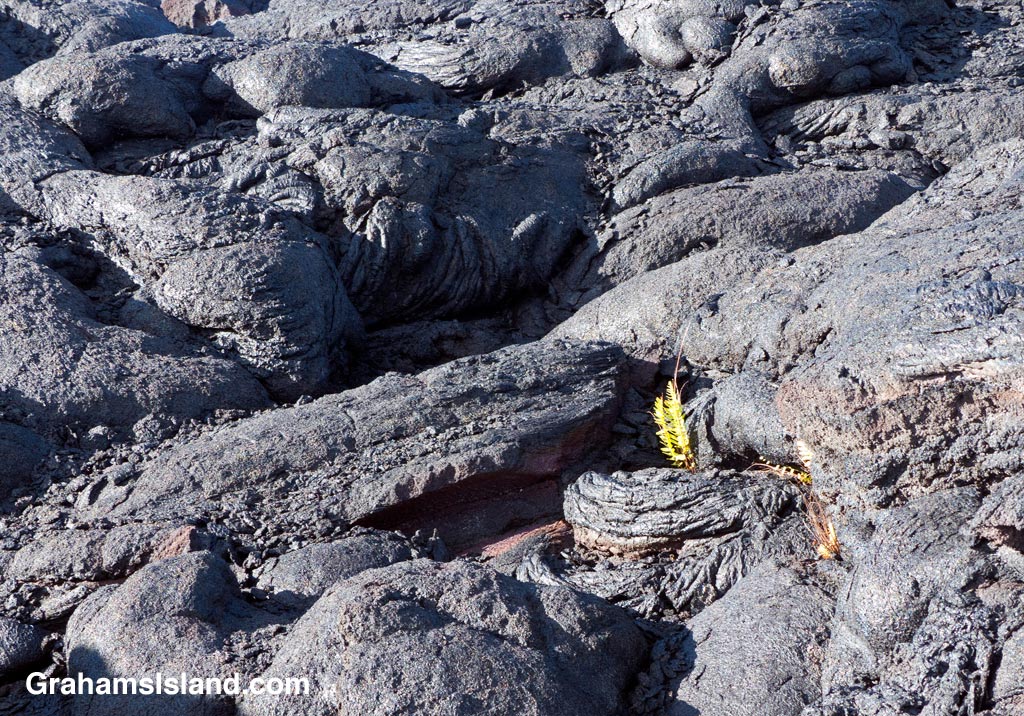
A fern gets a toehold in a field of lava. I like the resilience of the fern, daring to grow in such a hostile place. I also like the texture of the lava, a hard rock and yet crumbly as well. I can almost hear it crunching underfoot.
 Graham's Island