Category Archives: Parks

Rainbow Falls

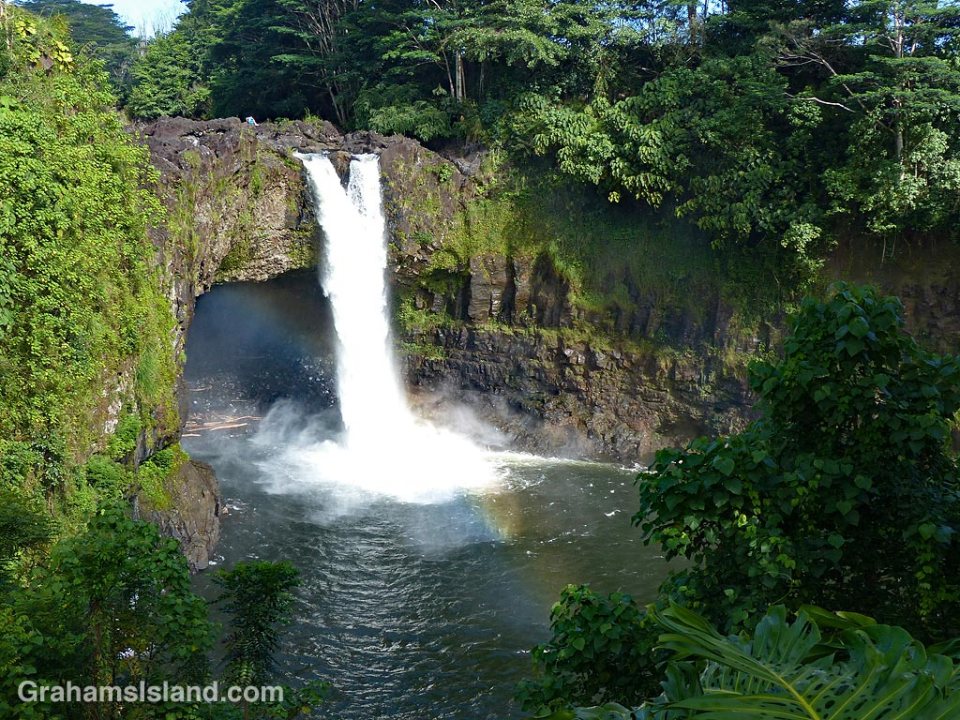
Rainbow Falls and rainbow

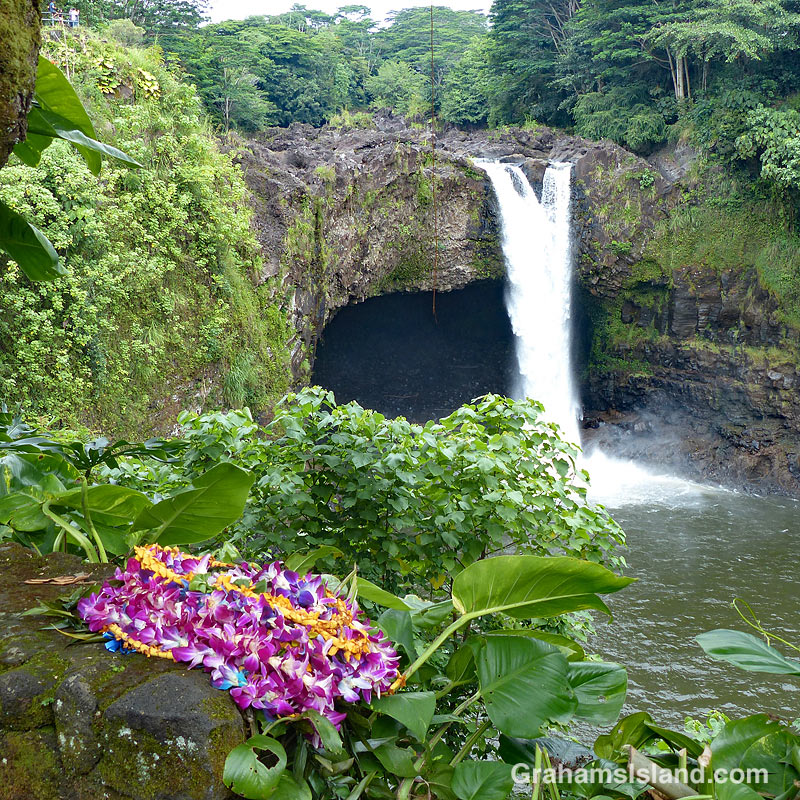
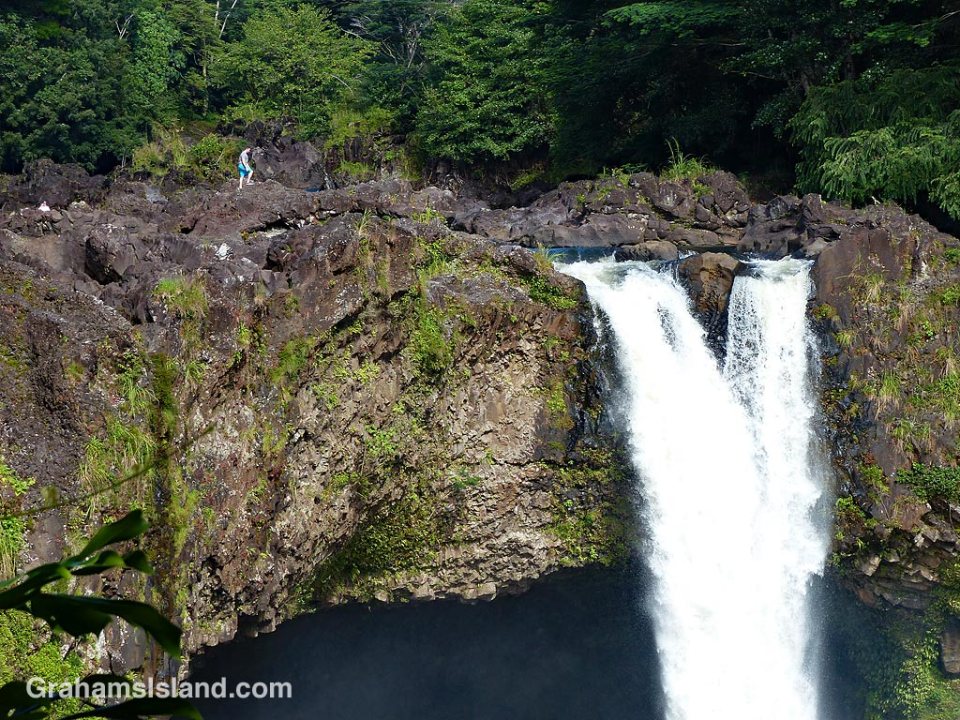
Rainbow Falls and offeringRainbow Falls are located in Wailuku River State Park, in Hilo. They get their name from the fact that, in the mornings, rainbows often form in the mist from the falls (above).

Center, someone left an offering, possibly to Hina, mother of the demigod Maui, who is said to have lived in the cave behind the falls.

And below, someone who has inadvertently walked past the 83,000 ‘Danger’ and ‘Warning’ signs to wander around at the top of the falls. Flash floods occur often and people die here every year.

Rainbow Falls

Abstracts: Rainbow Falls banyans

Abstracts-Rainbow Falls Banyans

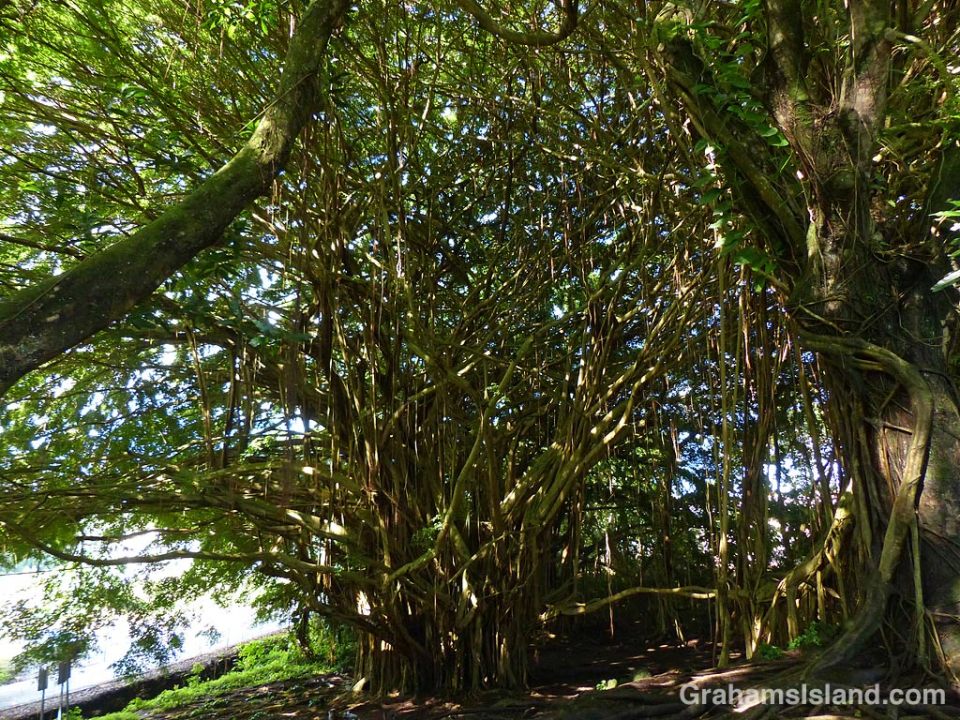
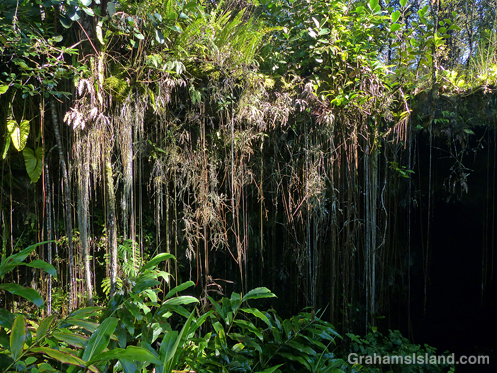
Abstracts-Rainbow Falls BanyanThe main attraction of Wailuku River State Park, in Hilo, is Rainbow Falls. But at the top of the hill are these huge banyan trees.

Banyans are not just a huge sprawl of branches, but a sprawl of roots, too. As epiphytes they begin life growing on other trees, from seeds dispersed there by birds. Over time, they send roots down to the ground, known as prop roots, which help support the mass of branches.

Banyan trees are also known as strangler figs because their roots and branches will ultimately overwhelm the host tree and kill it. Eventually, the dead host will decay and leave a hollow center to the banyan tree that’s left.

By continuing to send down prop roots, banyans grow out as well as up. Very old trees can cover a huge area. For example, the Great Banyan Tree in Kolkata, India is more than 250 years old. Its covers around four acres and has more than 3,500 prop roots. Here in Hawaii, the largest banyan grows in Lahaina on Maui. Planted in 1873, it now has 16 main trunks and covers two thirds of an acre.

The Rainbow Falls trees aren’t that large, but they’re coming along nicely.

Kaumana Caves

Kaumana Cave entrance

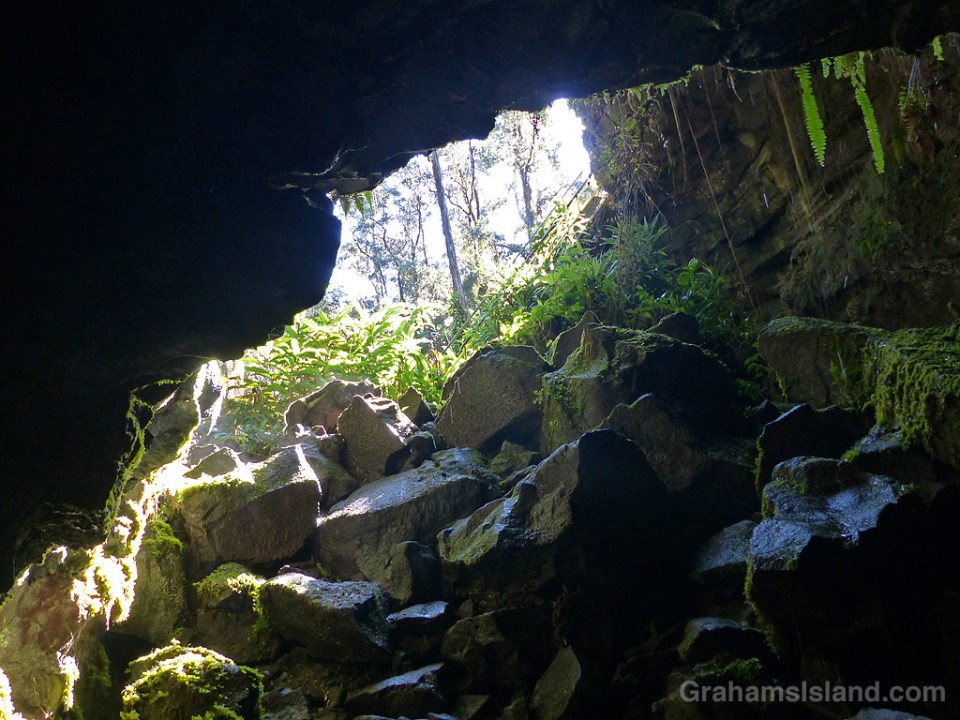
Kaumana Cave access stairsKaumana Caves State Park is a small park west of Hilo. Besides the usual park facilities, the main attraction is the caves. The caves are actually a lava tube, created by a flow from Mauna Loa in 1881. They’re accessed through the large opening where a section of the tube collapsed, so the two caves are at opposite ends of this opening.
My understanding is that the caves go on for quite a way, but one is not supposed to go much beyond the entrances because it is, officially, private property after that. It’s also very dark and claustrophobic, so that was enough for me.

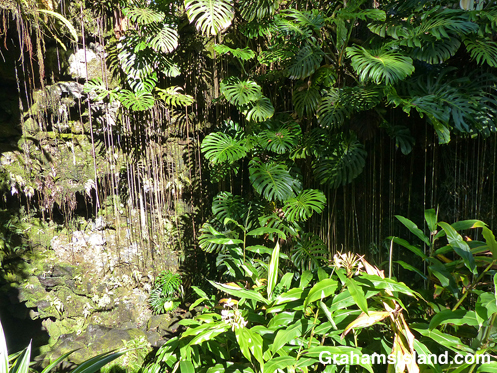
The photos show – Above: A view from mouth of the southern cave; Middle: The staircase down to the caves; Below: Foliage that’s grown in the open portion of the tube. The cave entrances are the dark areas at the edge of these photos.

Kaumana Cave tropical foliageKaumana Cave foliage

Two Step

Two Step

There are seasons in Hawaii. Summer is hotter, and wetter on the dry side of the Big Island. But let’s be honest, there are many people who live through freezing winters and boiling summers, sun-free winters and sun-seared summers. They believe Hawaii has summer year-round, and not just any summer, but a pleasant summer where it’s warm and sunny but not inhospitably so.

For those people, and in response to this week’s Sunday Stills challenge on the theme of ‘Summer,’ I give you a typical summer shot of people getting ready to go snorkeling, or just exiting the water. The photo was taken at Two Step, next door to Pu’uhonua o Hōnaunau National Historical Park — in February. Bwahahahahahaha.

For more information about Pu’uhonua o Hōnaunau National Historical Park, visit https://www.nps.gov/puho/index.htm.

See more Sunday Stills responses here.

Large orange sulphur butterflies mating

Large Orange Sulphur Butterflies mating

While on a hike south of Pu’uhonua o Hōnaunau National Historical Park, I saw this pair of large orange sulphur butterflies. They were flying around, joined together, before settling on this seed pod. I assume they were mating, though this discrete view is the only one I had of them.

To see what was going on on the other side would have involved thrashing around in some nasty-looking brush. This would have added to the usual assortment of lacerations that I seem to acquire on a daily basis, and would undoubtedly have caused the butterflies to take to the air again. So I let them be.

Dead tree in the lava

Dead tree in the lava

The twisted remains of a dead tree lie, under heavy skies, on an old lava field at Hawaii Volcanoes National Park.

For more information about Hawaii Volcanoes National Park, go to nps.gov/havo/.

Posted in response to this week’s WordPress Photo Challenge ‘Twisted.’


Someone’s having a bad feather day

Hawaiian Coot with misplace feather

Hawaiian CootThis Hawaiian coot looked surprised to discover a wayward feather in its otherwise immaculate plumage (above). Several attempts to corral the unruly feather failed, leaving the bird with a distinctly grumpy look (middle photo). But a solution was found (below). Time for a stylish V for Victory lap around the pond.

Posted in response to this week’s WordPress Photo Challenge ‘Liquid.’

Hawaiian Coot with two misplaced feathers