Category Archives: Places

Abstracts: Rainbow Falls banyans

Abstracts-Rainbow Falls Banyans

Abstracts-Rainbow Falls BanyanThe main attraction of Wailuku River State Park, in Hilo, is Rainbow Falls. But at the top of the hill are these huge banyan trees.

Banyans are not just a huge sprawl of branches, but a sprawl of roots, too. As epiphytes they begin life growing on other trees, from seeds dispersed there by birds. Over time, they send roots down to the ground, known as prop roots, which help support the mass of branches.

Banyan trees are also known as strangler figs because their roots and branches will ultimately overwhelm the host tree and kill it. Eventually, the dead host will decay and leave a hollow center to the banyan tree that’s left.

By continuing to send down prop roots, banyans grow out as well as up. Very old trees can cover a huge area. For example, the Great Banyan Tree in Kolkata, India is more than 250 years old. Its covers around four acres and has more than 3,500 prop roots. Here in Hawaii, the largest banyan grows in Lahaina on Maui. Planted in 1873, it now has 16 main trunks and covers two thirds of an acre.

The Rainbow Falls trees aren’t that large, but they’re coming along nicely.

International takeoff

Japan Airlines plane tail

Japan Airlines planeKona airport is officially called the Ellison Onizuka Kona International Airport at Keahole.

Ellison Onizuka was an astronaut from Kealakekua, Hawaii, who died in the destruction of the Space Shuttle Challenger. Kona is the district and Keahole the place name for the actual location (Keahole Point) of the airport. And International? Well that’s largely due to the aircraft in these photos.

Japan Airlines (JAL) began flying to Kona from Tokyo in 1996, but suspended service in 2010. With no international flights coming in, the feds shut up shop, and that’s the way it stayed until the end of 2016. At that point, Hawaiian Airlines began service to Tokyo three times a week and a new Federal Inspection Service facility opened at the airport to accommodate the needs of the government. But the icing on the cake occurred in September of last year when JAL resumed daily flights to Kona. And in December of this year, Air Canada will begin seasonal nonstop flights from Vancouver. Très internationale!

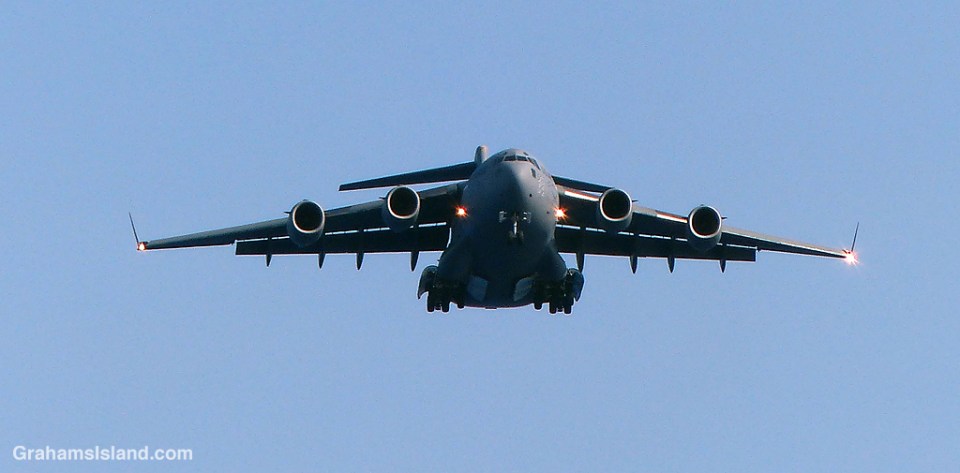
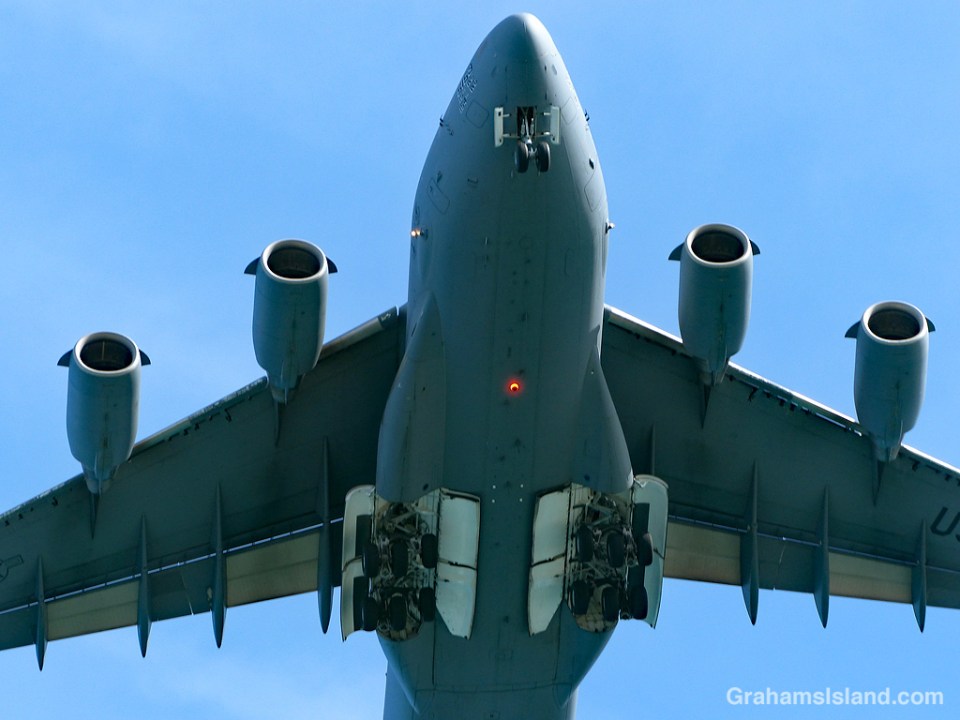
These photos are of the outgoing JAL flight preparing to take off on the return journey to Japan. I took the top photo because it made me think of a shark cruising by.

Japan Airlines plane takeoff

Two nene having lunch

Nene eating

Two NeneI came across this pair of nene, the Hawaiian goose, on one of my walks. They didn’t seem too bothered by my arrival in the vicinity and continued to graze.

And in a shameless bit of self-promotion, the second image is my Photo of the Week for this week (7-23-18 to 7-30-18). Check out my shop for more details here.

Signs: Mo’okini Heiau

Signs-Mo'okini Heiau

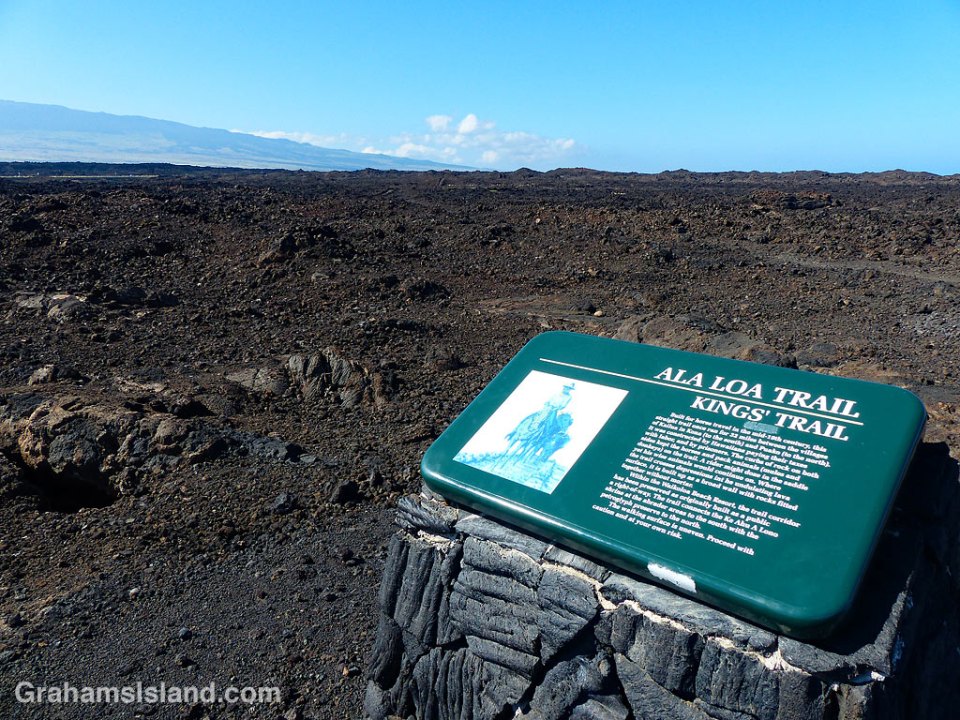
Mo’okini Heiau is located just off one of my regular walks. The old signs for the heiau and the Kamehameha birth site fell from their original spot, tacked on a fence, some years ago. Since then, the signs have been wedged into a barbed wire fence, from which they regularly fell into the grass.

When I noticed this, I’d root the signs out and wedge them back in the fence. I believe other people also did this. At some point, one of the signs split in two, so there were three pieces to try and arrange in some way that they wouldn’t immediately fall down again.

I kept thinking I should bring some wire and a drill and try and put the signs back together again, maybe attach them to a fence post, but I only remembered this good intention when I was picking the signs out of the grass.

The grounds of the heiau are maintained by staff presumably contracted by the county or state. However, the area in the vicinity of the signs never got much attention except when, a couple of years ago, a sign prohibiting animals (on the left of the photo) suddenly appeared. I have a fondness for that sign because the chance of anyone enforcing that regulation is right up there with me winning three different lotteries on the same day (and Hawaii doesn’t have lotteries).

So imagine my surprise the other day when I reached this point in my walk and saw this spiffy new sign. Two new boards attached to a brightly painted pole securely set in a rock. I was giddy with shock and excitement (yes, I don’t get out much). If an alien spaceship had landed I wouldn’t have been more surprised. Note too the red and yellow paint on the chain across the trail to the heiau, and the well-supported post that fell down about a year ago.

Folks, forget the volcano. You want to see something truly amazing on the Big Island, come up to North Kohala and check out these signs while they’re still standing.

Kaumana Caves

Kaumana Cave entrance

Kaumana Cave access stairsKaumana Caves State Park is a small park west of Hilo. Besides the usual park facilities, the main attraction is the caves. The caves are actually a lava tube, created by a flow from Mauna Loa in 1881. They’re accessed through the large opening where a section of the tube collapsed, so the two caves are at opposite ends of this opening.

My understanding is that the caves go on for quite a way, but one is not supposed to go much beyond the entrances because it is, officially, private property after that. It’s also very dark and claustrophobic, so that was enough for me.

The photos show – Above: A view from mouth of the southern cave; Middle: The staircase down to the caves; Below: Foliage that’s grown in the open portion of the tube. The cave entrances are the dark areas at the edge of these photos.

Kaumana Cave tropical foliageKaumana Cave foliage

Three green turtles and a passenger

Three green turtles

It’s not unusual to see green turtles hauled out on shore. Sandy beaches are prime resting spots, but these three chose this rocky bay, only a few hundred yards from some of the best beaches on the island. Perhaps they valued quiet over easy access.

The middle one of the three had gained a passenger that I didn’t notice until I processed the photos, an a’ama crab, making the most of its excellent vantage point.

Green turtle and A'ama crab

Mountain Road stream

Mountain Road stream

Mountain Road stream poolThe Kohala Mountain Road passes over the dry southwest side of Kohala Mountain. There are several streams running down the side of the mountain toward Kawaihae and the Kohala Coast and they can run anything from dry to flash flood. It all depends on the rain.

This stream, just below the road’s high point around 3,500 feet, is running somewhere in the middle of the flow range. The top photo shows the stream tumbling through a series of pools on its way to the coast. And those black pipes? The photo to the left shows a small dam, built into the stream. Those pipes gather water from behind the dam and carry it to ponds where it’s stored for use during dry times.