
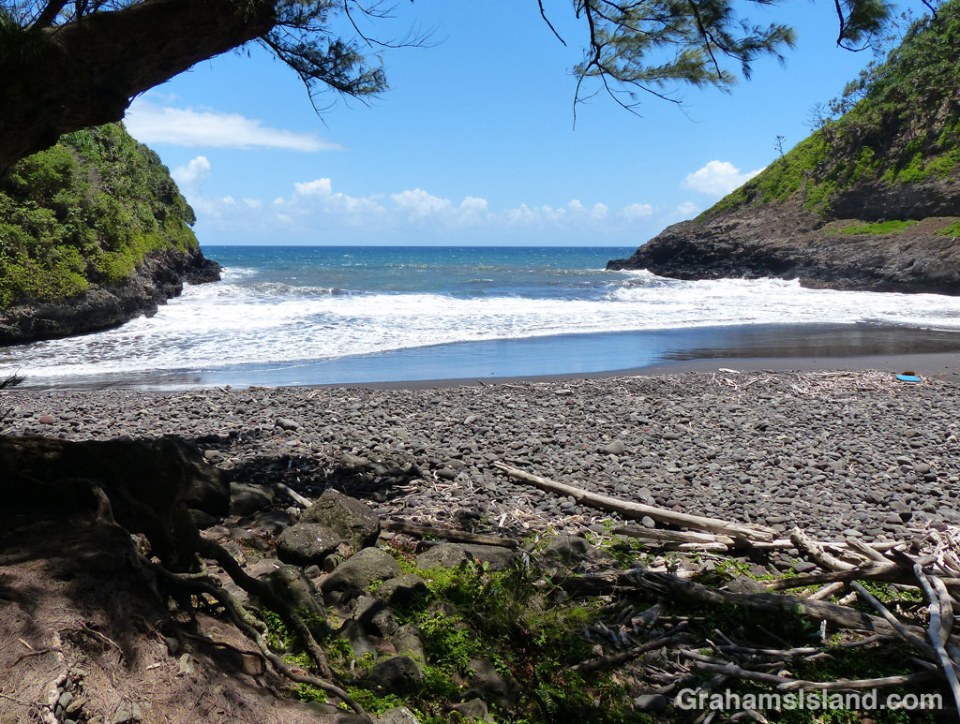
At the end of Highway 270, on the northern tip of the island, is Pololu Valley. There’s a trail down to the beach there and, at the other end of the beach, another trail leading up to a bench that overlooks Honokāne Nui valley.
Not far beyond the bench, the trail was destroyed by an earthquake in 2006. It’s still possible to descend to the valley, but the trail goes straight down a steep slope and ropes are in place to make this possible. There are no guarantees that these ropes are in good condition and the slope certainly isn’t. If you do descend this section, the trail passes through varied vegetation and ultimately leads down to a rocky beach at the mouth of Honokāne Nui valley.
Beyond Honokāne Nui, there’s another trail that continues over the next hill and down into Honokāne Iki valley. That valley opens up to this beautiful little bay, which is quite protected and, at low tide, has a nice sandy beach. Be aware though that this is private land and in use on a regular basis.
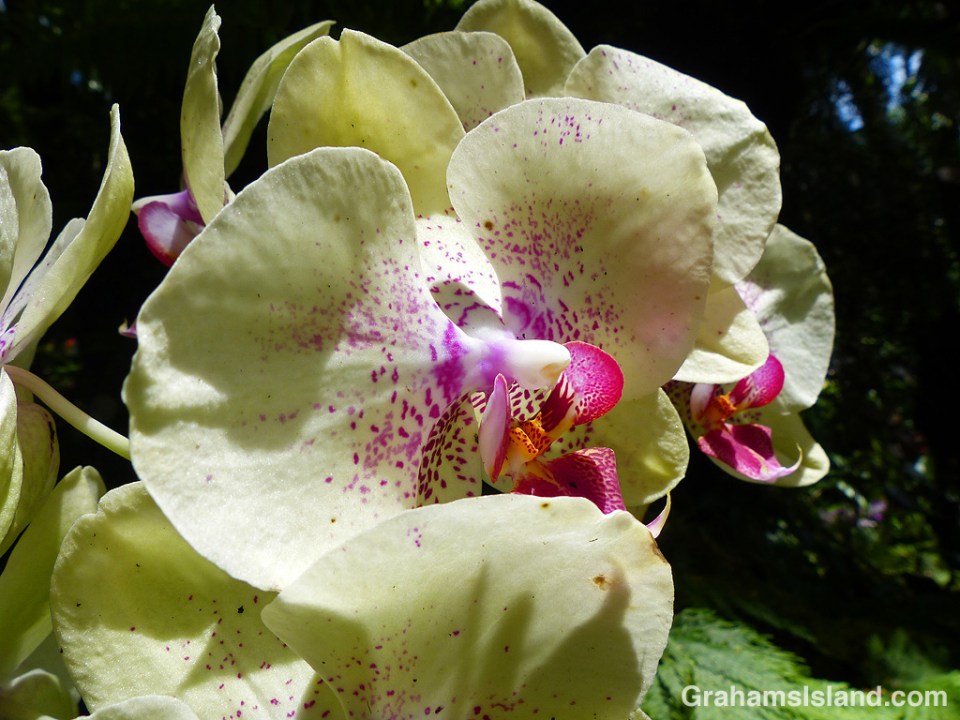
 There are many varieties of phalaenopsis orchids on show at Hawaii Tropical Botanical Garden. This one is Phalaenopsis (ChianXen Queen x Diamond Beauty).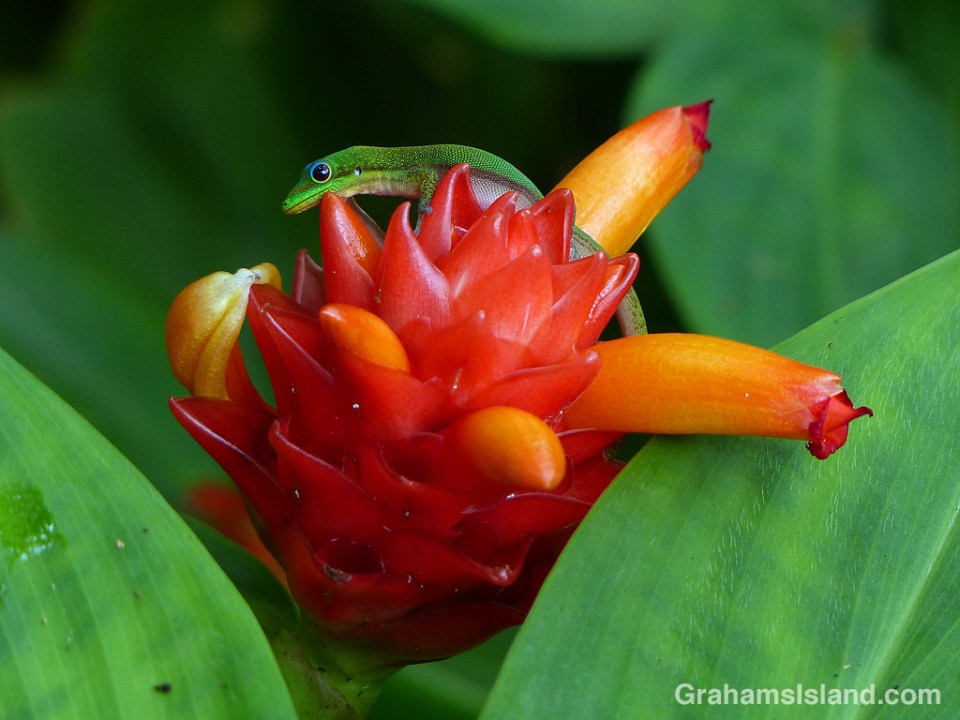
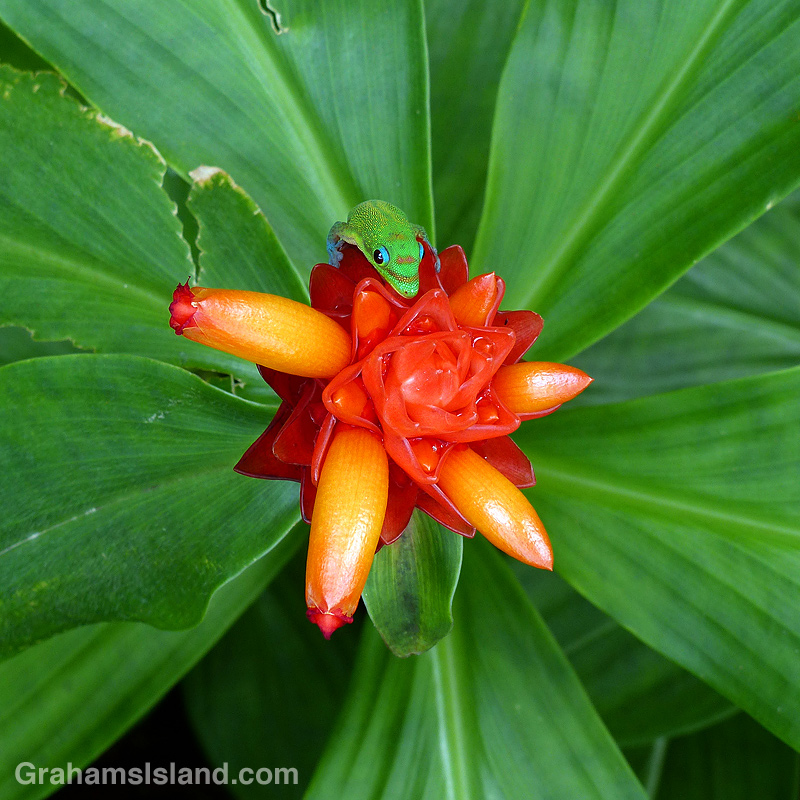 Costus curvibracteatus is also known as orange tulip ginger and hails from Costa Rica and Panama. In these photos, the overlapping red parts are the bracts and the longer orange tubular forms, emerging from between the bracts, are the flowers. However the bracts can also be orange, and the flowers a similar length as the bracts.

 Osmoxylon lineare is also commonly known as miagos bush. It hails from the Philippines and grows to about six feet high. This plant is interesting for its spiky foliage and because the distinctive creamy-white flowers and dark fruits can be seen on the same plant at the same time.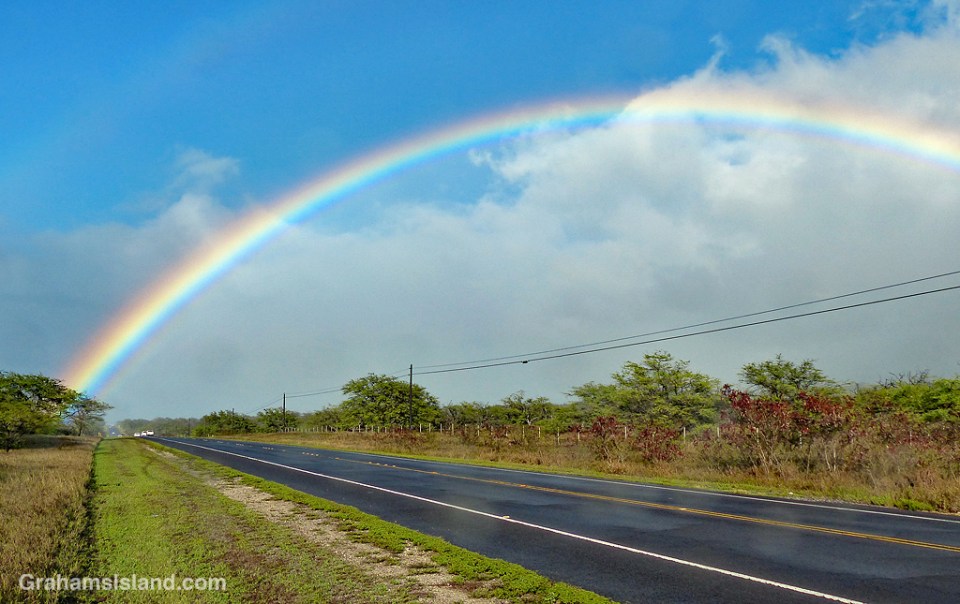
 Today marks the start of the fourth year for this blog. Post number one was of a rainbow over the northern coast, so I thought I’d post another one on the anniversary.
 Graham's Island