
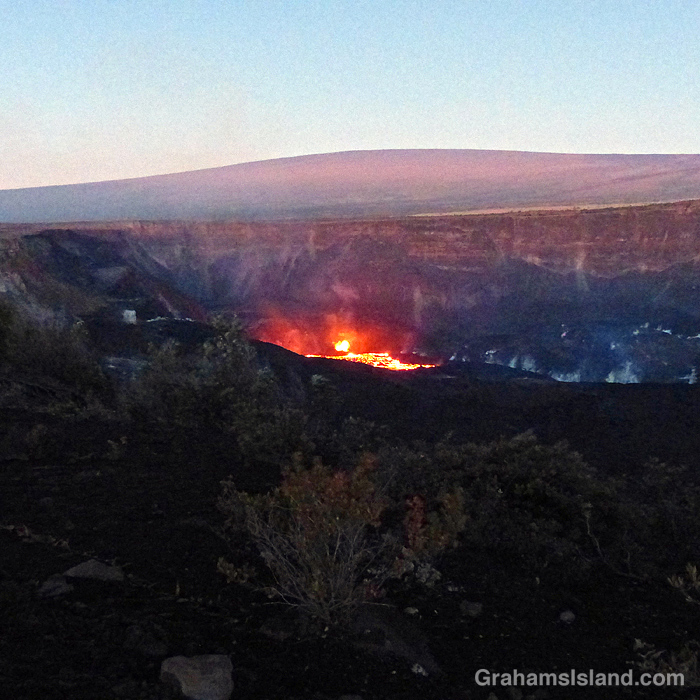
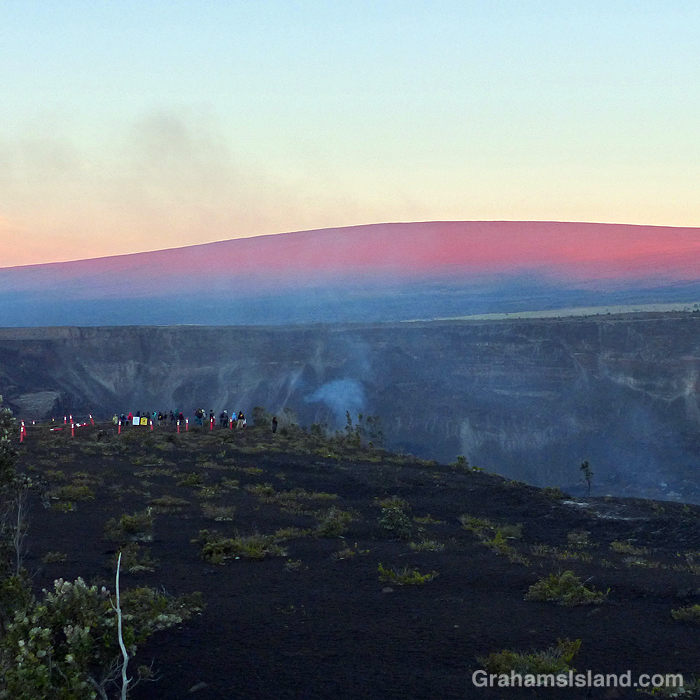
After my recent early morning visit to see the activity at Kilauea Volcano, I did a bit of hiking around the rim of Halema’uma’u Crater. This is a view towards the current active vent.

After my recent early morning visit to see the activity at Kilauea Volcano, I did a bit of hiking around the rim of Halema’uma’u Crater. This is a view towards the current active vent.

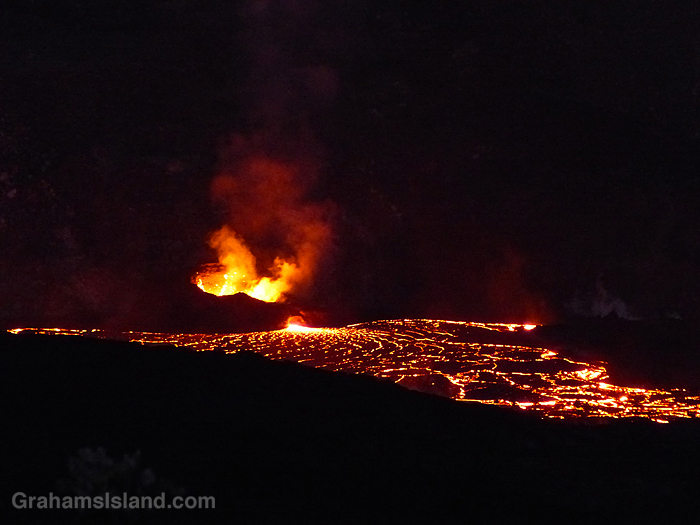
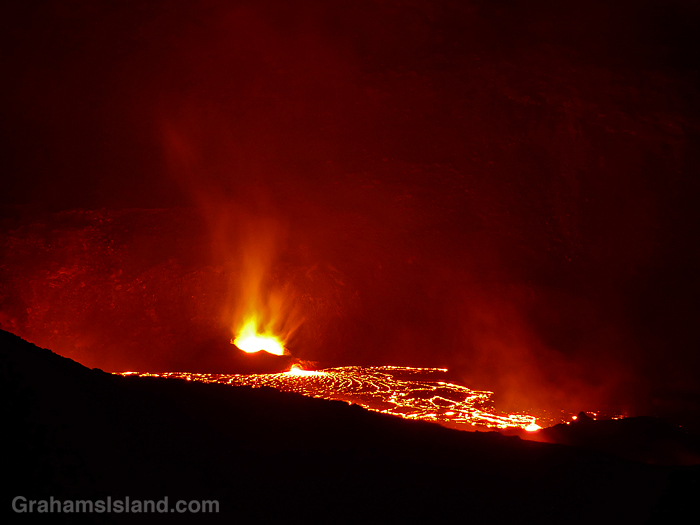
Yesterday was Guy Fawkes Day in Britain and to celebrate I finally got to see some fireworks, albeit of a very different kind and in the wee hours of the morning instead of the traditional Bonfire Night.
I got up just after 1 a.m., left the house around 2 a.m. and drove over to Hawaii Volcanoes National Park. I mostly had a beautiful starlit night for the drive except for about 15 minutes over the saddle between Mauna Kea and Mauna Loa when I was driving through cloud and not entirely sure whether there was any other traffic despite barreling along at 60 mph.
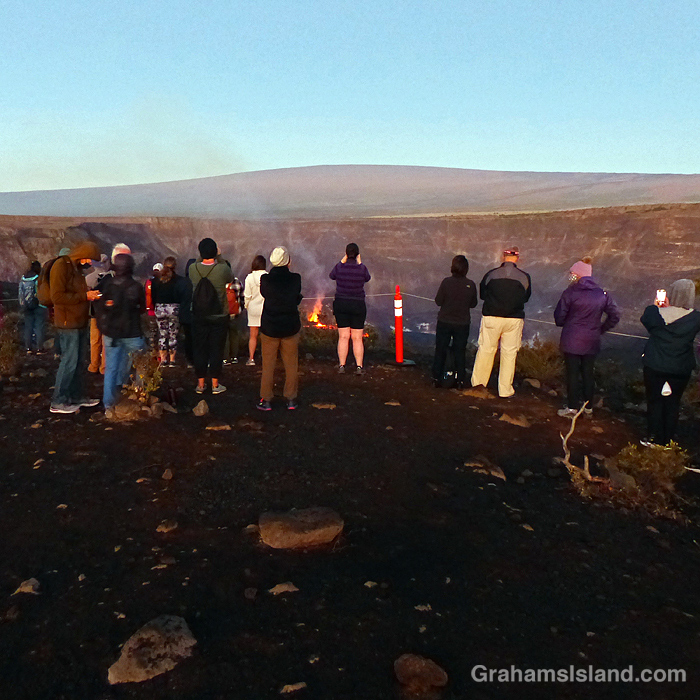
I made good time, arriving at the park around 4:30 a.m. and the viewing point about 15 minutes later. There were around 20 people already there, but a prime viewing spot was open so I set up my tripod and camera and began taking photos.
The viewing area was a place I’d stopped by during the previous eruption in December 2020. That spot only allowed a view of the glow of the eruption, which was lower in the crater. This time the eruption was higher up and the trail had been extended so that a good view could be had of both the eruption site and the crater floor the lava was flowing onto.
The eruption began on September 29, 2021 through a series of vents, but by October 4 this had settled down to two vents and by October 6 to the single vent in the west wall of Halemaʻumaʻu crater seen in these photos.
The eruption has added about 184 feet of lava to the previous lava lake level and though it appears to have slowed a tad lately, it still put on a good show with a good deal of spattering and some smaller fountains of lava. The active vent has formed its own cone with lava spilling into the lake through a gap in the cone. Recently, a bridge formed over that cone so that the lava spills out though a short tunnel as can be seen in these photos.
I stuck around until the sun rose high enough to illuminate the slopes of Mauna Loa and then headed back to the car. After a spot of hiking, the return drive and some shopping in Waimea. I got home around 2:30 p.m.. A long day, but well worth it in my book.
This week’s Sunday Stills challenge theme is ‘Eerie.’ See more responses here.
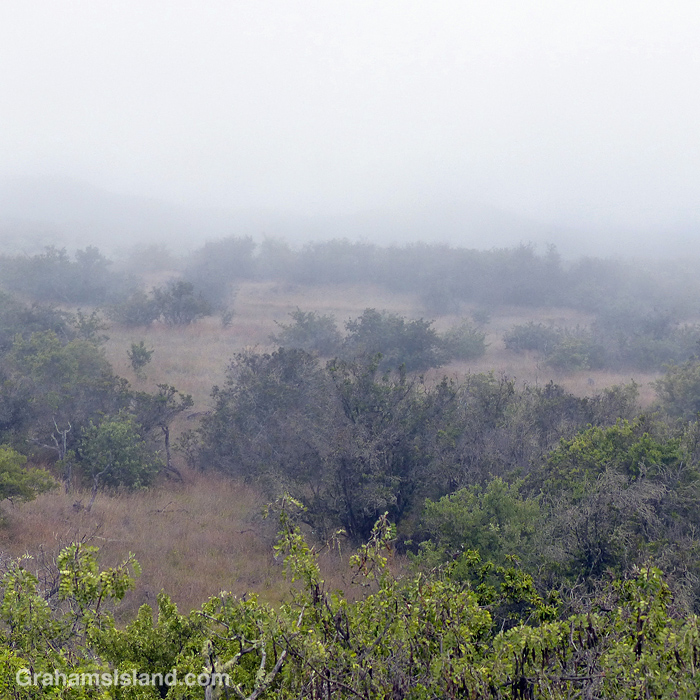
I couldn’t think of too many eerie things amongst my photos. This image of trees on the lower slopes of Mauna Kea, shrouded in cloud, is as close as it gets. This is a fairly common occurrence as clouds tend to build up during the day and often reach this area in the afternoons.
Also posted in response to Becky’s October Squares challenge theme of ‘Past Squares – Sky’ (See more responses here), and to the current Friendly Friday challenge theme of ‘Weather’ (See more responses here).

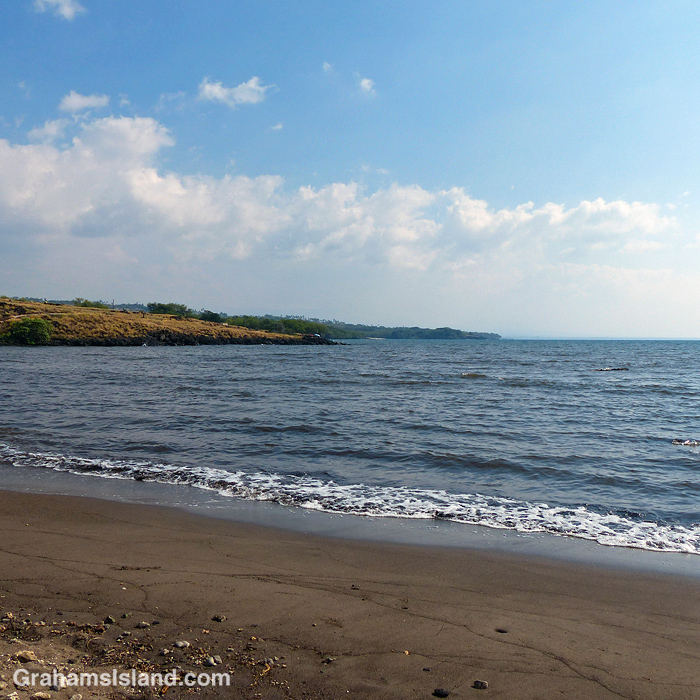
I took the top photo on my way to work one early morning. It’s a tranquil scene (the reason I go down there) shot from the beach below Pu’ukohala Heiau in Kawaihae. The second photo was shot on my way home in mid-afternoon. It was taken from the same beach in roughly the same place and looking in roughly the same direction.
Astute observers will see past the similarities in the photos and notice something is missing. Hualalai Volcano has disappeared. Now, it’s not unreasonable to think that those puffy white clouds in the second photo have something to do with this, but that’s not really the case. True, they might mask the upper reaches of the volcano, but the whole thing? No, the culprit is the fuzzy band between the clouds and the land – vog!
The latest eruption of Kilauea Volcano, which began on September 29th, is churning out vog, which forms when volcanic gases interact with sunlight, air, moisture, and dust. Two days later, when these photos were taken, it was having a visible effect. I’d noticed the vog drifting up the west side of the island during the morning and by afternoon visibility was greatly reduced. But it’s not just visibility that’s affected. Vog is especially troublesome for people with breathing difficulties, but can also irritate the eyes and skin of just about anyone.
Posted in response to Becky’s October Squares challenge theme of ‘Past Squares – Time.’ See more responses here.
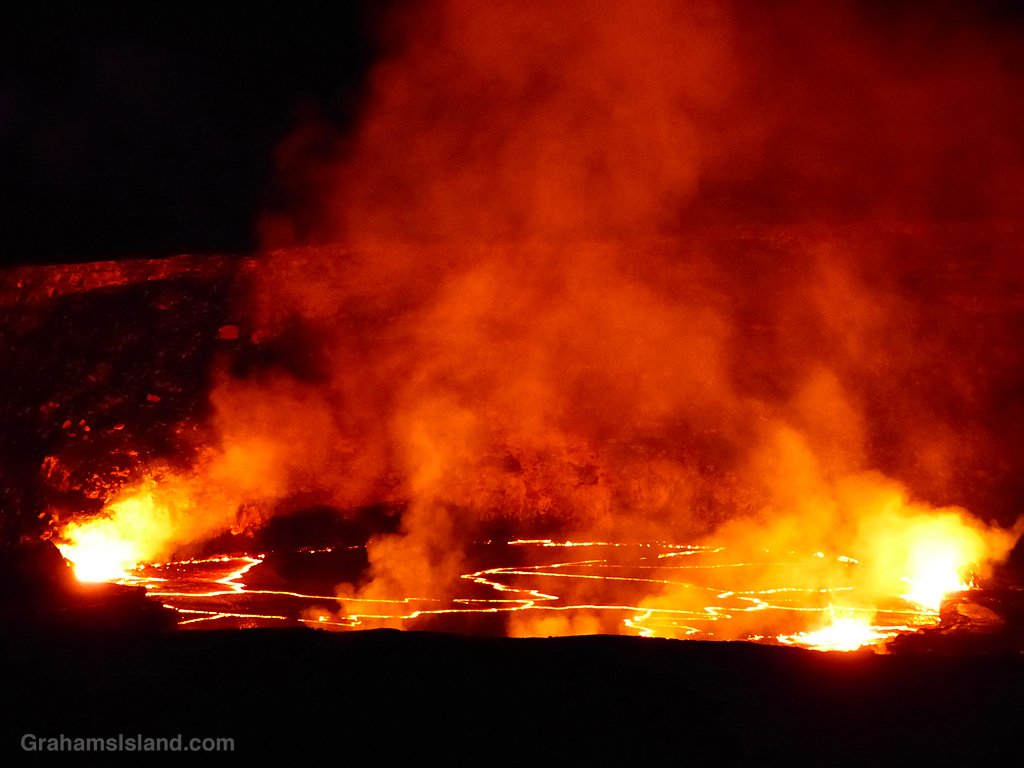
Yesterday afternoon, around 3:20 p.m., Kilauea Volcano began a new eruption. Like the previous one, from December 2020 to May 2021, the eruption is in Halemaʻumaʻu crater, at the summit of the volcano. That eruption created a lava lake in an area that collapsed in 2018 when the main activity moved down the east rift zone to the Leilani Estates Subdivision. This new eruption has reactivated the lake in the crater.
These photos are from the 2018 activity in Halemaʻumaʻu crater shortly before the level of the lava lake dropped and the crater floor collapsed.

This week’s Sunday Stills challenge theme is ‘Signs of Autumn.’ See more responses here.
We’re a little short on autumnal changes here. I tend to mark seasonal changes in terms of wildlife, such as the return of humpback whales in winter. For autumn, the return of Pacific golden plovers from their summer breeding grounds in Alaska is probably the most notable.
Outside of wildlife, the shortening of the days does register here. It’s not as dramatic as when I lived in Washington State, with summer sunsets around 9 p.m. and winter darkness setting in a little after 4 p.m.. In Hawaii, the equivalent times are 7 p.m. and 6 p.m., not such a big difference.
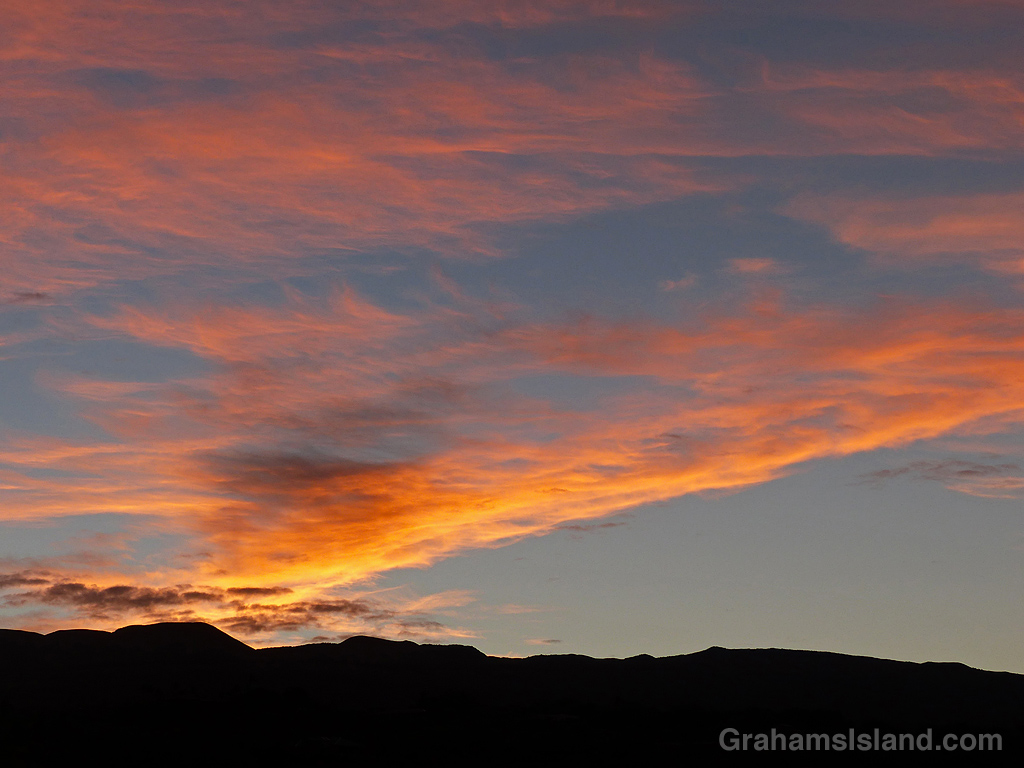
But it does make a difference for my morning commute, and autumn signals the time when I usually leave home when it’s mostly dark and arrive at work when it’s mostly light. I also try and give myself a little extra commuting time so I can pull over and take photographs when the sunrise merits it, such as this streaky red sunrise over Kohala mountain.
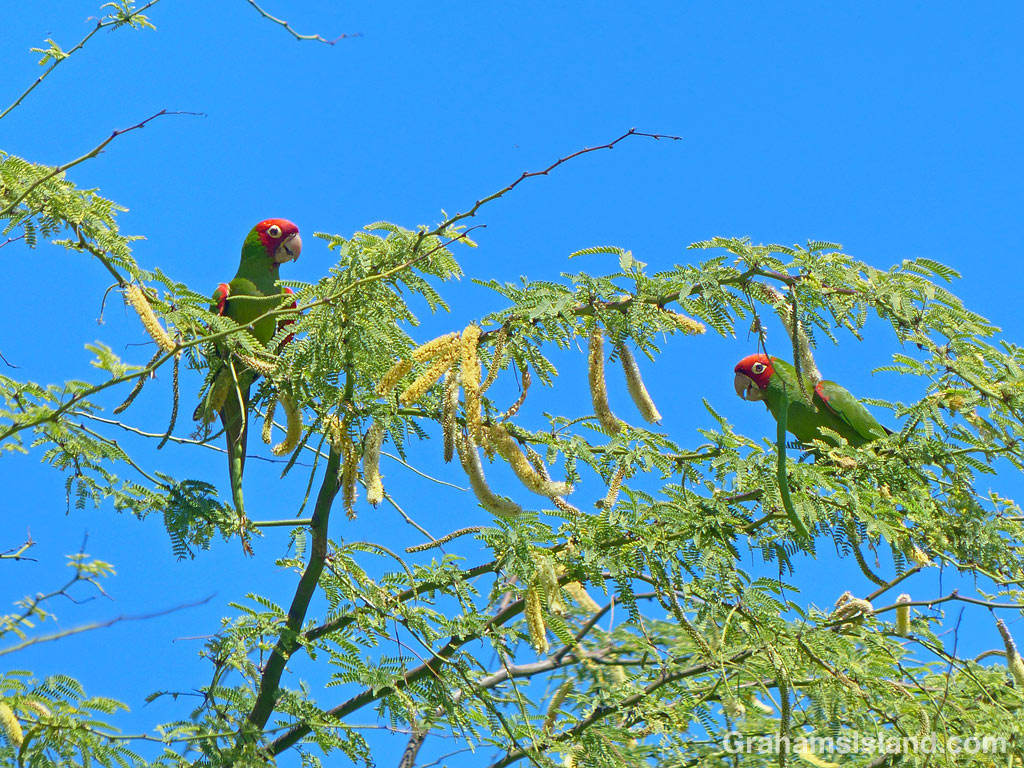

I’ve lived in Hawaii for more than nine years now and had previously never seen any of those most tropical of birds, the parrots. One reason for this is that parrots aren’t native to Hawaii, but a variety of different parrots have become established here.
Red-masked parakeets were first seen here in 1988 and are probably the most common parrot on the Big Island. They’re natives of Ecuador and Peru, but are now fairly well established on the Kona coast, which is where I saw this a pair, in Kohanaiki Beach Park. While they forage along the coast here, they roost high up on the slopes of Hualalai Volcano.
This week’s Sunday Stills challenge theme is ‘Going Back….’ See more responses here.
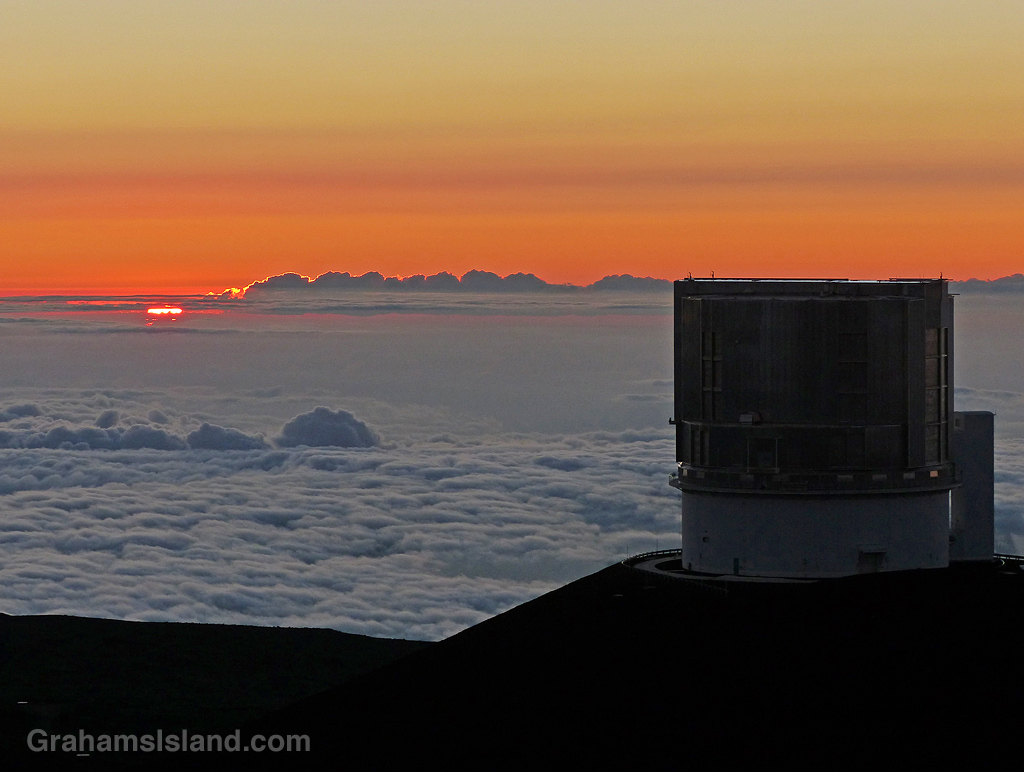
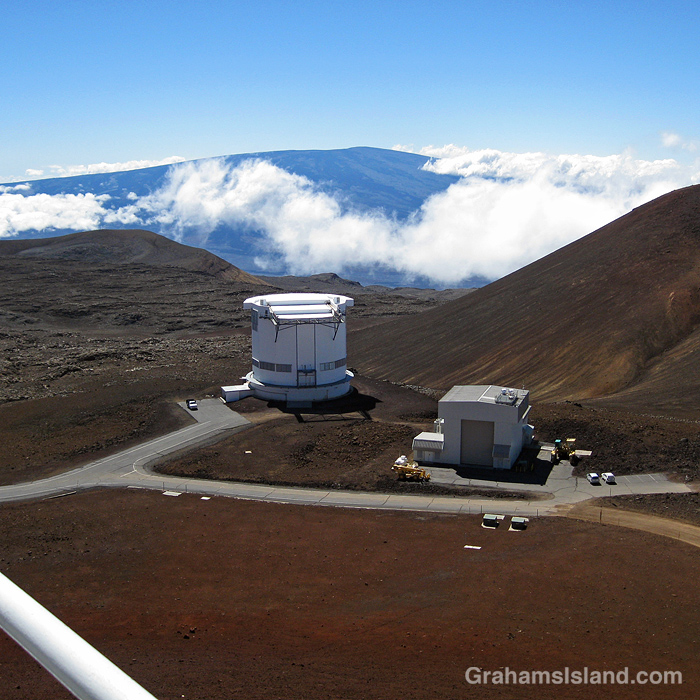
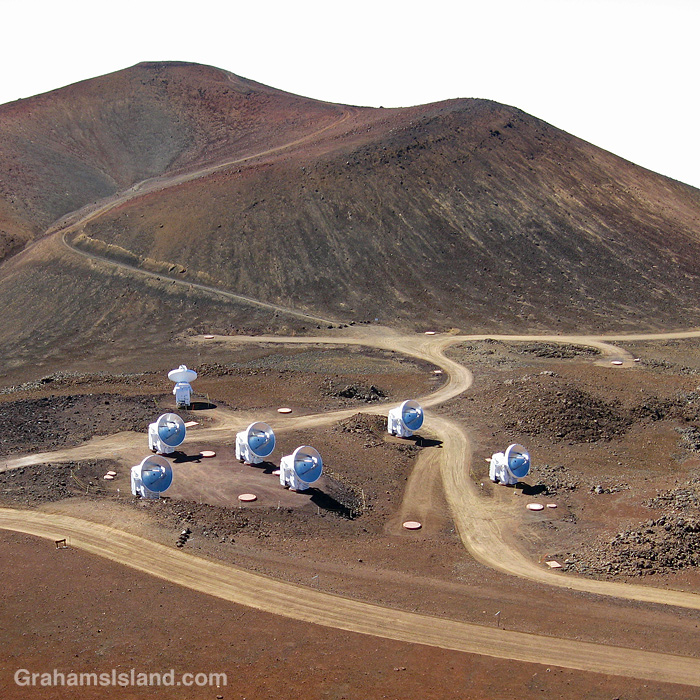
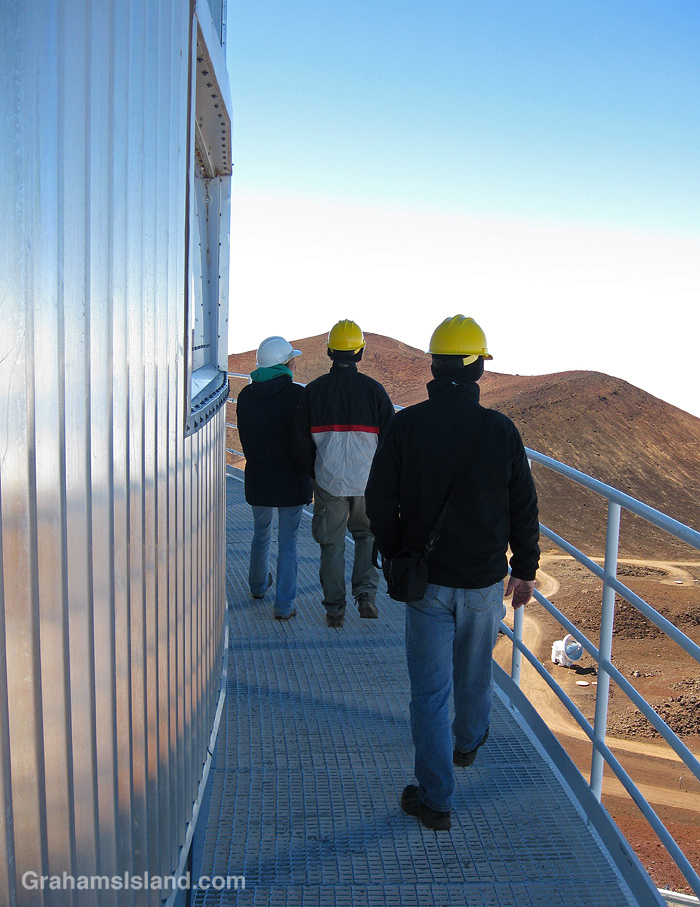
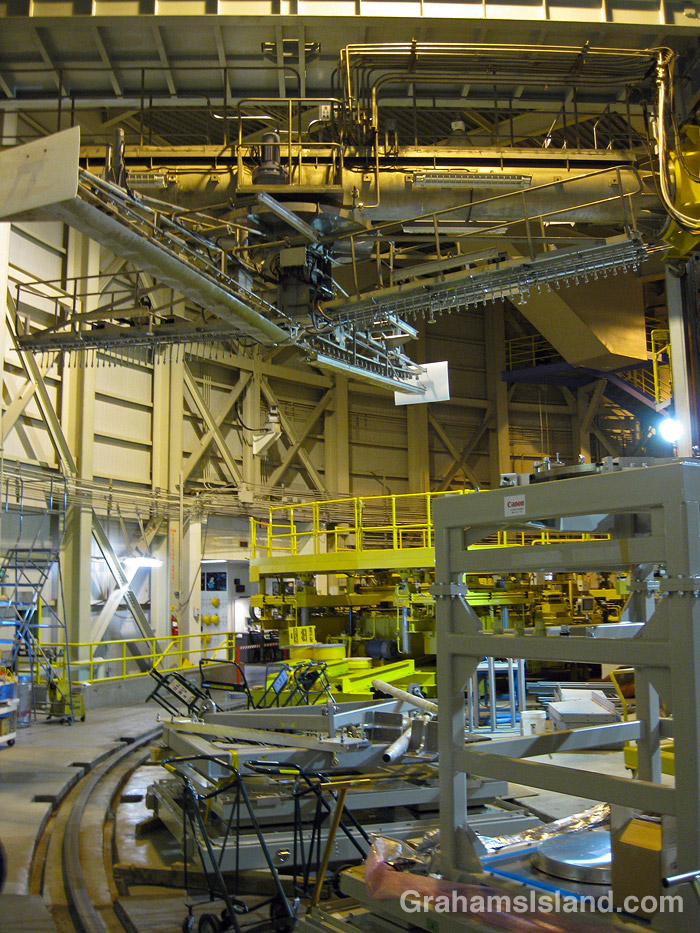
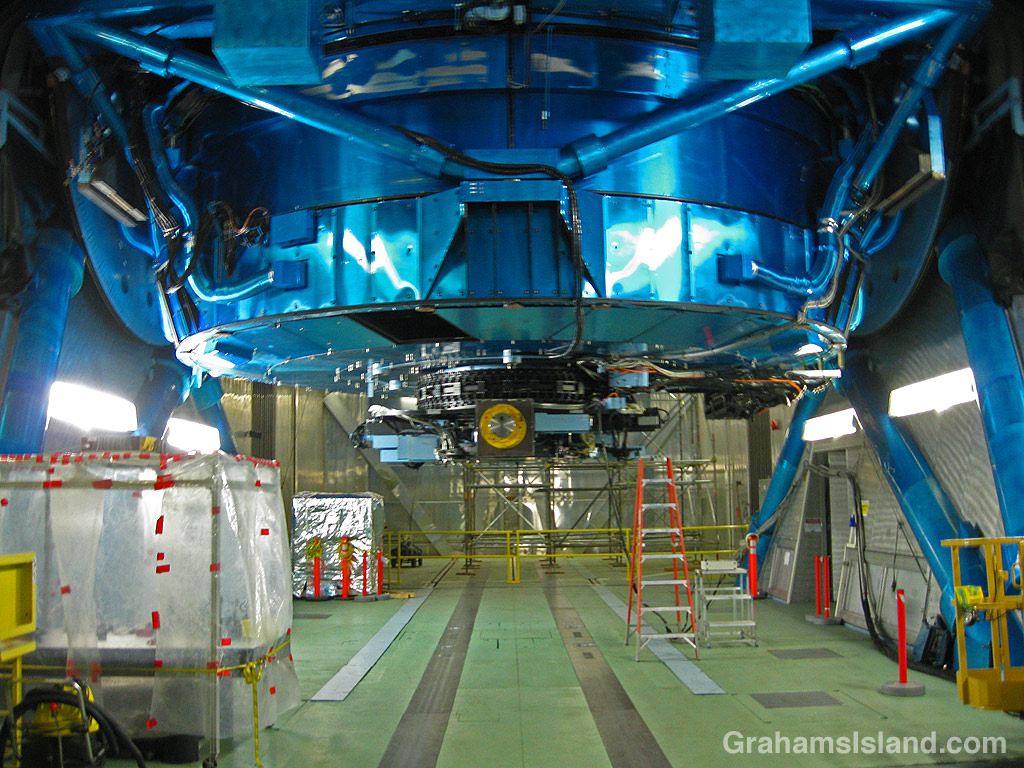
I was thinking about posting photos going back to my first visit to Hawaii, but in looking at them, I realized that I’d never posted photos from my tour of the Subaru Telescope, which I took a few months after moving here. At the time, the Subaru Telescope was the only one on the summit of Mauna Kea that offered tours to the general public, though the tours have been shut down by the current Covid situation.
I particularly remember the fabulous views from the walkway around the exterior of the telescope. The interior of the telescope was also interesting, though in the abstract way of a giant piece of equipment. This is not a telescope where one gets to put an eye to the lens to see what’s going on, though I was charmed to learn that when Princess Sayako of Japan dedicated the telescope in 1999, she was able to do just that because a special eyepiece had been constructed for that purpose!
The Subaru Telescope is a Ritchey-Chretien reflecting telescope. It has a large field of view which makes it ideal for wide-field sky surveys. For more information about the Subaru Telescope, visit https://subarutelescope.org/en/. The telescope’s live camera stream captured a cool video of last month’s Perseid Meteor Shower which can be seen here.
 Graham's Island