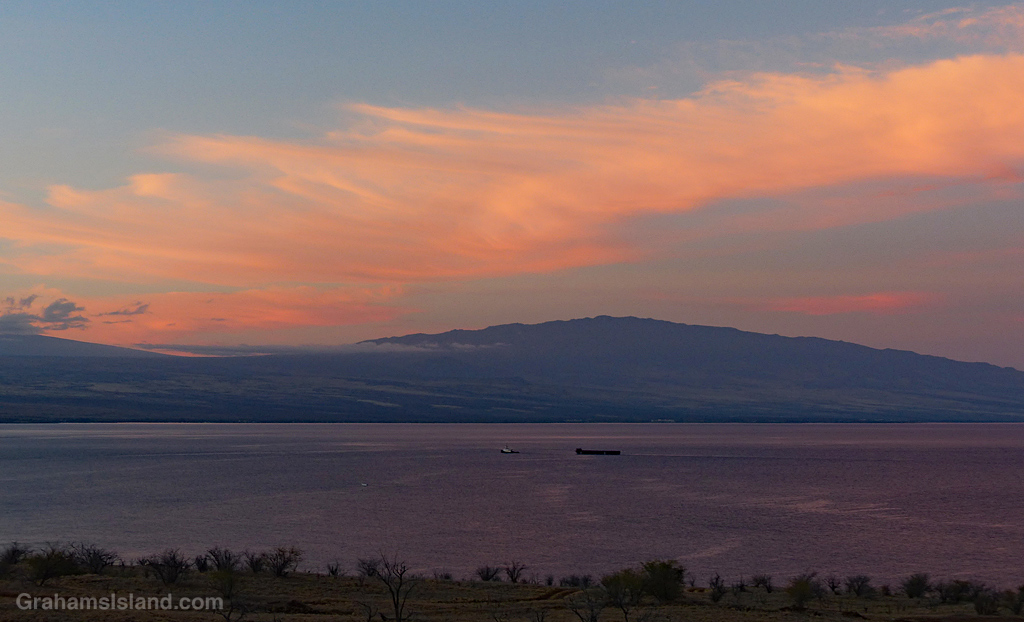
Wispy clouds catch the early morning sun above Hualalai volcano while an inter-island tug and barge heads in toward Kawaihae harbor.

Wispy clouds catch the early morning sun above Hualalai volcano while an inter-island tug and barge heads in toward Kawaihae harbor.
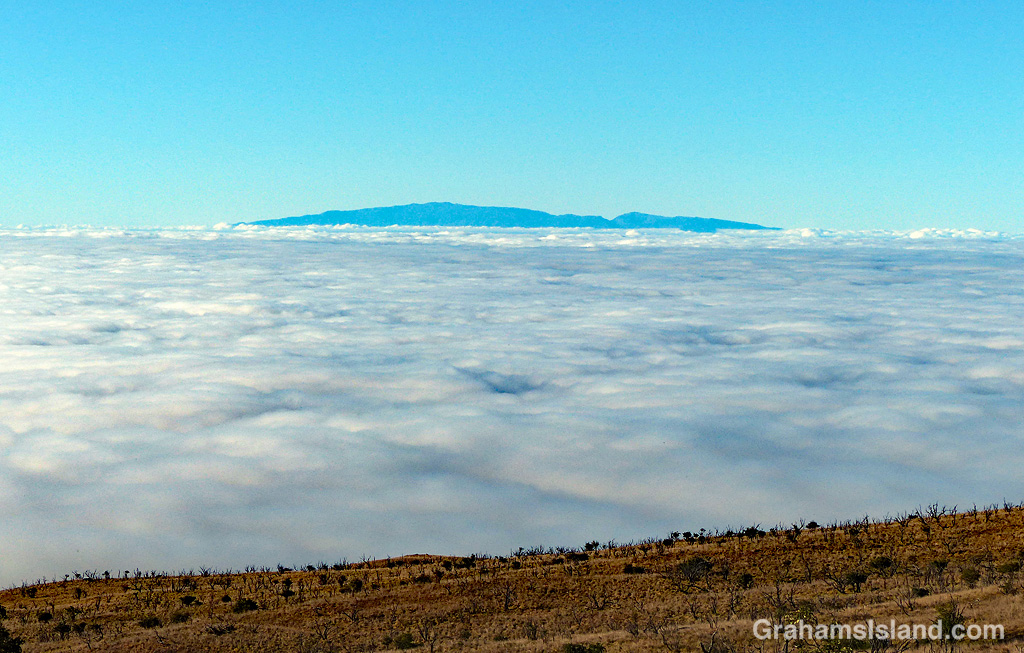
A sea of clouds separates Maui and the Big Island, as seen from the slopes of Mauna Kea. Somewhere under there is Kohala Mountain, which is 5,480 feet high.
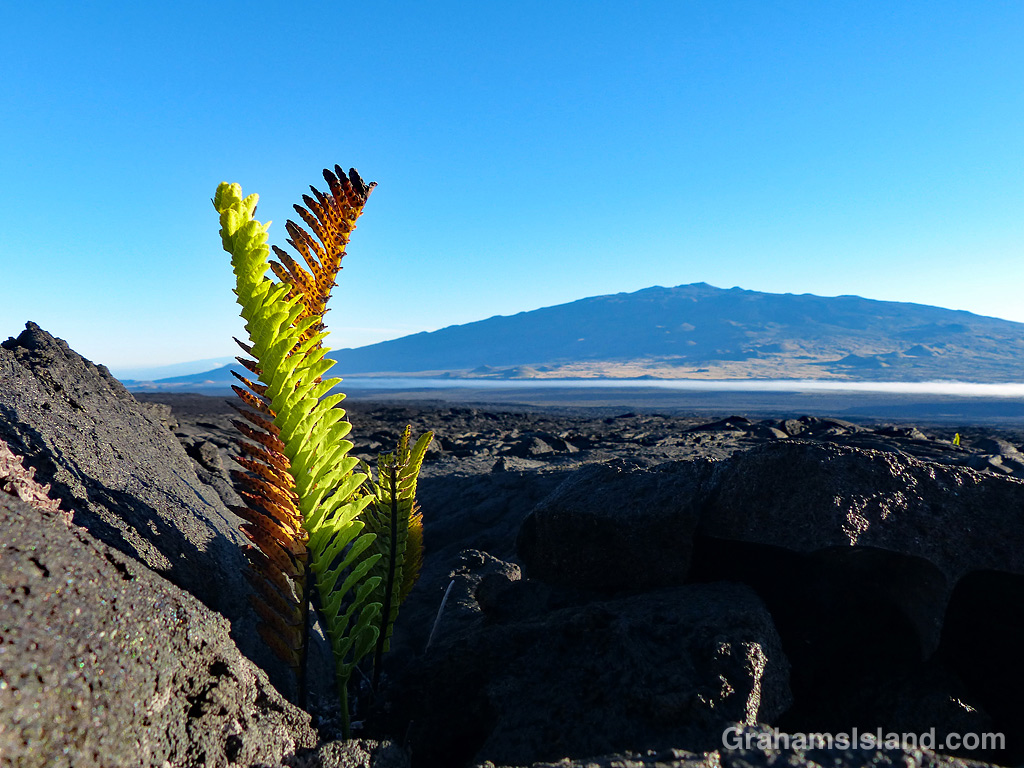
Ferns are one of the first plants to establish a foothold in lava flows. These ferns are on the northeast slope of Mauna Loa with Mauna Kea in the background.
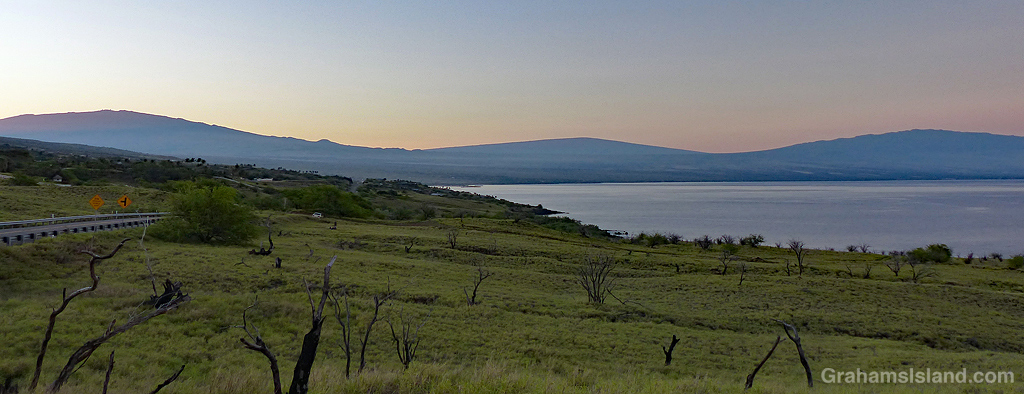
Three of the Big Island’s volcanoes – from left, Mauna Kea, Mauna Loa, and Hualalai – seen as daylight suffuses the sky.
Posted in response to this week’s Sunday Stills challenge on the theme of ‘Daylight.’ See more offerings here.
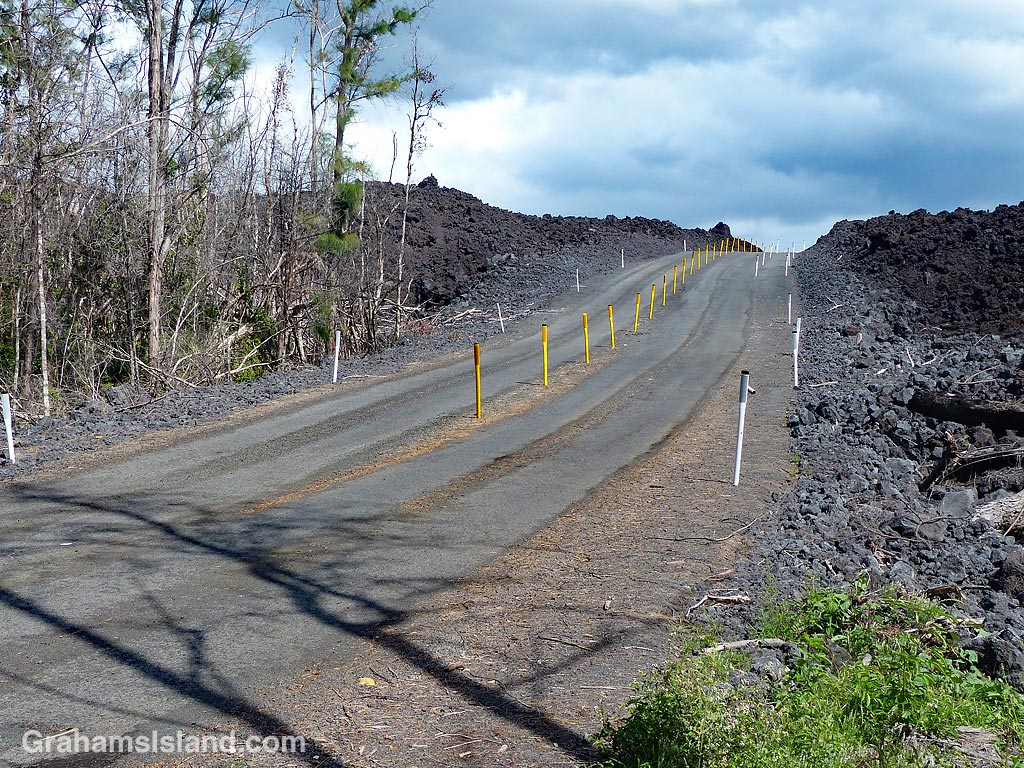
I’ve posted about my January visit to Pohoiki here, here, and here. The reason I was able to make that visit is because the county finally put a temporary road over one of the flows that cut off that part of the island.
One of the features of lava flows is that they don’t uniformly erase everything in their path. Sometimes they flow around areas. Sometimes they stop and a new flow emerges to one side. Sometimes a flow blocks one side of an area and a different flow blocks the other side.
The 2018 Kilauea eruption was no different in this regard. Some houses escaped destruction, but became inaccessible by road. Pohoiki was one of those places, until the new road was completed.
Things move at a leisurely pace in Hawaii and one might think the delay in building the road was due to this, but in this case, the county had good reason to wait. The simple reason is that they had to wait for the lava to cool down. It took several months for the lava to cool enough to make it practical to build a road over the flow. Even then it would not have been safe to cut through the flow and build the road at its former level.
How quickly the lava cools depends on many things including hot hot it was to begin with and how deep the flow is. It can take many months before the lava at the heart of a flow cools down enough to solidify and not present a danger.
For those interested in what happened during that 2018 eruption, the PBS show, NOVA, broadcast an episode titled ‘Kīlauea: Hawaiʻi on Fire.’ It’s about 50 minutes long and has a bit of a dramatic ‘will anyone survive’ tone in places, but I found it very informative. It might be available at https://www.pbs.org/wgbh/nova/, but if not you can see it here.
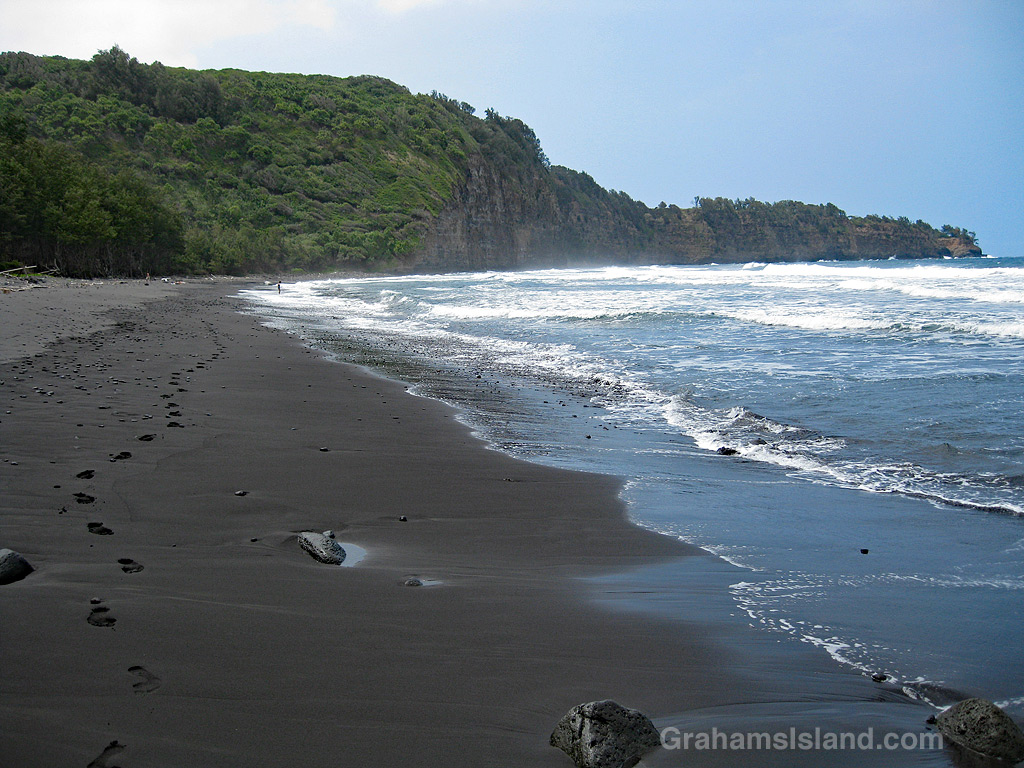


 This week’s Friendly Friday challenge theme is ‘Turning point.’ (See more responses here.) Since this is a photo blog about the Big Island it seems appropriate to post some photos from my first visit here in 2010, a visit which was the catalyst for the move to the island. There was no ‘ah ha’ moment, but these photos give a general idea of some of the things that appealed.
The top photo is Pololu beach on the North Kohala coast. Second photo is a Hawaiian green turtle resting on the black sand beach at Punalu’u County Beach Park. Third photo is tropical foliage next to a small cascading stream. Fourth photo shows some small lava breakouts in the flow that was active at that time. Conveniently, that activity was about 100 yards from the parking area and only 10 feet or so beyond where I was standing. The bottom photo is a view of Two Step, a popular snorkeling spot, from Pu’uhonua o Hōnaunau National Historical Park.


A couple more photos from my visit to Pohoiki at the end of January. Here, an abandoned shower in the picnic area is backed by lava from last year’s flow.

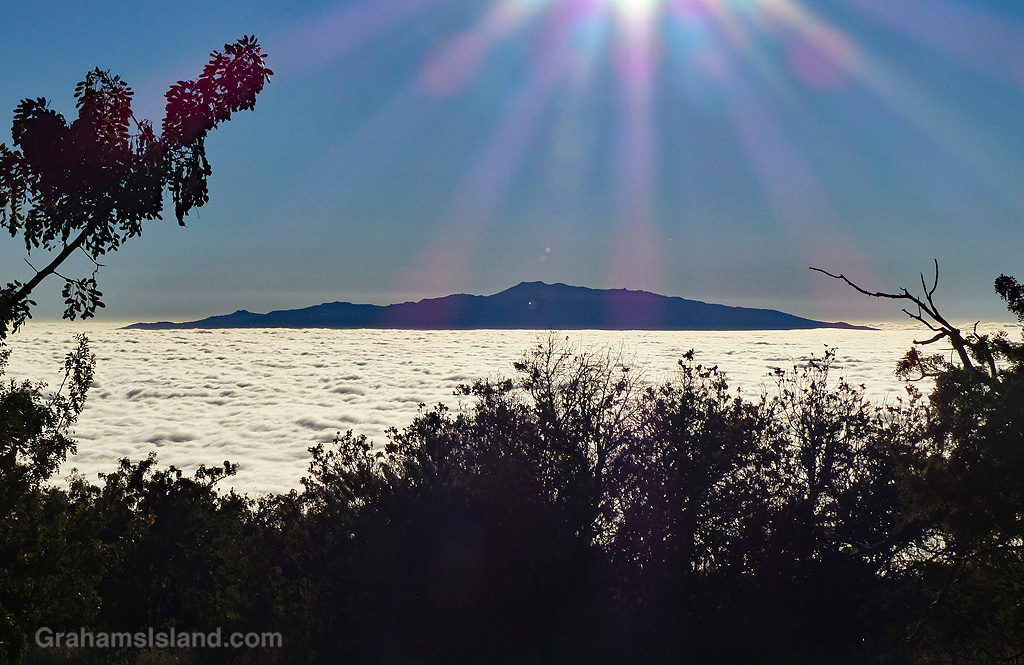
I’ve spent a fair amount of time in my life looking up at clouds, often as they poured water in my direction, so it’s nice to look down on them once in a while. Airplanes are probably the most common place to enjoy this view, but here on the Big Island, the upper reaches of Mauna Kea and Mauna Loa also offer this perspective.
In this case, the clouds were low enough that, when I was visiting the Palila Forest Discovery Trail at around 7,000 feet, the clouds blanketed the landscape below. Here, Hualalai pokes through the cloud layer in the late afternoon.
For more information about Palila Forest Discovery Trail, go to dlnr.hawaii.gov/restoremaunakea/palila-forest-discovery-trail/.

