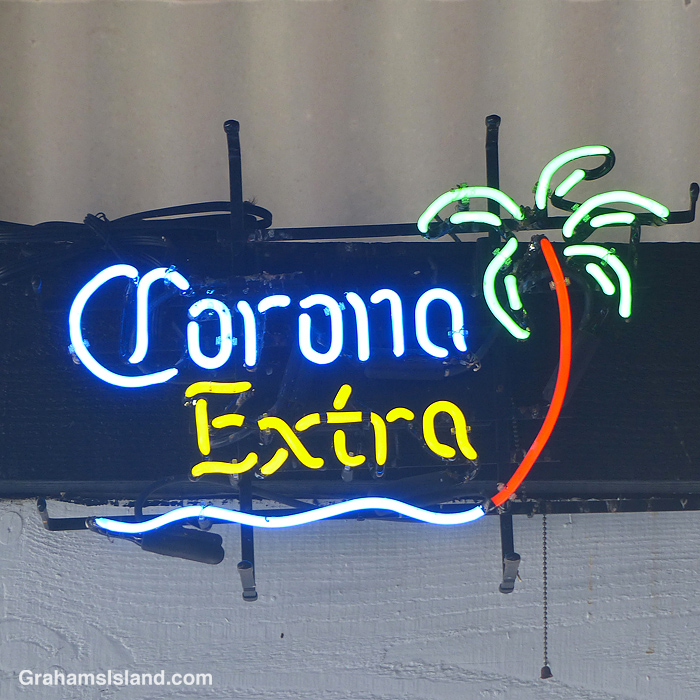
One of the many neon signs at the Harbor House Restaurant located at Honokohau Marina just north of Kailua Kona.
Posted in response to Becky’s July Squares challenge theme of ‘Trees.’ See more responses here.

One of the many neon signs at the Harbor House Restaurant located at Honokohau Marina just north of Kailua Kona.
Posted in response to Becky’s July Squares challenge theme of ‘Trees.’ See more responses here.

The Ala Kahakai Trail, which used to run from the northern tip of the island to the south-eastern tip, can be followed for a good stretch of the South Kohala Coast. The part south of Kohanaiki Beach Park is well marked and signed. That’s not the case in many other places.

This is one of the signs outside the Bamboo Restaurant in downtown Hawi. While some local restaurants had been offering take-out food, the Bamboo had remained closed during the pandemic. It’s not really geared to be a take-out restaurant and a lot of its business comes from visitors to the island. But about a month ago, the restaurant reopened with restricted hours.
The number of visitors to the island has increased to such an extent that there’s a shortage of rental cars available. When things shut down, the rental car companies shipped vehicles to the mainland for sale, rather than have them depreciate in their parking lots. But the rapidly increasing visitor numbers have caught them out and it sounds like it will be a while before they’re able to get their fleets back to their usual levels.
In the meantime, the reopening of the Bamboo is another encouraging sign that things could be getting back to normal around here.
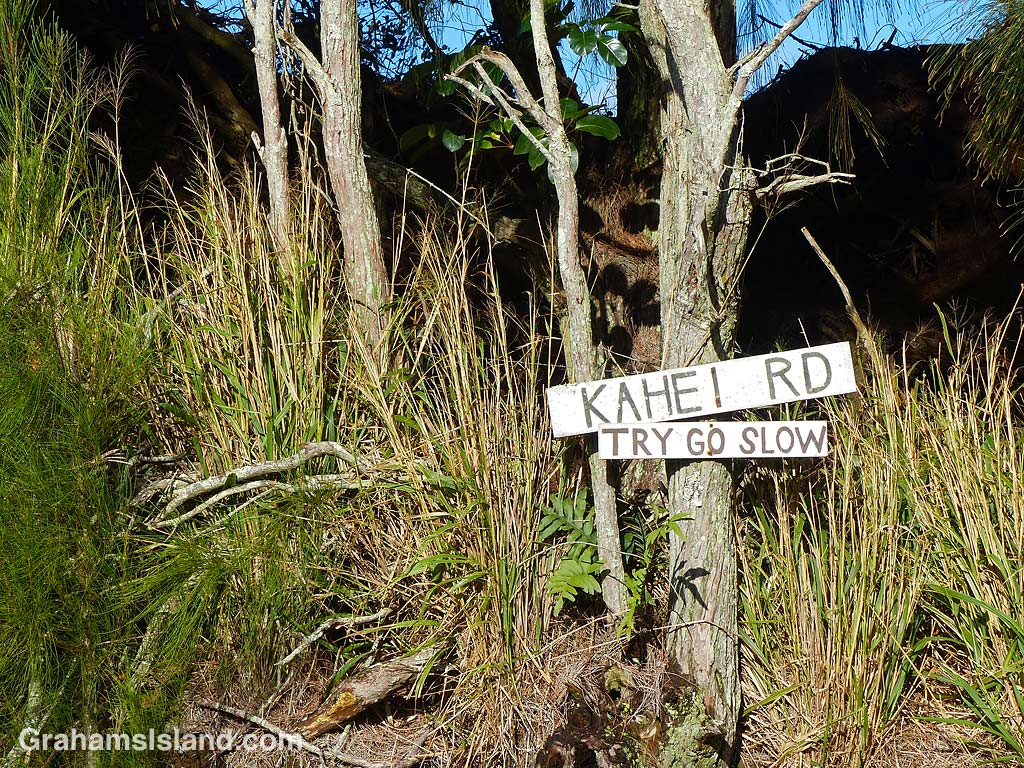
This sign, on a quiet back road, is a bit of Hawaiian pidgin, a local version of English that is still widely used. Not too hard to figure out what this sign means.

This is the sign at the landward end of the breakwater that protects Kawaihae harbor. The breakwater is just over half a mile long and, as you’d expect, people rigorously respect the warning to stay off this dangerous structure. Just kidding. We’re talking people here. They fish from the structure on a regular basis and, as far as I can tell, nobody seems too bothered about that. This is an early morning view.
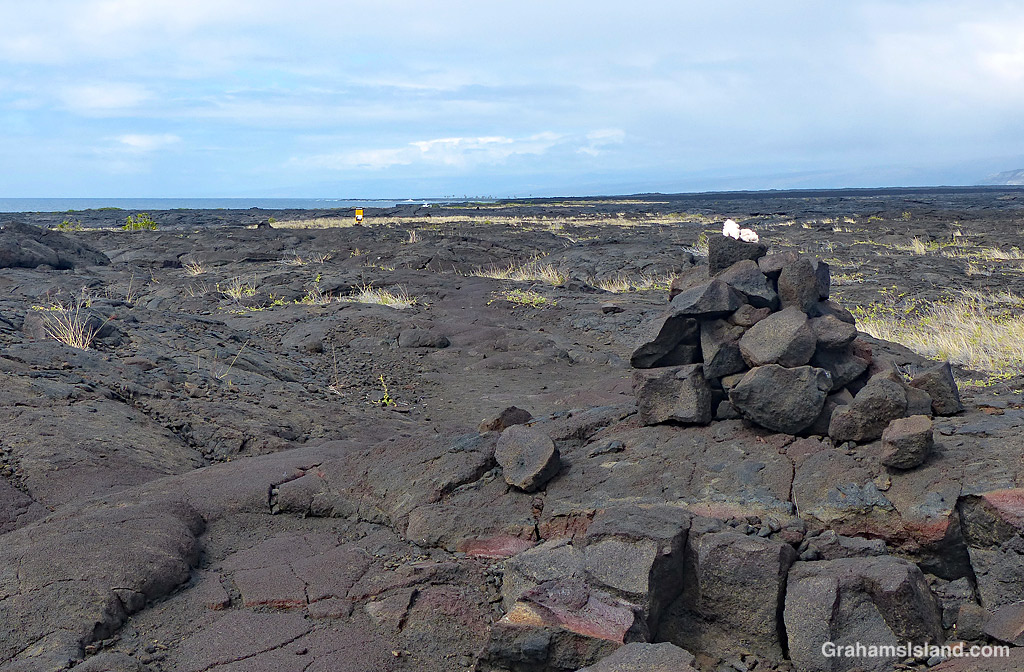

The coastal regions of Hawaii are dotted with tsunami warning signs. Basically, any place within reach of a tsunami gets a sign.
I came across this sign while hiking the Puna Coast Trail in Hawaii Volcanoes National Park. It stood out as a dot of color in a field of lava and scrubby grasses. What I liked about the sign was its sage advice ‘In case of earthquake, immediately go to high ground or inland.’ At this spot, the high ground is inland, so that kills two birds with one stone.
On the other hand, getting to that high ground inland involves scrambling over a mile or more of rough lava. Also, if the earthquake was big enough, it might just mean that you could encounter lava from a new eruption heading down to the coast to meet you. The sign doesn’t offer any advice on what to do then!
For more information about Hawaii Volcanoes National Park, go to nps.gov/havo/.
Back in June, I went to Hawaii Volcanoes National Park to do a little hiking. The park had recently reopened and I thought it would be a good time to do some of the popular trails near the summit that are usually crowded. I was right about this because I saw hardly anyone all day.
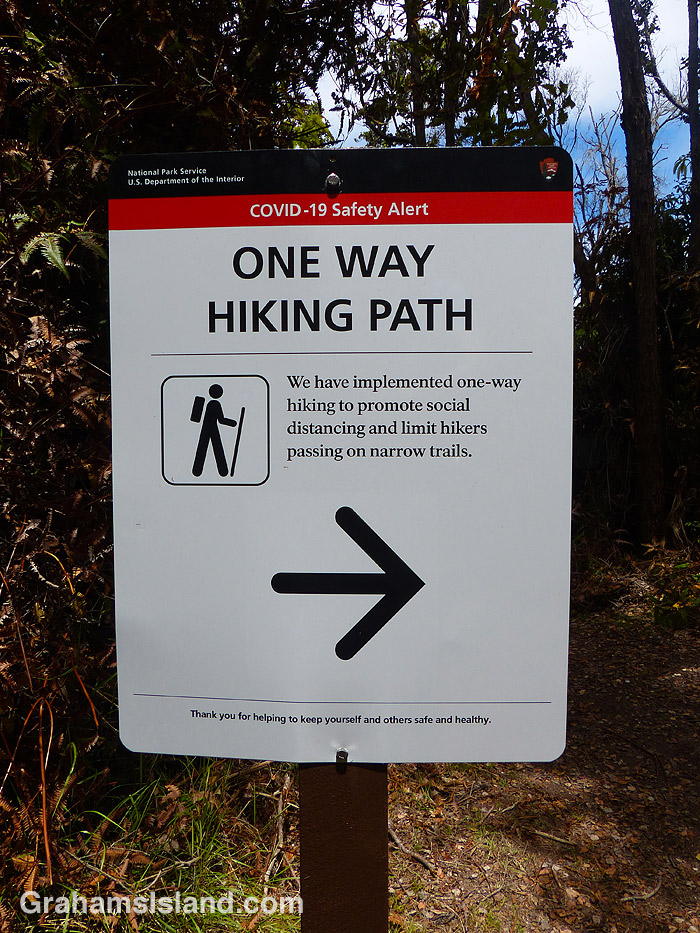
One of the trails I hiked was the Byron Ledge Trail and when I got to a junction near the end of it I came across this sign. I knew the park had made the popular Kilauea Iki Trail one way, but I hadn’t known about it applying to any other trails.
As you might have guessed, I arrived at this spot from the pointy end of the arrow. I’d hiked the trail in the wrong direction. The problem was that there was nothing at the other end of the trail letting me know I shouldn’t enter. When I hiked Kilauea Iki later, it was the same: at the parking lot there was a sign saying hike this way, but nothing at the other entrances to the trail.
On my way out of the park I stopped at the entrance and mentioned this to the ranger on duty. When I returned to the park in August, I asked the ranger at the entrance if they were still doing one way traffic on some of the trails. She said they weren’t. I wasn’t surprised. To do it properly, it would require a lot of signage and, with the Visitor Center closed, it would be hard to get the message across to everyone who visits the park.
For more information about Hawaii Volcanoes National Park, go to nps.gov/havo/.

No prizes for guessing who the owner of this truck will vote for, assuming he’s still alive. Trump might be the first president actively seeking to kill his most ardent supporters, by urging them to gather in groups and protest measures that help keep them alive.
 Graham's Island