
I saw this goat grazing as it passed through a shallow gully and I liked this moment when it spotted me.
I saw this goat grazing as it passed through a shallow gully and I liked this moment when it spotted me.

The beautiful red flowers of native Ohia trees are popular with bees, even in remote areas like the Kau Desert Trail, where these photos were taken.


A view across Waipi’o Valley from the road into the valley. This road has been closed to visitors for some time, because of rockfalls from the steep slopes above it. A project to improve the road recently finished its first phase, but it’s likely to be a few years before the road is opened to anyone other than residents, licensed tour operators, and native Hawaiians exercising traditional rights. Even then, it’s not clear what access will be permitted.
One thing this means is that the (strenuous) Muliwai Trail, into the next door Waimanu Valley, is currently closed and is likely to be so for some time, if it ever reopens. That trail can be seen (very faintly) making a zigzag up the steep slope on the far side of the valley.
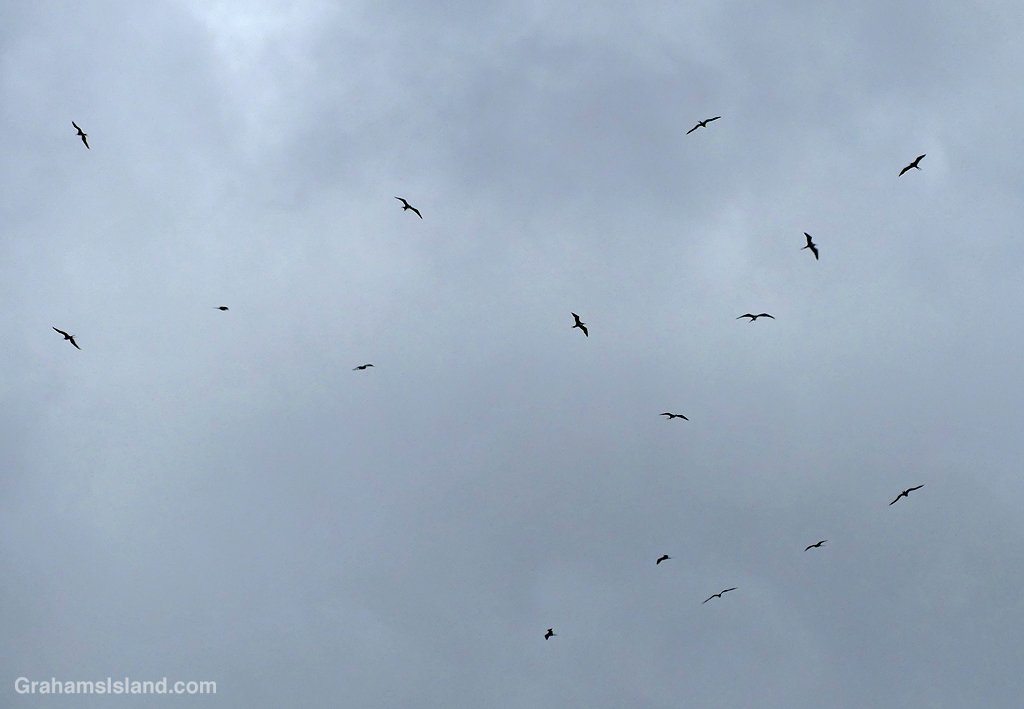
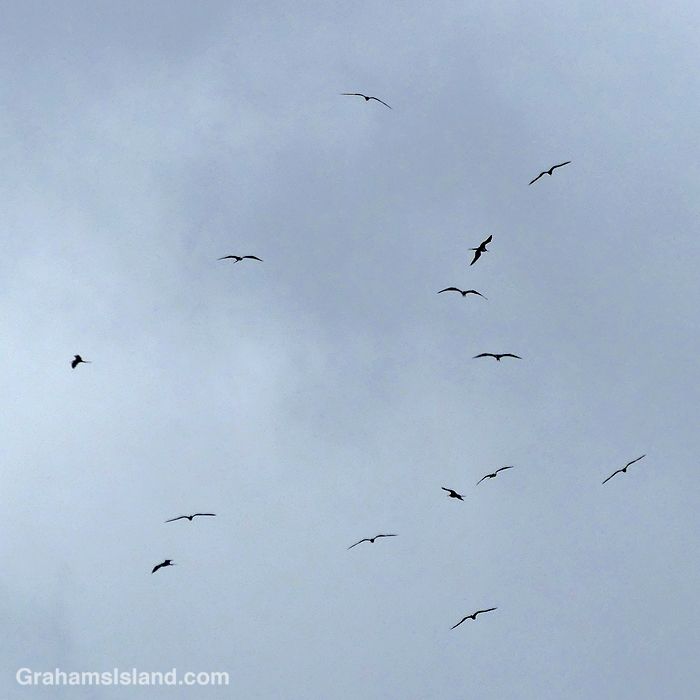
“Graham, get your camera. Storm birds!” With that alert, I dashed out of the office at work and saw these Great Frigatebirds circling in the gray skies towards Kohala Mountain. There were 16 of them, which is the most I’ve seen at one go.
These birds are known as ’Iwa in Hawaii. This means ‘thief’ in the Hawaiian language, a reference to their practice of harassing other birds into dropping prey they’ve caught, which the ’Iwa then take for themselves.
In Hawaii, a gathering of these birds is seen as a sign of stormy weather coming, Hence the storm birds name. They were on the money again, with Tropical Storm Calvin hitting the island a few days later.


This is the smallest Flowery Flounder I’ve seen while snorkeling. It was probably about 3 inches long. The only reason I saw it was because it was moving for just a moment before it settled down.
If you can’t see it in the top photo, the cropped version should help.
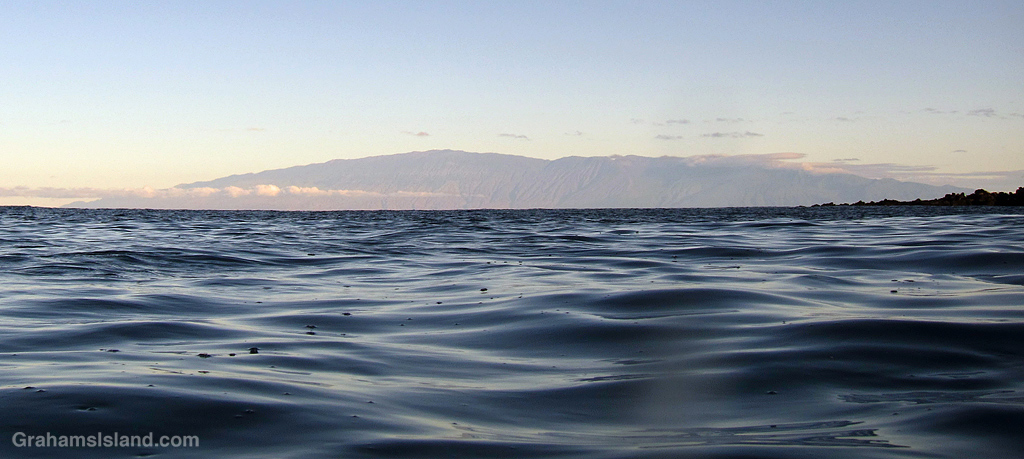
A view of Maui, seen from the water while snorkeling one day.

This praying mantis was on the ground at work and likely to get stepped on, so I moved it to a safer spot. In the process, it opened its wings exposing the lovely markings on them.

This week’s Sunday Stills challenge theme is ‘Double Trouble.’ See more responses here.
A pair of juvenile Black-crowned Night Herons spell trouble for small fish living in the pool behind Pelekane Beach in Kawaihae.

Giant Porcupinefish can inflate themselves into a ball. When they do so, long spines along the back become raised and stick out, making them an extremely unpleasant proposition for any predator. Oh, and they’re poisonous, too. Trouble, indeed.
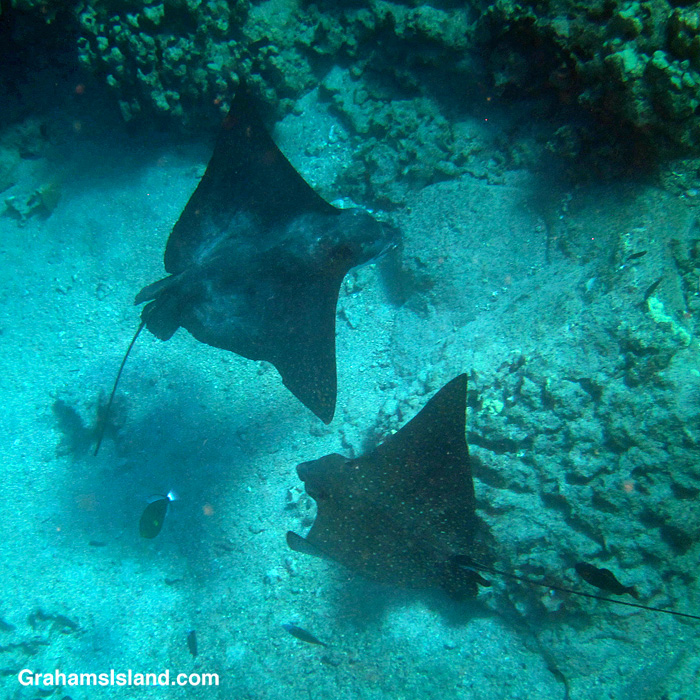


Spotted Eagle Rays hunt for molluscs and other creatures hiding in the sand. They root out prey with their duck-like bills.
Wild pigs can dig up a garden in no time, searching for worms and the like, but they go bananas over fallen fruit. These two were slurping down fallen mangoes.
This cow looked very suspicious of these cattle egrets, especially the one on its back. But they weren’t up to any trouble, just waiting for the cow to start grazing again and stir up some insects for them.

The Gold Dust Day Gecko on the left isn’t licking the paint. He’s sticking out his tongue and leaning to make his body look bigger in a challenge to the other gecko. The other one was singularly unimpressed and chased off his adversary.

