A black witch moth blends in on a large branch of what I think is a kiawe tree. I would never have noticed it if I hadn’t seen it land there.

A black witch moth blends in on a large branch of what I think is a kiawe tree. I would never have noticed it if I hadn’t seen it land there.

Over the last few weeks, several people have asked me how I’ve been affected by Kilauea Volcano’s latest eruption in a subdivision in Puna. I’ve been happy to respond that, where I live, I’ve hardly been affected at all.
I live near the northern tip of the Big Island and the current eruption is taking place in the southeast corner of the island. This eruption is also not like the recent one in Guatemala, with a deadly explosive element. Instead, it has settled into a steady, if prolific stream of molten lava, burning buildings in its path on the way to the coast. This behavior makes the direct impact of the eruption a more localized affair. If a person lived in the vicinity of the lava flow path, they’ve probably been forced to leave their home with no indication of when they might be able to return. But for the rest of the island, the lava itself poses no threat. What does affect, not only this island, but also others in the Hawaiian chain, is vog.
Vog, a blend of the words ‘volcanic,’ ‘smog,’ and ‘fog,’ is the result of gases from an eruption reacting with moisture and sunlight. It varies in intensity depending on the output of the volcano and it varies in who it affects depending on the wind.
Vog has been around a while, since the volcano has been erupting, pretty much continuously, since 1983. That 1983 eruption was at the Pu’u O’o vent. Then, in 2008, a new vent opened in Halemaʻumaʻu Crater, within the summit caldera. With two active vents, the vog got noticeably worse. This year’s new eruption has added to the output and also thrown in some ash deposits on areas within range.
The northeast trades are the dominant winds here and when they blow, the vog is blown along the south coast of the Big Island and then up along the west coast. Typically it will reach Kailua Kona, about halfway up, or a little farther north.
Up here on the northern tip the trades blow strong, too strong for many people who find it too windy. But the advantage of those winds is that they keep the vog at bay. Ironically, this past winter, the winds were more variable and we had more vog up here than usual. But since this current vent opened, the trades have been fairly consistent and have kept this part of the island mostly vog free.
Yesterday was an exception. The winds weakened and the vog crept north, which is what the photos are about. The top one, I’ve run before. It shows Hualalai Volcano seen from the water off the north Kohala coast. The bottom photo was taken yesterday from roughly the same area (though without zooming in). Hualalai is gone! That headland is about 400 yards away and I’d estimate that visibility was around 2 miles. I couldn’t even see the horizon. The water just faded away into the vog.
Even when it’s voggy, it doesn’t bother me too much, but some people are more affected. The air becomes acrid and sore throats and noses are common. Luckily, the winds picked up during the day and conditions improved, so we’ll see what happens.

Raccoon butterflyfish are one of those fishes often seen in small groups. Other fish tend to clump together, but raccoon butterflyfish always seem to be traveling in formation as though they’re taking part in some kind of synchronized swim competition. Perhaps they are, in which case this group would have scored high points.

The wandering glider (Pantala flavescens) is a fairly common dragonfly with a worldwide distribution, but it’s not one I’ve previously photographed. This isn’t for lack of trying.
I like dragonflies, so I’m always lured in when I see them flitting around. I figure that, even though they’re in motion, I should be able to get a photo because they often fly back and forth over small areas looking for food. So I’ve taken hundreds of dragonfly photos, many of which have a bit of dragonfly in them, some of them a whole dragonfly, a few where the dragonfly is fuzzy but identifiable, one or two that look pretty good.
This was another of those days. There were three or four dragonflies in the area and I was shooting photos with my usual success rate when I saw one of them settle. This one was clearly not familiar with dragonfly rules of conduct, which state: 1. Remain in constant motion if photographers are present. 2. If you must rest, make sure you aren’t observed.
Cashing in on my luck, I got several photos before the dragonfly flew off. I took a few more futile flying shots and was about to leave, when the same dragonfly landed again in almost the same spot. I particularly like the single yellow-brown cell in each of the wings, which is a handy identifier.

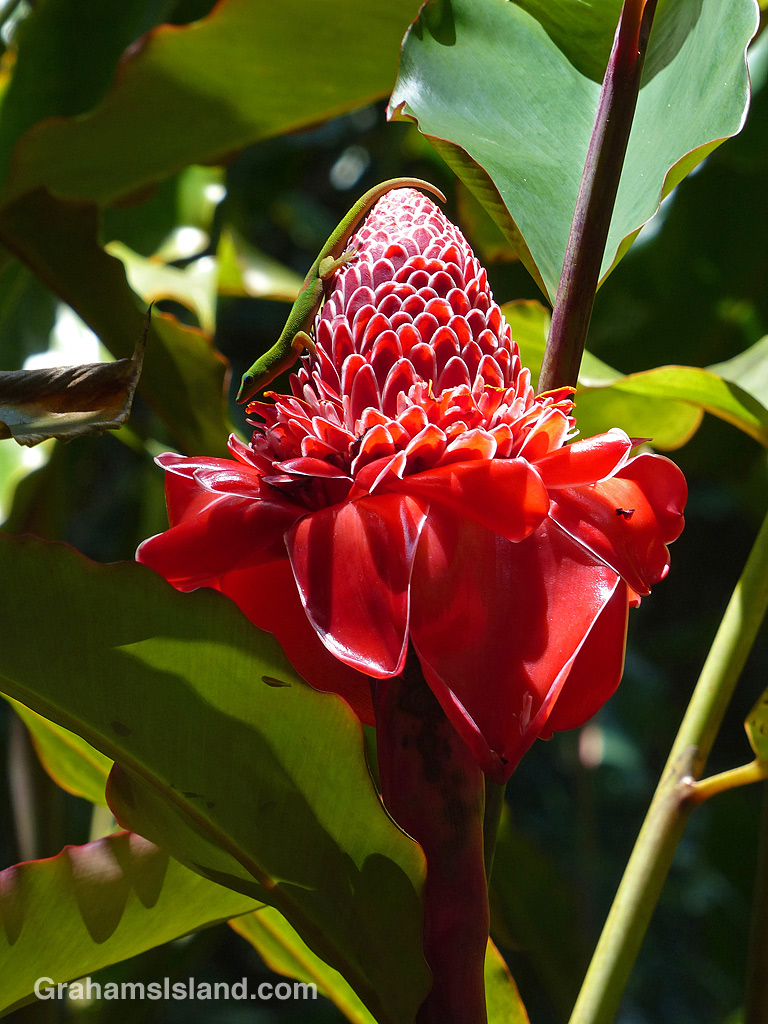
Let’s face it, anthuriums are a little bit strange. But I’ve grown to appreciate them more, living in Hawaii, and they certainly are a richly tropical flower.
These were at Hawaii Tropical Botanical Garden. For more information go to htbg.com.

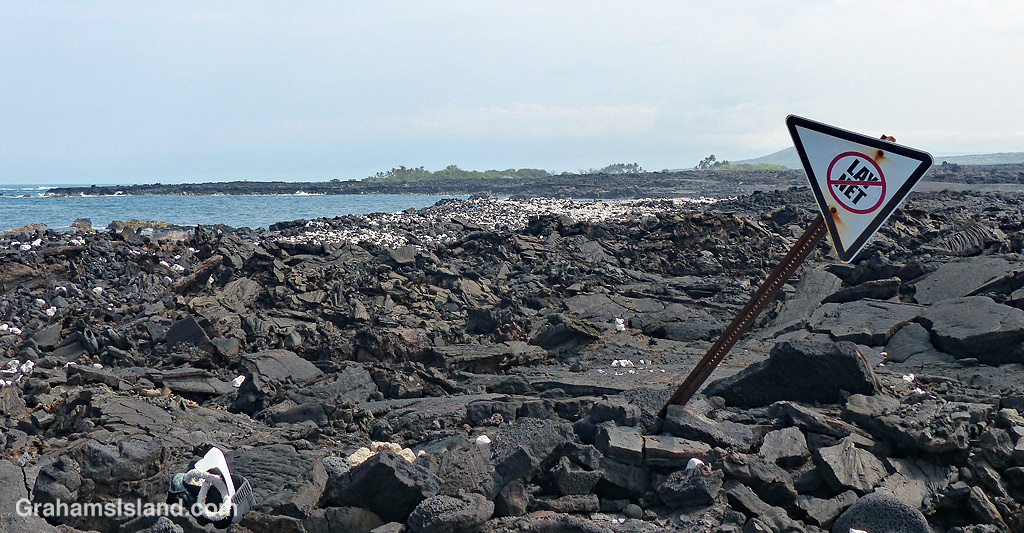
These are scenes from the coast of the Big Island, a few miles northeast of South Point, the island’s southernmost tip. This stretch of coast is notorious for the amount of marine debris on its shores.
In late January of this year, a mass of rope washed up at Kamilo Point, just a few miles from where these photos were taken. The rope mass was estimated to weigh around 40 tons. Kamilo Point is nicknamed ‘Plastic Beach’ because weather conditions and ocean currents bring huge amounts of debris ashore there. At least some of this junk is believed to have come from the ‘North Pacific Garbage Patch’ and before that, Asia.
In early March, volunteers gathered 11.6 tons of debris from this same stretch of coast.
The debris in these photos is mild be comparison, but still unsightly, and dangerous for everything from seabirds to Hawaiian monk seals, turtles, and humpback whales. That said, the blue plastic soaking tub (below) on the ocean’s edge, looked awfully inviting.


This old thermometer is still firmly affixed to the concrete block wall of a farm building on the side of Pu’u Wa’awa’a. I like how the rusting metal seems almost to be part of the texture of the wall.

I always tend to think of animals and birds as being supremely graceful, swooping through the air, leaping from tree to tree, twisting and turning at high speed. So, while I don’t wish them any harm, I get a secret pleasure when I see one of nature’s creatures looking a bit clumsy. I’ve seen turtles bumping into rocks, birds landing with an ungainly stumble, geckos leaping and missing their target.
I saw this grasshopper jumping from one branch to another but, alas, it did not quite stick the landing. Mind you, if I was a grasshopper and tried the same stunt, I’d probably impale myself on that nasty-looking thorn.