Bench overlooking Honokane Nui Valley

Bench overlooking Honokane Nui Valley

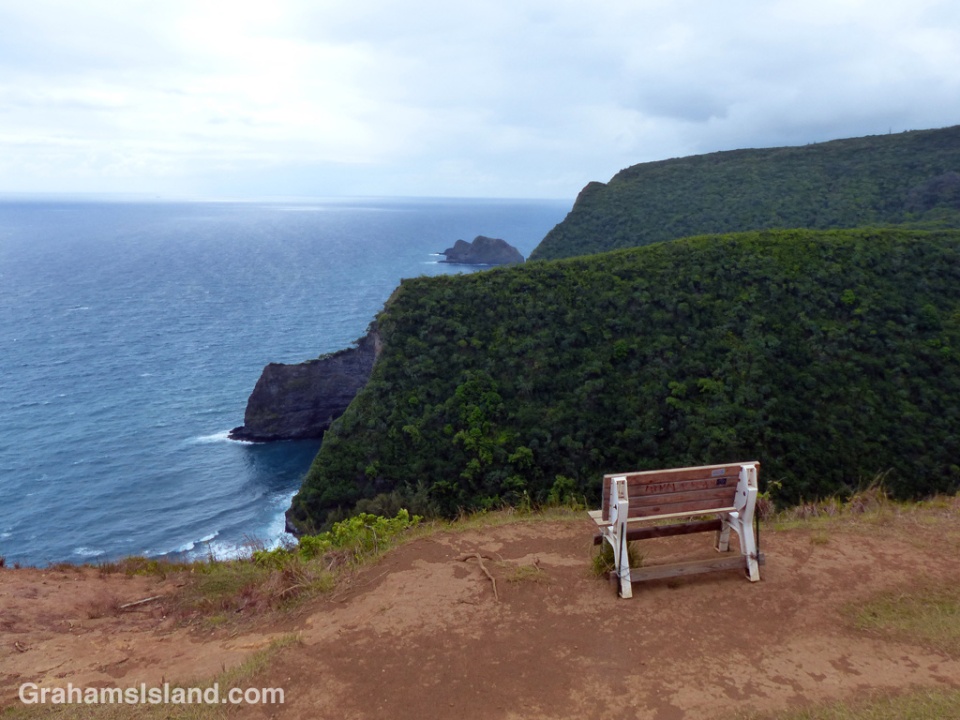
I’ve posted a photo of this bench and view before, but when I took this walk beyond Pololu a few months ago the bench was in bad shape. One of the legs had rotted out and if I wanted to sit, it had to be on one end and with care.

So last time I hiked up that way I took a tape measure, planning to assess the damage and work out what was needed to fix the bench. However, when I got there I found someone had beaten me to it. And unlike my repair idea, they had wisely decided to discard the previous bench frame and replace it with a plastic one.

While it might be somewhat less aesthetically pleasing, the plastic frame should last a lot longer than its predecessor. It’s also securely anchored with metal rods so the bench should be around for a good long time. Something to look forward to next time I make the hike.

Abstracts: Cruise ship windows

Abstracts-cruise ship windows

Every week, a cruise ship drops anchor off Kailua Kona and passengers are ferried ashore to explore the delights of the town or to go on tours of the island. While it’s there, the ship dwarfs the town.

This image shows a section of the ships side, row upon row of cabin windows. Technically, one might be expected to refer to these as portholes, but I don’t think that applies to cruise ships, which are basically giant floating hotels.

Spinner dolphins

Spinner dolphin leap

Spinner dolphin leapingOn a recent walk I noticed some disturbance in the water not far offshore and was happy to see a school of 15 to 20 spinner dolphins. I thought they were headed south and set out to follow them from shore. Then they turned around and went north again. I followed. This happened several times, so I just sat down and watched while they tried to make up their minds.
Spinner dolphins get their name from the twirls they make when they leap from the water. It’s thought this activity helps dolphins know where others in the school are because the bubbles generated by their takeoff and return to the water are a good target for their echolocation.

Posted in response to this week’s Sunday Stills challenge on the theme of ‘Back to School’ (Yes, it’s a stretch!). See more responses here.

Spinner dolphins

Going to the Moon or Mars?

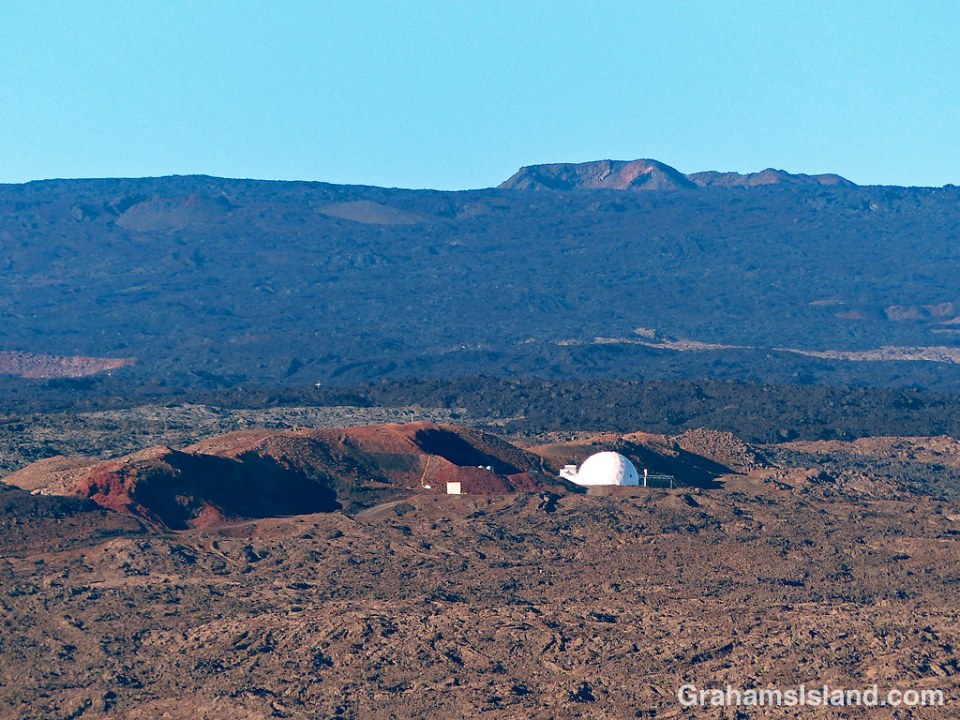
HI-SEAS site on Mauna Loa

HI-SEAS access road on Mauna LoaSitting at around 8,200 feet on the northern slope of Mauna Loa, is the HI-SEAS (Hawai’i Space Exploration Analog and Simulation) site. The dome is where a crew of volunteers stays, simulating what could face a similar crew living on Mars. The terrain has similarities to Mars, the crew can only go outside in space suits, and communications are delayed by 20 minutes as they would be in real transmissions between Earth and Mars.
Currently, I believe the dome is empty. The last mission, scheduled to run for eight months from February 15, 2018 through October 15, 2018, was canceled after a few days because of some kind of accident, the details of which were never released.

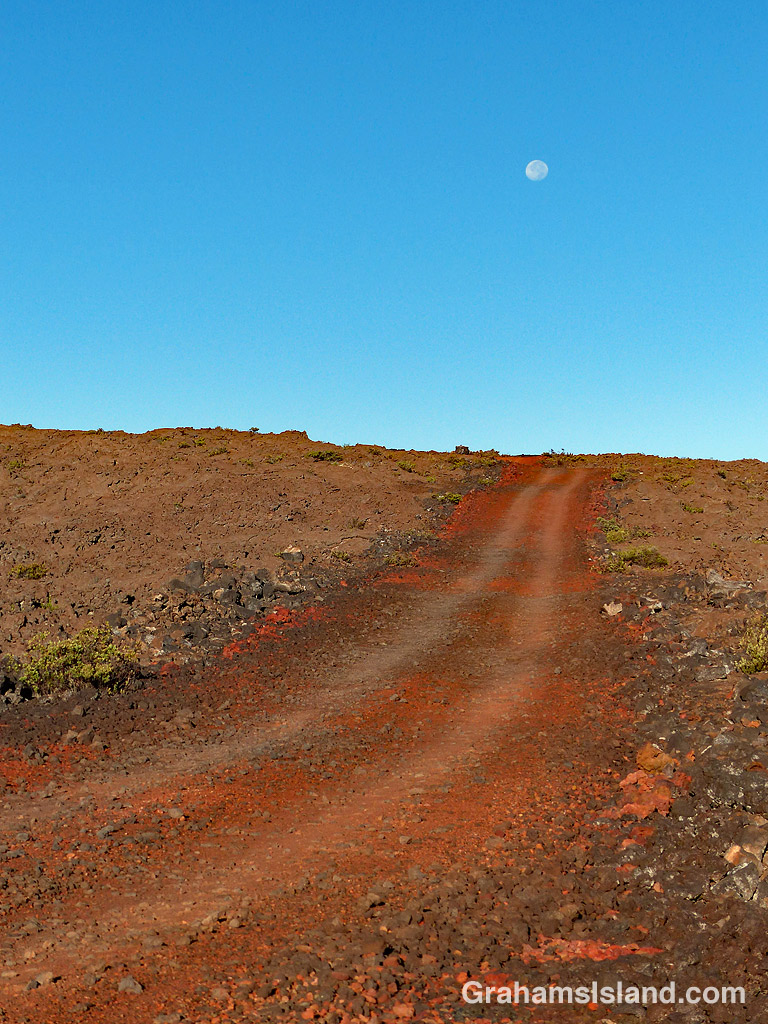
The second photo shows the approach road to the HI-SEAS site with a near full moon above. Public access to the site is not allowed for obvious reasons, but I do think it would be great fun to dress the kids up as little green Martians and take them trick or treating there. Imagine being inside the dome when there’s a knock on the door.

For more information about HI-SEAS, go to hi-seas.org/.

How long is a zebra moray eel?

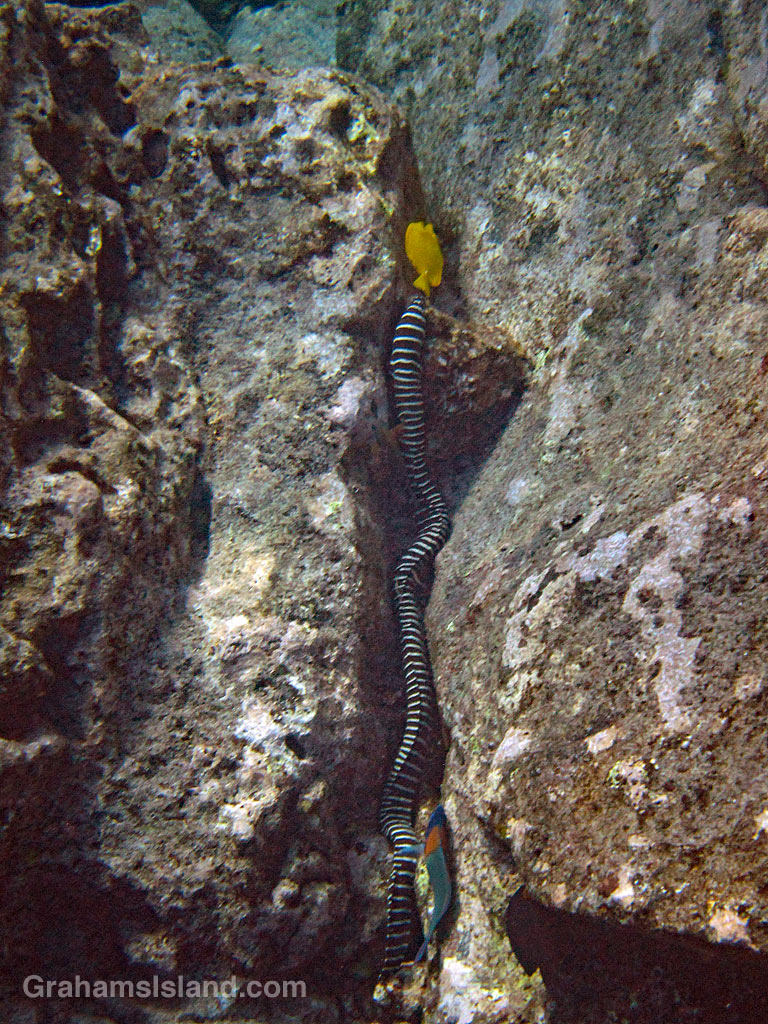
Zebra Moray Eel

Zebra moray eels are one of the easiest eels to identify, their circular stripes differentiating them from any other eel. They feed mostly on crabs, which they crush with their blunt teeth.

These eels can grow to five feet in length, but are usually smaller. This one though is probably about as large as they get. The yellow tang near its head could be as long as six or seven inches, while the saddle wrasse at its tail tops out at ten inches. That would make this eel somewhere between four and five feet long. It’s certainly the biggest zebra moray that I’ve seen.

Four views of a Hawaiian garden spider

Hawaiian Garden Spider female underside
Hawaiian Garden Spider female top view
Hawaiian Garden Spider sideview
Hawaiian Garden Spider female side view

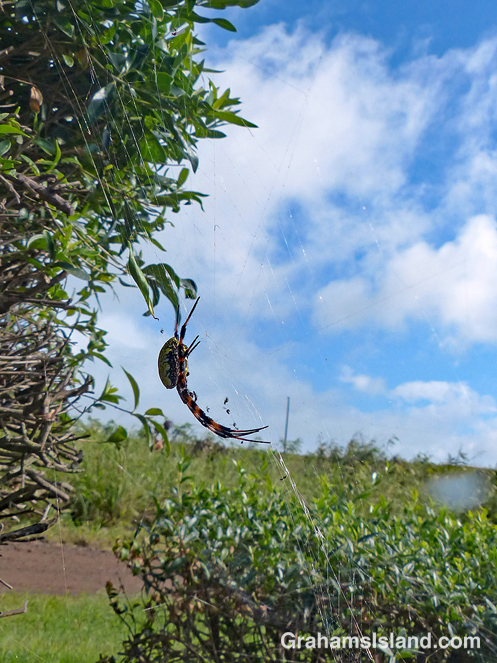
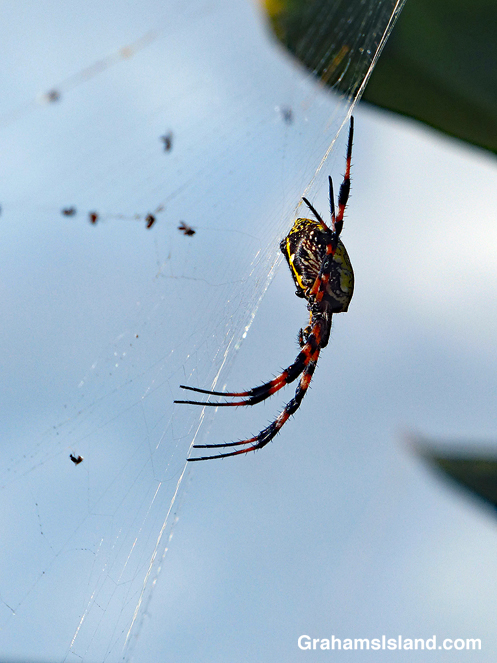
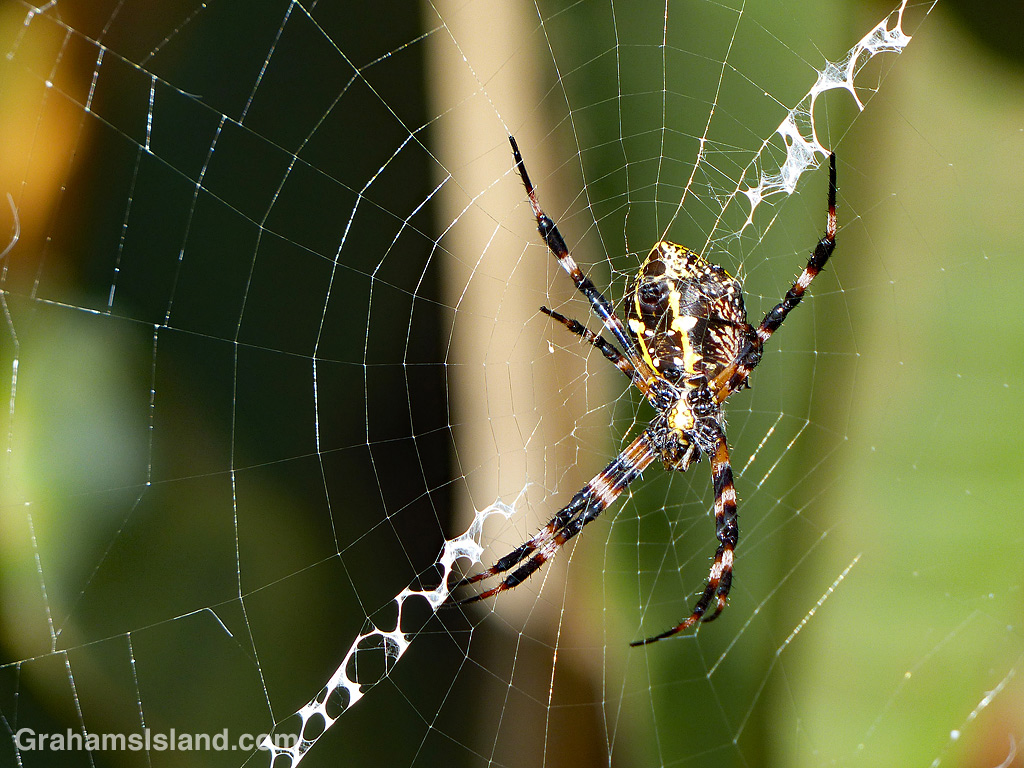
This rather large female Hawaiian garden spider (Argiope appensa) had spun a web in a place where I was able to gain decent access to it, so I decided to take photos from front and back and both sides.

The top pose is the one I see most often, with the spider perched on the underside of her web. The back view is the most striking, with its jewel-like top side of the abdomen. The two side views show how gently the spider sits on her nest.

A couple of days later, I saw this same spider on her web with the jeweled back catching the sun. I must have got a bit too close because in an instant the spider was on the other side of the web, underside toward me. I’m still not certain how she made such an instantaneous transition, whether it was through a hole in the web or zipping around the edge, but it was faster than my eye could record.

Kou tree

Kou flower and bee

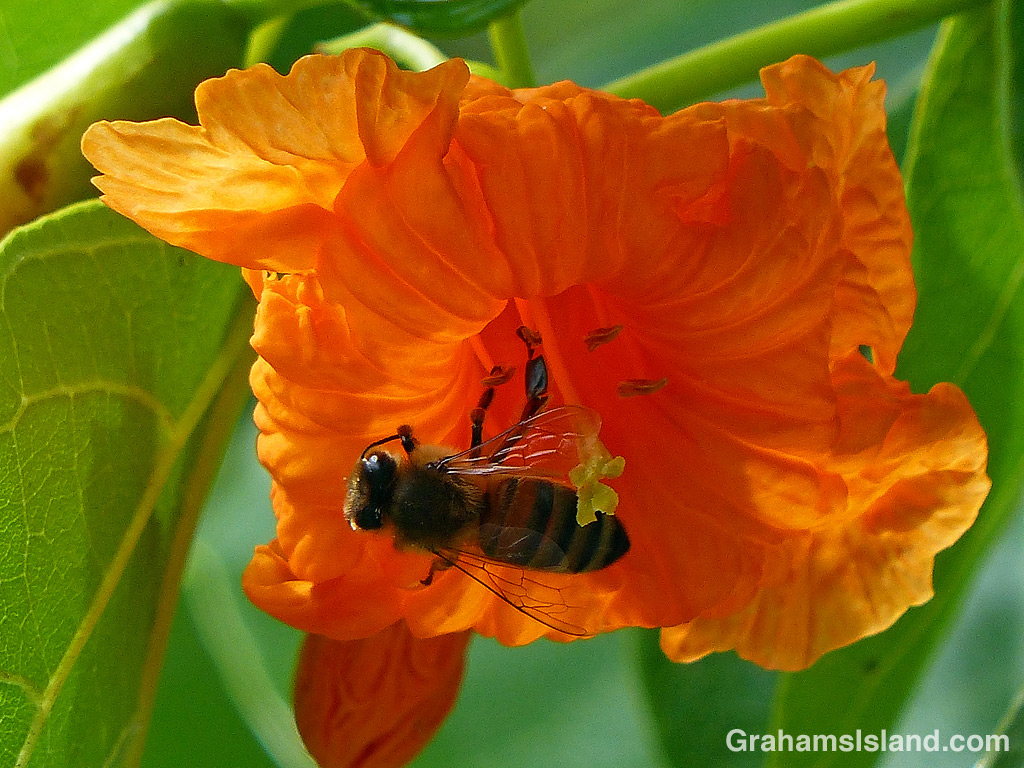
Kou flowersKou (Cordia subcordata) is an indigenous tree that was also brought over by Polynesian settlers. It was highly prized for its wood, which was used to make bowls and other containers.

The flowers are beautiful, too. Less than two inches across, they grow in clumps, which are sometimes hidden by the shiny green leaves. The flowers are followed by small, round green fruits (seen in the photos to the left and below) which harden to a dark brown and contain white seeds.

The flowers on this tree were popular with a variety of insects including a honey bee, above, and a paper wasp (Polistes exclamans), below.

Kou flower and paper wasp

Kou flower and wasp

Kou tree

Place of Refuge from the water

Place of Refuge from the water

This is a view of Pu’uhonua o Hōnaunau National Historical Park, otherwise known as Place of Refuge. The pu’uhonua or place of refuge was a place that offered sanctuary to those who had broken laws or been defeated in battle. Reaching this spot meant they’d be spared and allowed to go home.

So this view is one that a young frightened warrior might see while trying to reach that spot. Hale o Keawe, the small structure with the steeply pitched roof, can be seen in the center of the photo. It sits on the edge of the pu’uhonua. To the right of it is safety; to the left death.

Fortunately that wasn’t my choice. I was just looking at fish.